

Could an adjustment be the right next step for vertigo, or should you seek medical advice first? If you’re experiencing spinning, dizziness or unsteadiness, it’s understandable to feel unsure about the cause and whether hands-on care could make things worse. Searching for chiropractic treatment for vertigo Billericay should start with safe triage, not an assumption that chiropractic care suits every type of dizziness.
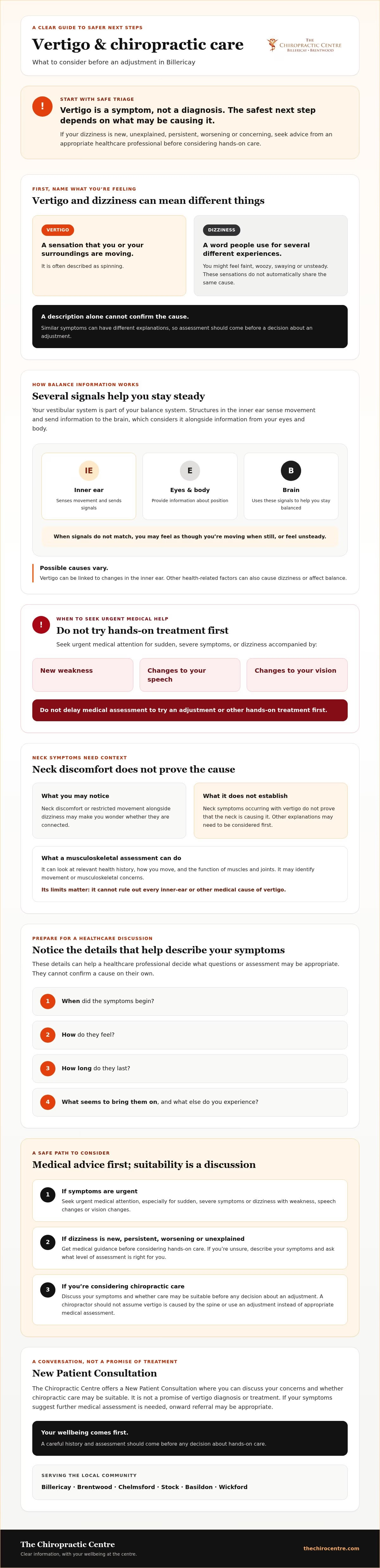
Vertigo usually describes a sensation that you or your surroundings are moving, while dizziness can also mean feeling faint or off balance. Different causes call for different care, so discuss a new or unexplained episode with an appropriate healthcare professional before considering an adjustment. Seek urgent medical help if dizziness comes with concerning symptoms such as weakness or difficulty speaking.
This guide explains what may be behind vertigo, when chiropractic care might be relevant and how to choose a safe next step. The Chiropractic Centre offers New Patient Consultations, where you can discuss your symptoms and whether chiropractic care may be suitable. A consultation is not a promise of vertigo treatment, and your wellbeing should come first. The practice serves Billericay and nearby Brentwood, Chelmsford, Stock, Basildon and Wickford.
Key Takeaways
- Learn how vertigo differs from light-headedness and why it describes a symptom, not a single cause.
- Understand how the body’s balance system and different health factors can contribute to spinning or unsteadiness.
- See when neck discomfort may be relevant, and why it does not by itself show what is causing your vertigo.
- Prepare for a healthcare discussion by noting when symptoms began, what triggers them and what else you experience.
- Find out how to approach chiropractic treatment for vertigo Billericay safely, including discussing suitability at a New Patient Consultation.
Chiropractic treatment for vertigo in Billericay: what does the term mean?
Vertigo is a sensation that you or your surroundings are moving, often described as spinning; general dizziness can also mean feeling faint, woozy or unsteady. Vertigo is a symptom, not a diagnosis, and it can have different causes. The Vertigo overview describes the term and its different forms, but your symptoms need to be understood in context rather than diagnosed from a description alone.
Vertigo, dizziness and balance problems are not interchangeable
People use “dizzy” to describe several different experiences. You might feel as though the room is turning, sway when walking or feel faint after standing up. These sensations can be unsettling, but they do not automatically point to the same cause or require the same response.
If symptoms occur, note when they began, how they feel, how long they last and what seems to bring them on. Include any other symptoms. These details can help a healthcare professional decide what questions or assessment may be appropriate. They cannot, on their own, confirm a cause such as a balance problem or spinal alignment issue.
Why someone might consider a chiropractor
Neck discomfort or restricted movement alongside dizziness may lead you to look into musculoskeletal care. It is understandable to wonder whether the two are connected. However, neck symptoms occurring alongside vertigo do not prove that the neck is causing it. Other explanations may need to be considered first.
If you’re exploring chiropractic treatment for vertigo Billericay, treat suitability as a question to discuss, not an assumption. A careful history and assessment should come before any decision about an adjustment. The Chiropractic Centre offers a New Patient Consultation, giving you an opportunity to discuss your concerns and whether chiropractic care may be suitable. It is not a promise of vertigo diagnosis or treatment.
If your dizziness is new, persistent, worsening or concerning, seek advice from an appropriate healthcare professional before considering hands-on care. First understand what you’re experiencing, then choose a safe next step for you.
What can cause vertigo, and why does assessment come first?
Vertigo can be linked to changes in the inner ear, which helps your brain understand movement and keep you balanced. Other health-related factors can also cause dizziness or affect balance. The causes of vertigo vary, so the same description of spinning does not necessarily mean the same underlying problem.
Your vestibular system is part of your balance system. It includes structures in the inner ear that sense movement and send information to the brain. The brain uses those signals, alongside information from your eyes and body, to help you stay steady. If the signals do not match, you may feel as though you’re moving when you’re still, or feel unsteady.
Vertigo needs a cause-sensitive assessment because similar symptoms can have different explanations, and the safest next step depends on what may be behind them. A chiropractor should not assume vertigo is caused by the spine or use an adjustment instead of appropriate medical assessment. Neck discomfort alone cannot establish the cause.
Symptoms that call for medical advice before hands-on care
Seek urgent medical attention for sudden, severe symptoms or dizziness accompanied by new weakness, changes to your speech or changes to your vision. Do not delay medical assessment to try hands-on treatment first.
Get medical guidance if dizziness is new, persistent, worsening or unexplained. If you’re unsure what to do, describe your symptoms to an appropriate healthcare professional and ask what level of assessment is right for you.
What a musculoskeletal assessment can and cannot establish
A musculoskeletal assessment looks at relevant health history, how you move and the function of muscles and joints. It may help identify movement or musculoskeletal concerns, but it cannot rule out every inner-ear or other medical cause of vertigo. Any findings need to be considered within those limits.
If your symptoms suggest that further medical assessment is needed, onward referral may be appropriate. In Billericay, a New Patient Consultation at The Chiropractic Centre gives you an opportunity to discuss your concerns and ask whether chiropractic care may be suitable. It does not guarantee a vertigo assessment or treatment. If you’re also seeking help with musculoskeletal concerns, read about a New Patient Consultation before deciding on a next step.
Could chiropractic care be relevant when vertigo occurs with neck symptoms?
Neck pain or difficulty turning your head can make it reasonable to ask whether musculoskeletal care has a role. A chiropractor may assess neck movement and related muscle or joint concerns, but those symptoms do not prove that the neck is causing vertigo. The two can occur together for different reasons.
For someone considering chiropractic treatment for vertigo Billericay, the key question is not simply whether an adjustment is available. It is whether hands-on care is appropriate after your symptoms, health history and examination findings have been considered. An adjustment is not automatically suitable for someone experiencing vertigo, and it is not a treatment for every balance disorder.
When an adjustment may be considered
An adjustment is a hands-on technique used in chiropractic care. Before considering one, a clinician should review your history, ask about the dizziness and any accompanying symptoms, and assess relevant movement and physical findings. This helps determine whether musculoskeletal care may suit your needs, rather than assuming a spinal cause.
If hands-on treatment is considered, ask why it may be appropriate, what its potential benefits and limitations are, and what alternatives may be available. You should be able to ask questions and give your consent before treatment begins. If you’re uncomfortable or unsure, say so. A careful conversation is part of making an informed choice.
When chiropractic treatment may not be the next step
If the cause of your vertigo is unknown, or your symptoms are sudden, severe or changing, seek appropriate medical advice before considering an adjustment. Symptoms linked to the inner ear or another health concern may need assessment beyond musculoskeletal care. An adjustment should not delay that assessment.
A suitable decision may be to pause hands-on treatment and seek another assessment or pathway. If your history or examination findings suggest your symptoms fall outside the practitioner’s scope, referral may be appropriate. That is not a failure to help; it keeps your wellbeing at the centre of the decision.
The Chiropractic Centre offers a New Patient Consultation as an opportunity to discuss your concerns and ask whether chiropractic care may be suitable. It does not guarantee a vertigo-specific assessment or treatment. If you’re considering care in Billericay, explain what you’re experiencing and check that the next step takes account of your symptoms, preferences and any need for medical advice.
How to choose a safe vertigo assessment in Billericay
A useful consultation starts with your experience, not an assumption about the cause. Before speaking with a local healthcare professional, jot down a few details. You do not need medical terminology; clear, everyday descriptions are helpful.
- Onset: When did the symptoms first appear? Did they begin suddenly or gradually?
- Pattern: How often do episodes happen, and how long do they last?
- Triggers: Do you notice them after moving your head, standing up or doing a particular activity?
- Other symptoms: Note neck pain, headaches, changes in balance or anything else you’ve experienced alongside the dizziness.
- Health history: Share relevant health conditions, recent changes and any medical advice or assessment you’ve already received.
This record can help you explain what’s happening and give the practitioner a clearer starting point. For a sense of what may happen at an appointment, you can also read New Patient Chiropractor Consultation Essex: Your Clinical Roadmap to Long-Term Relief. The title is a guide to expectations, not a substitute for asking how your own symptoms will be considered.
Questions to ask before agreeing to hands-on treatment
You’re entitled to understand the reasoning before deciding whether to proceed. Ask what the assessment suggests, what remains uncertain and whether your symptoms need another type of assessment. If an adjustment is proposed, ask why that technique is thought to suit you and what alternatives are available.
Check that the discussion covers relevant risks and the option of referral if your symptoms need care beyond the practitioner’s scope. Consent should be an ongoing conversation: you can ask to pause, decline a technique or change your mind. For more on treatment expectations, see What Does a Chiropractic Adjustment Feel Like?
What to share at a first consultation
Bring notes on when the symptoms started, how often they occur, how long they last and any triggers you’ve noticed. Mention neck discomfort, headaches or changes in balance, and tell the practitioner about any recent medical advice. If a movement or position makes symptoms worse, explain that rather than trying to demonstrate it without guidance.
If you’re exploring chiropractic treatment for vertigo Billericay, The Chiropractic Centre’s New Patient Consultation can be an opportunity to discuss your concerns and ask whether chiropractic care may be suitable. It is not a promise of vertigo-specific assessment or treatment. Ask about a New Patient Consultation and take your symptom notes with you; the next step should reflect your wellbeing and any need for further medical advice.
Your next step: discuss vertigo symptoms with The Chiropractic Centre
A considered next step starts with understanding what you’re experiencing. If symptoms are new, worsening, unexplained or accompanied by concerning changes, seek appropriate medical advice first. Once you have guidance on whether further medical assessment is needed, you can ask whether musculoskeletal care may be suitable for your circumstances.
The Chiropractic Centre offers New Patient Consultations. If you live in Billericay, Brentwood, Chelmsford, Stock, Basildon or Wickford, contact the clinic to explain what you’re experiencing and ask whether your needs fit its services. This is an opportunity to discuss suitability, not a promise that the consultation will diagnose vertigo or lead to an adjustment or vertigo treatment.
What a local consultation can help clarify
A consultation gives you a chance to talk through your symptoms, relevant health history and any neck or movement concerns. You can ask whether musculoskeletal care appears appropriate and what the next step might be. If medical advice or another pathway is more suitable, that should be part of the discussion rather than pressing ahead with hands-on care.
If an adjustment is considered and you’d like to know more about what to expect, look for the article What Does a Chiropractic Adjustment Feel Like? Understanding a technique can help you prepare questions, but it does not mean an adjustment is necessary or right for you.
Choose a considered, low-pressure next step
Share your concerns openly, including what you’re unsure about. Ask why a particular option is being discussed, what alternatives there may be and whether you can pause or decline treatment. Your wellbeing and informed consent should guide any care conversation. You do not need to agree to hands-on treatment simply because you’ve attended a consultation.
For anyone considering chiropractic treatment for vertigo Billericay, the safest route is to seek medical advice when needed, then discuss suitability without assuming the cause or outcome. Contact The Chiropractic Centre in Billericay to ask whether a New Patient Consultation may be an appropriate place to discuss your needs. Take your time, ask questions and choose the next step that feels right for your health.
Take a safe, informed next step
Vertigo describes a sensation, not a single cause. Spinning, faintness or unsteadiness can have different explanations, so the right next step depends on your symptoms and health history. Neck pain alongside dizziness may be relevant, but it does not confirm that your neck is the cause.
If symptoms are new, worsening, unexplained or accompanied by concerning changes, seek medical advice before considering hands-on care. If you’re exploring chiropractic treatment for vertigo Billericay, discuss suitability rather than assuming an adjustment is appropriate. Ask what an assessment can establish, what remains uncertain and whether another care pathway may be needed.
The Chiropractic Centre offers New Patient Consultations and chiropractic adjustments. A consultation is a chance to discuss your concerns and whether chiropractic care may be suitable. It is not a promise of vertigo diagnosis, treatment or an adjustment. Your wellbeing and informed consent should guide any decision.
Contact The Chiropractic Centre to discuss whether an assessment is suitable. You deserve clear answers and a next step that feels right for you.
Frequently Asked Questions
Can chiropractic treatment help vertigo?
Chiropractic care may be relevant if you also have neck pain or restricted movement, but that overlap does not show that your neck is causing vertigo. Vertigo has different possible causes, and an adjustment is not suitable for every balance problem. If you’re considering chiropractic treatment for vertigo Billericay, seek appropriate medical advice first if the cause is unclear, then discuss whether musculoskeletal care may suit your situation.
Is chiropractic treatment safe if I feel dizzy?
Feeling dizzy does not automatically make an adjustment appropriate or inappropriate. Suitability depends on your symptoms, health history and assessment, and the cause of dizziness may need medical attention first. Before agreeing to hands-on care, ask why it is being considered, what risks and alternatives apply, and whether another assessment is recommended. You can ask questions, pause or decline treatment at any time.
Can neck problems cause vertigo or dizziness?
Neck symptoms and dizziness can occur together, and neck-related factors may be considered during an assessment. However, neck pain or stiffness alone cannot confirm that the neck is causing vertigo. Inner-ear and other health-related causes may also need consideration. Share when the dizziness began, what brings it on and whether you have neck discomfort, so an appropriate healthcare professional can advise on next steps.
What happens at a chiropractor appointment for vertigo in Billericay?
The Chiropractic Centre offers a New Patient Consultation, which can be an opportunity to discuss your symptoms, relevant health history and whether chiropractic care may be suitable. Do not assume the appointment will confirm the cause of vertigo or include an adjustment. Ask how your concerns will be considered and whether medical advice or another care pathway may be more appropriate. The practice serves Billericay and nearby communities including Brentwood, Chelmsford, Stock, Basildon and Wickford.
Should I see a doctor or a chiropractor for vertigo?
If your dizziness is new, unexplained, persistent or worsening, seek advice from an appropriate medical professional before considering chiropractic care. This helps ensure possible causes needing medical assessment are not overlooked. If you’ve received suitable guidance and also have neck or movement concerns, you can discuss whether musculoskeletal care may be relevant. A chiropractor should not replace medical assessment when your symptoms call for it.
When should I seek urgent medical help for dizziness or vertigo?
Seek urgent medical attention if dizziness or vertigo comes on suddenly and severely, or occurs with new weakness, changes to your speech or vision. Do not wait for a chiropractic appointment or try hands-on treatment first. If symptoms are concerning but not sudden or severe, contact an appropriate healthcare professional for advice, particularly if they’re new, persistent, changing or unexplained.
Can a chiropractor diagnose the cause of vertigo?
A chiropractor may assess musculoskeletal concerns, but that assessment cannot rule out every inner-ear or other medical cause of vertigo. The clinician should explain what the findings suggest and what remains uncertain. If your symptoms need assessment beyond their scope, medical advice or referral may be the appropriate next step. Do not rely on an adjustment or a spinal assessment alone to establish why you feel dizzy.