

What if the safest decision isn’t simply yes or no, but depends on your child, the reason for care and the approach being considered? If you’re asking, “is chiropractic safe for children”, it’s understandable to feel cautious. Online advice can conflict, and children aren’t treated exactly like adults.
Suitability depends on an individual assessment, a clear discussion of potential benefits and risks, and your informed agreement before treatment is considered. In the UK, chiropractors must be registered with the General Chiropractic Council. Evidence also varies by concern: it is different for musculoskeletal issues than for claims about colic, asthma or ear infections, where evidence is limited or inconclusive.
This guide explains what safety can depend on, what the evidence can and can’t tell you, and what to discuss before making a decision. You’ll also learn how paediatric care may differ from adult treatment, how your child’s comfort fits into the conversation, and when another clinical opinion may be appropriate. For families in Brentwood, Billericay, Chelmsford, Stock, Basildon and Wickford, a New Patient Consultation at The Chiropractic Centre is an opportunity to raise concerns and understand options.
Key Takeaways
- There’s no universal answer to “is chiropractic safe for children”; suitability depends on your child’s health, symptoms and proposed care.
- Ask for a plain-English explanation of any adjustment being considered and how the approach is suited to your child.
- Look at the evidence for your child’s specific concern, as findings can vary between conditions.
- Before deciding, discuss the purpose of care, possible benefits and risks, alternatives, and how your child’s comfort will be respected.
- A New Patient Consultation at The Chiropractic Centre gives families in Brentwood, Billericay, Chelmsford, Stock, Basildon and Wickford an opportunity to discuss concerns and understand options.
Is chiropractic safe for children? Start with the balanced answer
There isn’t a universal yes-or-no answer to “is chiropractic safe for children?” Whether care may be suitable depends on the child, the concern being assessed and the approach proposed. Chiropractic is a hands-on, drug-free form of care, but that alone doesn’t establish whether it’s appropriate for a particular child or condition. A decision should follow an assessment and a clear conversation, rather than a broad claim that it is safe or unsafe for every child.
What does safety mean when considering care for a child?
Safety means considering whether the proposed care is appropriate, what possible harms or discomforts could occur, what benefit is reasonably expected and what alternatives are available. Being drug-free doesn’t remove the need to consider potential risks or compare the approach with other options. These points should be explained before you decide. If you’re uncomfortable, you can ask for more time, pause the discussion or decline care.
Your child’s comfort matters too. Share what they’re worried about and make sure their response is heard during any assessment or discussion. You shouldn’t feel rushed into agreeing to an adjustment. A calm, open conversation can help you understand what is being suggested and why.
Why does the answer depend on the child and the reason for care?
Age and development can affect how a child communicates discomfort and how a practitioner assesses them. Medical history, current symptoms and the nature of the concern also matter. A child with a movement-related complaint may need a different discussion from an infant brought in for a non-musculoskeletal concern. An approach suitable for one child or situation shouldn’t automatically be assumed suitable for another.
It also helps to separate general claims about chiropractic from evidence for a particular condition. Evidence for non-musculoskeletal concerns such as colic, asthma or ear infections is limited or inconclusive. That differs from assessing a musculoskeletal concern, and neither broad claims nor online anecdotes can settle what is right for your child. Ask what evidence relates to the specific concern and how certain the expected benefit is.
Start with your child’s circumstances. Explain what you’ve noticed, ask what the assessment suggests and make sure you understand the proposed approach before deciding whether to proceed.
How paediatric chiropractic care differs from adult care
Paediatric care isn’t simply a smaller version of an adult appointment. Your child’s age, development, health history, symptoms and comfort all shape what an assessment involves and whether hands-on care is considered. The method, purpose and possible effects should be explained to you in clear language before you decide.
What might a child’s assessment involve?
The first step is understanding your child, not assuming a particular adjustment is needed. A practitioner may discuss your child’s health history and symptoms with you, including when the concern began and how it affects daily activities. Your observations as a parent or carer can provide useful context, and your child’s own experience should be heard in an age-appropriate way.
If relevant to the concern, an age-appropriate assessment of the muscles and joints may look at movement and the area causing symptoms. The practitioner should explain what they’ve found, what it may mean and whether further assessment or another course of action should be considered. An assessment doesn’t automatically mean treatment will follow.
How should adjustment techniques be explained?
Spinal manipulation is a hands-on method that moves the vertebrae to restore proper motion and reduce pain. The term describes an approach, not a recommendation for every child. Adjustment techniques can vary, so ask which method is being proposed, why it may be considered for your child and what they may experience. Don’t assume a technique or the amount of force used for an adult is suitable for a child.
There isn’t one standard procedure for every child or complaint. Ask for an explanation of the intended purpose, possible discomfort or risks, and alternatives. Your child’s comfort and response matter during the conversation and any care. If they seem distressed, or you’re unsure about what’s proposed, pause and talk it through before deciding. Paediatric care shouldn’t be described as risk-free, painless or proven for every concern.
The American Chiropractic Association’s statement on paediatric chiropractic care sets out a professional association’s position. It offers context, but it isn’t independent evidence of benefit for a particular condition or UK guidance. Keep the focus on your child’s needs and on an individual explanation of any proposed care.
To learn more about an individualised approach, read about paediatric care at The Chiropractic Centre.
Risks, evidence and the concerns parents should take seriously
Hands-on care can have unwanted effects, and a reassuring discussion isn’t a guarantee. When considering whether chiropractic care is suitable for your child, look at the evidence for the specific concern and proposed intervention, rather than relying on broad claims about children’s health.
What does the evidence say about benefits for children?
Research findings need to be considered condition by condition. Evidence relating to musculoskeletal symptoms is not the same as evidence for non-musculoskeletal concerns. In particular, evidence for chiropractic care for conditions such as colic, asthma or ear infections is limited or inconclusive. It would be misleading to present chiropractic as a proven treatment for these concerns.
Evidence also has limits. Studies can differ in the children included, the care provided and how outcomes are measured. A finding about one group or technique can’t automatically be applied to every child. Ask what evidence relates to your child’s particular symptoms and how certain the expected benefit is. Be cautious of promises to treat a range of unrelated childhood conditions.
What possible risks and warning signs should parents discuss?
Some children may experience temporary effects, such as soreness or irritability, after hands-on care. Serious adverse events are described as rare in the available research, but rarity doesn’t mean risk is impossible, and the evidence has limitations. A 2015 systematic review reported no deaths associated with chiropractic care in the academic literature it examined. That finding describes what was reported in that literature; it cannot establish that harm is impossible or provide a precise measure of risk.
Ask what possible effects are relevant to the proposed care, how they would be recognised, and what you should do if your child feels worse afterwards. Share relevant health history and symptoms so the practitioner can consider whether the proposed approach is suitable or whether another opinion is needed.
Trust your concern if symptoms are new, severe, worsening or unexplained. Seek prompt advice from an appropriate healthcare professional rather than assuming chiropractic care is the answer. The right next step depends on your child and their symptoms, so don’t rely on general online guidance to assess an individual situation.
A careful decision leaves room for questions. Ask for the evidence and its limits to be explained in plain English, then take time to consider the information before agreeing to care.
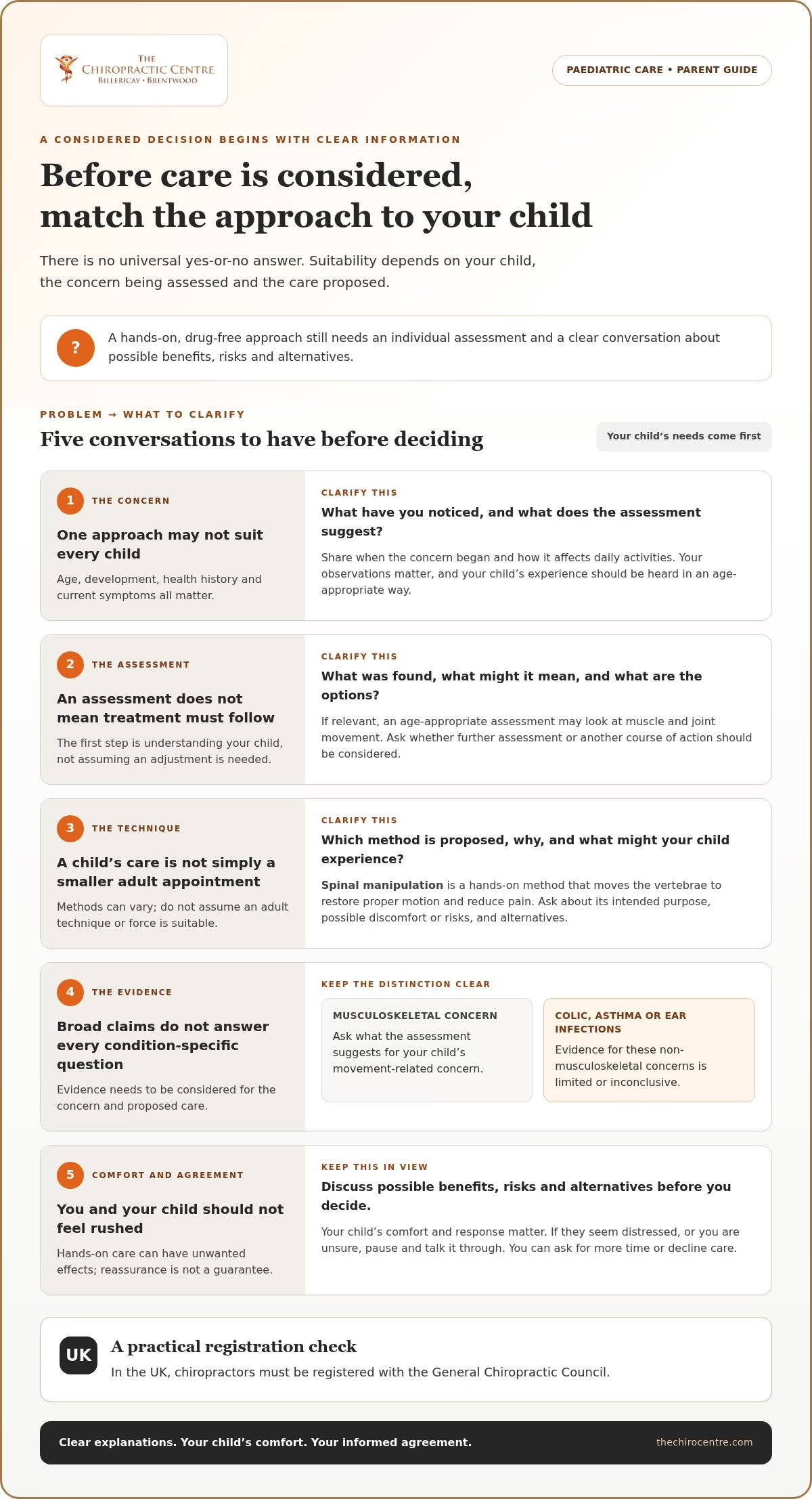
What parents can ask before deciding on chiropractic care
A clear conversation can help you understand what’s being suggested and decide whether it feels right for your child. Start by describing the concern in your own words: what you’ve noticed, when it began and how it affects your child. Share relevant health history and any changes in their symptoms. Then ask the practitioner to explain the assessment and options before you consider care.
Questions to ask about the assessment and proposed care
You don’t need specialist knowledge to take part in the discussion. These questions can help you get clear, useful answers:
- What did the assessment find, and how does it relate to my child’s concern?
- What care are you proposing, and what is its purpose?
- What benefits might be expected, and what are the possible risks or unwanted effects?
- Are there alternatives, including waiting or seeking another clinical opinion?
- How would you review my child’s progress or respond if symptoms changed?
Look for an explanation that links the proposed care to your child’s particular needs, rather than a general promise. If something is unclear, ask for it to be explained in plain English. You can also ask what would prompt the practitioner to change the approach or suggest another opinion.
How parents and children can make an informed decision
Your child’s age will affect how they take part, but their questions and comfort still matter. Give them a chance to express concerns in a way that feels natural for them. Notice whether they seem at ease with the discussion, and let the practitioner know if they’re anxious or reluctant. You can pause to consider what you’ve heard; you don’t have to agree to care during the conversation.
If you’d like a general explanation of what an adjustment may feel like, read the chiropractic adjustment experience guide. It offers general context, not a child-specific description, so discuss what’s relevant to your child directly.
If you’re still considering whether chiropractic care is suitable, explore the question “is chiropractic safe for children” through an individual assessment and open discussion. The new patient chiropractic consultation explains what to expect from a first visit. You can arrange a New Patient Consultation to discuss your child’s concern and understand the options before deciding.
Paediatric chiropractic care at The Chiropractic Centre in Essex
For families considering care, the first step can be a conversation rather than a commitment to treatment. The Chiropractic Centre provides paediatric care and New Patient Consultations, giving you an opportunity to talk through your child’s needs and understand possible next steps. The question “is chiropractic safe for children” deserves an individual discussion, not a blanket answer or a promise of a particular result.
A calm, individual conversation about your child’s needs
Your knowledge of your child matters. During a New Patient Consultation, you can share your concerns and relevant history, while the discussion takes account of your child as an individual. Ask what the proposed approach involves and why it is being considered. The aim is to help you understand the options before deciding whether to proceed.
Paediatric care shouldn’t assume every child needs an adjustment. A conversation may help clarify whether chiropractic care is appropriate to consider, or whether another next step would better suit the concern. You can raise questions about your child’s comfort and ask for explanations in language that you and your child can understand.
When a separate clinical opinion may be appropriate
Chiropractic care shouldn’t take the place of appropriate assessment for concerning symptoms. If your child has significant, unexplained or worsening health concerns, discuss them with an appropriate healthcare professional. Share those concerns during the consultation too, so the discussion can take account of the full picture.
Seeking another clinical opinion is a reasonable option if a concern needs further assessment or you remain uncertain about the right next step. A thoughtful care plan should respect that choice and leave space to weigh the information, consider alternatives and decide without pressure.
The Chiropractic Centre provides paediatric care for families in Brentwood, Billericay, Chelmsford, Stock, Basildon and Wickford. Whether you’re exploring options for a musculoskeletal concern or want to understand what a consultation involves, bring your questions and take time to consider the discussion. You don’t need to arrive with a decision already made.
To learn more about the approach, explore paediatric care at The Chiropractic Centre.
Make a considered choice for your child
There isn’t a single answer to “is chiropractic safe for children”. Suitability depends on your child’s circumstances, the reason for care and the approach being considered. Evidence also differs between musculoskeletal concerns and claims about other childhood conditions, so ask what’s known and where uncertainty remains.
Before deciding, make sure you understand the assessment, the purpose of any proposed care, possible risks and alternatives. Your child’s comfort matters, and you can take time to consider the information without pressure. If symptoms are concerning or unexplained, seek advice from an appropriate healthcare professional.
The Chiropractic Centre provides paediatric care and New Patient Consultations. For families across Brentwood, Billericay, Chelmsford, Stock, Basildon and Wickford, a consultation offers an opportunity to discuss your concerns and understand possible next steps. Explore paediatric care at The Chiropractic Centre and arrange a New Patient Consultation to discuss your child’s needs.
Frequently Asked Questions
Is chiropractic safe for children?
There isn’t one answer that applies to every child. If you’re asking, “is chiropractic safe for children”, suitability depends on your child’s age, health history, symptoms, assessment and the care being proposed. Ask about potential benefits, possible risks and alternatives before deciding. Evidence also varies by condition, so broad claims about children’s health shouldn’t replace an individual discussion or appropriate clinical advice.
Can a chiropractor treat a baby or young child?
A chiropractor may assess a baby or young child, but that doesn’t mean treatment will be suitable or recommended. The practitioner should consider the child’s development, health history and reason for the visit, and explain any proposed care to you in clear terms. Evidence differs between concerns, so be cautious of promises to address conditions such as colic. You can take time to consider the options before agreeing to care.
What happens during a child’s first chiropractic appointment?
A first appointment is an opportunity to explain what you’ve noticed and share your child’s health history. The practitioner can discuss your concerns, ask about symptoms and, if relevant, carry out an age-appropriate assessment. You should receive a clear explanation of any findings and possible next steps. An appointment doesn’t mean you have to agree to treatment. You can ask questions, pause or decide not to proceed.
Are chiropractic adjustments different for children?
An adjustment for a child shouldn’t be assumed to match an adult’s care. The approach considered should take account of the child’s age, development, symptoms and comfort. Ask what technique is proposed, why it may be appropriate and what your child might experience. There isn’t one method for every child, and hands-on care shouldn’t be described as risk-free or guaranteed to be painless.
Can chiropractic care help children with specific conditions?
Evidence needs to be considered for each condition, rather than making general claims about children’s health. Chiropractic care may be considered in relation to some musculoskeletal concerns, but evidence for non-musculoskeletal conditions such as colic, asthma or ear infections is limited or inconclusive. Ask what research relates to your child’s specific concern and how certain the expected benefit is. Be wary of promises to treat unrelated conditions.
What risks should parents know about before considering chiropractic care?
Hands-on care can have unwanted effects, and the possible risks depend on the child and the proposed approach. Ask what effects may occur, how they would be monitored and what to do if your child feels worse. If symptoms are new, severe, worsening or unexplained, seek advice promptly from an appropriate healthcare professional rather than assuming chiropractic care is the answer. You can pause or decline care if you’re uncomfortable.
How can I find paediatric chiropractic care near Brentwood or Billericay?
The Chiropractic Centre provides paediatric care and New Patient Consultations for families in Brentwood, Billericay, Chelmsford, Stock, Basildon and Wickford. A consultation gives you a chance to discuss your child’s history and concerns, understand the assessment and hear possible next steps before deciding. You don’t need to arrive certain that treatment is right for your child.