

If you’re asking, “how many chiropractic sessions do I need?”, you’re likely looking for a clear idea of what care could involve before you get started. There isn’t one session count for everyone. Your needs, assessment findings, goals and response to care all help shape a plan, which should be discussed with you rather than assumed in advance.
You deserve to understand what each appointment is intended to support and how you and your chiropractor will review your progress. A New Patient Consultation gives you time to discuss your concerns and have your needs assessed. Your chiropractor can then explain possible next steps, including chiropractic adjustments, and review them with you as your needs change.
This guide explains why session needs differ, what a personalised care plan and progress review can involve, and how to discuss your goals and choices. If you’re in Brentwood, Billericay, Chelmsford, Stock, Basildon or Wickford, these points can help you prepare for a conversation about care that supports your wellbeing, including whether massage therapy could form part of your care.
Key Takeaways
- There’s no single answer to “how many chiropractic sessions do I need?” Your plan should reflect your assessment, goals and response to care.
- Your concern, how long you’ve experienced it and the demands of daily life can all inform a discussion about care.
- More appointments don’t automatically mean better progress. Reviews help you and your chiropractor consider whether care still fits your goals.
- Make each session purposeful by sharing what has changed, raising concerns and agreeing on next steps together.
- A New Patient Consultation is a starting point to discuss your needs and suitable care, which may include chiropractic adjustments or massage therapy.
How many chiropractic sessions do you need? The honest answer
There isn’t one session count that applies to everyone. If you’re asking, “how many chiropractic sessions do I need?”, the answer depends on your assessment, what you want to work towards and how you respond as care progresses. Any adjustment plan should be discussed with you, not presented as a standard package or a promise of a particular result.
An individual chiropractic care plan is a proposed approach based on your assessment, personal goals and response to care, with progress reviewed along the way.
Your chiropractor can explain why appointments are suggested and what each is intended to support. A plan is a guide for shared decision-making, not a guarantee that you’ll need a set number of visits or achieve a specific outcome. Ask questions about the plan and discuss how it fits your priorities and daily routine.
Why a fixed number of chiropractic sessions can mislead
People come to care with different concerns, experiences and everyday demands. You might want to move more comfortably at work, return to an activity or understand recurring discomfort. Someone else may have different priorities, even if their symptoms sound similar.
How long you’ve had a concern is useful context, but it doesn’t predict a set result. Your response to care also matters, so another person’s experience can’t tell you how many sessions you’ll need. Your plan should reflect your circumstances rather than an average or someone else’s story.
Chiropractic care may involve an adjustment. The Chiropractic Centre also offers massage therapy as a distinct hands-on service. To learn more about what chiropractic care involves, you can read this neutral overview alongside a discussion of your own needs with your chiropractor.
What the first consultation can clarify
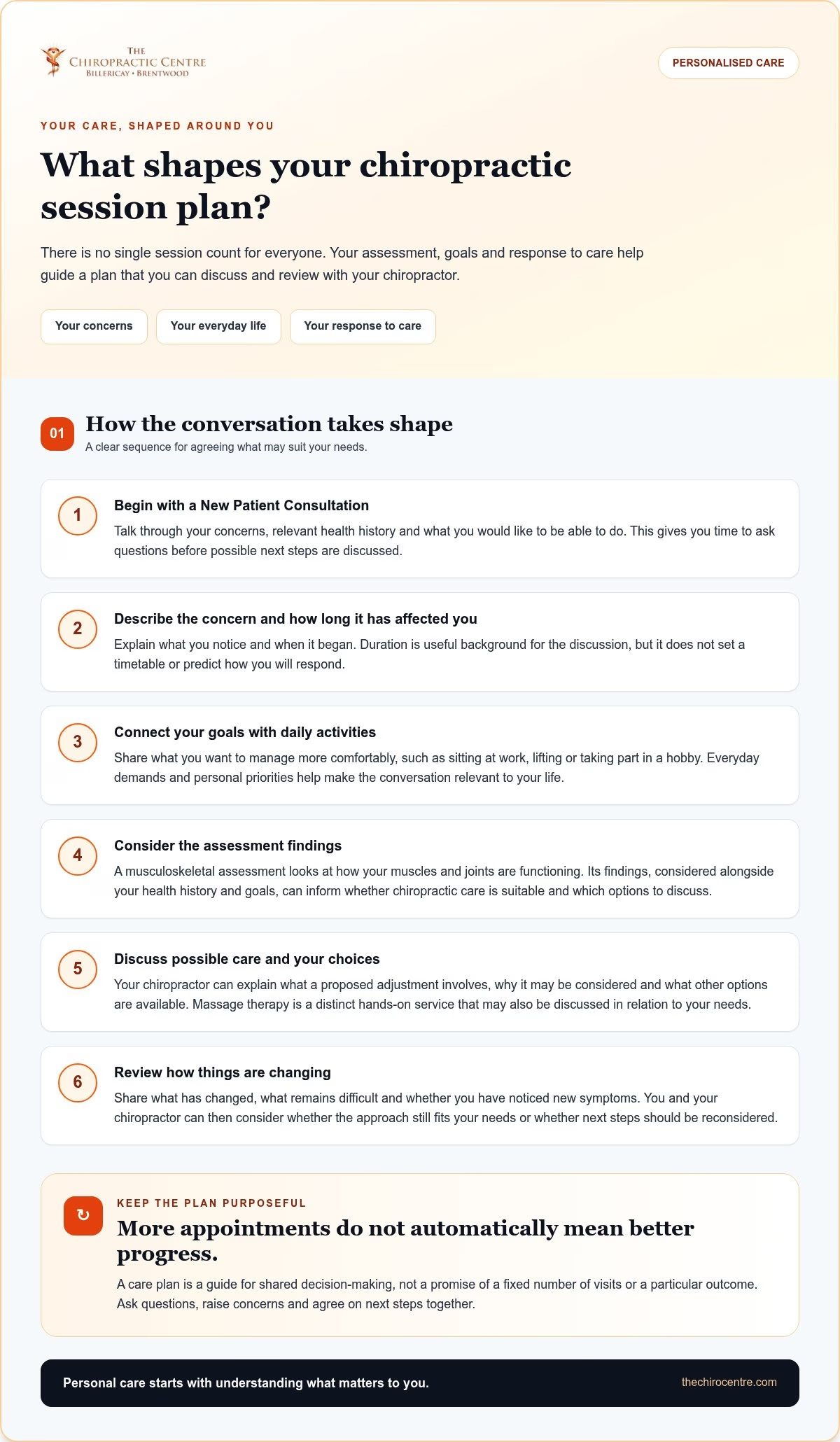
A New Patient Consultation gives you time to describe your concerns, relevant health history and what you’d like to be able to do. A musculoskeletal assessment looks at how your muscles and joints are working. Together, your history and assessment help inform whether chiropractic care is suitable and what next steps to discuss.
Your chiropractor can explain the findings in plain language and talk through possible options, their aims and how progress could be reviewed. This makes the consultation a practical starting point, rather than asking you to commit to a fixed number of visits before your needs have been assessed. If you’re considering a new patient chiropractor consultation in Essex, use the time to raise your questions and explain what matters most to you.
What influences how many chiropractic sessions you may need?
Your care plan should reflect more than the name of a symptom or condition. The nature of your concern, how long it has affected you, your everyday demands, personal goals, assessment findings and response to care can all inform the discussion. None of these factors on its own sets a fixed number of appointments.
Session planning can take account of your symptoms, how long you’ve experienced them, assessment findings, personal goals, daily activities and response to care.
How your symptoms and goals shape a plan
Start with what you want to change. You may be focused on easing discomfort, or you might want to move more freely during a particular task, such as sitting at work, lifting or taking part in a hobby. Being clear about what matters most helps your chiropractor discuss care in terms that relate to your life.
How long you’ve had a concern is useful background, not a timetable. A recent issue and a long-standing one may lead to different conversations, but duration alone can’t predict your response or determine how many sessions are suitable. A named condition doesn’t automatically mean a particular treatment schedule either. Your experience and aims matter.
Before an appointment, think about when the concern affects you most and which activities you’d like to manage more comfortably. For example, note whether discomfort arises during a particular work task or hobby. These details give you and your chiropractor a clearer basis for agreeing what progress might mean for you.
How assessment and response guide next steps
A musculoskeletal assessment looks at how your muscles and joints are functioning and helps your chiropractor understand your presentation. Its findings, considered alongside your health history and goals, can inform whether chiropractic care is suitable and which options to discuss. They don’t predetermine a result.
As care continues, share what has changed, what remains difficult and whether you’ve noticed new symptoms. At a review, this feedback helps guide a discussion about whether the approach still fits your needs or whether next steps should be reconsidered. You’re part of that conversation, not simply following a schedule.
Adjustment safety matters. If an adjustment is proposed, ask what it involves, why it may be considered and what other options are available. The research on chiropractic care includes information about approaches and safety. Your chiropractor can discuss how these considerations relate to your circumstances and explain the adjustment techniques being proposed.
If you’re in Brentwood, Billericay, Chelmsford, Stock, Basildon or Wickford, a new patient consultation offers a starting point to discuss your concerns and goals with a chiropractor.
Is more chiropractic treatment always better? Understanding reviews and progress
A longer care plan isn’t automatically more effective. Appointments should have a clear purpose linked to your goals, and reviews should help you decide whether that purpose still fits. A plan sets out an approach to consider; reviewing it means discussing your experience and progress and deciding together whether it remains appropriate.
Planned care gives you a direction; reviewed care checks that the direction still makes sense for you.
It’s reasonable to ask what each appointment is intended to support and how you’ll assess whether care remains useful. If the purpose or length of a plan feels unclear, raise it with your chiropractor. Open questions help you make an informed choice.
What signs of progress can you discuss?
Progress is personal and may not follow a straight line. Rather than treating one moment or symptom as proof that treatment has worked, notice changes that relate to your priorities. You might reflect on:
- Whether your comfort has changed, and in what situations.
- How easily you manage movements or tasks that matter to you.
- Whether daily activities, such as work or hobbies, feel different.
- Any concerns or changes you’ve noticed since your last appointment.
These observations can make a review more specific. Improvement in one area may sit alongside difficulty in another, and symptoms can vary. Share both encouraging changes and anything that worries you. Your experience informs the conversation, but a particular change alone doesn’t establish that care caused it.
When should a care plan be discussed again?
Bring the plan back into the conversation if your goals change, your experience differs from what you expected or you’re unsure why appointments are continuing. The question “how many chiropractic sessions do I need?” can be revisited as you and your chiropractor consider what has changed and what you want to focus on now.
Depending on that discussion, you may consider continuing with the current approach, adapting it or concluding care. Your chiropractor should explain the options in clear language, including the purpose of any proposed next steps. Shared decision-making means your views and preferences are part of the choice. Ask questions, take time to understand the discussion and speak up if a plan doesn’t feel right for you. Appointments should be purposeful, not repeated simply because a longer plan has been suggested.
How to make each chiropractic session purposeful
A useful appointment is a two-way conversation. Help keep it focused by sharing what matters to you, including changes in comfort or movement and any concerns since your previous visit. Mention daily activities that affect how you feel, such as sitting at work, household tasks or exercise. This helps your chiropractor understand your experience, though it can’t guarantee faster recovery.
Try this simple routine:
- Clarify your goal. Say what you’d like to focus on today, even if it’s a small change or a question.
- Share what’s changed. Include improvements as well as ongoing difficulties or new concerns.
- Ask questions. Check the purpose of the adjustment or other care being discussed, and raise anything you’re unsure about.
- Agree next steps. Make sure you understand what happens next and how it relates to your goals.
Questions to ask your chiropractor about session numbers
You don’t need to have the perfect words prepared. A few direct questions can make the plan clearer:
- What is this appointment intended to address?
- When will we review my progress, and how will we assess it?
- What choices do I have if my goals or experience change?
- What should I expect from the proposed approach, and what concerns should I raise?
These questions help you understand the reasoning behind care and make decisions with your chiropractor. If an adjustment is proposed, you can also ask what it involves and discuss any concerns before proceeding.
Keeping track between appointments
Brief notes can help you recall details at your next review. You might jot down how your comfort feels during a usual activity, whether a movement is easier or more difficult, and any changes since your appointment. Keep it simple. You’re not trying to diagnose yourself or prove that treatment has worked; you’re recording useful observations to discuss.
If you’re unsure what to expect, reading about what a chiropractic adjustment feels like may help you prepare questions for your chiropractor. Share your notes and ask how they relate to your goals. That keeps the discussion focused on your experience and whether the next step still feels appropriate.
If you’re ready to talk through your concerns and priorities, book a New Patient Consultation with The Chiropractic Centre.
Planning chiropractic care with The Chiropractic Centre in Essex
It’s natural to want a clearer idea of what care may involve before you begin. A New Patient Consultation at The Chiropractic Centre gives you time to discuss what’s concerning you, what you’d like to work towards and what you want to understand about chiropractic care. Chiropractic adjustments are hands-on, drug-free care. Your chiropractor can discuss whether they’re suitable as part of an approach shaped around your individual needs and wellbeing, without promising a particular session count or result.
If you’re wondering how care might fit into your life, the consultation can turn that uncertainty into a practical conversation. Your chiropractor can explain relevant assessment findings and discuss possible next steps. Any suggested plan should have a clear purpose and be reviewed in light of your experience.
What to expect from a personal care conversation
You can share your concerns, priorities and questions openly, including how they affect everyday life and what you hope to change. An adjustment may be discussed in relation to your assessment and whether it’s suitable for you. Ask what it involves and talk through any concerns before deciding on next steps.
A new patient chiropractor consultation in Essex is a starting point for that individual discussion. It’s an opportunity to understand the proposed approach and how it may support your wellbeing, rather than being asked to follow a standard session schedule.
Choosing a next step that feels right for you
It’s reasonable to ask what each appointment is for, when your care will be reviewed and what alternatives may be appropriate. The Chiropractic Centre offers massage therapy as well as chiropractic adjustments. Your chiropractor can discuss whether massage therapy is relevant to your concerns and how it differs from an adjustment. Your priorities and preferences belong in the conversation.
The Chiropractic Centre welcomes people from Brentwood, Billericay, Chelmsford, Stock, Basildon and Wickford who want to explore chiropractic care. Arrange a New Patient Consultation to talk through your concerns and discuss an individual plan at a pace that feels comfortable. Bring your questions and start with what matters most to you.
Take your next step with a plan shaped around you
There’s no fixed answer to “how many chiropractic sessions do I need?” Your care should be discussed in light of your assessment, what you want to achieve and how things change over time. Appointments should have a clear purpose, with opportunities to share your experience, ask questions and review what feels right for you.
The Chiropractic Centre has supported the local community for over 10 years and places importance on adjustment safety. A free spinal health check is also available. If you’d like to talk through your concerns and possible next steps, a New Patient Consultation offers a personal starting point, without a promised session count or outcome.
Arrange a New Patient Consultation with The Chiropractic Centre and start a conversation about care that reflects your needs. You’re entitled to understand your options and take each step at a pace that feels comfortable.
Frequently Asked Questions
How many chiropractic sessions do I need?
There’s no set number that suits everyone. How many chiropractic sessions do I need depends on your assessment findings, what you want to achieve and how your experience changes with care. Your chiropractor can discuss a proposed plan and review it with you, rather than promise a particular number of appointments. Share your priorities and ask what each suggested session is intended to support.
How often do you usually have chiropractic sessions?
There isn’t one appointment frequency that’s right for every person. Your chiropractor can discuss a suitable schedule in light of your assessment, concerns and goals, then review whether it remains appropriate. Ask why appointments are suggested at that pace and when you’ll talk about progress. The plan should be clear to you and open to discussion as your needs or experience change.
Can one chiropractic session be enough?
One session may be enough for you to discuss your concerns, receive an assessment or try an agreed approach, but it can’t be assumed to resolve every issue. People respond differently, and a particular result can’t be guaranteed. Your chiropractor can explain what one appointment may address and whether a review or further care would be worth discussing in light of your goals.
What happens if I do not notice progress after several sessions?
Tell your chiropractor if you aren’t noticing the changes you hoped for, or if your symptoms have changed or become a concern. A review can revisit your goals, your experience and the reasons for the current plan. Ask whether to adapt the approach, consider other suitable options or conclude care. You shouldn’t have to keep attending without understanding the purpose of appointments.
Do I need ongoing chiropractic sessions after my symptoms improve?
Not necessarily. Whether to continue after symptoms improve depends on your circumstances, preferences and goals, and should be discussed with your chiropractor. Review what has changed and ask what any further appointments are intended to support. Ongoing care shouldn’t be automatic: talk through the options and decide together whether another session feels appropriate for you.
Does the number of chiropractic sessions differ for back pain and neck pain?
Back pain and neck pain don’t each come with a standard session count. The nature and duration of your concern, assessment findings, daily activities and personal goals all help shape a care discussion. The name or location of a symptom alone can’t predict how many appointments you may need. Your chiropractor can explain how your individual presentation informs any proposed plan and its review.
How will my chiropractor decide whether to continue treatment?
Your chiropractor can consider your assessment, the goals you agreed and what you report about comfort, movement and everyday activities. At a review, ask what progress has been observed and what the proposed next step is intended to achieve. You can discuss continuing, changing the approach or ending care. The Chiropractic Centre serves people in Brentwood, Billericay, Chelmsford, Stock, Basildon and Wickford.