
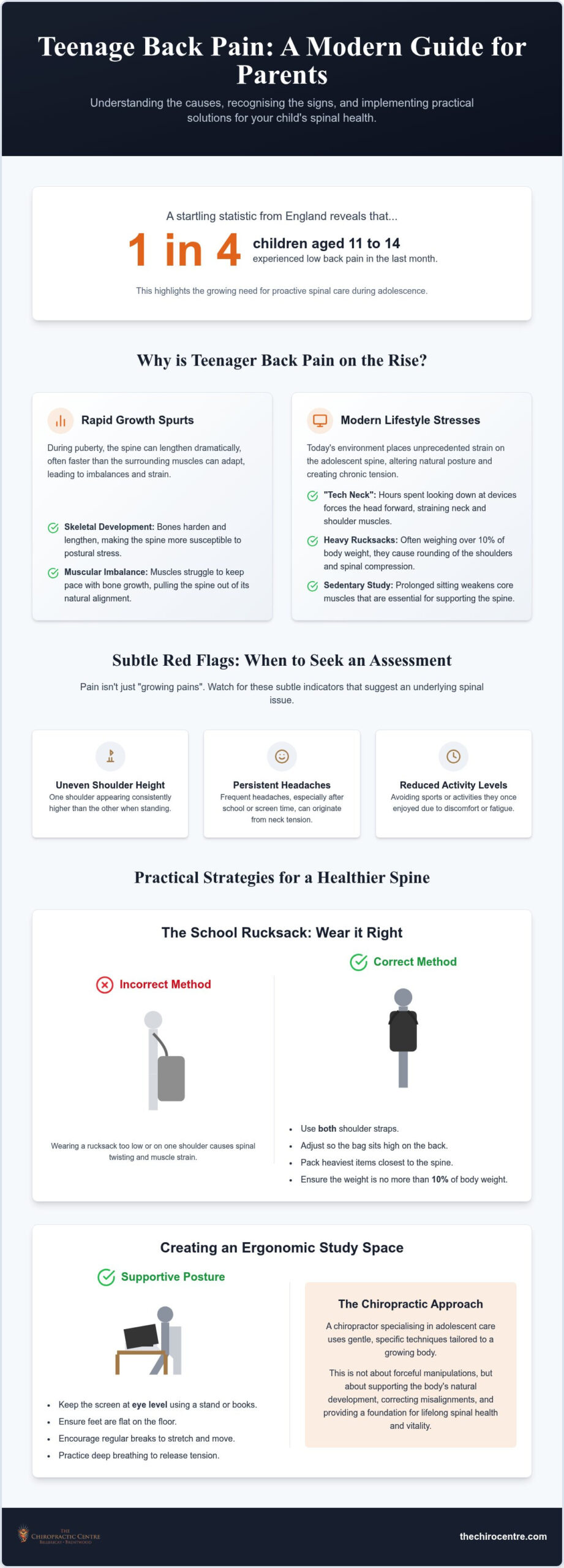
Did you know that one in four children in England aged 11 to 14 has experienced low back pain in the last month? As a parent, it is naturally worrying to see your child hunching over a screen for hours or struggling under the weight of a heavy school rucksack. You likely suspect that “growing pains” don’t tell the whole story, yet you may feel hesitant about whether chiropractic care is gentle enough for a developing body. We understand these concerns; we believe that proactive spinal health is a cornerstone of long-term vitality and wellness.
This guide explains how a specialised teenager back pain chiropractor Essex families trust can identify the root causes of discomfort whilst supporting your child’s rapid development. We promise to provide expert insights into managing “tech neck” and backpack strain with techniques tailored specifically for adolescent frames. We will also share practical posture habits for the classroom and introduce our gentle, local approach to professional spinal assessments in Billericay and Brentwood, ensuring your teenager moves through their school years with confidence and ease.
Key Takeaways
- Understand how rapid growth spurts and “tech neck” create unique physical pressures on adolescent spines during their transition to adulthood.
- Identify subtle red flags like uneven shoulder height or persistent headaches that suggest your teen may benefit from a professional assessment.
- Learn practical strategies for school life, including the best way to wear a rucksack and how to organise heavy books to minimise spinal load.
- Discover why a teenager back pain chiropractor Essex provides a gentle, reassuring environment that differs significantly from adult-focused care.
- See how a Free Spinal Health Check in Billericay or Brentwood can offer clarity and a proactive path forward for your family’s wellness.
Why Teenager Back Pain is Rising Across Essex
Adolescence represents a pivotal transition in spinal development. It is the bridge between the flexible, resilient frame of a young child and the more rigid, load-bearing structure of an adult. During these years, the biomechanics of the spine change rapidly as the body prepares for its final form. Whilst younger children are often protected by a higher percentage of cartilage, teenagers are in the midst of ossification, where their skeletal system is hardening and becoming more permanent. This makes them significantly more susceptible to postural issues than their younger siblings. Seeking a teenager back pain chiropractor Essex parents can rely on is often the first step in addressing these shifts before they become lifelong habits.
The Physiology of the Growing Spine
During puberty, growth plates are highly active, and the spine can lengthen by several inches in a matter of months. This rapid height increase often leaves the muscular system struggling to keep pace, creating imbalances that pull the spine out of alignment. The nervous system also faces the challenge of recalibrating movement patterns to suit a changing centre of gravity. It is during this window of rapid change that conditions such as Adolescent idiopathic scoliosis are most likely to appear or progress. Understanding these internal shifts is essential for effective care, as it allows for adjustments that support growth rather than just treating temporary symptoms.
Modern Environmental Stresses
The lifestyle of a secondary school student in Essex has changed dramatically. Students in areas like Billericay and Chelmsford often carry rucksacks weighing upwards of 10% of their body weight, which forces the head forward and rounds the shoulders. This is compounded by several modern factors that reduce spinal resilience:
- The repetitive strain of “Tech Neck” caused by looking down at mobile devices for hours.
- Prolonged sedentary study habits that weaken the deep core stabilising muscles.
- The hidden impact of exam stress, which manifests as physical tension in the neck and shoulders.
These environmental stresses don’t just cause temporary aches; they can alter the natural cervical curve and place unnecessary pressure on the nervous system. When combined with the “sedentary shift” seen in secondary schools, these factors can lead to a significant decline in postural health. Early intervention at a local clinic helps to correct these patterns, ensuring your child moves into adulthood with a foundation of vitality rather than chronic pain. It’s about looking beyond the immediate discomfort to protect their long-term wellness.
For teenagers whose physical symptoms are exacerbated by neurodevelopmental conditions like ADHD, a multidisciplinary approach is often best; clinicians in these fields frequently refine their practice through psychologist clinical supervision Australia to provide the highest standard of evidence-based support.
The Impact of Rapid Growth Spurts and Modern Lifestyle
Rapid growth is a complex physiological event. It isn’t just about buying new school trousers every six months; it involves a significant “stretching” of the nervous system as bones often lengthen faster than the nerves and muscles can adapt. This can lead to temporary coordination issues or a sense of clumsiness as the brain recalibrates to a changing body. Many parents are told that discomfort is simply “growing pains,” a normal rite of passage that their children will eventually outgrow. We believe this dismissal can overlook underlying biomechanical stress that may persist into adulthood. As the American Academy of Pediatrics on teen back pain highlights, persistent aches are often linked to specific lifestyle factors and overuse rather than the natural growth process itself.
The Exam Season Tension
Revision sessions are a physical marathon for the adolescent spine. Stress creates a physiological feedback loop where academic anxiety manifests as physical tension in the trapezius and levator scapulae muscles. This “sympathetic overdrive” keeps the body in a state of high alert, leading to rigid posture and shallow breathing patterns. To break this cycle, we recommend simple ergonomic adjustments at home. Using a laptop stand to keep the screen at eye level and ensuring feet stay flat on the floor can significantly reduce the load on the lower back. Encouraging your teen to practice deep diaphragmatic breathing during study breaks can also help down-regulate the nervous system and release stored physical tension.
Beyond these daily habits, a complete reset during the holidays can be incredibly beneficial for a student’s physical and mental health; a family getaway to the coast with Happy Place Caravans offers the perfect opportunity for teenagers to decompress and stay active in a fun setting.
Adolescent Biomechanics in Sports
Essex has a vibrant youth sports culture, but these activities place unique demands on a developing frame. From the high-impact collisions of rugby in Brentwood to the demanding flexibility and repetitive ranges of motion required for dance in Billericay, teen bodies are often pushed to their limits. These activities can create asymmetrical muscle development or minor spinal misalignments that hinder peak performance. A teenager back pain chiropractor Essex specialist focuses on these specific biomechanical needs, ensuring the spine is a source of strength rather than a limitation. Supporting these active lifestyles with Massage Therapy can also aid recovery and prevent future injury. If you’ve noticed your teen struggling with their form or complaining of stiffness after training, a Free Spinal Health Check can provide the clarity and reassurance you need.
Identifying Red Flags: When to Seek a Chiropractor for Your Teen
Many parents wonder if their child’s complaints are just a byproduct of a busy school week or a particularly heavy rucksack. Whilst occasional stiffness is common, certain physical markers suggest a deeper issue that requires more than just rest. Consulting a teenager back pain chiropractor Essex families trust can help you differentiate between temporary fatigue and a developing spinal concern. One of the most obvious signs is a visual imbalance; look for uneven shoulder height or a noticeable “leaning” to one side when your teen is standing naturally. These subtle shifts often indicate that the spine is struggling to maintain its optimal alignment under the stress of daily life.
Physical symptoms often extend beyond the back itself. Persistent headaches following a day of classes or neck stiffness that doesn’t resolve with a good night’s sleep are significant indicators of spinal stress. If your teenager mentions “pins and needles” or numbness in their arms or legs, it may indicate nerve irritation. These are common causes of upper and lower back pain in teens that require professional attention to ensure the nervous system is functioning correctly. Another practical sign is found in their wardrobe. Check the soles of their school shoes; uneven wear, particularly if one heel is significantly more worn than the other, often points towards pelvic misalignment or a leg length discrepancy.
The Adams Forward Bend Test
This is a simple screening tool you can use at home to check for spinal symmetry. Ask your teenager to stand with their feet together and bend forward at the waist, reaching for their toes with their palms together. Look across their back from behind. Are both sides of the rib cage level, or is there a prominent “hump” on one side? Whilst muscle asymmetry can cause minor differences, a distinct curve or rib hump often signals a structural shift. It is a useful first step, but it doesn’t replace a clinical examination by a professional who understands adolescent growth patterns.
Functional vs. Structural Issues
It’s important to distinguish between “lazy posture” and genuine spinal restriction. Functional issues are often habit-based and can be corrected with movement and lifestyle changes. However, if these functional imbalances are left unaddressed, they can eventually lead to structural changes where the spine begins to adapt permanently to a poor position. Our approach to Scoliosis Management Essex focuses on identifying these transitions early. We look beyond the surface to see if the spine is moving as it should, ensuring your teen’s posture is supported by a healthy, mobile structure rather than a rigid, restricted one.
Practical Strategies for Supporting Your Teenager’s Spinal Health
Supporting a teenager’s spinal health requires a blend of professional guidance and daily habit changes. Whilst a teenager back pain chiropractor Essex can provide the necessary clinical adjustments, the “homework” done at home often determines the speed of progress. Small, consistent adjustments to daily routines can significantly reduce the cumulative strain on a developing spine. It is about creating an environment where their body can grow without unnecessary restriction or physical stress.
The 10% Rule for School Bags
A common contributor to adolescent back pain is the sheer weight of school materials. A bag should never exceed 10% of a teenager’s body weight. For a student weighing 50kg, that means a limit of just 5kg. To manage this load effectively, encourage your teen to use a rucksack with two wide, padded straps. Wearing a bag over just one shoulder creates a significant lateral pull on the spine, leading to muscle imbalances. When packing, place the heaviest items, such as textbooks and laptops, closest to the spine. Adjust the straps so the bag sits high on the back; if the bag sags below the waist, it pulls the shoulders back and arches the lower spine excessively. Encourage a weekly “clear out” of school lockers and bags to remove unnecessary clutter that adds silent weight.
Active breaks are equally vital. During long revision sessions or digital entertainment, the body often settles into a “static load.” Encourage your teen to stand up and stretch every 30 minutes. Even a two-minute walk around the room can reset the nervous system and prevent the deep core muscles from switching off. By consulting a teenager back pain chiropractor Essex families can learn specific stretches that target the muscles most affected by prolonged sitting, helping to maintain the core stability needed to support their growing frame.
Sleep Hygiene and Spinal Alignment
During the final growth phases, the body undergoes intense repair during sleep. A supportive, medium-firm mattress is essential to provide a stable base for the spine. Sleeping positions also play a major role in comfort. Stomach sleeping is generally discouraged because it forces the neck into a sustained rotation, which often exacerbates neck and shoulder tension. Instead, encourage side sleeping with a pillow between the knees or back sleeping with a pillow tucked under the knees. Both positions help maintain the spine’s neutral curves. Finally, ensure their pillow supports the natural cervical curve without being too high or too flat. If you are unsure whether your teen’s daily habits are contributing to their discomfort, a Free Spinal Health Check is a great way to get professional feedback on their posture and ergonomics.
Gentle Chiropractic Care for Adolescents at The Chiropractic Centre
It is entirely natural for parents to feel a sense of hesitation when considering chiropractic care for their child. You might worry that the techniques used for adults are too forceful for a developing frame. At our clinic, we bridge the gap between paediatric care and adult therapy with a “Gentle Touch” philosophy. As a teenager back pain chiropractor Essex families have trusted for over a decade, we ensure every adjustment is age-appropriate, low-force, and specifically calibrated to the adolescent spine. Our goal is to work with the body’s natural growth processes rather than against them, fostering a sense of internal vitality and long-term wellness. If you have younger children at home and are curious about the safety standards that underpin this approach from infancy onwards, our parent’s guide to paediatric chiropractic care in Essex explains the ultra-gentle techniques used across all childhood stages.
When you visit us for a New Patient Consultation, we take the time to listen to both you and your teenager. We look beyond the immediate symptoms discussed in previous sections, such as “tech neck” or rucksack strain, to understand your child’s unique lifestyle and physical history. This comprehensive assessment allows us to create a holistic care plan that often combines Chiropractic Adjustments with Massage Therapy and tailored lifestyle advice. By addressing the person as a whole, we help teenagers move from a state of restriction to one of fluid, comfortable movement.
Expertise You Can Trust in Essex
With over 10 years of clinical experience in Essex, we have established deep roots in the Billericay and Brentwood communities. Our practitioners are experts in adolescent spinal health, possessing the specialised knowledge required to manage complex growth phases and conditions like scoliosis. We believe the environment is just as important as the treatment itself. Our clinics are designed to be welcoming and non-clinical, helping to put teenagers at ease from the moment they walk through the door. This personable approach ensures that your teen feels like a partner in their own health journey, rather than just a patient in a waiting room.
Your Path to Wellness
The first step toward relief doesn’t have to be a leap of faith. We offer a Free Spinal Health Check in Billericay to help identify potential issues during these critical growth years. This short, low-pressure assessment is the ideal way for worried parents to get professional clarity without an immediate commitment. If we identify areas that require attention, we will guide you through the transition to a full New Patient Chiropractor Consultation Essex families recommend. From there, we develop a personalised care plan designed to support your teenager’s specific needs, whether they are navigating exam season or competing on the sports field. You can book your Free Spinal Health Check today by contacting our local team, taking a proactive step toward your child’s lifelong spinal health.
Supporting Your Child’s Journey to Adulthood
Navigating the physical demands of the teenage years requires a proactive approach. We have explored how modern environmental stresses, from digital devices to academic pressure, can impact a developing spine during these critical growth phases. By identifying red flags early and implementing practical lifestyle changes like the “10% rule” for school bags, you can significantly reduce the risk of long-term discomfort. Choosing a teenager back pain chiropractor Essex families trust ensures that your child receives care tailored to their unique biomechanical needs rather than a one-size-fits-all solution.
At The Chiropractic Centre, we bring over 10 years of experience to our specialised paediatric and adolescent care pathways. Our gentle, non-invasive techniques are designed to support growing spines with the precision and kindness they require. We invite you to Book a Free Spinal Health Check for Your Teenager in Billericay to gain professional clarity on your child’s spinal health. It’s a simple, low-pressure step toward ensuring they move through their school years with vitality and ease. Your teen’s health is a partnership, and we are here to help them thrive as they grow.
Frequently Asked Questions
Is chiropractic care safe for teenagers whose bones are still growing?
Chiropractic care is entirely safe for teenagers whose bones are still growing. Our practitioners use gentle, age-appropriate techniques that are specifically calibrated for developing skeletal systems. We focus on low-force adjustments that support the natural ossification process rather than overwhelming it. By ensuring the spine remains in optimal alignment during rapid growth spurts, we help prevent the development of compensatory patterns that could lead to chronic issues in adulthood. For a detailed overview of how these safety standards apply across all childhood ages, you may find our guide to safe paediatric chiropractic care in Essex a reassuring read.
At what age should a teenager first see a chiropractor?
There isn’t a single “correct” age to start, but the onset of puberty is often a critical time for a first assessment. As the body transitions through significant biomechanical changes, a teenager back pain chiropractor Essex can identify early signs of scoliosis or postural fatigue. Many families find that a baseline check-up around age 11 or 12 provides peace of mind as secondary school life and heavier rucksacks become a daily reality.
Can a chiropractor help with my teenager’s “tech neck”?
We frequently help teenagers manage the physical effects of “tech neck.” This condition is caused by the repetitive strain of looking down at mobile devices, which can flatten the natural curve of the neck. Our approach combines gentle adjustments to restore mobility with practical ergonomic advice for study sessions. We also provide targeted exercises to strengthen the deep neck flexors, helping your teen maintain a healthier, more upright posture during digital entertainment.
How many sessions will my teenager need to see an improvement in their posture?
Every teenager’s journey is unique, so the number of sessions required depends on the duration and severity of their symptoms. Most parents notice positive changes in their child’s comfort and posture within the first few weeks of care. Following an initial assessment, we provide a personalised care plan that outlines the expected frequency of visits. Our goal is always to achieve long-term stability with the minimum number of sessions necessary.
Does my teenager need an X-ray before starting chiropractic treatment?
Most teenagers don’t require an X-ray before starting treatment. Our clinicians perform a thorough physical examination and orthopaedic testing to understand the root cause of the discomfort. We only recommend diagnostic imaging if the initial assessment reveals specific red flags or if we need to rule out underlying structural issues. If an X-ray or MRI is necessary, we can provide the appropriate referral to ensure your child receives the most accurate diagnosis.
Can chiropractic care help with teenager headaches and migraines?
Chiropractic care is highly effective for managing teenager headaches and migraines, which are often triggered by tension in the upper neck and shoulders. When spinal joints in the cervical region are restricted, they can irritate surrounding nerves and lead to recurrent pain. By restoring proper movement to these areas and reducing muscular tightness, we can often significantly decrease the frequency and intensity of these episodes without the need for over-the-counter medication.
What is the difference between growing pains and a spinal issue?
“Growing pains” are typically described as a dull, aching sensation in the legs that often occurs at night. In contrast, spinal issues usually manifest as localised discomfort, stiffness, or visible postural changes like uneven shoulders. If your teenager’s pain is persistent, occurs during activity, or is accompanied by restricted movement, it’s likely more than just a normal growth phase. A professional assessment can help distinguish between these two distinct types of discomfort.
Do I need a GP referral to book a paediatric chiropractor in Essex?
You don’t need a GP referral to book an appointment with a paediatric or adolescent specialist at our clinic. Chiropractors are primary healthcare practitioners, which means you can contact us directly to arrange a consultation or a Free Spinal Health Check. We are always happy to communicate with your GP or other healthcare providers if you wish, ensuring a coordinated and holistic approach to your teenager’s long-term wellness and recovery.