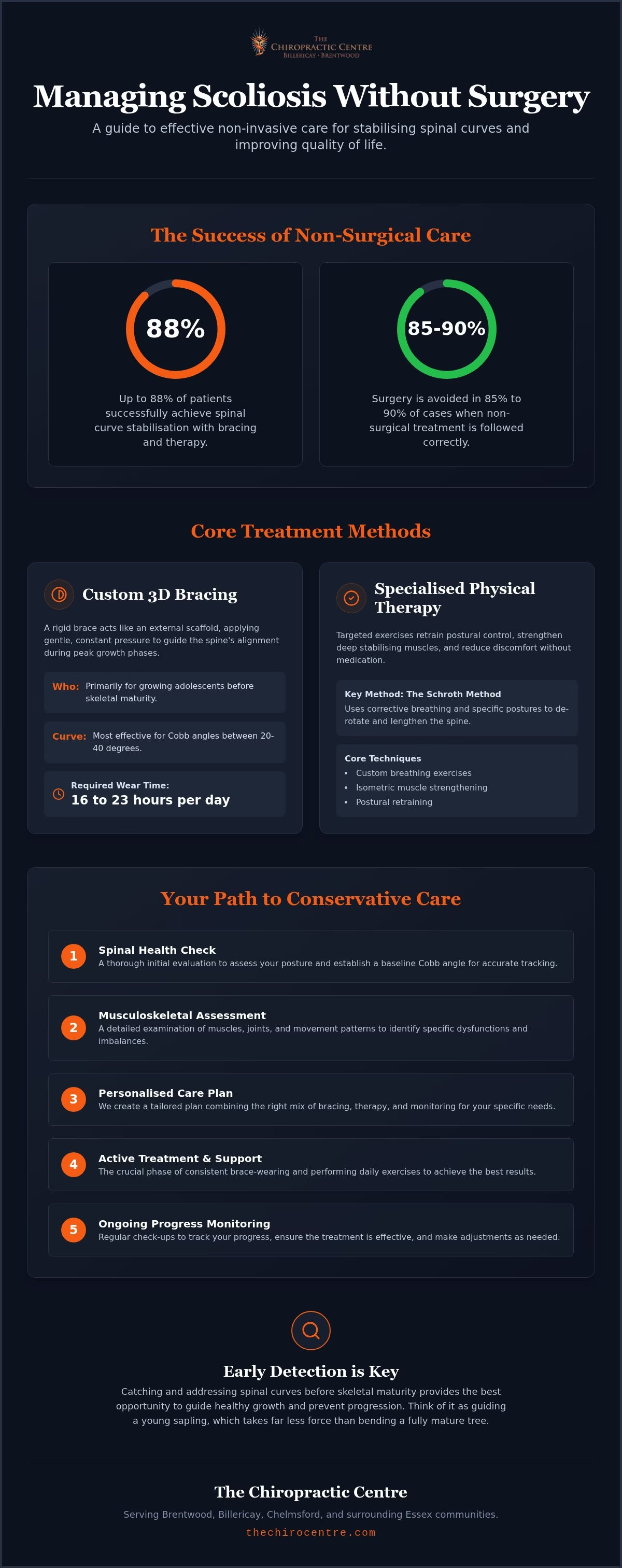
TL;DR: Scoliosis can be managed without surgery through custom bracing and specialized physical therapy, which successfully stabilize spinal curves in up to 88% of patients.
- Clinical studies show non-surgical care prevents surgery for 85% to 90% of patients.
- Bracing is only effective for growing adolescents with Cobb angles between 20–40 degrees.
- Adolescents must wear custom 3D braces for 16 to 23 hours every day.
- The Schroth method uses custom breathing and isometric exercises to de-rotate the spine.
Non-surgical scoliosis treatments can effectively stabilize spinal curves and reduce back pain through conservative methods like custom bracing and specialized physical therapy. Early intervention gives a strong chance to prevent curve progression and avoid major surgical procedures. People across Billericay, Brentwood and surrounding Essex areas often use these non-invasive options to manage their posture safely. The core decision is whether your curve, age and symptoms still fit conservative care, and which mix of bracing, therapy and monitoring will hold the curve steady.
Early detection fits growing spines for non-surgical success
Non-surgical scoliosis care works well for growing children, adolescents, and adults with mild to moderate spinal curves. Typical situations we see: a growing adolescent with a mild curve needs active monitoring plus exercise before any brace is required; a teen in a growth spurt with a moderate curve often needs custom bracing paired with targeted therapy to hold the Cobb angle; an adult with postural pain and a stable curve usually gains mobility from adjustments and strengthening rather than from a brace. With clients we see that early detection leads to much better long-term spinal stability. Catching curves before skeletal maturity allows gentle therapies to guide healthy growth.
Adolescents undergoing growth spurts respond well to targeted exercises and custom bracing. Adults seeking relief from a misaligned spine (vertebral subluxations) can improve mobility without invasive operations. For many people, a whole-body treatment (holistic approach) reduces pain effectively.
Think of your spine like a young sapling: guiding its growth early takes far less force than bending a fully mature tree later.
Mild cases require active monitoring. Moderate curves benefit immediately from targeted care. Our team at The Chiropractic Centre provides tailored support for families across Billericay and Brentwood. Explore our Scoliosis Treatment & Spinal Alignment services to discover your options.
Tip: Consult a spine specialist early to establish a baseline Cobb angle for effective non-surgical tracking.
Non-surgical care can stabilize curves and ease pain
Scoliosis can often be managed without surgery through non-invasive treatments that stabilize curve progression and relieve severe discomfort.
Many non-surgical options focus on managing symptoms while halting further curve development. As noted in Wikipedia’s 2026 overview of scoliosis management, non-surgical care aims to prevent spinal curves from worsening over time. Physical therapies help manage bad posture (postural decline) and restore functional mobility. You can explore our Scoliosis Treatment Archives to see how custom care plans support spinal health. Gentle spinal care reduces spinal pressure (spinal compression) to ease daily strain.
By addressing both the structural “nerve-trap” in the spine and the compensatory muscle guarding in the glutes, you create a stable environment for long-term healing. Non-surgical care keeps your body balanced without drastic changes, much as you would tune a delicate instrument. Request a consultation to map a plan that fits your curve.
Custom bracing slows progression during growth
Modern spinal braces slow down curve progression in growing adolescents with a Cobb angle between 20 and 40 degrees.
Rigid 3D custom braces act like external scaffolding. They apply gentle, constant pressure to realign the spine during peak growth phases. For strong effectiveness, young patients must wear their brace for 16 to 23 hours every day.
Brace wear-time directly determines whether a curve stabilizes or worsens. Skipping just a few hours daily reduces the correction force significantly. If bad posture appears alongside a visible spinal drift, seeking prompt care prevents severe stiffness. You can read about Scoliosis Treatment in Brentwood: Proactive Management for spinal health to see how early conservative support protects long-term mobility.
Bracing fits growing teens well, while adults with stable curves often benefit more from targeted physical therapies. Acting while growth is still underway gives your child a clear path toward a straighter, healthier spine.
Physical therapy retrains posture and reduces discomfort
Physical therapy slows curve progression, improves posture, and reduces discomfort through targeted strengthening exercises. Specialized methods retrain how your brain controls posture while realigning your spine.
In clinical practice, targeting deep stabilization muscles helps stabilize abnormal spinal rotations. Exercises like the Schroth method teach you to de-rotate and lengthen your trunk using custom breathing techniques. This approach offers a drug-free path to lower your pain levels. According to a 2023 WHO report on living with scoliosis, early conservative care plays a strong role in maintaining long-term physical function.
Targeted therapy supports your torso the way a fitted scaffold would. Strengthening weak areas stops stiff muscles protecting the spine (muscle guarding) from creating further imbalances. For broader care options, read our guide on Back Pain Relief Without Surgery: A Clinical Guide. Targeted physical therapy suits active patients who want lasting spinal stability.
Tip: Stay consistent with daily isometric exercises to strengthen the core muscles around the curvature.
Studies show high rates of curve stabilization without surgery
Non-surgical care halts scoliosis progression for up to 88% of patients, according to long-term clinical observational studies.
From client work, we see that spinal pressure responds well when you combine structural care with targeted physical therapies. A bad posture often signals underlying stress, similar to a bending tree trunk that needs a steady supportive brace. Correcting vertebral subluxations (misaligned spine issues) early protects your long-term mobility.
| Outcome Measure | Non-Surgical Rate | Source |
|---|---|---|
| Curve Stabilization | 70–88% | Clinical Observational Studies |
| Surgery Avoidance | 85–90% | Long-Term Research Data |
Our firm professional assessment is that proactive physical rehabilitation beats passive monitoring because active stabilization prevents further structural curvature. Stiff muscles protecting the spine can limit your progress, so muscle guarding must be actively managed to maintain vitality. This drug-free approach restores balance and supports lasting relief.
Five practical steps to begin conservative care
Starting a non-surgical care plan helps relieve spinal pressure safely and puts recovery under your control.
Treating stiff muscles that protect the spine early prevents long-term compensatory tightness in your hips. Pairing work on the structural nerve-trap within the spine with care for compensatory glute muscle guarding supports lasting recovery.
- Book a consultation: Speak directly with a practitioner to discuss your specific spinal health goals.
- Undergo a movement test (functional movement screening): Identify mechanical imbalances causing bad posture.
- Receive targeted adjustments: Gentle spinal care relieves a pinched nerve (nerve root compression).
- Begin custom exercises: Strengthen weak supporting muscles to protect your spine daily.
- Review whole-body treatment: Combine targeted active care with lifestyle guidance for lasting stability.
Taking prompt action protects your spine. Schedule a visit to start these five steps.
Warning signs that your curve may be progressing
Your scoliosis is worsening if you notice uneven shoulders, a prominent rib hump, or changing clothing fit.
As clinicians, we observe that subtle postural decline (bad posture) often signals a progressing curve before pain begins. Uneven hips or a leaning torso usually mean spinal compression (spinal pressure) is increasing rapidly.
Visual changes happen gradually. Look out for the following warning signs:
- One shoulder blade sticking out more than the other
- An asymmetrical waistline or tilted hips
- Clothes hanging unevenly on your body
- Constant muscle guarding (stiff muscles protecting the spine)
When a curve progresses, conservative care alone might become insufficient. Addressing the structural issues early supports long-term healing, though severe cases may still require medical intervention. If you notice these physical changes, book a consultation with our team in Billericay to assess your spine promptly.
Limits of conservative care and when to seek further help
Severe scoliosis cases sometimes reach a threshold where gentle therapies can no longer prevent progression.
When you notice intense pain alongside rapid physical changes, non-surgical methods may hit their limits. From clinical observation, tracking curve progression through regular scans helps determine if targeted therapies are still effective. Rapid advancement means alternative medical interventions become necessary for safety.
Managing a misaligned spine through targeted adjustment or massage therapy works well for many individuals in Billericay and Brentwood. Surgery remains a last resort. Conservative care offers a natural, drug-free path for mild to moderate curves.
Severe structural changes can cause severe nerve root compression (pinched nerve) or breathing issues. If you experience progressive neurological symptoms, an orthopedic evaluation becomes essential. Spinal pressure requires direct surgical intervention when internal organs face structural crowding.
What time and money non-surgical care typically require
Non-surgical care requires a structured commitment of both your time and financial resources.
From client work we see that early structural corrections demand frequent visits, which gradually taper off as your spine stabilizes. Initial corrective care usually involves multiple visits each week for manual therapy or targeted adjustment sessions. If you wear a custom brace, daily wear schedules drive your progress alongside routine progress reviews. Total overall expense varies based on condition severity, care plan duration, and necessary supportive modalities.
Addressing a misaligned spine alongside stiff muscles protecting the spine prevents long-term physical decline. Intensive initial therapy fits patients with active symptoms, while reduced maintenance schedules suit those focusing on long-term spinal health. Because each spine needs personalized care, ask our team for exact care figures at your first visit.
Frequently asked questions
Can scoliosis be treated without surgery?
Scoliosis can often be managed effectively using non-surgical methods. Non-invasive care options include specialized spinal exercises, custom bracing, and targeted physical therapy. Gentle spinal manipulations can also relieve associated pain. These drug-free approaches help stabilize your spinal curve and improve overall mobility.
How do I know if my scoliosis is worsening?
You may notice changes in shoulder height or asymmetric waistlines if your curve progresses. Increased back pain and fatigue after standing can also signal changes. Uneven clothing fit often indicates a shift in your spine. Regular visual checks and postural evaluations help track structural shifts over time.
What is the role of physical therapy in scoliosis treatment?
Physical therapy strengthens core muscles to better support your misaligned spine. Target routines improve flexibility and reduce stiffness in surrounding tissues. Specific rehabilitation programs promote better alignment during daily activities; for instance, you can explore spine rehabilitation at Centrum Medyczne Mesir to see how professional care supports recovery. Consistent movement retraining helps prevent progressive postural decline.
Can exercise help with scoliosis pain?
Targeted exercise reduces discomfort by strengthening the muscles that support your spine. Core training balances weight distribution across your back joints. Stretching eases stiff muscles protecting the spine, though this compensatory response requires full spinal evaluation to build long-term stability. Gentle movement promotes blood flow and relieves chronic tension.
What treatments are available for adult scoliosis?
Adults can manage symptoms through targeted chiropractic care, non-surgical therapies, and dedicated physical rehabilitation. Manual adjustments help maintain joint mobility and decrease localized spinal pressure. Targeted soft tissue work reduces muscular strain across your lower back. Taking a whole-body treatment supports long-term comfort without reliance on medication.
Finding the Right Path for Your Spine
The decision you face is the same one set out at the start: whether non-surgical care can still stabilize your curve, ease pain and protect mobility, or whether your signs point toward a different path. Choosing conservative spinal care helps protect long-term health when bracing, therapy and monitoring still match your Cobb angle and growth stage.
Our clinical experts at The Chiropractic Centre (thechirocentre.com) offer personalized guidance for each step of that decision. Conservative spinal care continues to support people who want natural healing without invasive procedures.
If you suspect bad posture or a misaligned spine, addressing these issues early makes a major difference. Evaluating your spine provides clarity and peace of mind.
Contact our team to schedule a professional consultation and personalized curve assessment today.