

What if the position that feels comfortable at bedtime is the reason your neck hurts by morning? Finding how to sleep better with neck pain often starts with keeping your head, neck and spine in a neutral line. Back or side sleeping may support this alignment, while sleeping on your stomach can strain your neck because your head has to turn to one side.
It’s frustrating when neck discomfort interrupts your sleep, especially if changing your pillow hasn’t helped. Pillow height and shape matter, but your usual sleeping position and the way your neck is angled through the night can matter too.
This guide explains how to adjust your sleeping position and pillow to support your neck, how back sleeping can affect spinal alignment, and what may contribute to nighttime neck pain. You’ll also learn when changing your sleep set-up may not be enough, and how a broader approach to wellbeing can help you decide what to do next.
Key Takeaways
- Choose pillow support that suits your body, rather than assuming more height or extra pillows will help.
- Use the line of your ears, shoulders and hips as a simple guide to your sleeping posture.
- Back sleeping can support spinal alignment when your neck and lower back are comfortably supported.
- Night-time neck pain may relate to more than sleep position, including awkward movements or jaw clenching.
1. What is the best sleeping position for neck pain?
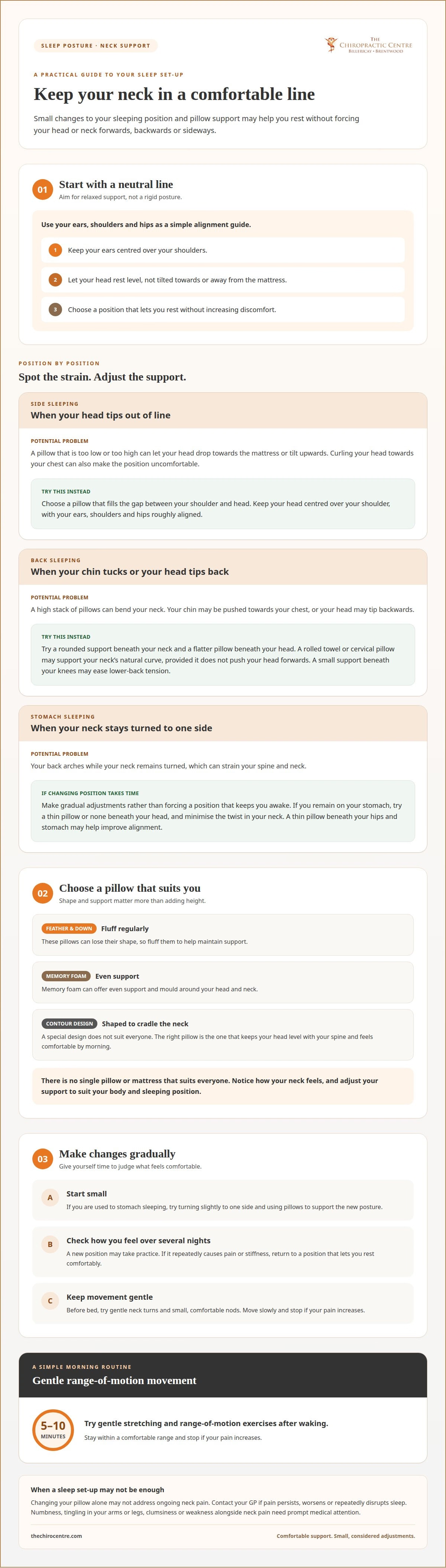
If you’re trying to work out how to sleep better with neck pain, start with a position that supports your head without forcing it forwards, backwards or sideways. Back or side sleeping can make it easier to keep your neck and spine in a comfortable line. On your side, choose a pillow that fills the gap between your shoulder and head without tilting your neck upwards. Aim to keep your ears, shoulders and hips roughly aligned.
On your back, try a rounded support beneath your neck and a flatter pillow beneath your head. A rolled towel or cervical pillow can support your neck’s natural curve, as long as it doesn’t push your head forwards. The right pillow depends on your body: one well-shaped pillow may suit you, while someone else may need more support. Avoid stacking pillows high beneath your head, as this can bend your neck and contribute to morning stiffness.
Feather and down pillows can lose their shape, so fluff them regularly to maintain support. Memory foam can offer even support, while contour designs are shaped to cradle the neck. Neither material suits everyone. Learning how to sleep better with neck pain also means noticing whether your pillow keeps your neck comfortable by morning. Mattress choice matters too: there’s no single mattress that suits everyone, so consider comfort and your sleeping position.
Before bed, try gentle neck turns from side to side and small, comfortable nods. Move slowly, stay within a comfortable range and stop if your pain increases. Gentle stretching and range-of-motion exercises for five to ten minutes after waking may help ease stiffness.
Contact your GP if neck pain persists, worsens or repeatedly disrupts sleep. NHS 111 can advise when you need urgent medical help. Numbness, tingling in your arms or legs, clumsiness or weakness alongside neck pain need prompt medical attention.
2. Keeping the neck and spine in a neutral position
A neutral sleeping position keeps your neck from bending forwards, backwards or sideways. Your head should feel balanced over your shoulders, rather than tilted towards the mattress. A comfortable, supported position may help limit sustained tension that leaves neck muscles aching or stiff on waking. Alignment is about a relaxed, supported line, not holding your body rigid through the night.
Side and back sleeping usually make it easier to keep your head and neck aligned. On your side, avoid curling your head towards your chest or letting it drop towards the mattress. On your back, check that your chin isn’t pushed down towards your chest. Sleeping on your stomach can strain your spine because your back arches while your neck stays turned to one side.
There’s no single sleeping position that suits everyone. Choose one that lets you rest without increasing discomfort, rather than forcing yourself to stay in an uncomfortable posture. If lying flat aggravates your symptoms, sleeping more upright or in a recliner may feel easier. Notice how your neck feels during the night and when you wake, then adjust your support or position accordingly.
If you’re changing a familiar position, make small adjustments first. For example, if you usually sleep on your stomach, try turning slightly to one side and use pillows to support the new posture. Build gradually on changes that feel comfortable instead of trying to switch positions completely in one night. This gives your body time to adapt and helps you judge whether the new position reduces tension.
Consistency matters: a new position may take practice, and changing your pillow alone may not address persistent or chronic neck pain. Notice how your head and neck feel over several nights, rather than judging after one attempt. If a position repeatedly causes pain or stiffness, return to one that lets you rest comfortably. A neutral position should support sleep, not become another source of strain.
3. Back sleeping and spinal alignment
Back sleeping is often recommended for neck pain because it lets your head face upwards without turning to either side. Keep your neck in line with your chest, rather than letting your chin tuck towards your throat or your head tip backwards. A small support beneath your knees may ease lower-back tension and help preserve your spine’s natural curve. Adjust it if the position feels strained.
Good posture means supporting your body’s natural curves, not forcing your back flat against the mattress. Notice whether your shoulders rest comfortably and your lower back feels supported. If your mattress sags beneath your hips, your spine may settle unevenly. No single mattress type suits everyone, so pay attention to comfort and how your body rests.
Side sleeping is another option for neck and back pain. Lie with your head centred over your shoulder, not angled towards the mattress or lifted too high. If lower-back discomfort is also a concern, placing a firm pillow between your knees may help keep your hips and pelvis aligned. Try alternating sides if one shoulder feels compressed or uncomfortable.
Stomach sleeping can strain your spine because your back arches and your neck has to turn to one side. If you can’t change position straight away, use a thin pillow or none beneath your head, and minimise the twist in your neck. A thin pillow under your hips and stomach may also help improve spinal alignment. Make small adjustments rather than forcing a posture that keeps you awake.
Memory foam can mould around your head and neck, but the right pillow is one that keeps your head level with your spine. A special pillow won’t address every cause of pain, particularly if discomfort continues in different positions. In such cases, addressing underlying muscular tension through advanced physiotherapy—as demonstrated by centres like re-activ.ch—can be an important step alongside sleep adjustments. Notice how your neck, shoulder and back feel during sleep and on waking. Choose a position that feels comfortable, then adjust its support if it causes new pressure or stiffness.
4. Causes of neck pain during sleep
To understand how to sleep better with neck pain, consider what happens before the discomfort starts. Muscles can become strained after an awkward position or a sudden head movement during sleep. A recent injury may also leave your neck sore at night. Notice whether pain is there as soon as you wake or develops after you’ve been resting for a while.
Daytime habits can contribute to tension before bed. For example, spending long periods looking down at a screen may leave your neck muscles feeling tight. Stress can also lead to unconscious muscle tension and make it harder to settle comfortably. Consider whether symptoms follow a particular activity or change in routine, rather than assuming sleep is the only cause.
The jaw can be relevant, too. People with temporomandibular joint disorders may clench or grind their teeth at night, and can wake with jaw pain or popping alongside neck discomfort. Research cited in the market findings reports 70% of people with these disorders also had neck pain. If both areas feel sore, mention the jaw symptoms when discussing your neck pain with a health professional.
Pay attention to whether the pain is new, recurring or linked to a particular event. A recent strain may feel different from discomfort that returns over several nights. Making a brief note of when symptoms begin, what you were doing beforehand and whether your jaw also hurts can help you describe the pattern clearly.
If neck pain keeps returning or affects your sleep, consider discussing the wider pattern with a practitioner. Discuss recurring neck pain and how it affects your rest. An assessment can consider your symptoms and daily habits, rather than focusing on sleep position alone.
The Chiropractic Centre
The Chiropractic Centre supports people in Brentwood, Billericay, Chelmsford, Stock, Basildon and Wickford who experience neck discomfort that affects their sleep. A New Patient Consultation gives you the opportunity to discuss your symptoms and how they affect your day-to-day wellbeing.
Depending on your needs, support may include Chiropractic Adjustments or Massage Therapy. These treatments can form part of a personalised approach to comfort and movement, rather than focusing on sleep position alone. Paediatric Care is also available for children whose discomfort affects their rest.
If neck pain continues to disrupt your sleep, contact The Chiropractic Centre to discuss a New Patient Consultation and possible next steps.
Take the next step towards more comfortable rest
Better rest can start with a clearer picture of what affects your neck. Notice whether discomfort follows a particular routine, activity or sleeping habit, and how it changes during the day. This can help you explain what you’re experiencing and provide a useful starting point for discussing how to sleep better with neck pain.
If discomfort keeps interrupting your sleep, a New Patient Consultation at The Chiropractic Centre gives you the opportunity to talk through your concerns and explore suitable care. Support may include Massage Therapy, and Paediatric Care is available for children whose neck discomfort affects their rest. The conversation starts with your individual needs, without pressure to follow a particular path.
When you’re ready to discuss your next step, contact The Chiropractic Centre. A more comfortable night can start with a thoughtful approach to your wellbeing.
Frequently Asked Questions
What is the best sleeping position for neck pain?
Back sleeping can be a comfortable position for some people, allowing the neck to rest without twisting. Side sleeping may also feel comfortable, depending on how your head rests in relation to the mattress. Sleeping positions affect neck comfort differently for each person.
What sleeping position is best for neck pain?
There’s no single best position for everyone, but back or side sleeping can be easier on the neck than sleeping on your stomach. Your preferred position, shoulder width and comfort all affect how your head rests. Sleeping habits and posture can influence how your neck feels overnight.
How should you position your pillow to reduce neck pain?
A pillow can support your head and the space beneath your neck. Its height and shape affect whether your head rests forwards, backwards or at an angle. For side sleeping, the pillow fills the gap between your shoulder and head; for back sleeping, it supports your head without pushing it forwards.
Which pillow is best for neck pain, and how much should it cost in the UK?
The best pillow is one that fits your body and keeps your neck comfortable in your usual sleeping position. Memory foam and contour designs are options, but the material alone can’t tell you whether a pillow will suit you. UK prices vary with a pillow’s materials, shape and construction, so consider these features alongside your budget rather than assuming a higher price means better support.
Is it better to sleep without a pillow if you have neck pain?
Not necessarily. Sleeping without a pillow may suit some stomach sleepers, as a thick pillow can raise the head while it’s turned. For back or side sleeping, removing the pillow may leave your neck unsupported. The effect of pillow support varies with your sleeping position and comfort.
What mattress firmness helps with neck pain?
No single mattress firmness is best for everyone with neck pain. Your sleeping position, body shape and comfort all affect how a mattress supports you. A mattress that lets your body rest without uncomfortable pressure may feel more suitable than one chosen by firmness alone. How your neck and back feel after resting on a mattress can vary from person to person.