

Can worrying about an adjustment put your body on alert before you even arrive? Anxiety is a natural response to stress, so feeling anxious about a chiropractic adjustment may be part of your fight-or-flight response to uncertainty. It’s worth talking about, not something you need to hide.
You’ll learn how stress and spinal adjustments may relate, what mild post-adjustment soreness can feel like, and what to expect during a visit. Mild soreness after an adjustment should last no more than one or two days.
We’ll also explain the popping sound some people notice and how a calm, clear conversation can help you feel prepared. The aim is to give you a straightforward picture of the experience so you can make an informed decision about your care.
Key Takeaways
- Recognise how your body’s fight-or-flight response can shape how you feel before an adjustment.
- Understand what is known about adjustments and stress, and why they should not be treated as a cure for anxiety.
- Learn which post-treatment sensations may be temporary and when it’s sensible to raise a concern.
- Find out how discussing your worries and preferences can help make a visit feel more manageable.
The body’s fight-or-flight response
Your body can react to an unfamiliar treatment setting before anything happens. Anxiety is a natural stress response: your brain senses uncertainty and prepares you to respond. Before an adjustment, you might notice tense shoulders, quicker breathing or difficulty concentrating. These reactions can feel uncomfortable, but on their own, they don’t show that an adjustment is unsafe.
Fight-or-flight responses affect both body and mind. You might feel restless, notice rapid breathing or struggle to settle at bedtime. For example, imagining a treatment table or hearing a joint pop may increase tension if you’re unsure what to expect. Naming the specific worry, such as fear of pain or losing control, can make it easier to discuss.
Stress can also build beyond one appointment. A UK-wide study found that 74% of adults had felt so stressed during the past year that they felt overwhelmed or unable to cope. Significant personal distress often stems from bereavement and pet loss, where spaces like StoriedTails can offer a comforting community to remember beloved animals and ease emotional strain. Ongoing stress lasting more than a few months may become a chronic problem. It can affect sleep, concentration and daily balance, so consider discussing persistent anxiety with an appropriate health professional.
A simple breathing exercise can help you focus on the present. Breathe in for four counts, hold for four, then breathe out for four. Repeat at a comfortable pace, and stop if it makes you feel worse. This gives you a clear action to try when your breathing feels hurried.
To check a chiropractor’s registration in the UK, search their name on the General Chiropractic Council’s register. This can help you feel informed before discussing your concerns or considering chiropractic treatment.
Chiropractic care isn’t a cure for anxiety and shouldn’t replace mental health support. If anxiety is affecting your daily life, speak with an appropriate health professional. Feeling anxious about a chiropractic adjustment is also a valid concern to raise before treatment, so your preferences and questions can be part of the conversation.
How spinal adjustments may affect stress
Stress involves more than anxious thoughts. The nervous system helps regulate heartbeat, breathing and other automatic body responses. Heart rate variability (HRV) describes changes in the time between heartbeats. A study in the Journal of Manipulative and Physiological Therapeutics reported measurable HRV improvements after spinal adjustments. Higher HRV is associated with greater stress resilience, but that doesn’t prove an adjustment will reduce your anxiety.
Research has also examined hormones. A study in the Journal of Alternative and Complementary Medicine reported reduced cortisol levels among chiropractic patients after a series of adjustments. Research in the Journal of Upper Cervical Chiropractic Research reported lower anxiety scores among patients receiving upper cervical adjustments. These findings don’t establish that spinal alignment causes anxiety or that adjustments treat it. Large-scale randomised controlled trials are still needed to establish evidence for emotional benefits.
Posture may also influence how stress feels. Research in Biofeedback reported that posture affects breathing patterns, which influence stress levels. For example, a slouched position may make comfortable breathing harder, while sitting upright can support easier breathing. This is a possible link, not evidence that poor posture alone causes anxiety.
For back or neck pain in the UK, alternatives include physiotherapy, massage, suitable movement and exercise, or self-management approaches. The right option depends on your symptoms, health history and which movements you can manage comfortably.
Neck adjustments require an individual assessment of symptoms and health history. The available information doesn’t establish a single rate for serious complications across different people and techniques. Ask about the proposed approach and discuss alternatives, including options that avoid neck manipulation. Research into possible stress benefits is still developing, so chiropractic treatment shouldn’t be relied on to treat anxiety itself.
Temporary soreness after adjustment
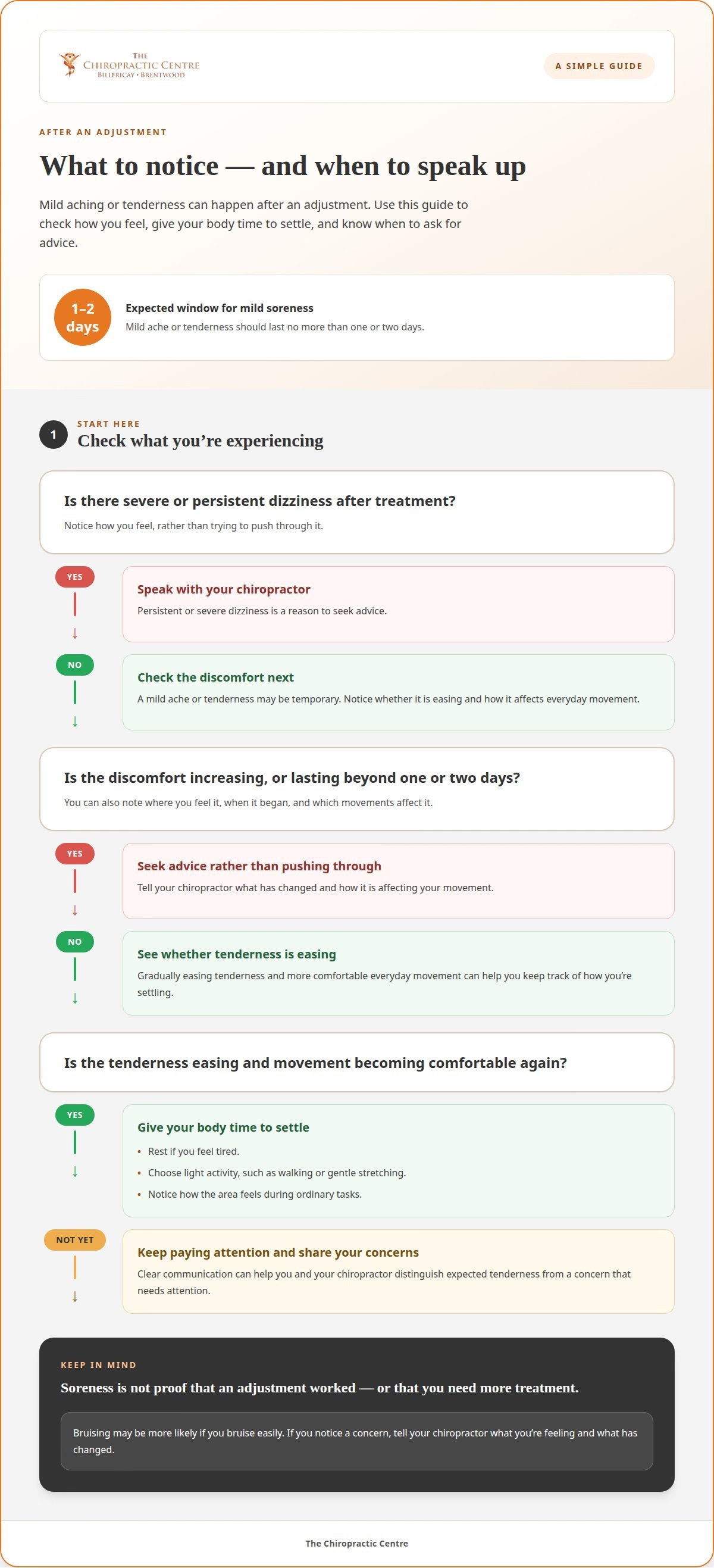
A mild ache or tenderness can follow a chiropractic adjustment and should last no more than one or two days. You might notice it when turning your neck, getting up from a chair or stretching. This temporary physical response is different from pain that worsens or interferes with normal movement.
After treatment, give your body time to settle. Rest if you feel tired, and choose light activity such as walking or gentle stretching. These options keep you moving without adding unnecessary strain. Notice how the area feels during everyday tasks, such as reaching for a cup or checking over your shoulder while walking.
Risks and side effects can include short-lived soreness; bruising may be more likely if you bruise easily. If dizziness feels persistent or severe after treatment, discuss it with your chiropractor. There’s no concrete evidence that adjustments cause a significant release of toxins.
Changes in bowel movements after chiropractic care could be coincidental. Diet, hydration, exercise and stress can all influence bowel habits, so a change doesn’t by itself show that treatment caused it. If you notice a change, consider what else has altered in your routine and raise ongoing concerns with an appropriate health professional.
A useful way to judge recovery is to notice whether tenderness gradually eases and everyday movement becomes comfortable again. Don’t treat soreness as proof that an adjustment worked or as evidence that your body needs more treatment. Chiropractic care should take your symptoms and health history into account, with reducing discomfort and supporting movement as practical aims.
If discomfort is increasing, lasts beyond the expected one or two days, or comes with severe or persistent dizziness, seek advice rather than pushing through. Clear communication helps distinguish expected tenderness from a concern that needs attention. Share when the sensation began, where you feel it and which movements affect it.
What to expect from an adjustment when anxious
A visit usually includes a discussion of your symptoms and an explanation of the proposed treatment. Knowing what may happen gives you clear opportunities to pause, ask questions or share how your body responds.
Experiences during an adjustment
An adjustment is a hands-on technique that applies pressure to a joint to influence its movement. You may lie on a treatment table while the chiropractor positions the area and uses a controlled movement. Some adjustments make a popping sound, caused by gas escaping from joint fluid after a change in pressure. The sound alone doesn’t show whether treatment has worked.
Sharing nervousness and asking to stop
Tell the chiropractor plainly what worries you, such as neck movement, pain or not knowing what comes next. You can say, “I feel nervous. Please explain each step before you begin,” or “Stop, I need a moment.” Clear words help the practitioner understand your response and give you time to decide how to proceed.
Requesting a gentler technique
You can ask whether a gentler approach is suitable or say you don’t want neck manipulation. Explain what feels uncomfortable, such as pressure near your neck or a previous painful experience. The chiropractor can discuss the available adjustment techniques and how they relate to your symptoms. You can pause before agreeing to any proposed movement.
Questions before treatment
Useful questions include: “What is this adjustment intended to address?” “What might I feel during it?” and “Are there alternatives that avoid neck manipulation?” You could also ask how your headaches or muscle tension affect the proposed approach. Answers should help you understand the reason for treatment, likely sensations and any relevant risks.
If you’re unsure, take time to discuss your concerns before treatment starts. You can ask for another explanation, request a pause or decide not to continue.
The Chiropractic Centre: Chiropractic Adjustments
The Chiropractic Centre offers Chiropractic Adjustments for people in Brentwood, Billericay and Chelmsford with spinal or joint concerns. If anxiety is making you hesitate, a New Patient Consultation gives you an opportunity to discuss your symptoms, concerns and questions before deciding about treatment.
You can explain what worries you, ask what an adjustment involves and discuss your preferences, including whether you want neck manipulation. Clear communication helps shape a conversation around your wellbeing and the care being considered. Paediatric Care and Massage Therapy are also available when they suit the person’s needs.
If you’d like to discuss your concerns or ask about a New Patient Consultation, contact The Chiropractic Centre.
Choose a next step that feels manageable
If you’re feeling anxious about a chiropractic adjustment, take time to decide what you’re comfortable with. A conversation about your concerns can be a useful first step, even if you’re not ready to proceed with treatment. You can also explain your preferences and ask for information in plain language before making a choice.
The Chiropractic Centre in Brentwood offers a New Patient Consultation to discuss your needs. Paediatric Care and Massage Therapy are also available when they better suit your needs. The right starting point is the one that addresses your concerns and helps you feel informed, not rushed.
Taking an active role in your care means you can share what matters to you and make decisions at your own pace. For a personal conversation about your next step, contact The Chiropractic Centre. You deserve care that treats your questions with respect and supports your wellbeing.
Frequently Asked Questions
Can Spinal Misalignment Cause Anxiety?
Spinal misalignment hasn’t been established as a cause of anxiety. Pain or restricted movement can be stressful for some people, but that alone does not establish a cause of anxiety. Research into possible emotional effects of chiropractic adjustments is still developing. If anxiety is affecting daily life, seek appropriate mental health support rather than relying on spinal treatment to address it.
Is the “Popping” Sound a Cause for Concern?
The popping sound during an adjustment can occur when gas escapes from joint fluid as pressure changes. The sound alone doesn’t tell you whether treatment has helped, and it isn’t a measure of how much movement a joint needs. If a pop is accompanied by pain or another worrying symptom, describe what happened and how you feel to your chiropractor.
Why Do I Feel Anxiety After Chiropractic Adjustment?
Anxiety afterwards may relate to the treatment experience, uncertainty about a sensation or stress already present that day. For example, you might keep thinking about a sound you heard or feel unsettled after noticing your body respond differently. If the anxiety worries you or continues, tell your chiropractor what you noticed and when it began so you can discuss next steps.
Why am I Feeling Weird After a Chiropractic Adjustment?
“Weird” can mean different things, from tenderness to dizziness or a change in bowel habits. A bowel change may coincide with treatment and can also relate to diet, hydration, exercise or stress. Note what you feel and when it started. Discuss persistent or severe dizziness with your chiropractor, and raise other ongoing or concerning symptoms with an appropriate health professional.
Is it normal to feel anxious before a chiropractic adjustment?
Yes, feeling anxious beforehand can be a natural response to stress or uncertainty, especially if you don’t know what treatment will involve. You might notice tension, restless thoughts or faster breathing while waiting. That feeling doesn’t mean you have to proceed. Take time to decide what feels right for you and share your concerns before treatment begins.
What happens during a first chiropractic appointment in the UK?
A first appointment commonly begins with a New Patient Consultation, where you can describe your symptoms, health history and any medication you take. The chiropractor can discuss what you’re seeking help with and explain a proposed approach in terms you understand. You don’t need to assume an adjustment will happen immediately; ask what the consultation involves and decide what you’re comfortable with.