

Regular chiropractic adjustments may be worth considering when back or neck pain, headaches, musculoskeletal injuries or restricted movement affect everyday life. The long term benefits of regular chiropractic adjustments can include improved mobility and support for posture, but the right approach depends on your needs and goals.
Looking beyond a single appointment may make sense when pain or stiffness keeps returning, or when habits such as prolonged computer and phone use place strain on your neck and lower back. An adjustment applies a controlled force to a joint, with the aim of improving its movement.
This article explains who may benefit from ongoing care, how posture and everyday strain fit in, and which concerns chiropractic adjustments may address. You’ll also learn why visit frequency varies and how adjustments can sit alongside practical steps such as regular exercise and better posture.
Key Takeaways
- Visit frequency varies with your symptoms, history, activity level and goals; there’s no single schedule for everyone.
- Back or neck pain, headaches, injuries and restricted movement are among the concerns that may lead people to consider chiropractic care.
- Notice how prolonged screen use and everyday habits affect your posture and comfort, then explore how movement and lifestyle changes may help.
- For recurring lower back pain, ongoing care has been associated with fewer days of bothersome pain for some people, though long-term evidence remains inconclusive.
What is a chiropractic adjustment?
A chiropractic adjustment is a hands-on technique that applies a controlled, sudden force to a joint. The aim is to improve joint movement, which may help ease pain and support mobility when movement is restricted. It is a drug-free approach to care. Adjustments may be considered for back or neck pain, headaches and musculoskeletal injuries, but they cannot guarantee lasting relief or prevent every recurrence.
How does chiropractic compare with physiotherapy, exercise or usual NHS care for long-term pain relief? These approaches differ, and evidence on the long-term effects of chiropractic adjustments is inconclusive, so they cannot be ranked as better or worse on that basis. An adjustment focuses on joint movement, while exercise and physiotherapy may form part of movement-based care. The right option depends on the concern and the care being considered.
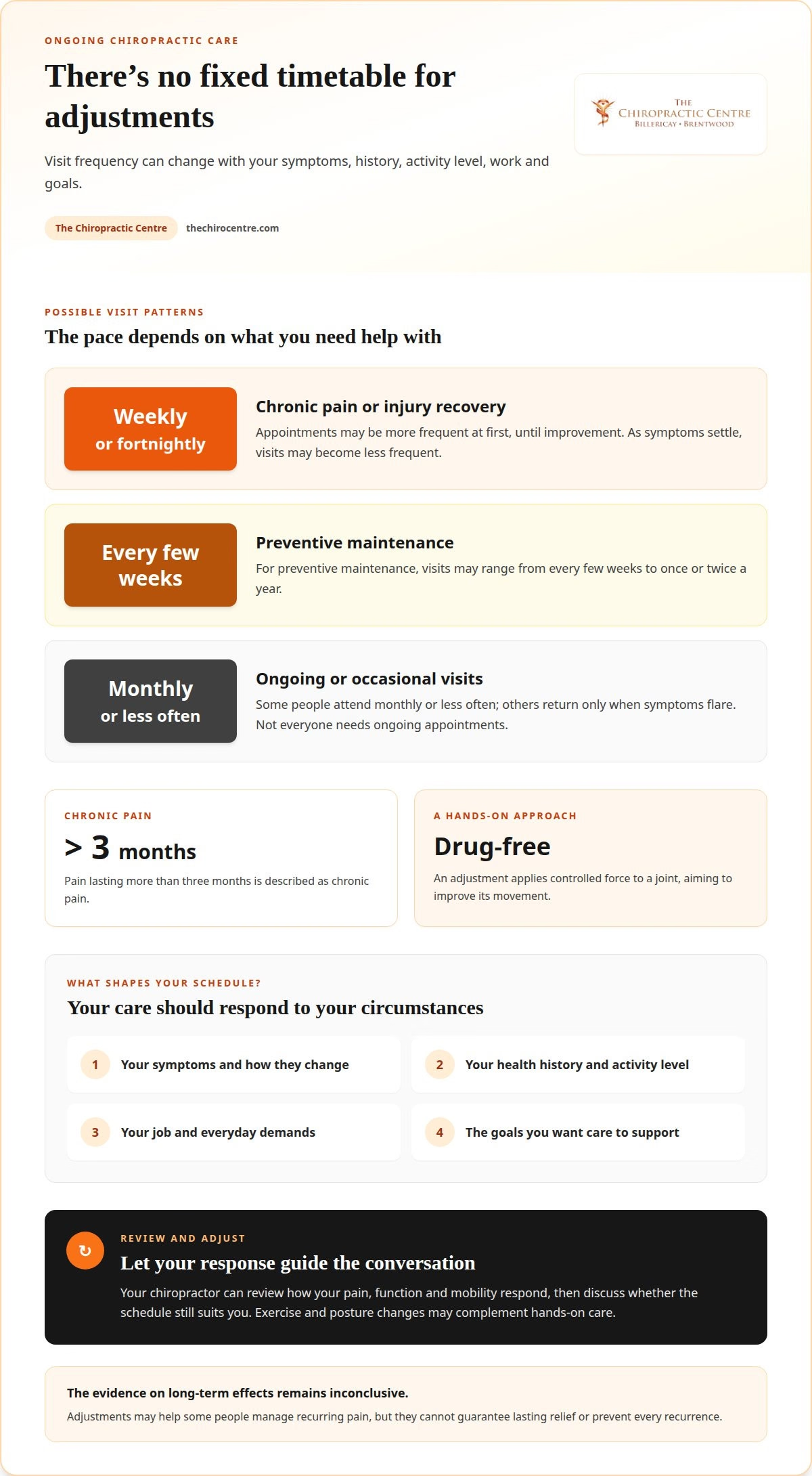
There is no standard number of adjustments that suits everyone. For preventive maintenance, visits may range from every few weeks to once or twice a year. For chronic pain or injury recovery, appointments may be weekly or fortnightly until improvement. Some people attend monthly or less often, while others return only when symptoms flare. Frequency depends on your history, activity level, job, symptoms and goals, not a fixed timetable.
Acute pain may call for more frequent visits at first, followed by fewer appointments as symptoms settle. A chiropractor can review how your pain, function and mobility respond, then adjust the schedule and discuss whether ongoing care suits your needs. Chronic pain means pain lasting more than three months, according to Cleveland Clinic. For recurring pain, the aim may be to improve joint movement and help you manage everyday strain, not promise that symptoms will never return. You can also discuss how exercise and posture changes may complement hands-on care.
Who Benefits Most from Regular Chiropractic Treatments?
Chiropractic care may be worth discussing if musculoskeletal discomfort makes specific tasks harder. For example, a retail worker might struggle to stand comfortably through a shift, while a gardener may find bending and reaching difficult. The useful question is not simply whether you have discomfort, but how it affects the activities you want to manage.
Ongoing care gives you and your practitioner a way to review changes against a practical goal, such as completing a workday or returning to a hobby. For many people, that might mean building the physical stamina for long-haul travel or safari holidays organised through ronyegsafaris.com without being held back by joint stiffness. A single appointment addresses the concern in front of you; follow-up can help you discuss how symptoms and function change over time. That does not mean everyone needs ongoing appointments.
Chiropractic care can complement exercise and everyday habits that support musculoskeletal health. If your goal is to feel steadier during a walk, for instance, movement and suitable exercises can complement hands-on care. Sleep, work demands and activity choices also affect how your body feels, so discussing these factors gives a fuller picture than focusing on one symptom alone.
There is no single UK price for ongoing chiropractic treatment; costs depend on the care and practice. NHS access varies locally, so provision is not uniform across the UK. Before deciding whether care suits your circumstances, consider the expected cost and what you want it to help you do.
If you’re unsure where to begin, a Free Spinal Health Check offers a way to discuss your concerns and goals.
Posture and strain from everyday activities
Spending hours at a computer, on a phone or using a tablet can strain your neck and lower back. Understanding how posture affects spinal movement can help you identify everyday habits worth changing.
Posture, spinal health and prevention
Posture is how you hold your body when sitting, standing and moving, and it affects how your spine handles daily demands. The spine’s natural curves help keep your centre of gravity central and support natural movement. Staying in one position for a long time, such as leaning towards a laptop, can strain your neck and lower back. Changing position and moving regularly can reduce the time you spend holding that posture. Better movement habits support spinal health, but cannot prevent every injury or recurrence of pain.
Body mechanics matter during everyday tasks, not just exercise. Reaching repeatedly for a mouse or twisting to lift a shopping bag, for example, can load your body unevenly. Keeping frequently used items within easy reach and turning your whole body towards a lift may make these tasks more comfortable. Gentle exercises that build strength and mobility may also support daily movement.
Posture and stress
Stress and physical discomfort can add to each other’s demands: pain can contribute to stress. For instance, a tense neck after a long day of screen-based work may make it harder to relax. Noticing when tension builds gives you a cue to change position, move gently or pause from the task. These steps address immediate strain while recognising stress as part of your overall experience.
Do regular chiropractic adjustments help chronic lower back pain over the long term?
Regular adjustments may help some people manage recurring lower back pain, but they are not a guaranteed long-term solution. Evidence on lasting effects remains inconclusive, so another person’s or a study’s results cannot predict what you’ll experience.
A study in Pain Physician reported marked improvements in pain, function and quality of life among patients receiving adjustments more than once per week. This suggests appointment frequency may matter during care, but it does not establish an ideal schedule for everyone. Progress also involves whether movement and daily activities become easier.
A Swedish trial followed people with recurring or persistent lower back pain who responded to initial care. Those attending scheduled maintenance visits had fewer days of bothersome back pain over the following year than those who returned only when pain came back. The result supports considering planned follow-up after initial improvement, rather than waiting for each flare-up.
That trial applies to a specific group: people with recurring or persistent pain who responded to their initial treatment. It does not show that maintenance visits prevent pain for everyone or that adjustments work equally well for every cause of back pain. A useful measure is whether your own pain, movement and everyday function improve over time.
If you’re considering ongoing care, discuss a clear goal, such as walking comfortably or managing work tasks. Review your progress towards that goal as care continues, alongside any return of pain. If appointments are not helping you meet the agreed goal, the plan may need reconsidering. Regular adjustments are one option for managing back pain, not a substitute for a broader view of your health.
For a discussion about whether chiropractic adjustments for lower back pain may suit your needs, consider an individual assessment.
The Chiropractic Centre: Chiropractic Adjustments
The Chiropractic Centre provides chiropractic adjustments for people seeking support with pain, restricted movement or recurring musculoskeletal concerns in Brentwood, Billericay, Chelmsford, Stock, Basildon and Wickford. A New Patient Consultation lets you discuss your symptoms, health history and goals before considering care.
If muscle tension or discomfort also affects you, Massage Therapy is another option. Care starts with understanding your concerns and discussing a suitable next step, without promising a particular result.
To discuss your concerns, contact The Chiropractic Centre.
Take the next step towards care that fits you
Start by identifying what you want to change. Perhaps you’d like sitting through a working day to feel easier, or to return to an activity with less concern about discomfort. Discuss that goal alongside your health history and the effect symptoms have on daily life. Understanding the long term benefits of regular chiropractic adjustments means considering what matters to you, not following a routine that does not fit.
The Chiropractic Centre offers a New Patient Consultation to discuss your needs. Care also includes Paediatric Care and Massage Therapy, with options to discuss for different ages and concerns. A practitioner can help you understand whether chiropractic adjustments suit your situation and what progress could look like, without promising a particular result.
Taking time to talk through your concerns can make the next step feel more manageable. Contact The Chiropractic Centre to discuss your care. A thoughtful conversation can be a positive start towards feeling more at ease in everyday life.
Frequently Asked Questions
How Often Should You Come In?
There is no appointment interval that suits everyone. Your chiropractor considers what you’re seeking help with and how your symptoms and daily function change during care. For example, note whether sitting, walking or a usual work task feels different after an appointment. This gives you a practical basis for discussing whether the current plan is useful or needs review.
Is it safe to get adjusted regularly?
Chiropractic adjustments are not suitable for every person or health concern. Before treatment, share relevant health conditions, past injuries and any recent changes in your symptoms. This helps the practitioner consider your circumstances and discuss whether an adjustment is appropriate. If you have concerns about a proposed technique, raise them before treatment so you can understand the approach and make an informed decision.
Maintenance and Frequency: How Often Should You Get Adjusted?
Consider maintenance care in relation to your own progress, rather than as a fixed routine. A useful review considers whether your original goal still matters and whether changes in work, activity or symptoms affect it. For example, moving from desk work to a more physically active role may change what you want from care. Discuss these changes at appointments.
What long-term benefits of regular chiropractic adjustments are supported by clinical evidence?
Current evidence does not establish consistent long-term benefits for everyone or every condition. A study in Pain Physician reported improvements in pain, function and quality of life among patients who received adjustments more than once per week. That finding applies to the patients studied and does not prove that others will have the same outcome. Evidence on long-term effects remains inconclusive.
Can chiropractic adjustments provide lasting relief for neck pain or headaches?
Some people seek adjustments for neck pain or headaches, but lasting relief cannot be assumed. Regular adjustments may reduce the frequency and intensity of tension headaches, particularly for people with chronic headache conditions. Headaches have different possible causes, so the type and pattern of your symptoms matter when discussing care. Keep track of how headaches affect your usual activities and share that information during an assessment.
What are the risks and side effects of repeated chiropractic adjustments?
Possible short-term effects include soreness, discomfort or a headache after an adjustment; these usually resolve within a few days. Nausea is rare. Stroke has been reported rarely after adjustments, and the risk is considered low. Seek emergency care if you lose bladder or bowel control or develop numbness in the groin. Tell your practitioner about unexpected or worsening symptoms after treatment.