

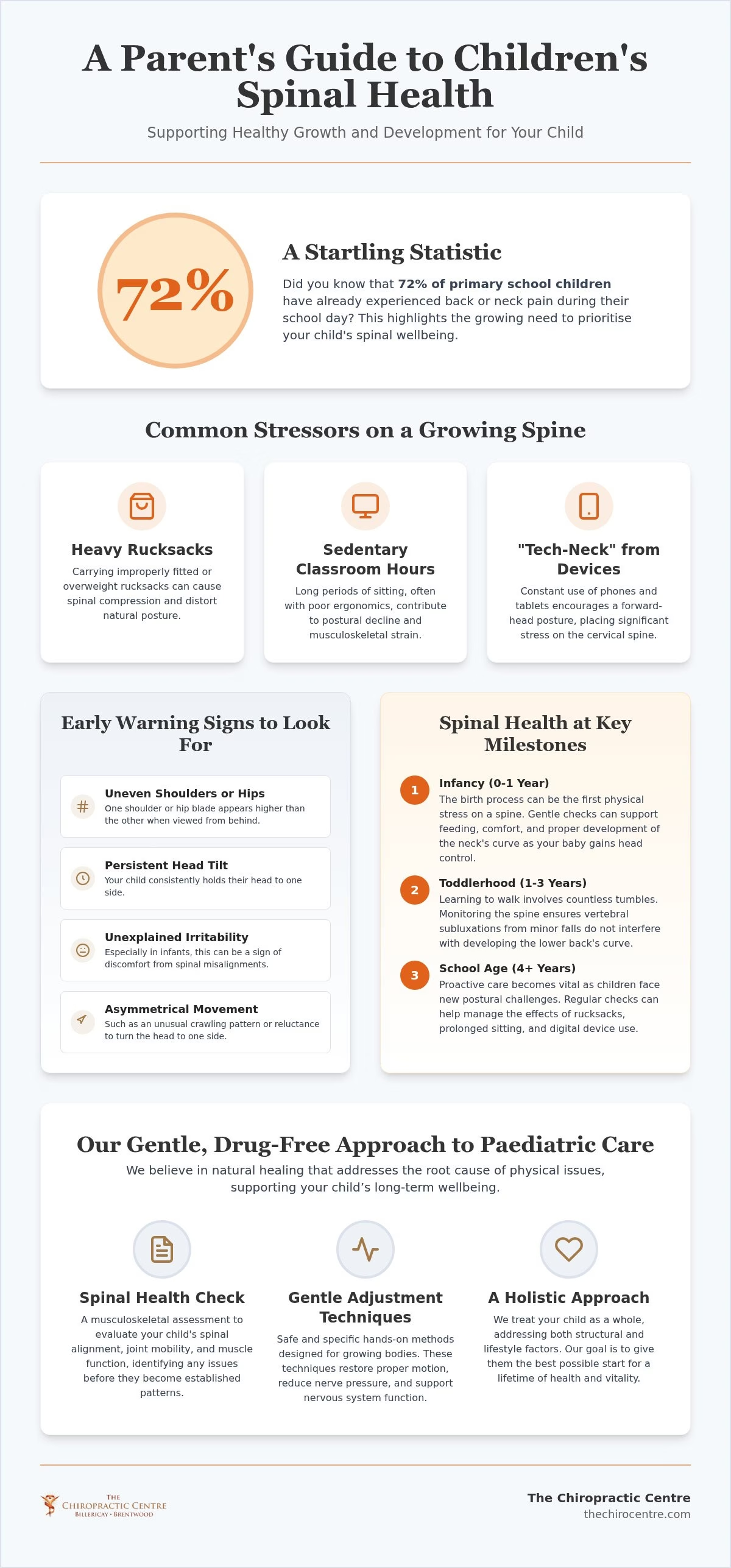
Did you know that 72% of primary school children have already experienced back or neck pain during their school day? It is a startling statistic that highlights why prioritising children’s spinal health Essex wide is becoming a vital part of modern parenting. As children grow, their musculoskeletal system faces constant pressure from heavy rucksacks, sedentary classroom hours, and the ever-present “tech-neck” caused by tablets and phones.
You probably worry about whether your child’s posture is developing correctly or if those growing pains are something more significant. It is completely normal to feel uncertain about spotting the early signs of scoliosis or wondering if chiropractic care is a safe choice for younger bodies. This clinical guide is designed to replace that worry with confidence. You will discover how to identify subtle signs of postural decline at home and learn why gentle, paediatric adjustment techniques are a drug-free way to support healthy development.
We will walk you through practical tips for school and play, providing the reassurance you need to make informed decisions about your family’s wellbeing. From understanding vertebral subluxations to the benefits of a professional spinal health check, this article offers a clear path toward long-term physical vitality for your child.
Key Takeaways
- Understand why maintaining structural integrity is vital for your child’s nervous system and overall physical growth.
- Learn how to spot vertebral subluxations early to support children’s spinal health Essex wide during key developmental milestones.
- Discover how to identify the early warning signs of postural decline and scoliosis caused by modern digital habits.
- Implement practical strategies at home and school to protect your child’s spine through movement and better ergonomics.
- Find reassurance in gentle, paediatric adjustment techniques designed specifically for the unique needs of growing youngsters.
Why Children’s Spinal Health in Essex Matters for Lifelong Wellness
When we discuss children’s spinal health Essex parents often focus on whether their child is experiencing discomfort. However, true paediatric spinal health is about much more than just the absence of pain. It serves as the vital foundation for your child’s nervous system function and their overall physical growth. By adopting a holistic approach, we look beyond immediate symptoms to ensure the structural integrity of the spine is maintained during every developmental leap. This integrated view of child wellness is shared by international specialists like firststepchilddevelopment.com, who focus on the intersection of physical development and mental health.
Early alignment doesn’t just help with posture; it supports the entire body. Many families find that a well-aligned spine contributes to better sleep patterns and a more resilient immune system in infants. When the spine is balanced, it allows a child to reach their full physical potential without the hidden restrictions of joint stiffness or nerve pressure. It’s about giving them the best possible start for a lifetime of vitality.
The Role of the Spine in Childhood Development
Your child’s spine acts as the protective housing for their nervous system whilst it matures. When a spinal joint subluxation occurs, it can create a minor misalignment that interferes with the communication between the brain and the rest of the body. This interference often disrupts natural movement patterns and can lead to compensations in other areas of the musculoskeletal system. Spinal health is the absence of structural interference during key growth phases.
Why Essex Parents are Choosing Drug-Free Spinal Care
Families across Billericay and Brentwood are increasingly looking for ways to support their children without relying on temporary fixes. There is a clear shift toward natural healing that addresses the root cause of physical issues rather than just masking them. Instead of waiting for a problem to arise, parents are opting for proactive care that focuses on long-term wellness.
Gentle adjustment techniques are designed to be safe and effective for growing bodies, offering a drug-free alternative to traditional interventions. A professional musculoskeletal assessment provides you with peace of mind, ensuring that any minor issues are identified before they become established patterns. This is particularly vital for the early detection of conditions like Scoliosis, where clinical monitoring during growth spurts is essential for a child’s future comfort and mobility. By choosing a community-focused clinic, you are partnering with experts who prioritise your child’s wellbeing as much as you do.
Understanding Developmental Milestones and Vertebral Subluxations
Childhood is a period of rapid change, but it is also a time of significant physical stress. From the initial pressure of birth to the inevitable tumbles of learning to walk, a child’s spine undergoes constant micro-trauma. These events can lead to vertebral subluxations, which are minor misalignments of vertebrae that can create nerve pressure and reduced mobility. Because children often cannot articulate spinal discomfort as “pain,” they may instead display irritability, restlessness, or a reluctance to engage in physical play. Monitoring children’s spinal health Essex wide is essential to ensure these minor issues do not accumulate and become established patterns during the primary years.
From Newborn to Toddler: The First Spinal Milestones
The journey begins in infancy, where the development of the cervical spine is crucial for achieving the goal of a pain-free baby. Early checks help ensure the neck is moving freely, which is vital for feeding, comfort, and proper head control. This is why seeking a chiropractor for baby colic or feeding difficulties is a common reason for a family’s first visit to our centre. As your baby begins to lift their head, crawl, and eventually walk, they develop the secondary curves of the spine. These curves act as the body’s natural shock absorbers. If a subluxation limits movement during these milestones, it can affect how these curves form and influence future posture.
Vertebral Subluxations: The Silent Growth Restrictors
In plain English, a spinal joint subluxation is a partial misalignment that stops a joint from moving exactly as it should. This restriction can impede nerve function, potentially affecting a child’s coordination or energy levels. Since children are naturally resilient, they often adapt to these restrictions, making the signs difficult for parents to spot without a professional musculoskeletal assessment. Understanding the link between Posture and Scoliosis in Kids can help you stay vigilant as your child grows.
Parents should look for non-pain indicators that a subluxation might be present, such as:
- Uneven shoe wear or one foot turning significantly in or out.
- A persistent head tilt or a preference for looking in one direction.
- Uneven shoulder heights or hips when standing still.
- Frequent “growing pains” that disrupt sleep or evening rest.
If you have noticed any of these subtle changes in your child’s movement, a Free Spinal Health Check at our Billericay clinic can provide the clarity you need. Proactive care ensures that children’s spinal health Essex families value is protected, allowing every youngster to grow and play without structural restriction.
Identifying Postural Decline and Scoliosis in Growing Children
Postural decline is no longer just a concern for adults; it is becoming increasingly common in school-age children. Whilst it is tempting to tell a child to simply “sit up straight,” a persistent slouch is often more than a bad habit. It can be a sign of underlying structural issues that require attention. Protecting children’s spinal health Essex wide involves identifying these changes before they become permanent. Early detection is the key to ensuring that a temporary slouch doesn’t turn into a lifelong struggle with back pain or restricted movement. By looking beyond the surface, we can address the structural integrity of the spine during its most formative years.
Spotting the Signs of Postural Decline
The digital age has introduced “forward head carriage,” a condition often called “tech-neck.” This occurs when the head shifts forward from its natural alignment over the shoulders due to excessive tablet and phone use. This position puts immense strain on the upper back and neck muscles. Additionally, spinal compression from prolonged sitting at school desks can affect the lumbar region, leading to stiffness. In older children and teenagers, these structural stresses frequently manifest as cervicogenic headaches. These are not typical tension headaches; they originate from irritation in the cervical spine and can significantly impact a child’s concentration and mood.
Scoliosis Management: What Essex Parents Need to Know
Scoliosis is a lateral curvature of the spine that most frequently appears during the pre-teen growth spurt. Unlike a postural slouch, scoliosis involves a complex rotation of the vertebrae. Understanding scoliosis management Essex families can access is vital for long-term health. Early intervention during these rapid growth phases can significantly influence how the spine develops and matures. Clinical monitoring ensures that any curvature is managed proactively, supporting the child’s physical potential without unnecessary restriction.
You can perform a simple “home check” by observing your child from behind whilst they stand naturally. Look for uneven shoulders, a prominent shoulder blade, or an uneven waistline. A standard part of a professional spinal health check is the “Adam’s Forward Bend Test.” During this assessment, the child leans forward at the waist, allowing the practitioner to look for a rib hump or spinal asymmetry that isn’t visible when standing. Whilst these home observations are a great starting point, they don’t replace a musculoskeletal assessment. A professional evaluation provides the clarity and peace of mind you need to ensure your child’s spine is growing exactly as it should.
Practical Strategies to Protect Your Child’s Spine at Home and School
Parents in Billericay and Wickford often ask how they can proactively support their child’s physical development outside of the clinic. Protecting children’s spinal health Essex families value requires a consistent approach built on three essential pillars: ergonomics, movement, and regular clinical checks. By making small, intentional changes to your child’s daily routine, you can significantly reduce the physical stresses that lead to long-term discomfort. It’s about creating a lifestyle that encourages structural integrity from a young age.
The ‘Essex School Bag’ Challenge: Ergonomic Tips
One of the most significant daily stresses for school-age children is the weight of their rucksack. To prevent unnecessary strain, a child’s bag should never exceed 10% to 15% of their total body weight. It is also essential that they use both shoulder straps at all times. Carrying a heavy bag on one shoulder creates uneven loading; this habit can lead to vertebral subluxations and compensations in the spine as the body tries to stay upright. When packing, place the heaviest books and items closest to the child’s back. This simple adjustment reduces the spinal leverage of the load, keeping the centre of gravity closer to the body and protecting the developing musculoskeletal system.
Creating a Spine-Friendly Home Environment
As homework levels increase, the setup of a home study station becomes a vital factor in preventing postural decline. Ensure your child has a supportive chair that maintains the natural lumbar curve of their lower back. Their feet should rest flat on the floor, with knees and hips at a 90-degree angle. If they use tablets or laptops, encourage the ’20-20-20 rule’ to protect the cervical spine: every 20 minutes, look at something 20 feet away for at least 20 seconds. This break allows the neck muscles to relax and prevents the “tech-neck” patterns that often lead to headaches and stiffness.
Varied physical activity is the final piece of the puzzle. Movement is the fuel that maintains joint mobility and spinal health. Encourage a mix of activities that involve stretching, reaching, and balancing rather than repetitive, high-impact sports alone. If you are concerned that your child’s daily habits are already impacting their posture, you can book a Free Spinal Health Check at our Billericay clinic to receive personalised advice tailored to your child’s needs. Maintaining children’s spinal health Essex wide is a journey, and taking these practical steps today ensures a more comfortable and active future for your youngster.
Gentle Paediatric Care at The Chiropractic Centre
The Billericay clinic is more than just a professional setting; it’s a community hub designed to be calm and welcoming for your little ones. We understand that a child’s first visit to a chiropractor can feel like a significant event for both of you. That’s why every aspect of our environment is tailored to put children at ease, replacing clinical detachment with empathetic warmth. Our commitment to drug-free, natural healing ensures that your family receives care that respects the body’s innate ability to recover. For many families, the Free Spinal Health Check Billericay is the perfect starting point to understand how we can support children’s spinal health Essex families trust.
What to Expect During a Paediatric Consultation
During the initial visit, we conduct a thorough musculoskeletal assessment tailored specifically to your child’s age and temperament. We don’t just look at the spine in isolation; we observe how they move, play, and interact. When it comes to adjustment techniques, safety and comfort are our absolute priorities. The pressure used for a paediatric adjustment is incredibly light. It is often no more than the gentle touch you would use to check the ripeness of a tomato.
We believe that you are an essential part of the healing process. Parents are encouraged to stay present throughout the session, ensuring your child feels secure and supported. Following the assessment, we provide a clinical recovery guide. This is a clear set of instructions to help you support their progress at home, bridging the gap between clinical care and daily wellness. This proactive approach is central to supporting children’s spinal health Essex parents prioritise during growth spurts.
A Community Partner in Your Child’s Health Journey
Grayson and the team at The Chiropractic Centre act as authoritative mentors for families across Stock, Basildon, and Chelmsford. We have been established for over 10 years, building deep roots in the local community as a trusted resource for family wellness. Our holistic approach means we look at the person as a whole. We often work alongside other therapies, such as clinical massage, to support soft tissue health and improve circulation alongside our primary care.
By addressing structural misalignments early, we help your child reach their full physical potential without restriction. If you have concerns about your child’s posture, sleep, or development, we invite you to book a paediatric chiropractor Essex consultation. It is a low-pressure way to gain professional insight and start your child on a path toward long-term physical vitality and comfort.
Invest in Your Child’s Long-Term Vitality
Prioritising your youngster’s structural integrity today is one of the most impactful decisions you can make for their future wellbeing. By identifying vertebral subluxations early and implementing simple ergonomic strategies at home, you provide a foundation for healthy growth. We have seen how modern digital habits lead to postural decline, yet proactive monitoring ensures these patterns don’t become permanent restrictions. Supporting children’s spinal health Essex families value is our core mission, helping every child move through life with comfort and confidence.
With over 10 years of clinical excellence in Billericay, our team uses specialised paediatric and scoliosis management protocols that are highly rated by local Essex parents. We are here to act as your trusted partners in health, offering gentle, drug-free care tailored to your child’s unique needs. Taking that first step toward peace of mind is simple and low-pressure. Book a Free Spinal Health Check for Your Child Today and discover how our community-focused approach can help your family thrive. We look forward to welcoming you and supporting your child’s journey toward a vibrant, active future.
Frequently Asked Questions
Is chiropractic care safe for babies and small children?
Chiropractic care is exceptionally safe for babies and small children when performed by a qualified professional. We use specific paediatric adjustment techniques that are significantly lighter than those used for adults. These methods are designed to be comfortable and non-invasive, focusing on restoring proper motion to developing joints. Our Billericay clinic prioritises adjustment safety, ensuring your little one feels secure whilst we support their natural growth and nervous system function without the use of drugs.
At what age should a child have their first spinal health check?
A child can have their first spinal health check at any age, including as a newborn. Many Essex parents bring their infants in shortly after birth to check for misalignments caused by birth trauma. It is also beneficial to schedule checks during key developmental milestones, such as when they begin to crawl or walk. Regular monitoring of children’s spinal health Essex families choose helps identify minor issues before they become established postural patterns.
Can chiropractic help with my child’s poor posture and slouching?
Yes, chiropractic care can effectively address poor posture and slouching by identifying the underlying structural cause. Rather than just telling a child to sit up, a postural assessment helps us find misalignments that make upright sitting uncomfortable. We provide targeted adjustments and practical advice for families in Brentwood and Wickford to improve ergonomics. This holistic approach helps reverse postural decline caused by heavy rucksacks and excessive screen time during the school week.
What are the signs that my child might have a spinal joint subluxation?
Common signs of a spinal joint subluxation include a persistent head tilt, uneven shoulder heights, or one foot turning in or out. You might also notice uneven wear on the soles of their shoes or frequent “growing pains” that disrupt their rest. Emotional signs like unexplained irritability or restlessness can also indicate physical discomfort for children in Stock and Billericay. A professional musculoskeletal assessment is the most reliable way to identify these minor misalignments.
How many sessions will my child need to see an improvement?
The number of sessions required varies depending on your child’s specific needs and how long the issue has been present. Every journey begins with a new patient consultation, where we create a personalised roadmap for recovery. Some children show improvement after just a few visits, whilst others benefit from ongoing well-being care to support them through growth spurts. We focus on achieving long-term stability rather than just providing a temporary fix for immediate symptoms.
Does a paediatric adjustment hurt or make a ‘popping’ sound?
Paediatric adjustments are gentle and typically do not hurt or produce the “popping” sound often associated with adult care. Because a child’s joints are more flexible and contain more cartilage, the techniques we use are incredibly subtle. We often compare the pressure to checking the ripeness of a tomato. Most children find the process relaxing, and our Billericay team works hard to ensure the environment remains non-threatening and supportive for all ages.
Can chiropractic care help with school-related headaches?
Chiropractic care can often help with school-related headaches, particularly those that originate from the neck. These are known as cervicogenic headaches and are frequently caused by poor desk posture or “tech-neck” from tablet use. By addressing spinal joint subluxations in the cervical region, we can reduce nerve irritation and muscle tension. This drug-free approach is a popular choice for teenagers in Basildon and Chelmsford seeking natural relief from recurring physical discomfort.
What is the difference between a spinal health check and a GP visit?
A spinal health check focuses specifically on the structural integrity, alignment, and mobility of the musculoskeletal system. Whilst a GP visit is essential for diagnosing general illnesses or prescribing medication, our assessment looks at how the spine houses and protects the nervous system. We provide a detailed postural assessment and musculoskeletal evaluation that complements traditional medical care. This proactive check helps ensure children’s spinal health Essex wide is maintained throughout their formative years.