Trigger point needling Essex care gives you targeted muscle release when persistent tension and nerve-related leg pain refuse to ease. Knowing how local practitioners qualify their work, and what treatment is likely to cost, helps you choose safe clinical care that fits your symptoms.
Key Takeaways: Trigger point needling Essex care provides targeted muscle release for focal knots and sciatica-related guarding by using sterile needles to trigger a brief twitch response.
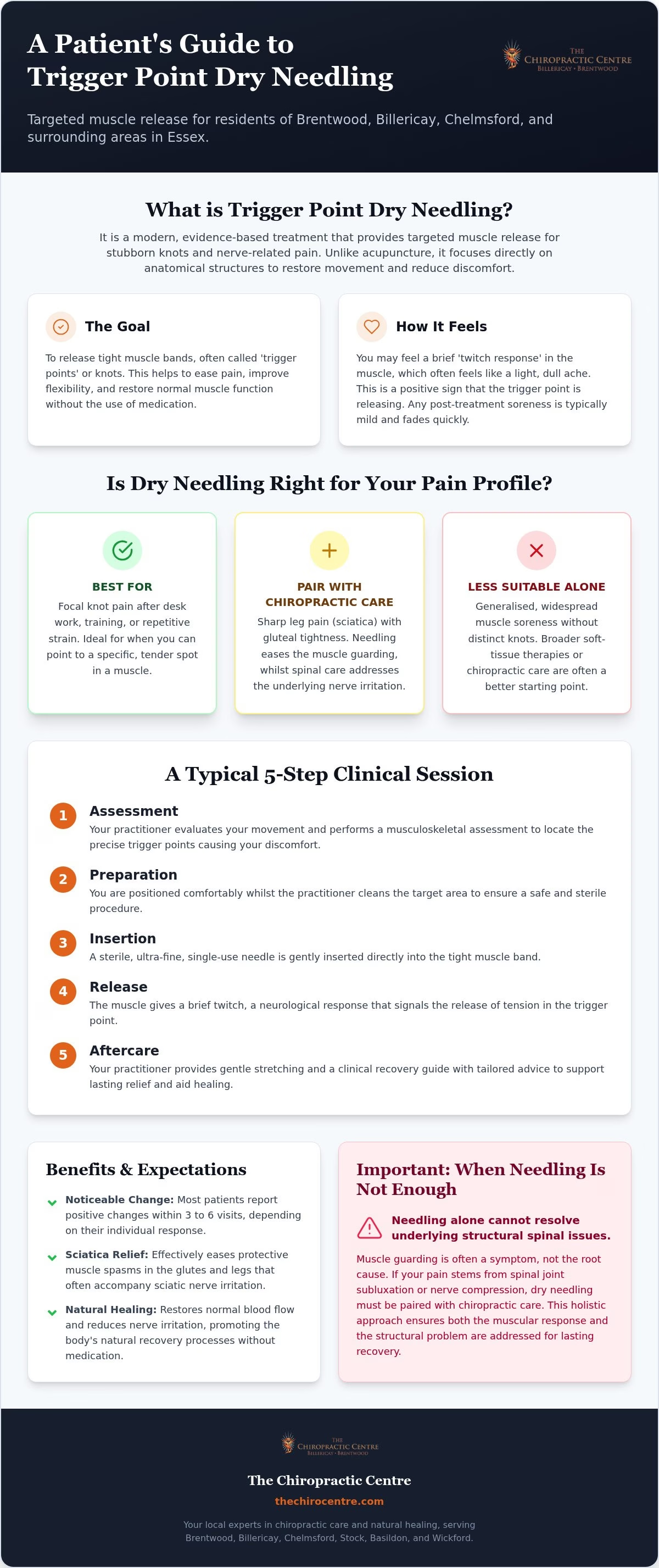
- Most patients notice positive changes within 3 to 6 visits depending on individual response.
- Dry needling will not resolve underlying structural spinal issues unless paired with chiropractic care.
- Best for focal muscle knots or gluteal guarding rather than generalized soreness without knots.
- The 3-tier cost breakdown in this article shows how qualifications impact your financial investment.
Trigger point needling Essex: match care to your pain profile
Your symptoms decide whether targeted dry needling will settle deep discomfort. Stubborn aches often stem from tight muscle knots (trigger points) that restrict movement, and releasing those spots eases tension quickly.
Before you book, map your situation to a clear next step:
- Focal knot pain after desk work or training: start with targeted dry needling treatments aimed at the tight band itself.
- Sharp leg pain with glute tightness: plan needling for muscle stiffness/tightness (muscle guarding) together with spinal assessment, because guarding alone rarely tells the full story.
- Generalised soreness without a clear knot: broader soft-tissue or chiropractic care usually fits better than needling on its own.
Deep muscle stiffness/tightness in your glutes can appear as a reaction to underlying spinal issues. That guarding is a protective mechanism, yet care still needs to address structural problems and the muscle response together, because needling alone will not correct joint misalignment. Targeted needling suits focal aches; wider soreness calls for a wider plan.
Request a consultation so the team can match the approach to your pain profile.
Dry needling differs from acupuncture in focus and method
Dry needling targets muscle knots to restore movement, whereas traditional acupuncture focuses on balancing body energy along meridian lines.
Dry needling suits structural injuries because it releases tension in deep tissue directly. Think of a knotted fishing line: acupuncture works across a wider system, while dry needling unpicks the knot you can point to.
This Western medical approach treats muscle stiffness/tightness so you regain mobility without drugs. For nerve-related leg pain, dry needling for sciatica can calm irritated tissue, though it cannot resolve underlying structural spinal issues on its own. More on this: Dry Needling for Sciatica.
Dry needling fits Essex residents who want direct, evidence-based help for sports injuries or postural strain; acupuncture suits people seeking broader wellness support. Schedule a visit in Billericay if you want a clear recommendation for your case.
Dry needling can ease sciatica and radiating leg pain
Dry needling reduces deep muscular tension that often accompanies sciatica and radiating leg discomfort. When sharp pain shoots down your leg, irritated nerves frequently drive nearby muscles into a defensive spasm.
Situation: protective spasm in the glutes piles pressure onto an already irritated sciatic nerve. Action: treat muscle stiffness/tightness in those glutes while you also address spinal nerve compression. Outcome: pressure eases, blood flow improves, and you give recovery a fair chance instead of chasing the spasm alone.
Dry needling by itself fails to resolve underlying structural problems. You set better conditions for lasting recovery once you target the spine’s structural nerve compression alongside the protective gluteal spasms. Releasing active trigger points restores normal blood flow and reduces nerve irritation without medication.
Practitioners at the clinic combine targeted dry needling with precise spinal care so soft tissue and structure move forward together. If you live in Brentwood or Billericay, book a consultation with the team and start from a full picture of your leg pain.
What dry needling for muscle pain feels like
Most patients report only minimal discomfort during dry needling.
In the Brentwood clinic, the brief twitch response usually feels like a light dull ache. That reaction shows your muscle knots are releasing. You may notice soft muscle stiffness/tightness afterwards, which fades as tissue settles.
Pairing work on compensatory guarding in the glutes with spinal care builds a steadier base for longer-term recovery, still without medication. You can browse further trigger point therapy notes for related gentle options. Treating these spots resets the tight band so movement feels freer again.
Reserve a slot in Essex when you want that response explained hands-on for your own muscles.
5 Steps that structure a clinical trigger point session
A clinical session follows a set protocol so muscle knots are treated safely and your discomfort is eased with a clear sequence.
- Assessment: Your practitioner evaluates your movement patterns and pinpoints areas of muscle stiffness/tightness.
- Preparation: You lie comfortably while the target area is cleaned and prepared.
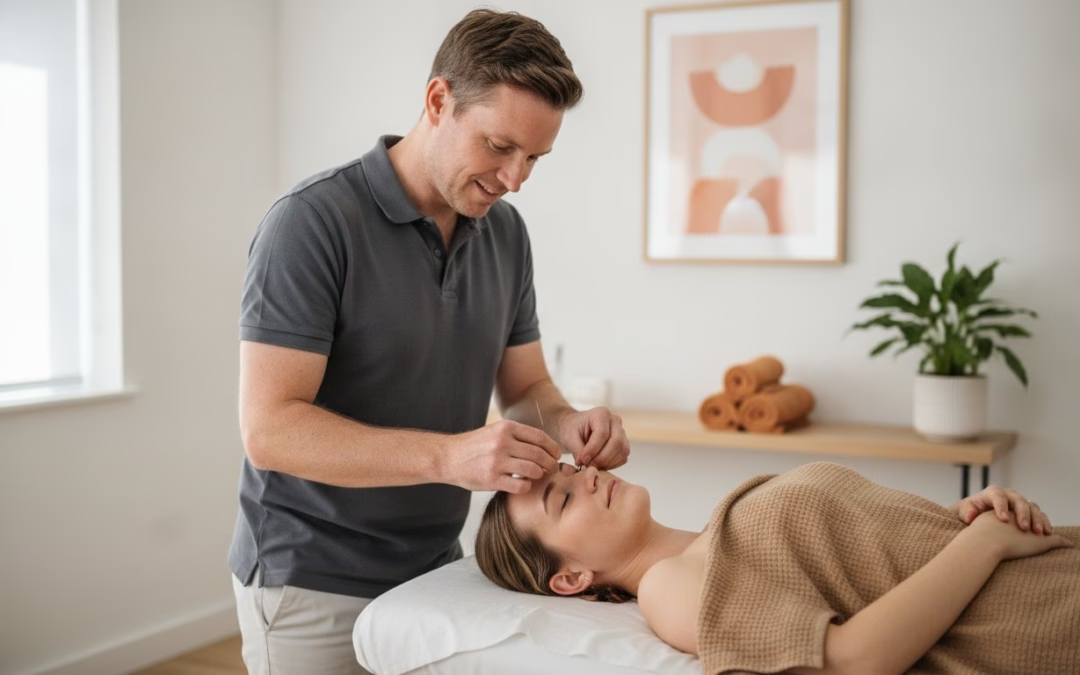
- Insertion: A sterile, ultra-fine needle enters the tight band.
- Release: The muscle twitches briefly, signalling that the tension has released.
- Aftercare: Gentle stretching and tailored advice support longer-term relief.
You stay guided at each stage. If pain worries you beforehand, know the needles are extremely thin and most people feel only a mild, temporary sensation. Arrange a visit with the centre when you are ready to walk through these steps in person.
When needling alone will not resolve your pain
Dry needling cannot settle every physical ache on its own.
Persistent problems often need a wider plan. Addressing both the structural nerve compression in the spine and the compensatory muscle stiffness/tightness in the glutes builds a steadier setting for healing over time. Muscle guarding requires precise evaluation to manage properly.
Therapy that ignores joint health and only works soft tissue helps for a short spell, then the original strain returns. For severe joint issues, a chiropractic adjustment is a sound starting point; combining that with massage therapy supports the body without relying on medication.
You can expect tailored care across Billericay, Brentwood and nearby Essex areas. Book a consultation when you want a plan that covers structure and soft tissue together.
3-Tier cost breakdown helps you budget Essex muscle therapy
Comparing practitioner qualifications and time commitments helps you choose safe care that fits your local budget. Higher qualifications usually mean clearer clinical reasoning and stronger peace of mind.
| Provider Tier | Essex Qualification Level | Typical Time Investment |
|---|---|---|
| Tier 1: General Wellness | Basic massage certificates | 30 to 60 minute sessions |
| Tier 2: Dedicated Physical Therapy | Advanced dry needling certification | Initial intake plus follow-ups |
| Tier 3: Comprehensive Clinical Care | Registered chiropractic or medical degrees | Detailed diagnostic consultations |
Fee transparency varies across Billericay and Brentwood clinics. Total investments depend on your specific assessment needs, so ask for a personalised quote before you commit.
The team focuses on honest guidance and your longer-term recovery rather than a one-off session. You can book a consultation to talk through suitable options for your schedule and symptoms.
Four qualifications protect you when choosing a local clinician
Verify statutory registration, dry needling certification, clinical indemnity insurance, and local clinical experience before you book. Clear credential details can be hard to find across Essex; practice websites often hide background and fee structures behind vague marketing language, which makes safe choices harder for patients in Billericay and Brentwood.
Ask whether your clinician treats muscle knots alongside compensatory muscle stiffness/tightness. Work on gluteal guarding beside spinal issues supports healing, yet it still cannot remove structural root causes on its own. Request full cost details before your consultation, and bring any questions you already have.
Book a consultation when you want those four checks walked through against your own case.
Combining needling with chiropractic care speeds recovery
Integrated plans pair dry needling with targeted chiropractic care so recovery does not stall at soft tissue alone. Pairing soft-tissue work with spinal alignment tends to hold relief for longer. Spinal nerve issues still need direct attention if you want a full result rather than a temporary ease in the muscle.
Your path starts with a thorough consultation at the Billericay practice, which serves patients across Brentwood and the wider Essex area. The plan is built around your goals and how your spine and muscles share the load.
Ready to move with less pain? Book a consultation with The Chiropractic Centre and put needling inside a wider care plan.
Frequently asked questions
How does the process work?
Trigger point needling Essex care targets painful muscle knots with fine, sterile needles so tension releases promptly. Your practitioner inserts a needle into the tight band to stimulate a twitch response. That reaction relaxes the tissue, restores normal blood flow, and supports healing without drugs. Book a consultation at the clinic to see how the method fits your recovery goals.
Does dry needling for muscle pain hurt?
Dry needling usually causes minimal discomfort, though you may feel a brief, mild ache during the twitch response. People in Billericay and Brentwood often describe it as a sudden, momentary deep cramp. That short feeling marks the muscle letting go of a stubborn contraction, and you remain supported throughout the procedure.
How many sessions of dry needling will I need for chronic pain?
Many people notice positive changes within three to six visits, depending on individual response. Your exact plan depends on your health goals and physical condition. Structural issues and muscle stiffness/tightness both matter for durable progress; treating guarding alone has clear limits if an underlying spine condition stays uncorrected.
Is dry needling the same as acupuncture?
Dry needling focuses on targeted anatomical relief, whereas acupuncture draws on traditional Chinese medicine principles. Dry needling works on specific muscle knots to ease physical pain and improve movement. Acupuncture aims to balance energy flow along meridians across the body. Each option serves a different purpose on a wellness path.
How will I feel after a session?
You might feel mild soreness or muscle tiredness for 24 hours after your appointment. The ache is similar to the feeling after a hard workout. Staying well-hydrated helps tissue recover; drinking plenty of water supports healing if you travel in from surrounding Essex areas.
Schedule Your Assessment in Essex
Deep muscle knots offer a drug-free route to ease pain and restore movement when you also face the decision questions this guide began with: does your pain profile suit needling, are the clinician’s qualifications clear, and will spinal structure be addressed beside soft tissue?
In clinical practice, work on spinal structure and persistent muscle stiffness/tightness together supports steadier healing. Treating guarding alone, without spinal care, limits how far recovery can go.
The team tailors care to your needs across Billericay, Brentwood, and nearby areas. To discuss personalised muscle therapy and schedule a full clinical assessment, book an appointment with the qualified team at The Chiropractic Centre.