

Jaw pain linked to teeth grinding can involve more than the jaw itself. If you’re wondering whether a chiropractor can help with TMJ-related jaw pain in Chelmsford, chiropractic care may help address contributing tension or movement issues in the jaw, neck and surrounding muscles. It isn’t a guaranteed fix, and the right approach depends on what’s causing your symptoms.
Grinding or clenching can strain the jaw, while clicking may occur alongside pain, tightness or difficulty chewing. Learn how these symptoms may relate to TMJ problems, when clicking may need assessment, and what chiropractic care could involve, such as an assessment, adjustment or massage therapy. The aim is to help you understand your options and choose a considered next step towards greater comfort.
Key Takeaways
- Jaw clicking, stiffness and locking can offer clues about what is affecting comfortable movement.
- Notice when clicking comes with pain, worsening symptoms or difficulty chewing, as these are reasons to seek an assessment.
- Grinding, clenching and muscle tension may contribute to jaw discomfort; recognising these patterns can help guide your next steps.
- An assessment may consider the jaw, neck and surrounding muscles, with adjustments or soft tissue therapy discussed as possible options.
TMJ and Jaw Pain: Can Chiropractic Care Help?
A chiropractor may help with some jaw pain by assessing jaw movement and related neck or muscle tension. Whether chiropractic care suits you in Chelmsford depends on your symptoms and assessment.
Jaw Symptoms and TMJ Diagnosis
The temporomandibular joint connects your lower jaw to your skull, with one joint on each side. TMJ dysfunction describes problems involving the joint or the muscles that guide jaw movement. Symptoms can include aching near the ear, clicking, stiffness, tenderness, pain when chewing and difficulty opening your mouth fully.
Notice whether your jaw locks open or closed, or whether your upper and lower teeth feel different when you bite together. Neck discomfort, ear pressure or pain, headaches and throat sensations can occur alongside jaw symptoms. An assessment considers your symptoms and jaw movement, as well as your neck and surrounding muscles, to understand what may be contributing.
Evidence for Chiropractic Treatment
A study reported in the Journal of Manipulative and Physiological Therapeutics found reduced pain and improved functional outcomes after chiropractic care for people with TMJ disorders. This supports considering treatment as a possible option, rather than proving that everyone will respond in the same way.
Chiropractic care may consider how neck mobility, posture and muscle tension relate to jaw movement. For example, an assessment may explore whether neck stiffness coincides with discomfort when chewing. The study finding supports considering this approach, while your symptoms and assessment guide whether it may be appropriate.
Treatment Risks and Side Effects
Potential side effects depend on the technique and area being treated. Before an adjustment or soft tissue therapy, discuss your symptoms, relevant health history and concerns. Ask what the proposed technique involves, and agree on what feels acceptable before treatment begins.
Jaw locking, a recent injury or severe pain are important details to raise during assessment, as they can affect which approach is suitable. You should be able to describe any discomfort during treatment and ask for the technique to stop or change. Clear communication helps keep care focused on your comfort and jaw movement.
When jaw clicking or popping needs assessment
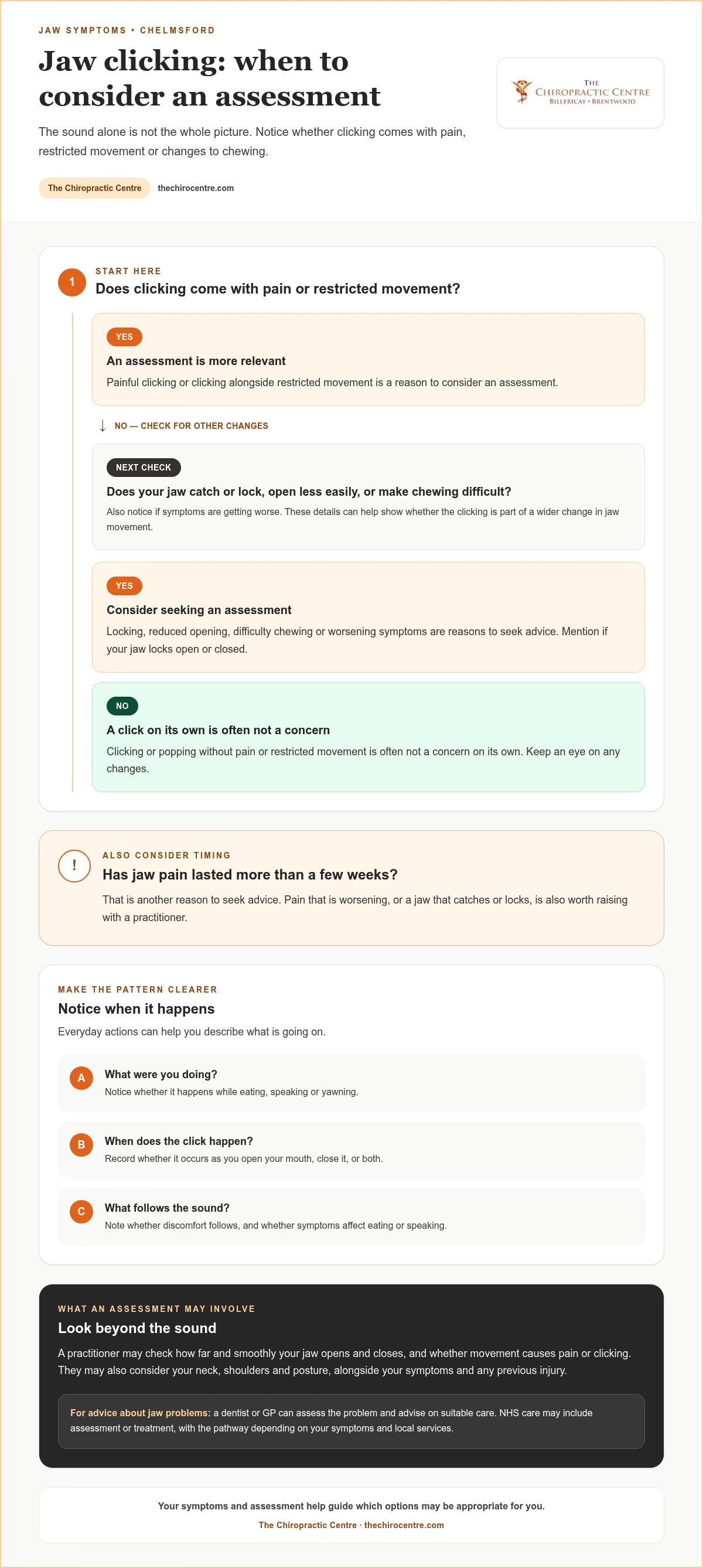
Clicking or popping without pain or restricted movement is often not a concern on its own. An assessment is more relevant when sounds accompany pain, locking, reduced opening or difficulty chewing.
Notice what happens during everyday actions such as eating, speaking or yawning. Record whether the click occurs when opening, closing or both, and whether discomfort follows. Painful clicking, worsening symptoms, or a jaw that catches or locks are reasons to consider an assessment. Jaw pain that lasts more than a few weeks is another reason to seek advice.
Does the NHS offer treatment or referrals for TMJ disorders in Chelmsford? NHS care may include assessment or treatment for jaw problems, with the pathway depending on your symptoms and local services. A dentist or GP can assess the problem and advise on suitable care.
A jaw assessment can look at how far and smoothly you open and close your mouth, and whether movement causes pain or clicking. The practitioner may assess your jaw alongside your neck, shoulders and posture, since muscle tension or restricted neck movement can be linked with jaw discomfort. Describe any previous injury and how symptoms affect eating or speaking.
To arrange an assessment in Chelmsford, explain when the clicking started, whether it hurts, and whether your jaw has locked. These details help the practitioner understand the pattern and consider appropriate next steps, rather than focusing on the sound alone.
Zone Technique is a named approach, so ask what the assessment and treatment involve and how they relate to your jaw symptoms. Useful points to understand include which areas are assessed, what movement findings guide care, and how progress will be reviewed. A clear explanation helps you make an informed choice about any proposed technique.
Can Teeth Grinding Cause TMJ Pain?
Grinding and clenching can repeatedly load the jaw muscles, contributing to tension and discomfort around the temporomandibular joint. At home, choose softer foods during a flare, avoid extreme jaw opening, and try gentle stretching or an ice pack.
Clenching, Grinding and Jaw Tension
Teeth grinding, also called bruxism, and jaw clenching are linked with TMJ problems. Repeated muscle effort can leave the jaw feeling tired or tense, particularly after sleep or a demanding day. Stress may contribute if it leads you to clench, but stress alone does not cause TMJ disorders.
Notice when your teeth touch during the day, such as while concentrating at a desk or driving. At rest, keep your lips together and your teeth slightly apart. This relaxed position reduces unnecessary contact between the teeth and gives the jaw muscles a chance to ease.
Posture and Clenching Strategies
A forward-head posture during desk work or phone use may affect jaw position and muscle activity. Bring your screen closer to eye level, relax your shoulders, and avoid holding your head forward for long periods. These practical posture changes can reduce strain around the neck and jaw.
Link clenching to its context: note whether it happens during focused work, stress or sleep. Pause when you notice your teeth pressed together, release your jaw, and return to a relaxed resting position. Gentle jaw and neck stretches may support movement, but stop if they increase pain.
For safe home care, choose softer foods if chewing aggravates symptoms and avoid forcing your jaw wide open. Gentle stretching and an ice pack may help. Seek assessment if pain worsens, chewing becomes difficult or your jaw locks.
Chiropractic adjustments and soft tissue therapy
If you’re asking whether a chiropractor can help with TMJ-related jaw pain in Chelmsford, treatment planning starts by connecting your symptoms with movement and muscle findings. An assessment may compare jaw opening and closing, note tenderness, and consider neck or shoulder tension. This helps identify areas that may be relevant to your discomfort, rather than focusing on one symptom alone.
Chiropractic adjustments are hands-on techniques that may address joint movement. For jaw-related concerns, a practitioner may assess the neck and upper back as well as the jaw. These areas support the head and work with muscles involved in jaw movement. Before treatment, ask which area is being addressed and what the adjustment involves. Discuss your comfort and preferences before deciding whether to proceed.
Soft tissue therapy focuses on tight or overactive muscles. Depending on the assessment findings, it may include massage, stretching or myofascial release around the jaw and neck. Intraoral myofascial release works on muscles surrounding the joint from inside the cheeks. This is a distinct hands-on method, so the practitioner should explain the approach and let you decide whether it feels suitable.
When symptoms include clenching, restricted opening or headaches, a treatment plan may combine manual techniques with targeted exercises. Each element should relate to a finding, such as neck stiffness affecting comfortable jaw movement. The aim is to address contributing movement or muscle factors, not simply silence clicking. Follow-up assessment can review changes in jaw function and help guide further care.
Whether a chiropractor can help with TMJ-related jaw pain in Chelmsford depends on your symptoms and assessment findings. A clear explanation of proposed techniques helps you understand how care relates to your concerns and make an informed choice.
The Chiropractic Centre: New Patient Consultation
The Chiropractic Centre offers a New Patient Consultation to discuss your jaw symptoms and assess how they affect movement and everyday comfort. It’s a practical next step if pain, clicking or clenching is interfering with eating, speaking or sleep.
Your consultation gives you time to explain when symptoms occur and what you’ve noticed. The findings can guide a conversation about suitable care, including Chiropractic Adjustments or Massage Therapy where appropriate. You can also discuss your questions and comfort before deciding on your next step.
For jaw pain in Chelmsford, contact The Chiropractic Centre to arrange a New Patient Consultation.
Take a considered next step
Jaw discomfort can affect everyday choices, from what you eat to how comfortably you speak. If you’re considering whether a chiropractor can help with jaw pain and TMJ in Chelmsford, a personal assessment can help you discuss your symptoms and suitable care options. The Chiropractic Centre offers New Patient Consultation, Paediatric Care and Massage Therapy, with your wellbeing at the centre of the conversation.
Bring a clear account of what you notice, including which movements feel difficult and what seems to aggravate your jaw. You can then talk through possible next steps without rushing your decision. If you’re ready to discuss your concerns, contact The Chiropractic Centre and take a positive step towards understanding your jaw health.
Frequently Asked Questions
How Do Chiropractors Assess TMJ Dysfunction?
A chiropractor assesses TMJ dysfunction by considering your symptom history alongside jaw movement and neck function. Explain whether chewing, speaking or yawning changes the discomfort, and whether one side feels different. Comparing movement on each side helps describe the pattern. Before an appointment in Chelmsford, note which everyday activities trigger symptoms and whether they vary through the day.
How Does Chiropractic Treat TMJ Disorder?
Chiropractic treatment may involve adjustments or soft tissue techniques, guided by assessment findings. Care may focus on movement and tension around the jaw and neck, with exercises considered as part of an individual approach. Bite changes, dental work and grinding guards are dental matters. Ask how any proposed technique relates to your symptoms and which area it will address.
When should you speak to a dentist or GP?
Speak to a dentist or GP about significant tooth pain, swelling, signs of infection or fever. Dental input is also relevant if your bite has changed, you need advice about a grinding guard, or symptoms follow dental work. These details may point to tooth or dental concerns alongside jaw muscle discomfort. Explain when symptoms began and what makes them worse.
Clicking and popping: is it always a problem?
No. Clicking or popping without pain or restricted movement is often not concerning. Seek an assessment if the sound occurs with jaw pain, reduced opening, locking, worsening symptoms or difficulty chewing. For example, note whether clicking is painless at breakfast but uncomfortable later, and whether you can open your mouth normally. That pattern provides more useful context than the sound alone.
How Does Posture Affect Jaw Alignment?
Posture can affect how your head, neck and jaw muscles work together. Leaning towards a phone or laptop may hold your head forward and add strain around the jaw and neck. Try raising your screen, relaxing your shoulders and changing position regularly. Notice whether tension changes during desk work, rather than judging your posture from one moment.
What Is TMJ?
TMJ means temporomandibular joint, the joint connecting your lower jaw to your skull. You have one on each side, and each combines rotation with sliding movement as your mouth opens. A cartilage disc helps the joint move smoothly. These joints support everyday actions such as chewing, talking and yawning, so problems can affect more than mealtimes.