
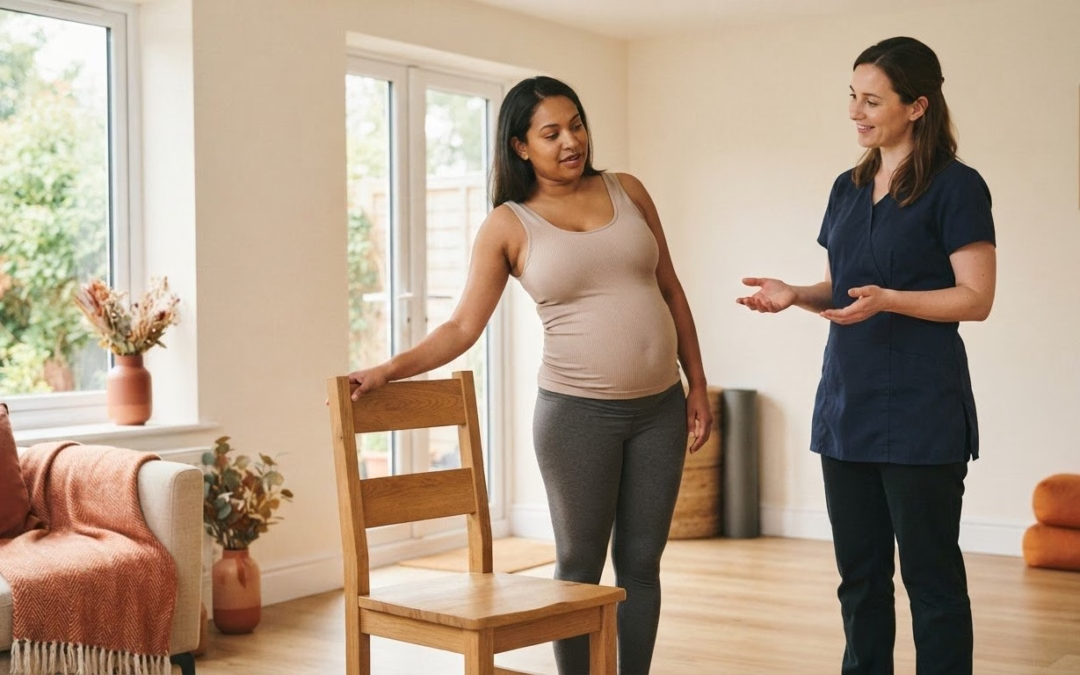
Relief often starts with changing how you move, not avoiding movement altogether. For relieving pregnancy-related back pain in Brentwood, gentle, suitable movement, supportive posture and regular 5-10-minute rests can help reduce strain. The right approach is one that responds to your comfort and the changes your body is going through.
Pregnancy-related back pain in Brentwood can make everyday activities uncomfortable, and rest alone may not ease the strain. Posture, gentle movement and pacing can help you manage daily tasks, while tailored exercise or hands-on care may be worth discussing. This article covers practical ways to adapt your routine and when to seek support.
Key Takeaways
- Small posture and movement adjustments may ease strain; the NHS says pelvic girdle pain affects about 1 in 5 pregnant women to some degree.
- Short, regular rests of 5-10 minutes can help reduce physical strain during pregnancy.
- Learn how movement guidance can support recovery, including when back and pelvic strengthening exercises may begin after delivery.
- See how targeted exercises and manual therapy may work together, and when a New Patient Consultation at The Chiropractic Centre could be a helpful next step.
Posture and body mechanics during pregnancy
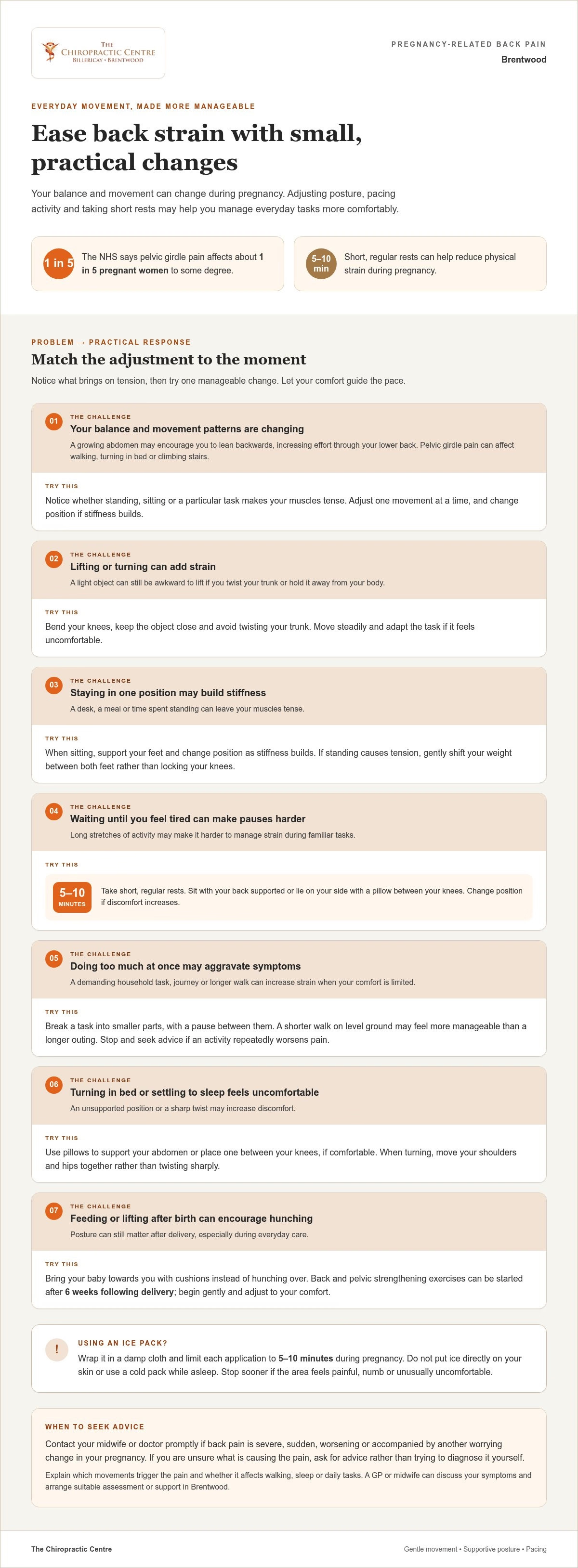
As your baby grows, your balance and movement patterns change. The NHS says about 1 in 5 pregnant women experience pelvic girdle pain to some degree. This discomfort can affect walking, turning in bed or climbing stairs. A growing abdomen may also encourage you to lean backwards, increasing effort through your lower back. Notice whether standing, sitting or a particular task makes your muscles tense.
Adjust one movement at a time. When lifting a light object, bend your knees, keep it close and avoid twisting your trunk. At a desk or during a meal, support your feet and change position when stiffness builds. If standing causes tension, gently shift your weight between both feet instead of locking your knees. Small adjustments can reduce sustained strain during familiar activities.
During pregnancy, regular rests of 5-10 minutes can help reduce strain. Sit with your back supported, or lie on your side with a pillow between your knees. If one position increases discomfort, change it. Short pauses between tasks can be more manageable than waiting until your back feels tired.
Seek prompt advice from your midwife or doctor if back pain is severe, sudden, worsening or accompanied by another worrying change in your pregnancy. A GP or midwife can discuss your symptoms and arrange suitable assessment or support in Brentwood. Explain which movements trigger the pain and whether it affects walking, sleep or daily tasks.
A repeating pattern of tightening alongside back pain may suggest labour. Pain travelling from your back or buttock down a leg may fit sciatica. Neither pattern confirms the cause, and back pain can have other explanations. If you’re unsure, contact your midwife or doctor rather than trying to diagnose it yourself.
After birth, posture still matters during feeding and lifting. For example, bring your baby towards you with cushions instead of hunching over. Strengthening exercises for your back and pelvis can be started after 6 weeks following delivery. Begin gently and adjust movements to your comfort, especially if a position brings back familiar pain.
Rehabilitation and movement guidance
Rehabilitation during pregnancy aims to maintain useful movement while managing activities that aggravate symptoms. A plan may include gentle mobility, strengthening and practical changes to daily tasks. The right approach depends on where you feel pain, what brings it on and how it affects walking, sleep or work. Describe these patterns clearly during an assessment.
Rather than pushing through discomfort, try a manageable version of a familiar movement. For example, take a shorter walk on level ground and notice whether your back settles or feels more strained. If standing from a chair is difficult, use your hands for support and move steadily. These examples can help you identify what feels tolerable; they are not a fixed exercise prescription.
For NHS maternity physiotherapy in Brentwood, ask your midwife or GP about the service linked to your maternity care. They can explain the local referral route and where appointments take place. Share when the pain began, which movements affect it and whether symptoms travel into your leg.
A physiotherapist can consider your movement, strength and everyday demands together. You might discuss getting in and out of a car, turning in bed or managing a workday. This makes rehabilitation more relevant than choosing exercises from a generic list. A suitable programme can be adapted as your comfort and pregnancy change.
Keep a simple record of activities and symptoms, such as walking, sitting or household tasks. Note what you could do comfortably and what increased pain later. Specific examples can help guide changes to your routine and make follow-up discussions more useful. If movement repeatedly worsens symptoms, pause that activity and seek advice.
Hands-on support may complement movement work when muscle tension makes activity uncomfortable. Massage therapy can form part of a broader approach, alongside suitable movement and practical changes. It isn’t a replacement for NHS maternity assessment when pain needs clinical review. The aim is to make daily movement more manageable, with support matched to your needs.
Activity, rest and relaxation
Gentle activity can help you maintain everyday movement, while pacing can reduce the chance of doing too much at once. Break a demanding task into smaller parts: prepare one part of a meal, sit to rest, then continue if comfortable. A short, level walk may suit you better than a longer outing if standing or walking increases strain. Let your comfort guide the pace.
Plan pauses around activities that leave you tense, such as travelling, household jobs or sitting through a long appointment. Change position, take a brief walk around the room or rest with your back supported. Regular breaks may help more than waiting until discomfort interrupts the task. If an activity repeatedly worsens pain, stop and discuss the pattern with your midwife or physiotherapist.
Try a simple breathing routine to relax. Sit comfortably, soften your shoulders and breathe out slowly without forcing a deep breath. Repeat for a few calm breaths, especially after a busy task or before settling to sleep. A quiet space, gentle music or a supported side-lying position may help you focus on releasing tension.
If you use an ice pack for discomfort, wrap it in a damp cloth and limit each application to 5-10 minutes during pregnancy. Don’t place ice directly on your skin. Stop sooner if the area feels painful, numb or unusually uncomfortable. Avoid using a cold pack while asleep, when you may not notice how your skin responds.
At bedtime, use pillows to support your abdomen or place one between your knees, if comfortable. If turning wakes you, move your shoulders and hips together rather than twisting sharply. Keep needed items within reach to avoid repeatedly stretching across the bed. During the day, note how activities, pauses and resting positions affect your comfort. These details can help you describe useful patterns at a maternity appointment.
Pain relief through targeted exercises and manual therapy
Targeted exercise should match the movement that brings on your discomfort. A physiotherapist may assess how you bend, stand from a chair or climb stairs, then adapt exercises to those tasks. Gentle pelvic movements or supported position changes may help you practise control without forcing a painful range. Stop any exercise that sharply increases symptoms and describe what happened.
Let your body’s response guide progress rather than completing a set routine at any cost. For example, you might practise a small movement beside a stable surface, then consider whether it makes walking or turning easier. A practitioner can adjust the position, range or effort to suit your symptoms. This individual approach is more useful than copying exercises designed for someone else.
Manual therapy may involve hands-on work to ease tension in muscles around the lower back, hips or buttocks. Massage can be adapted to your comfort, including your preferred position and areas of sensitivity. Tell the practitioner that you’re pregnant, where you feel pain and whether it travels into your leg. This helps them consider an appropriate approach and whether further assessment is needed.
Exercise and manual therapy can address different aspects of discomfort: movement practice builds confidence with daily tasks, while hands-on care focuses on soft tissues and comfort. Neither should require you to tolerate increasing pain. A useful session includes clear discussion of your symptoms and practical guidance for activities such as getting dressed, walking or standing at work.
For pain-relief medicines, ask your midwife, GP or pharmacist which options suit your pregnancy stage and health history. Don’t choose a medicine or dose based on general online advice; seek individual guidance before taking one.
If you’d like support matching movement and hands-on care to your needs, arrange a tailored appointment to discuss your symptoms and suitable next steps.
The Chiropractic Centre: New Patient Consultation
The Chiropractic Centre offers a New Patient Consultation to discuss pregnancy-related back discomfort. You can explain when symptoms began, which movements affect them and how they influence everyday activities. From there, you can discuss whether Massage Therapy or Chiropractic Adjustments may suit your needs.
Tell the practitioner that you’re pregnant and mention any advice you’ve received from your midwife, GP or physiotherapist. These details support a considered discussion of your comfort and care options. If your symptoms need maternity assessment, contact your midwife or GP promptly; hands-on care does not replace that support.
For a calm next step, contact The Chiropractic Centre to discuss a New Patient Consultation.
Take your next step towards comfortable movement
Progress can mean returning to a task that matters to you, rather than judging each day by whether discomfort has disappeared. Choose a practical goal, such as feeling more at ease during a usual walk or completing a daily routine with fewer interruptions. Notice what changes and share those details when discussing your care.
For relieving pregnancy-related back pain in Brentwood, a personalised discussion can help you consider support that fits your needs and stage of pregnancy. The Chiropractic Centre’s New Patient Consultation offers a chance to discuss your concerns and explore relevant care options. Paediatric Care is also available as a separate service for children.
Take a considered next step by contacting The Chiropractic Centre. Your movement goals can guide a supportive conversation about what comes next.
Frequently Asked Questions
What causes back pain during pregnancy and when does it usually start?
Back pain during pregnancy can have different causes, so its timing and feel vary from person to person. There isn’t a single week when it usually begins. The location, whether discomfort spreads and how it affects sleep or movement can help a clinician assess possible causes. Mention new or unusual pain to your midwife, particularly if it concerns you.
Which pregnancy-safe exercises and stretches can relieve back pain?
There isn’t one exercise routine that suits every pregnancy. Ask your midwife or maternity physiotherapist which movements fit your health and stage of pregnancy. If you’re considering relieving pregnancy-related back pain in Brentwood, ask them to review a gentle prenatal class or walking routine before you start. You can discuss suitability and any modifications rather than relying on a general online exercise plan.
How can posture, sleep position, and daily habits reduce pregnancy back pain?
When dressing, sit down to put on socks or trousers rather than balancing on one leg. At night, choose a position that lets you rest comfortably; no single sleeping posture suits everyone. If discomfort regularly wakes you or makes it hard to settle, tell your midwife. Explaining how your sleep is affected can help shape a useful discussion about support.
Are heat packs, massage, or physiotherapy safe for pregnancy-related back pain?
The right approach depends on your pregnancy and individual circumstances. Before using a heat pack or arranging treatment, ask your midwife, GP or maternity physiotherapist what is suitable for you. For relieving pregnancy-related back pain in Brentwood, discuss the proposed approach and any health concerns first. They can help you weigh up warmth, hands-on care or movement support.