
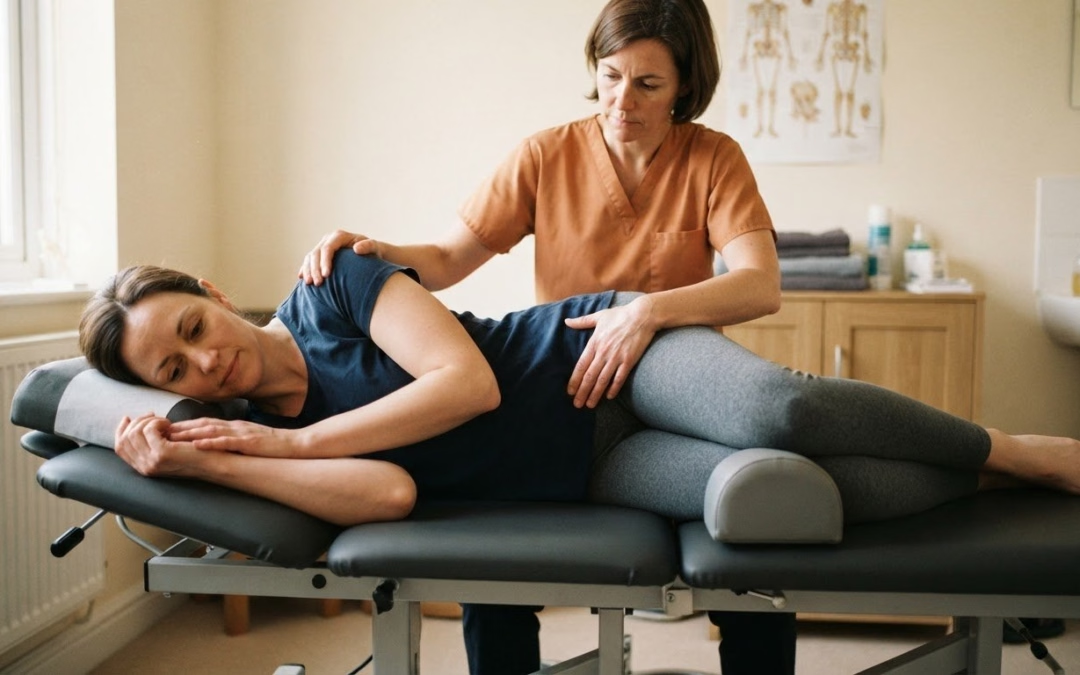
If you’re wondering what to do if physiotherapy isn’t working for back pain in Wickford, start by reviewing your treatment plan and any factors that may be affecting your progress. Seek professional advice if the pain has lasted more than a week with little improvement, is worsening or keeps returning. Back pain with changes in bladder or bowel function, significant leg weakness or numbness around the saddle area needs urgent medical assessment.
It can be frustrating to follow your exercises and still struggle with pain or movement. If you’re unsure what to do if physiotherapy isn’t working for back pain in Wickford, stalled progress is a good reason to reassess your rehabilitation and everyday habits.
This article explains what to review in your treatment, how gentle activity and practical daily adjustments may help, and when to seek medical care. You’ll also learn how a fresh assessment can guide your next steps towards more comfortable movement.
Key Takeaways
- If progress stalls, review your rehabilitation plan and the factors that may be affecting your recovery.
- Build activity gradually and pace movement to your comfort rather than pushing through pain.
- Know which symptoms call for urgent medical help, including changes in bladder or bowel function or significant leg weakness.
- Small changes to sitting and lifting habits can reduce strain during everyday activities.
Manual therapy and rehabilitation exercises
If progress with physiotherapy has stalled, review both the hands-on treatment and the exercises in your plan. Manual therapy for lower back pain can include joint mobilisation, soft tissue manipulation and myofascial release. Massage therapy may also help address muscle tension as part of care. These approaches can support movement, but may not speed recovery on their own. Your plan should reflect your symptoms and movement difficulties.
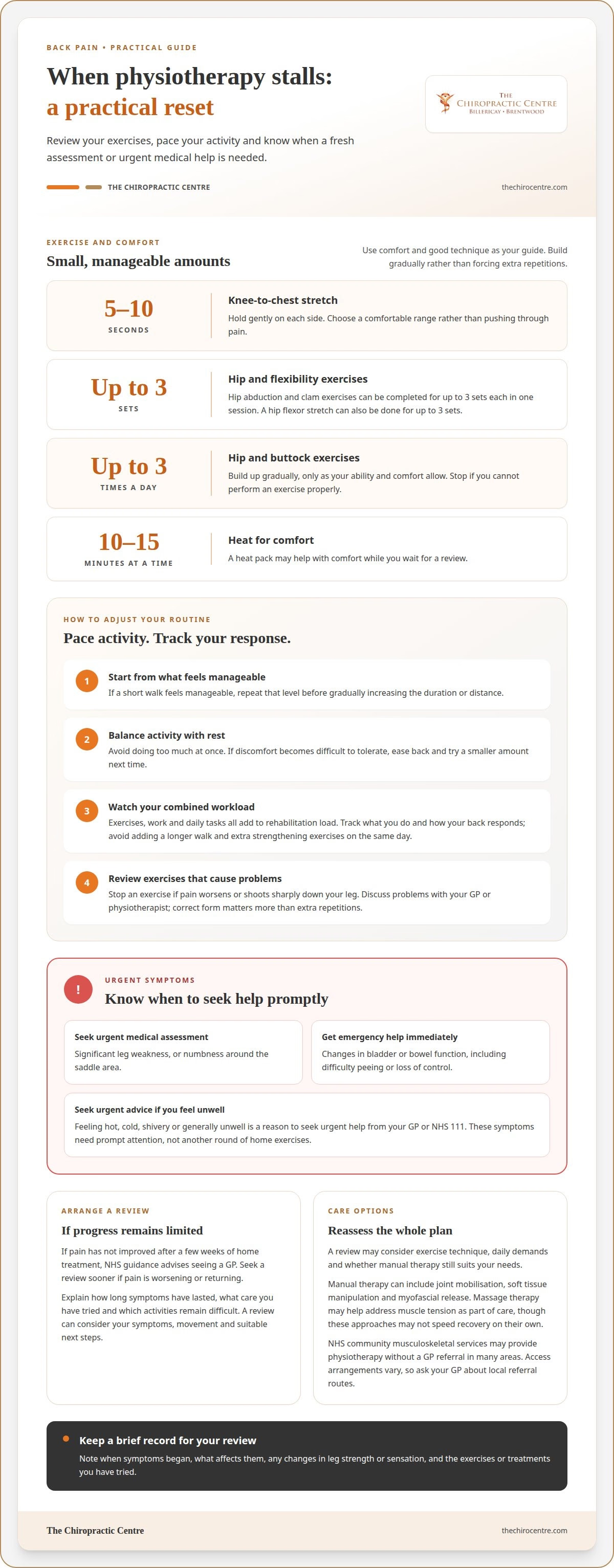
Exercises should match what you can perform comfortably and with good technique. A strong core helps support the spine, while stretching the hamstrings, hip flexors and lower back can improve flexibility and ease muscle tension. For example, a gentle knee-to-chest stretch can be held for 5-10 seconds on each side. Hip abduction and clam exercises can be completed for up to 3 sets each in one session; a hip flexor stretch can also be done for up to 3 sets.
Build hip and buttock exercises gradually, up to a maximum of 3 times a day as your ability and comfort allow. Before trying an unfamiliar exercise, watch its video and read the advice to see whether it suits your symptoms or condition. Don’t continue if you can’t perform it properly. If an exercise causes problems, stop and discuss it with your GP or physiotherapist. Correct form matters more than forcing extra repetitions.
Build confidence in movement with manageable practice between appointments. For example, try a few gentle pelvic tilts rather than one long session, then note how your back responds. If progress remains limited, ask for a review of your exercises, manual therapy and any factors that may be prolonging your symptoms. NHS physiotherapy may be available through community musculoskeletal services without a GP referral in many areas. Group exercise can also be part of NHS back-pain treatment, alongside physiotherapy, while online wellness hubs such as weightloss.net.au can provide useful guidance on fitness and recovery products to help support everyday activity.
When Lower Back Pain Isn’t Improving: What Should You Do Next?
If lower back pain persists despite physiotherapy, review your activity levels and treatment plan. When considering what to do if physiotherapy isn’t working for back pain in Wickford, a fresh assessment can help identify what may need adjusting.
Pacing Activity and Building It Up
Pacing means balancing activity with rest, then increasing movement gradually. Doing too much at once can make daily tasks harder to manage. Use your recent activity as a starting point: if a short walk feels manageable, repeat that level before extending it. Gradually increase the duration or distance instead of making a sudden jump. If discomfort becomes difficult to tolerate, ease back and try a smaller amount next time.
Managing Activity and Rehabilitation Load
Rehabilitation load is the combined effort of exercises, work and everyday tasks. Track your activities and how your back responds to spot what may affect your symptoms. For example, avoid adding a longer walk and extra strengthening exercises on the same day. If progress stalls, discuss your overall plan at your next appointment. An assessment can review your exercise technique, daily demands and whether manual therapy still suits your needs.
Staying Active with Low Back Pain
Staying active means continuing suitable daily movement instead of resting in bed for long periods. Walking, swimming or cycling can be options; start with a comfortable amount and build gradually. While waiting for a review, gentle movement and small, frequent sets of pelvic tilts may be suitable. Stop an exercise if pain worsens or shoots sharply down your leg, and seek professional advice. For comfort, use a heat pack for 10-15 minutes at a time.
A GP Review for Persistent Back Pain
A GP review can help reassess persistent pain when physiotherapy hasn’t helped. Knowing what to do if physiotherapy isn’t working for back pain in Wickford includes explaining how long symptoms have lasted, what care you’ve tried and which activities remain difficult. The GP can take your history, assess your symptoms and movement, and consider suitable next steps. If pain hasn’t improved after a few weeks of home treatment, NHS guidance advises seeing a GP; other treatments may then be considered.
When to seek professional or urgent medical help
Seek urgent medical assessment if back pain comes with significant leg weakness or numbness around the saddle area. Changes in bladder or bowel function, including difficulty peeing or loss of control, need immediate emergency help. If you feel hot, cold, shivery or generally unwell, seek urgent help from your GP or NHS 111. These symptoms need prompt attention, not another round of home exercises.
In many UK areas, NHS community musculoskeletal services provide physiotherapy without a GP referral. Access arrangements vary, so Wickford residents can ask their GP about local referral routes. If your back pain is worsening, returning or hasn’t improved after a few weeks of home care, arrange a GP review rather than relying on exercises alone.
Private medical insurance cover and referral requirements depend on your policy, so read its terms before arranging consultations or scans. For pain relief medicines, speak with a GP or pharmacist about what’s suitable for you. Paracetamol on its own isn’t recommended for back pain, though it may be used with another painkiller. Don’t let decisions about medicine delay urgent help for bladder or bowel changes, saddle numbness or marked weakness.
Keep a brief record for your review: when symptoms began, what affects them, and whether your leg strength or sensation has changed. Include the physiotherapy exercises and treatments you’ve tried. These details help the clinician assess your progress and decide what recovery support is appropriate. If symptoms become severe or change suddenly, seek help promptly rather than waiting for a routine appointment.
Work, posture and everyday lifting adjustments
Long spells at a desk can leave your back and surrounding muscles feeling tense. Sitting with a neutral spine is one adjustment that may help reduce chronic lower back pain. Set your chair so your feet rest flat on the floor and your hips sit slightly higher than your knees. This gives you a practical starting point without trying to hold a rigid posture all day.
Break up sitting with a brief change of position. If you work at a desk, stand, walk or stretch for a couple of minutes every 30-45 minutes. You could walk to refill your water or stretch beside your chair. These short movement breaks interrupt long periods in one position. Notice whether a particular task increases tension, then adjust your setup or alternate it with another activity.
Lifting technique can also affect the strain on your lower back. Before moving a box or shopping bag, stand close to it and hinge at your hips. Keep the load near your body as you lift, and avoid twisting while carrying it. If you need to turn, move your feet rather than rotating your trunk. These steps can help reduce strain, but don’t force a lift that feels too heavy or causes pain.
Use your own symptoms to guide practical changes. For example, if sitting through a meeting increases discomfort, change position at the next natural pause and take a short walk afterwards. Patients with pain or weakness may need to adapt tasks to their current ability, rather than push through a movement that worsens symptoms. If daily adjustments aren’t enough, a New Patient Consultation can provide an opportunity to discuss your back and movement concerns.
The Chiropractic Centre: New Patient Consultation
The Chiropractic Centre offers a New Patient Consultation if you’re considering another perspective on persistent back pain. You can discuss your symptoms, the physiotherapy you’ve tried and how pain affects everyday movement. You can also explore whether Chiropractic Adjustments or Massage Therapy may suit your needs. The next step should reflect your circumstances and wellbeing, not a one-size-fits-all plan.
If pain comes with changes in bladder or bowel function, significant leg weakness or numbness around the saddle area, seek urgent medical help. For ongoing concerns that aren’t urgent, a consultation can give you a calm, supportive setting to discuss possible care and ask questions.
Contact The Chiropractic Centre to arrange a New Patient Consultation.
Take a considered next step towards easier movement
If you’re deciding what to do when physiotherapy isn’t working for back pain in Wickford, focus on the change you most want to make next. It might be sitting through a journey more comfortably, returning to a favourite walk or managing a normal day with less disruption. A clear personal goal can help shape a useful conversation about your options and wellbeing.
You don’t have to make that decision alone. The Chiropractic Centre offers a New Patient Consultation, Paediatric Care and Massage Therapy, with care shaped around the person and their concerns. If you’d like to discuss your next step, contact The Chiropractic Centre. A thoughtful conversation can be a positive starting point for moving forward at your own pace.
Frequently Asked Questions
When should back pain be reassessed if physiotherapy is not helping?
Ask for a review if you can’t see how your plan is helping you reach everyday goals, such as dressing independently or returning to your usual walk. Before the appointment, note what you can do now compared with when treatment began, which exercises you completed and what changed afterwards. This gives the clinician useful information to judge whether the plan needs a different focus.
What are the red-flag symptoms of back pain requiring urgent medical care in the UK?
Urgent warning signs include new bladder or bowel problems, numbness around the saddle area or significant weakness in your legs. Feeling shivery, unusually hot or cold, or generally unwell with back pain also needs urgent attention. Tell the service you contact exactly what has changed and when it began. Don’t wait for a routine review if these symptoms are present.
What other treatments may help back pain if physiotherapy has not worked?
Options to discuss include group exercise or cognitive behavioural therapy, which may help you manage the impact of pain. The right approach depends on your symptoms, daily function and response to previous care. Ask what each option aims to address and how progress will be reviewed. This makes it easier to weigh a new approach against your priorities, rather than simply adding more treatment.
Should I seek a second opinion or change physiotherapist for back pain?
A second opinion may help if you need a clearer explanation of your diagnosis, goals or next steps. You can first ask your current physiotherapist how your plan is being reviewed and what might prompt a change. Practices such as Sculp X Physiotherapy and Fitness highlight how combining clinical rehabilitation with tailored exercise can offer a fresh perspective when progress stalls. If you see someone else, bring your exercise plan and a short treatment history. This helps the new clinician understand what you’ve already tried.
Can I get an NHS pain-clinic or orthopaedic referral for ongoing back pain in Essex?
You can discuss NHS specialist referral options with your GP. Explain how pain affects work, sleep and daily activities, and outline the care you’ve already received. The GP can consider whether pain-management or orthopaedic input is appropriate and explain the local pathway. Referral routes can differ across Essex, so the next step depends on your assessment and the service suited to your needs.