
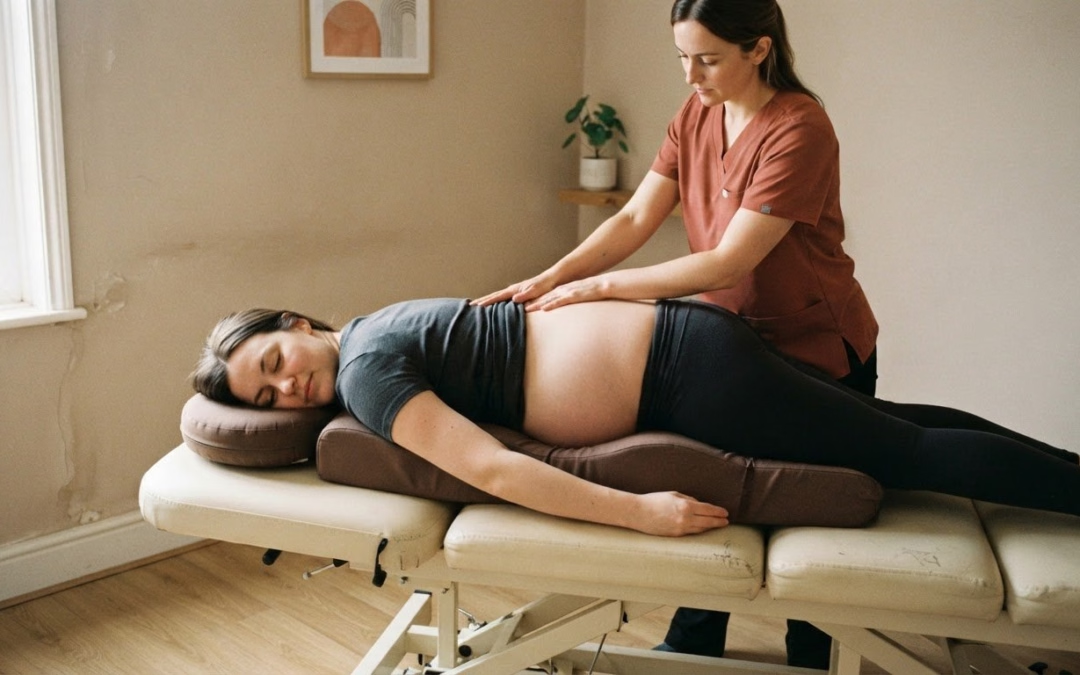
You don’t need to wait for a particular trimester to consider chiropractic care. You can explore it at any stage of pregnancy. For safe chiropractic care during pregnancy in Basildon, the approach should be gentle and tailored to your pregnancy stage, comfort and health circumstances.
It’s understandable to want reassurance before starting hands-on care while pregnant. This article explains what to consider when deciding whether to begin, why conditions such as placenta previa or pre-eclampsia call for coordination with your maternity team, and how techniques and equipment can be adapted for comfort. You’ll also learn what to expect from an individualised care plan, helping you make an informed decision that feels right for you.
Key Takeaways
- You can consider chiropractic care at any point in pregnancy; it does not induce labour.
- Some pregnancy-related conditions call for coordination with your maternity care team before care proceeds or is adapted.
- Pregnancy pillows and adjustable tables can help adapt the treatment setting to your comfort.
- A suitable approach considers your stage of pregnancy, individual discomforts and health circumstances.
Chiropractic care and labour induction concerns
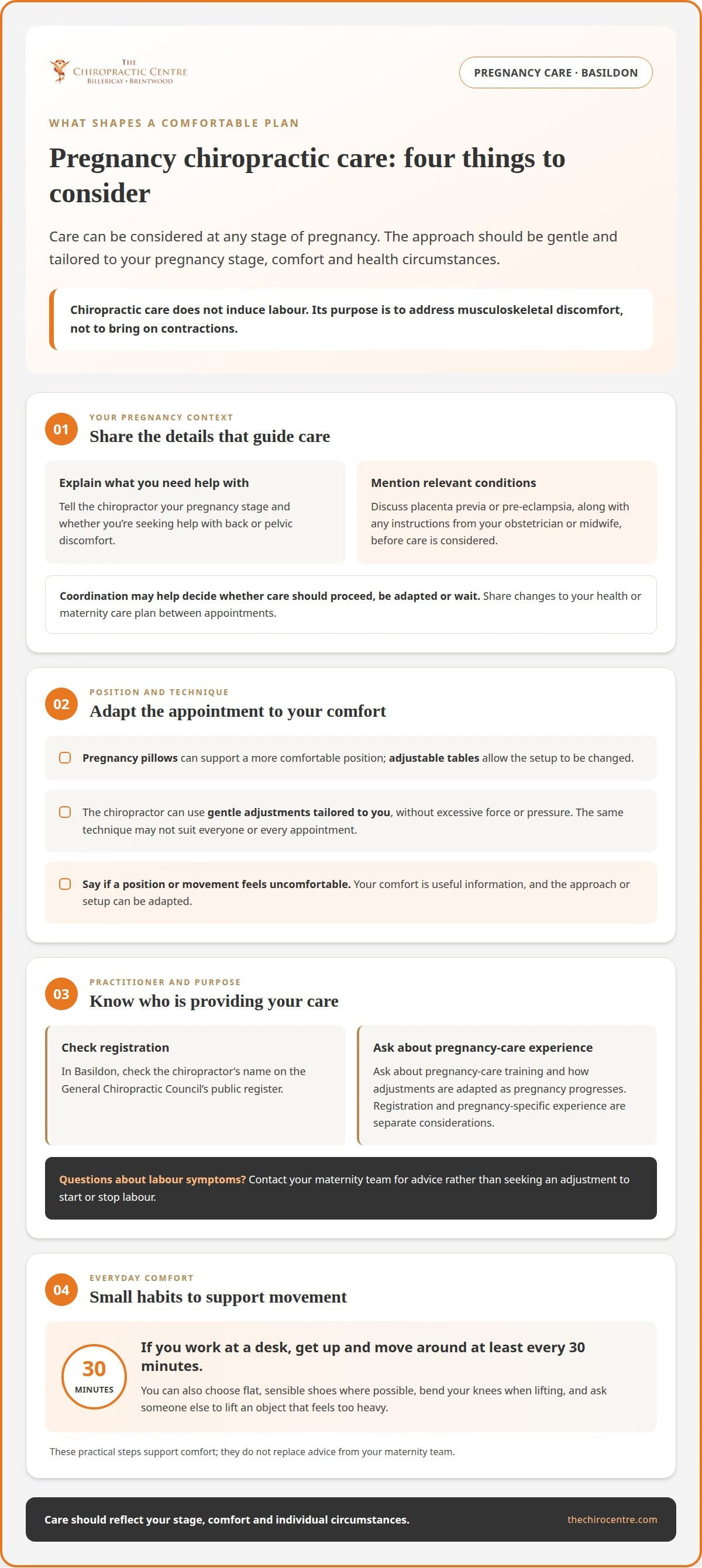
Chiropractic care does not induce labour, so there’s no need to time an appointment around your due date to start labour. Its purpose is to address musculoskeletal discomfort, not to bring on contractions. If you’re considering an appointment for back or pelvic discomfort, discuss your symptoms and pregnancy stage during the consultation. This helps shape a care plan around your reason for attending, rather than an assumed effect on labour.
In Basildon, check a chiropractor’s name on the General Chiropractic Council’s public register. Then ask about their pregnancy-care training and experience, including how they adapt adjustments as pregnancy progresses. Registration and pregnancy-specific experience are separate considerations. For safe chiropractic care during pregnancy in Basildon, be clear about your expectations: explain whether you’re seeking help with discomfort or asking about labour, so the practitioner can clarify the purpose of care.
Everyday movement can also help you manage stiffness. If you work at a desk, get up and move around at least every 30 minutes. Choose flat, sensible shoes where possible, and bend your knees when lifting. If an object feels too heavy, ask someone else to lift it. These practical steps support comfort; they don’t induce labour or replace advice from your maternity team.
Chiropractic appointments aren’t a way to start labour at home or change your birth plan. Don’t interpret an adjustment as a way to trigger contractions. If you’re concerned about labour symptoms, contact your maternity team for advice rather than seeking an adjustment to start or stop labour. This keeps questions about birth with the professionals supporting your maternity care.
After birth, chiropractic treatment may be scheduled to support the body’s recovery as muscles, tendons and ligaments return to normal. The timing and approach can reflect your recovery and comfort. The same principle applies during pregnancy: care should respond to your needs, not a target date for labour. A clear conversation about your aim, such as easing back discomfort, helps distinguish supportive care from labour induction.
Conditions that may require provider coordination
Some pregnancy-related conditions call for coordination before chiropractic care begins or changes. Placenta previa and pre-eclampsia are two examples to discuss with your maternity care provider. Your obstetrician or midwife can share relevant information about your pregnancy and existing care plan. This helps the chiropractor consider whether an adjustment should proceed, be adapted or wait. The aim is coordinated care that takes your pregnancy history seriously.
At an appointment, explain your diagnosis, who supports your maternity care and any instructions you’ve received. For example, if you have pre-eclampsia, mention it before hands-on assessment or treatment begins. If placenta previa has been identified, share that information even if you’re attending for back discomfort. These details help the chiropractor understand your circumstances and coordinate with your obstetrician or midwife before proceeding or adapting care.
Coordination can be a practical conversation between the professionals involved. It may focus on:
- The pregnancy-related diagnosis, such as placenta previa or pre-eclampsia.
- Your current maternity care plan and any relevant instructions from your obstetrician or midwife.
- The reason you’re seeking chiropractic care, such as back or pelvic discomfort.
- Whether the proposed approach needs to change in light of your circumstances.
These points give the conversation a clear purpose and help ensure a familiar symptom is considered in light of any pregnancy-specific condition. Share changes to your health or maternity care plan between appointments. A new diagnosis or updated instruction can affect whether care proceeds in the same way.
Coordination doesn’t mean every pregnant person needs the same plan. It connects your chiropractor’s approach with the care already provided by your maternity team. If you have placenta previa or pre-eclampsia, discuss the condition before treatment is considered. This gives the relevant professionals a chance to coordinate around your pregnancy, rather than assuming a routine adjustment suits every situation.
Pregnancy-adapted equipment and techniques
Pregnancy care can adapt both the treatment table and the chiropractor’s approach. The right setup and technique should reflect your comfort and stage of pregnancy.
Pregnancy-adapted equipment
Pregnancy-adapted equipment includes pregnancy pillows and adjustable tables. A pillow can support a more comfortable position, while an adjustable table allows the setup to be changed. These options matter as your body and comfort needs change during pregnancy. Tell the chiropractor if a position feels uncomfortable, so the equipment can be adjusted to suit you.
Pregnancy-adapted techniques
Pregnancy-adapted techniques involve gentle adjustments tailored to the individual, without excessive force or pressure. The approach should account for your pregnancy stage and the discomfort you’re seeking help with. The same technique may not suit every person or every appointment. If you’re uncomfortable during an adjustment, say so; the chiropractor can adapt the approach.
Your pregnancy stage helps shape the setup and treatment plan. A position that feels comfortable earlier in pregnancy may not feel right later. Pregnancy pillows and adjustable tables give the chiropractor options for adapting the appointment. Your comfort is useful information, not something to push through. Tell the practitioner if a position or movement feels difficult, and discuss what might be more suitable.
Care should also reflect your individual discomfort and relevant health circumstances. A gentle approach doesn’t mean every appointment looks the same: the chiropractor can consider the area being treated, your comfort and your pregnancy stage. Explain what you’re experiencing before treatment begins. This conversation helps guide the choice of technique and equipment, whether you’re seeking help with back discomfort or another pregnancy-related concern.
Pregnancy-adapted care is about more than equipment. Pillows and an adjustable table can support a tailored appointment, while the technique should remain gentle and individual. As your needs change, share what feels comfortable at each visit. This gives the chiropractor practical information to adapt the setup and approach, rather than relying on the same position or adjustment throughout pregnancy.
Chiropractic care during pregnancy
Pregnancy-specific experience matters when choosing a chiropractor. Look for someone trained and experienced in pregnancy care, with knowledge relevant to your needs. Professional memberships may be one factor to consider when choosing a chiropractor for pregnancy and paediatric care. Webster Technique certification indicates formal training in assessing and adjusting sacral alignment, as well as the soft tissues and ligaments attached to the pelvis.
These credentials describe training, not a guaranteed outcome. Webster Technique is not a procedure for repositioning a breech baby. If your baby is breech, discuss this as a separate maternity-care question rather than expecting a chiropractic technique to change the baby’s position.
Chiropractic care may address musculoskeletal discomfort, including pregnancy-related back pain. An adjustment can focus on spinal and pelvic alignment, with the aim of easing strain in these areas. You can also discuss pelvic discomfort during the assessment, particularly if it affects everyday movement such as walking or turning in bed.
Pregnancy-related sciatica is another concern you may raise. Sciatica involves pain associated with irritation or pressure around the sciatic nerve, which runs from the lower back through the hips and legs. Chiropractic adjustments may help relieve pressure on the nerve and reduce related discomfort. Describe where the pain travels, such as from your lower back towards your leg, to explain what you’re experiencing.
Keep expectations focused on musculoskeletal symptoms. Claims that adjustments improve immunity or nervous system function, or lead to better sleep, shorter labour or fewer birth interventions, go beyond what chiropractic care should be presented as achieving. A useful discussion centres on your actual concern, such as back pain or pelvic strain, and whether chiropractic care may be appropriate for it.
The Chiropractic Centre: Paediatric Care
The Chiropractic Centre provides Paediatric Care for families considering chiropractic support for their child after birth. If you’re pregnant and exploring care for yourself, a New Patient Consultation gives you the opportunity to discuss your symptoms, pregnancy stage and health history before considering Chiropractic Adjustments. This conversation helps clarify your needs and whether an adjustment is suitable for your circumstances.
After your baby arrives, Paediatric Care may be relevant if you have questions about chiropractic care for your child. Your needs and your child’s are separate, so discuss each concern clearly rather than assuming the same approach applies to both. Massage Therapy is also available if you’re seeking support with muscle tension.
To discuss your situation or arrange a New Patient Consultation, contact The Chiropractic Centre.
Choose a next step that feels right for you
If you’re considering safe chiropractic care during pregnancy in Basildon, take time to decide what you want from your care. You might want a clearer understanding of your options, a discussion focused on your comfort, or time to consider how care fits alongside your maternity journey. Naming your priority can make the conversation more focused and help you decide whether the proposed approach feels appropriate.
You don’t need to have every question resolved before taking that step. Sharing what matters to you can shape a thoughtful discussion about your wellbeing and the support you’re seeking. Your comfort and informed choice should remain central throughout.
If you’d like to discuss your needs, contact The Chiropractic Centre. A conversation can be a calm starting point as you consider what feels right for you.
Frequently Asked Questions
When should I start seeing a chiropractor during pregnancy?
You can seek an appointment when a musculoskeletal concern affects your comfort or everyday activities. Beforehand, note what brings on the discomfort, where you feel it and which movements make it better or worse. For example, record whether getting dressed or walking feels difficult. These details help focus the first discussion on your experience and what you hope to address.
Are there any risks associated with chiropractic care during pregnancy?
There isn’t a single risk estimate that applies to every pregnant person or technique. Before treatment, ask the practitioner to explain the proposed approach, what it is intended to address and what alternatives are available. You can also agree how to pause if you feel uncomfortable. These questions support an informed choice without assuming that every technique suits every pregnancy.
Can chiropractic care induce labour?
No, chiropractic care does not induce labour. It shouldn’t replace maternity care or be used to manage a birth concern. If you’re considering an appointment close to your due date, be clear about its purpose: addressing a musculoskeletal concern, not trying to influence when labour begins. For questions about labour or birth planning, speak with your maternity team.
Is chiropractic care safe during pregnancy, according to UK health guidance?
UK guidance should not be taken as a blanket guarantee that every chiropractic treatment is suitable throughout pregnancy. Suitability depends on the proposed care and your health circumstances, so a general statement cannot replace an individual assessment. If you’re unsure how treatment fits with advice from your maternity team, clarify this before proceeding and make sure your concerns are addressed.
What pregnancy-related symptoms might chiropractic care help with, and what does the evidence say?
Chiropractic care may be considered for musculoskeletal symptoms such as back discomfort or sciatica. Interpret evidence carefully: a possible area of focus does not prove that treatment will help everyone or change pregnancy or birth outcomes. If you’re considering care, define a practical aim, such as making a particular daily movement more comfortable, and discuss how progress will be assessed.
What risks or side effects can chiropractic treatment pose during pregnancy?
Possible concerns include whether a particular technique or treatment position suits your circumstances. Ask what the practitioner plans to do before treatment begins, and speak up if you want to pause or stop. You can also discuss a different approach if you’re uncomfortable. Clear consent and a shared understanding of the appointment help you stay involved in decisions about your care.