
Joint pain does not always tell the whole story. If you’re managing arthritis pain with chiropractic care in Chelmsford, understanding what may be contributing to discomfort is a useful first step. Arthritis describes a range of conditions that affect joints and can cause pain, swelling, stiffness or reduced movement. Mechanical joint problems can also affect how comfortably you move, so symptoms should be considered alongside joint function.
It’s understandable to want practical ways to ease pain and stay active. Chiropractic care cannot cure arthritis, but it may help manage pain and support joint movement as part of a wider approach to wellbeing. Appropriate care starts with understanding your symptoms and how they affect everyday activities.
This article explains the difference between arthritis and mechanical joint problems, what an assessment may involve, and how chiropractic adjustments and massage therapy may support comfort and mobility. It also covers factors that can affect treatment timelines and how heat and cold may fit into pain management.
Key Takeaways
- Learn how an assessment can distinguish joint movement concerns and help guide suitable adjustment techniques.
- Find out what morning stiffness may indicate and how care options can support hip and knee osteoarthritis.
- Understand why treatment plans and visit frequency are shaped by your symptoms, progress and wellbeing goals.
- Explore how massage options and membership sessions may fit into a personalised approach to comfort and movement.
Chiropractic assessment and adjustments for joint problems
Joint pain, swelling and reduced range of motion can be signs of arthritis, although mechanical problems may also affect movement. A musculoskeletal assessment considers your symptoms and how the joints and surrounding muscles function.
Chiropractic techniques and joint manipulation
Chiropractic techniques are hands-on methods, including spinal manipulation and joint mobilisation, used to address restricted movement. Chiropractors use more than 150 techniques to adjust the spine, joints and muscles. The choice depends on the joint involved, your symptoms and assessment findings. For example, a stiff knee and a sore shoulder may need different approaches. The aim is to support movement and comfort, not to cure arthritis or an autoimmune disease.
Adjustments for alignment and mobility
An adjustment applies a controlled force to a joint to support its movement and function. An assessment considers your medical history, symptoms, lifestyle and joint mobility. A practitioner may discuss symptoms that could be associated with arthritis, but a diagnosis may require further assessment. If osteoarthritis affects a joint, an adjustment may be adapted to its condition and your comfort. This helps guide care without promising a cure.
In the UK, chiropractors must be statutorily registered. You can check registration on the General Chiropractic Council register and ask the practitioner to explain their chiropractic qualification and training.
Chiropractic care for hip and knee osteoarthritis
Osteoarthritis, often called “wear and tear” arthritis, is the UK’s most common form and often affects hips and knees. A significant joint injury can raise the chance of developing it later. Symptoms include pain, stiffness and reduced movement. The NHS says osteoarthritis symptoms may include morning stiffness lasting less than 30 minutes.
Hip or knee pain can make walking, standing and using stairs harder. If you’re managing arthritis pain with chiropractic care in Chelmsford, adjustments may support movement and ease joint stress. They cannot cure arthritis or reverse joint changes. Care should be tailored to the affected joint, your symptoms and your comfort.
Osteopathy may use hands-on adjustments and massage to ease pain and improve range of motion. Physiotherapy often focuses on movement, strengthening and exercises suited to daily activities. For example, a physiotherapist may help you practise standing from a chair and build leg strength for walking or stairs. These approaches can support active self-management alongside manual care.
Rheumatoid arthritis differs: it is an autoimmune disease in which the immune system attacks joint linings, causing inflammation and pain. That distinction matters because symptom patterns and the affected joints help shape care. For managing arthritis pain with chiropractic care in Chelmsford, consider how treatment may fit alongside movement-focused support. If hip or knee stiffness limits daily life, explore chiropractic care for osteoarthritis.
Personalised treatment plans and ongoing well-being care
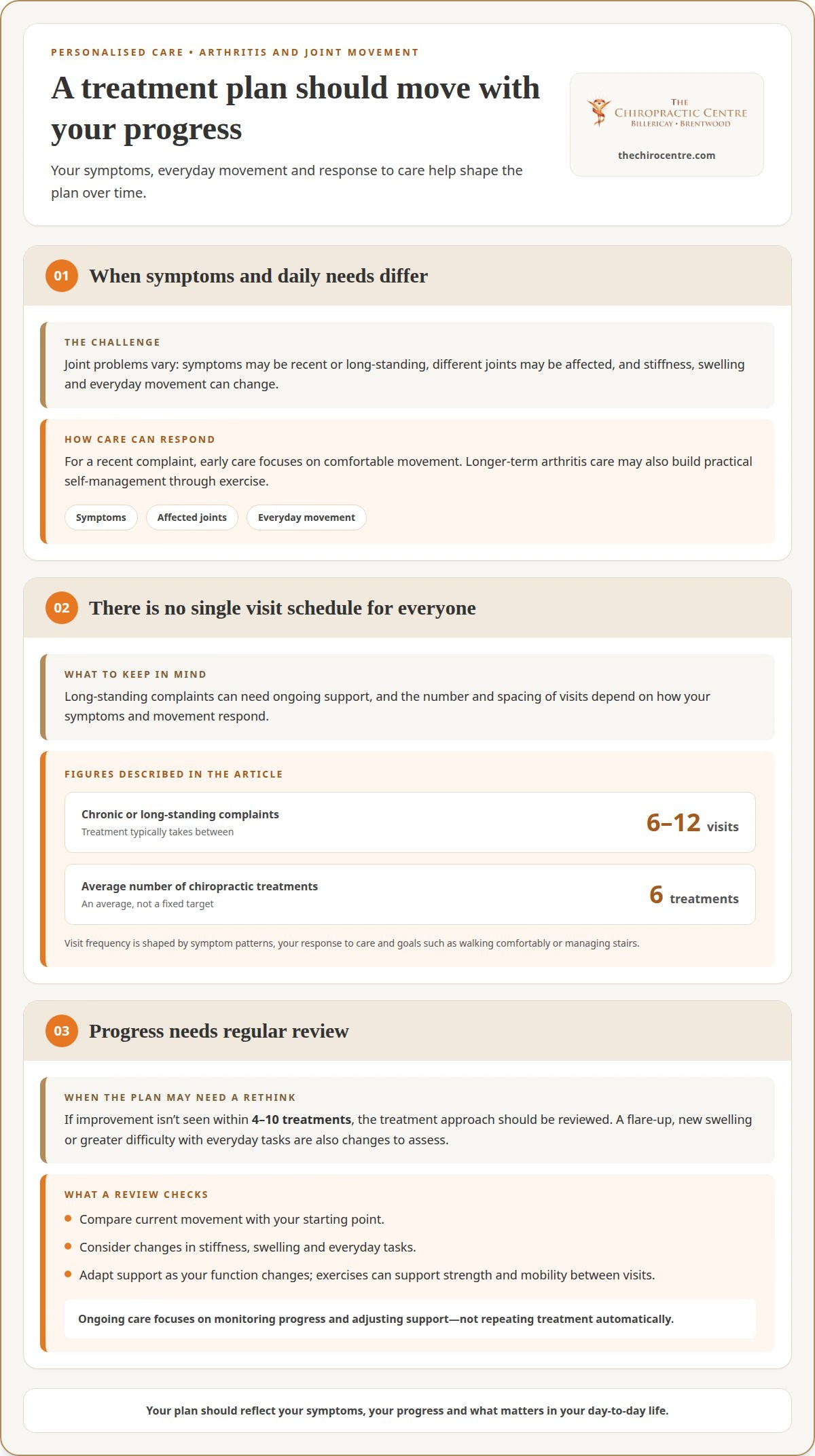
Treatment length depends on whether symptoms are recent or long-standing, which joints are affected, and how stiffness, swelling and everyday movement change. For a recent complaint, early care focuses on comfortable movement. Longer-term arthritis care may also build practical self-management through exercise.
For chronic or long-standing complaints, treatment typically takes between 6 and 12 visits, and the average number of chiropractic treatments is 6. Visit frequency depends on symptom patterns, response to care and goals such as walking comfortably or managing stairs. Osteoarthritis and rheumatoid arthritis affect people differently, so the plan considers the type of arthritis, affected joints and changes in function.
Review appointments compare your current movement with your starting point, including stiffness, swelling and everyday tasks. A gentle spinal care plan can be adapted as your function changes, while exercises can support strength and mobility between visits. Ongoing care should focus on monitoring progress and adjusting support, not repeating treatment automatically.
If improvement isn’t seen within four to 10 treatments, the treatment approach should be reviewed. Regular check-ups allow progress to be monitored and the plan adjusted. A flare-up, new swelling or reduced ability to manage everyday tasks gives the review specific changes to assess. This keeps visit frequency connected to your progress and practical needs, supporting useful movement and confidence in daily activities.
Massage therapy, sports massage and reflexology
Massage and other physical approaches may form part of arthritis pain management. The right option depends on your symptoms, comfort and everyday activities.
Hands-on and physical therapies
Soft tissue therapy uses hands-on methods, including massage, to ease muscle tension and support movement. Massage may help ease discomfort and support mobility for people with arthritis. Sports massage focuses on muscles used during activity, while pregnancy massage and reflexology are distinct options with different approaches. Your symptoms and comfort help determine what may be suitable.
Acupuncture uses fine needles at specific points and may help relieve pain and improve function. Ultrasound therapy uses sound waves to create heat in deeper tissues, with the aim of improving circulation and reducing stiffness. Shockwave therapy is a separate physical treatment, not the same as massage or spinal manipulation. Heat or cold may also provide comfort. Protect your skin from direct contact with very hot or cold sources.
Self-management and NHS options
In the UK, self-management for arthritis includes regular exercise, education and strengthening the muscles around affected joints. Walking and swimming are low-impact examples, while gentle stretching can support range of motion. These approaches can help you keep moving and manage everyday pain and stiffness.
NHS care may include support with exercise and self-management for osteoarthritis. A tailored programme can take account of the affected joints and how symptoms influence everyday activities. If pain limits walking, for example, a suitable activity plan can build movement gradually. Discuss options with a health professional if you need help finding an approach that suits your symptoms.
Membership options and prices
Membership sessions offer two care options to consider: chiropractic treatment and massage. The suitable option depends on the support you’re looking for, such as improved joint movement or muscle comfort. Membership does not replace an assessment of your symptoms or a personalised care plan.
Chiropractic membership sessions focus on adjustments, while massage membership sessions provide hands-on soft tissue care. If arthritis affects your movement, discuss how each type of session fits your needs and wider wellbeing goals. The aim is to make an informed choice, not to commit to care that doesn’t suit you.
Prices depend on the session type and your care needs, and are provided after a quote request. These factors clarify what you’re paying for before you decide. No membership price is given here, so avoid treating an unsupported figure as the cost of your sessions.
Think about whether you want chiropractic adjustments, massage therapy, or a combination that fits your treatment plan. Your symptoms, progress and comfort can guide that conversation. Membership is a care option, not a promise of a particular result or a set treatment schedule. For details about the sessions, explore membership options and consider which approach best matches your goals.
New Patient Consultation at The Chiropractic Centre
The Chiropractic Centre in Chelmsford’s surrounding area is a practical next step if arthritis pain is making everyday movement harder. A New Patient Consultation gives you time to discuss your symptoms, medical history and goals. Explain how joint discomfort affects activities such as walking, using stairs or getting dressed. This conversation helps shape an assessment around your needs and concerns.
An assessment can consider joint movement, posture and the muscles supporting an affected area. These details help guide whether chiropractic adjustments or massage therapy may be appropriate for your comfort and mobility. You can also discuss how progress will be reviewed and which changes in daily function matter most to you.
Chiropractic adjustments use hands-on techniques to support joint movement, while massage therapy works with soft tissues and muscle tension. These approaches may form part of a plan for managing symptoms, but they do not cure arthritis. Your preferences, the affected joints and your response to care help shape the approach.
The Chiropractic Centre also provides paediatric care for families seeking chiropractic support for a child, with the child’s needs considered separately from adult arthritis care. A consultation can clarify the concerns and suitable next steps, whether you’re asking about your own joint comfort or a child’s wellbeing.
If you’d like to discuss your needs, contact The Chiropractic Centre when it suits you.
Take a considered next step towards easier movement
Living with arthritis can make everyday choices feel more difficult, but your next step can be thoughtful rather than rushed. If you’re considering managing arthritis pain with chiropractic care in Chelmsford, start by identifying what you’d most like to do more comfortably, such as walking, reaching or getting up from a chair. A clear personal goal can help keep care focused on the parts of daily life that matter to you.
Arthritis affects everyone differently, so the most suitable approach depends on your symptoms, priorities and response to care. It’s reasonable to ask how an assessment will inform a plan and how you and the practitioner will review progress. Take time to discuss your concerns and decide whether the approach feels right for you.
The Chiropractic Centre can talk through your situation and possible next steps without pressure. For a friendly conversation about your needs, contact The Chiropractic Centre. A considered start can help you move towards care that feels relevant to your everyday life.
Frequently Asked Questions
What is arthritis?
Arthritis is a name for conditions that affect joints, causing symptoms such as pain, stiffness and swelling. There are at least 100 types. Osteoarthritis involves changes in joint tissues, while rheumatoid arthritis is an autoimmune condition in which the immune system attacks joint linings. Diagnosis can involve a clinical assessment and, where needed, blood tests or imaging to identify the cause.
Can a chiropractor help with arthritis?
A chiropractor may help some people manage arthritis-related discomfort by supporting movement and function. Care should reflect your symptoms, affected joints and health history, rather than assuming every painful joint needs the same approach. For example, hand stiffness may affect dressing differently from knee pain that makes stairs difficult. Chiropractic care can form part of a wider plan, but it does not cure arthritis.
How long does it typically take to manage osteoarthritis pain?
Managing mild to moderate osteoarthritis pain may take a few weeks to several months. The timeframe varies with the affected joint, symptom severity, daily activity demands and response to the plan. A useful measure is whether tasks such as standing from a chair or walking feel easier. Reviewing these changes helps show whether the approach supports your practical goals.
How many treatments will I need?
The number of treatments depends on your complaint, its duration and how your symptoms respond. Chronic or long-standing complaints may involve 6 to 12 visits; the average number of chiropractic treatments at the clinic is 6. These figures are guides, not a schedule for every person. Your progress and daily movement help shape decisions about continuing, changing or ending care.
Is chiropractic care safe for arthritis?
Safety depends on your health history and the condition of the affected joints. Chiropractic therapy is not suitable for people with active inflammation, a fused spine, or osteoporosis in the spine or neck. Tell the practitioner about diagnoses, recent changes in symptoms and any imaging findings before care begins. This information helps determine whether an adjustment is appropriate or another approach is needed.
Can chiropractic treatment help manage arthritis pain?
Chiropractic treatment may help manage pain by addressing movement restrictions around affected joints. It focuses on practical aims, such as making a daily walk or reaching for a cupboard more comfortable, rather than reversing the underlying disease. Care can be considered alongside exercise and self-management. Judge the value of treatment by changes in symptoms and the activities that matter to you.