
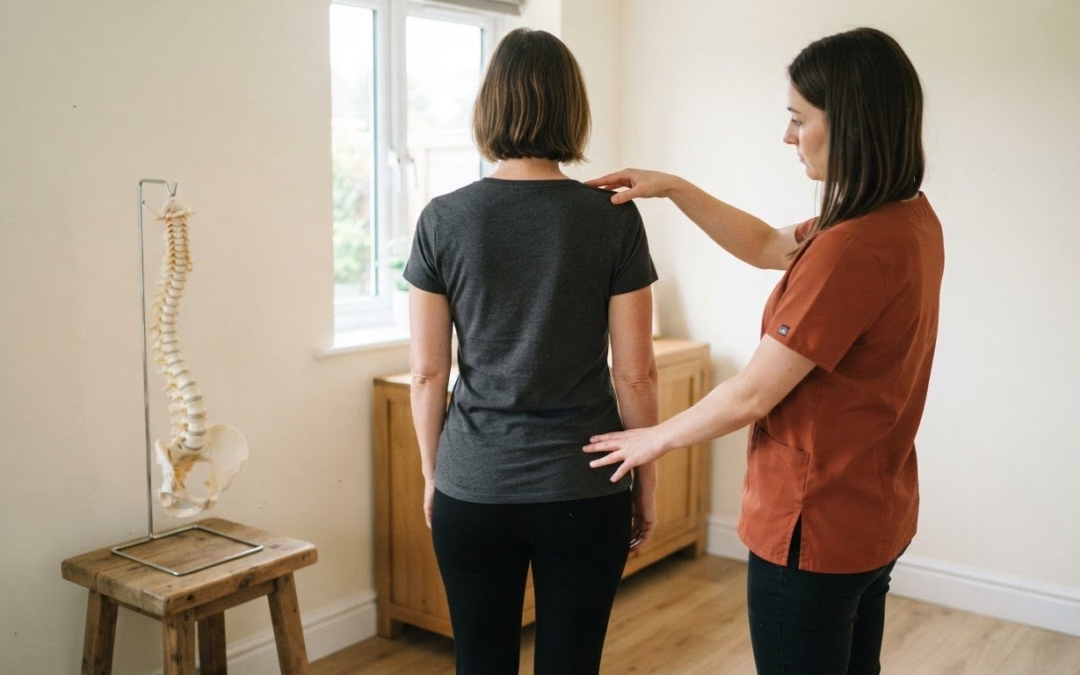
A spinal curve can affect more than posture. Adult scoliosis may change the shape of your waist or shoulders and make movement uncomfortable. A scoliosis specialist for adults in Stock can assess how the curve relates to your symptoms and everyday activities. Scoliosis is a three-dimensional curve of the spine that can develop in adulthood or continue from earlier life.
It’s understandable to feel concerned if you notice uneven shoulders, a change in your shape or back discomfort. The effects vary: some people have few problems, while others find that pain or stiffness affects everyday movement.
This article explains how scoliosis can affect appearance and mobility, and what conservative care may involve for adults and children. You’ll learn how support can be shaped around symptoms and function, and why exercise may help ease pain without necessarily changing the spinal curve. The aim is to clarify the options and what an individual assessment can help establish.
Key Takeaways
- Understand how pain, movement and daily activities can shape an adult scoliosis care plan.
- Recognise how a spinal curve may affect the chest, waist, shoulders and hips.
- Learn how suitable exercise and physiotherapy may support comfort, even when they don’t change the curve.
- See why non-surgical care can differ for adults and children, including the role of monitoring and bracing.
What non-surgical treatment options are there for scoliosis?
Adult scoliosis care can combine lifestyle changes, symptom management and clinical monitoring. The approach depends on how pain affects your movement and daily activities.
Lifestyle changes and home relief
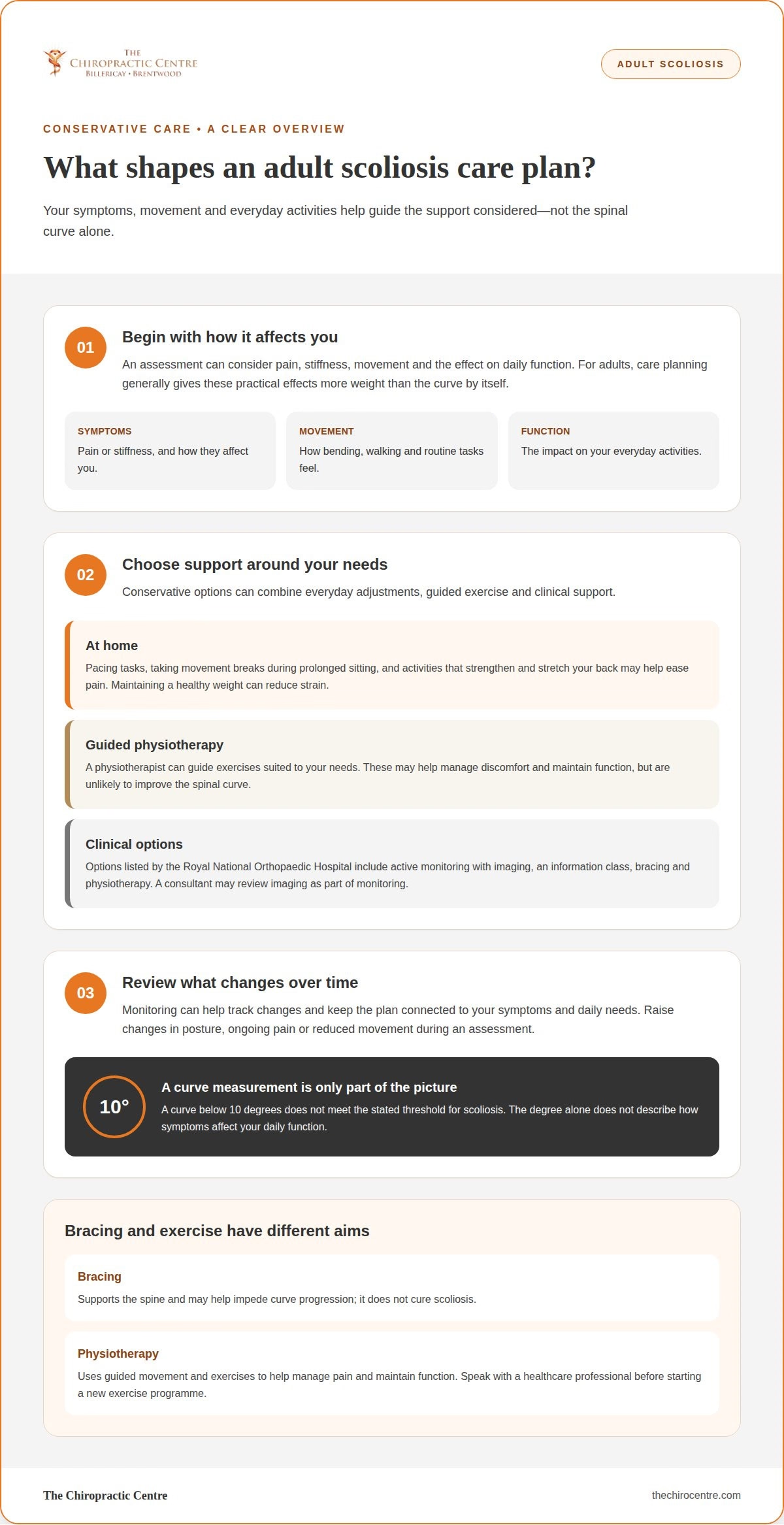
Conservative care uses everyday adjustments and non-surgical support to help manage symptoms. Activities that strengthen and stretch your back may ease pain, while maintaining a healthy weight can reduce strain. At home, pacing tasks and taking movement breaks during prolonged sitting may help you stay comfortable. A physiotherapist can guide you through exercises suited to your needs.
Clinical assessment and tailored planning
A clinical assessment considers your symptoms, movement and how scoliosis affects daily function. For adults, treatment planning generally weighs pain and functional limitations rather than focusing on the curve alone. A consultant may review imaging as part of monitoring. At the Royal National Orthopaedic Hospital, conservative options include active monitoring with imaging, an information class, bracing and physiotherapy. These options can help shape a plan around your needs and track changes over time.
When comparing spinal clinics in Essex, consider whether assessments take account of pain, functional limitations, imaging and progression. A clear plan should explain how monitoring and therapy relate to your symptoms.
Near Stock, look for a hospital spinal service or clinic that assesses adult scoliosis and can discuss conservative options. The Royal National Orthopaedic Hospital lists monitoring, bracing and physiotherapy among its approaches.
To find an NHS adult scoliosis specialist in Essex, speak to your GP about a referral to a spinal service. HCA UK advises people with continuous, severe back pain, discomfort or muscle stiffness to seek a GP referral to a spine specialist.
Physical deformities and mobility effects
Scoliosis can alter your posture and the shape of your chest or waist. Its effect on movement depends on the curve and your symptoms.
Physical changes and mobility
A spinal curve can rotate the ribs, changing the shape of your chest and waist. The Royal National Orthopaedic Hospital notes that this rotation may also make one shoulder or hip look higher, or a shoulder blade more prominent. These visible changes can affect how clothes sit and how comfortable you feel when standing or moving.
Mobility varies. Back pain or stiffness may make bending, walking or everyday tasks harder, while mild scoliosis may cause few problems. A diagnosis is based on spinal curvature: a curve below 10 degrees does not meet the stated threshold for scoliosis. The degree alone, though, doesn’t describe how symptoms affect your daily function.
Bracing and physiotherapy
Bracing supports the spine and may help impede curve progression, but it doesn’t cure scoliosis. Physiotherapy takes a different approach, using guided movement and exercises to help manage pain and maintain function.
Exercises taught by a physiotherapist may ease back discomfort, but are unlikely to improve the spinal curve. Speak with a healthcare professional before starting a new exercise programme, so it can be considered alongside your symptoms and scoliosis care. Exercise should support movement without placing undue strain on your back.
Changes in posture, persistent pain or reduced movement are useful details to raise during an assessment. A scoliosis assessment can help relate your symptoms to your movement and everyday needs.
Non-surgical scoliosis management for adults and children
Age shapes the context of scoliosis care: a child’s spine is still developing, while an adult’s curve may have begun earlier or appeared later. For children, the stage of growth helps describe the condition and understand why changes may need attention as they mature. Adult care focuses on scoliosis in a spine that has reached maturity.
Childhood scoliosis is grouped by the age when it develops. Infantile scoliosis refers to cases developing from birth to age three; juvenile scoliosis develops from ages four to ten; adolescent scoliosis affects young people aged 11 to 18. These labels help make clear that scoliosis in a young child is not the same developmental situation as a curve first identified during adolescence.
Growth timing varies between individuals. Growth typically stops around age 14 for females and age 16 for males, although this varies. That matters because a curve may change while a child is still growing. An age-aware care discussion can therefore distinguish a developing spine from an adult spine and consider the person’s stage, rather than treating age as a simple label.
In adults, scoliosis may be a curve that continued from childhood or one that developed later in life. An idiopathic curve has no identified cause, according to the Royal National Orthopaedic Hospital. Knowing whether scoliosis began during childhood or adulthood provides useful context for discussing its course and current needs. For parents, noting when posture changes first became visible can help establish a clearer timeline during an assessment. Adults can describe earlier diagnoses or childhood monitoring to explain whether the curve is longstanding or newly noticed.
Conservative scoliosis management
Conservative care may suit adults whose scoliosis is not severe and causes no pain; treatment may not be needed in those cases. When symptoms affect daily life, an orthopaedic assessment can consider discomfort, movement and whether the curve is progressing. The plan can then focus on practical goals, such as keeping comfortable during routine activities and maintaining mobility.
The cause and timing of the curve also matter. Idiopathic scoliosis means no cause has been identified, according to the Royal National Orthopaedic Hospital. Degenerative scoliosis develops later in life as the spine changes with age; HCA UK says it is especially common among adults aged 60 and above. These different patterns help explain why symptoms and monitoring needs vary.
Braces are one conservative option, although they don’t cure scoliosis. They may support the spine, ease discomfort or help impede curve progression. Braces may be considered as a conservative option, with comfort and intended use mattering when weighing this approach. Their role is to provide support, not to remove the underlying curve.
Monitoring can help track symptoms and changes in curvature over time. For example, an orthopaedic review may consider whether back pain limits walking, bending or other everyday tasks, alongside imaging and curve progression. Physiotherapy and suitable exercise can support movement and help manage pain, while maintaining a healthy weight may reduce strain on the back. These measures address function and comfort, rather than promising to straighten the spine.
For a personal discussion of conservative options, arrange a scoliosis management appointment.
HCA UK describes physiotherapy as an initial option for managing pain from adult scoliosis. A UK Scoliosis Clinic case study is titled as describing a curve changing from 44° to 35° over 8 months; this is a reported case, not a guarantee that another person’s curve will change in the same way. Individual advice should reflect clinical assessment and the person’s symptoms and needs.
The Chiropractic Centre: Scoliosis Management
The Chiropractic Centre offers Scoliosis Management for adults seeking support with symptoms, movement or day-to-day wellbeing. Scoliosis affects people differently, so care should reflect what you’re experiencing and what you want to manage. The focus is on discussing practical, non-surgical support, not promising to change the spinal curve.
A New Patient Consultation is a starting point for discussing your health concerns and how scoliosis affects everyday life. You can talk about changes in comfort, posture or movement, and activities you find difficult. This conversation helps establish what matters to you and whether Scoliosis Management suits your needs.
For a child or young person, Paediatric Care provides a way to discuss scoliosis in the context of their needs as they grow. Parents can raise concerns about posture, comfort and movement, and explain how these affect school, play or other routines. Understanding the child’s experience keeps the discussion centred on their wellbeing.
Massage Therapy may be relevant when muscle tension or soft tissue discomfort is part of your experience. It can complement a wider focus on movement and comfort, rather than being presented as a way to correct the spinal curve. The conversation starts with your symptoms and what you want to manage, whether you’re seeking support for yourself or your child.
If you’d like to discuss scoliosis care, contact The Chiropractic Centre.
Take a considered next step
A conversation with a scoliosis specialist for adults in Stock can help you focus on what matters in daily life. Before speaking with a practitioner, consider which movements or routines feel difficult, what you’d most like support with, and how your symptoms affect your wellbeing. Sharing these details can help you discuss care that reflects your priorities.
You don’t need to have every answer before taking that step. Sharing your concerns and asking how an assessment can guide a personal care plan is a useful place to begin. It’s a chance to talk through your needs and understand the support available.
If you’d like to discuss your situation, contact The Chiropractic Centre. A thoughtful conversation can help you move forward with greater clarity and confidence.
Frequently Asked Questions
What is adult scoliosis?
Adult scoliosis is a spinal curve identified in adulthood, whether longstanding or newly developed. Scoliosis is assessed using X-rays, which show the spine’s alignment and help measure its curve. This can help distinguish a structural spinal curve from uneven posture, which may look similar when someone is standing. The assessment also gives clinicians a clearer picture of the spine’s shape.
When should I see a spine specialist?
Consider seeking an assessment if back symptoms persist, worsen or begin limiting ordinary activities. It can help to note when discomfort occurs, such as while walking, sitting or bending, and whether you also experience tingling or numbness. Difficulty urinating or defecating alongside scoliosis requires immediate medical care, as it may signal pressure on lower spinal nerves.
What treatments do specialists offer for adult scoliosis?
Care depends partly on where pain may be coming from. In adults, scoliosis-related pain can involve facet joints, sacroiliac joints or pressure on a nerve root. Identifying the likely source helps guide discussion of suitable symptom management. A specialist may also consider how pain affects specific movements, such as standing from a chair or turning, so support can relate to your daily needs.
Which hospitals and clinics near Stock treat adult scoliosis?
The article points to a hospital spinal service or clinic near Stock. The Royal National Orthopaedic Hospital lists monitoring, bracing and physiotherapy, while The Chiropractic Centre offers adult Scoliosis Management.