
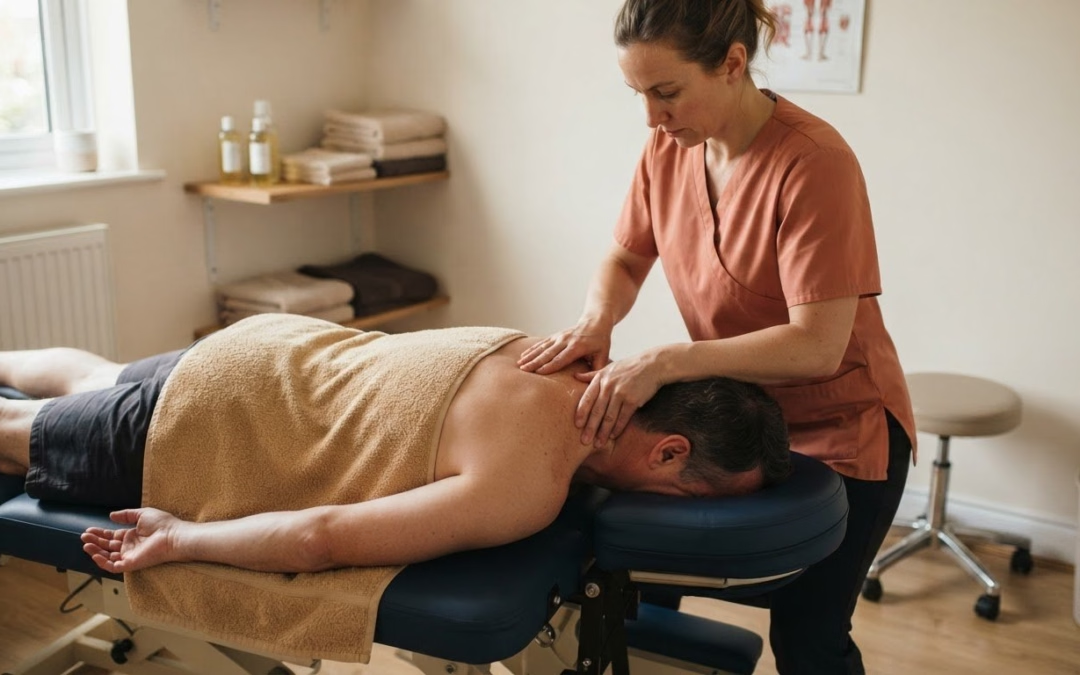
The right headache treatment starts with identifying what may be driving the pain, not simply trying to quiet it. A headache relief clinic in Chelmsford can assess whether your symptoms may be migraine, tension-related or cervicogenic, then consider which care best fits your needs.
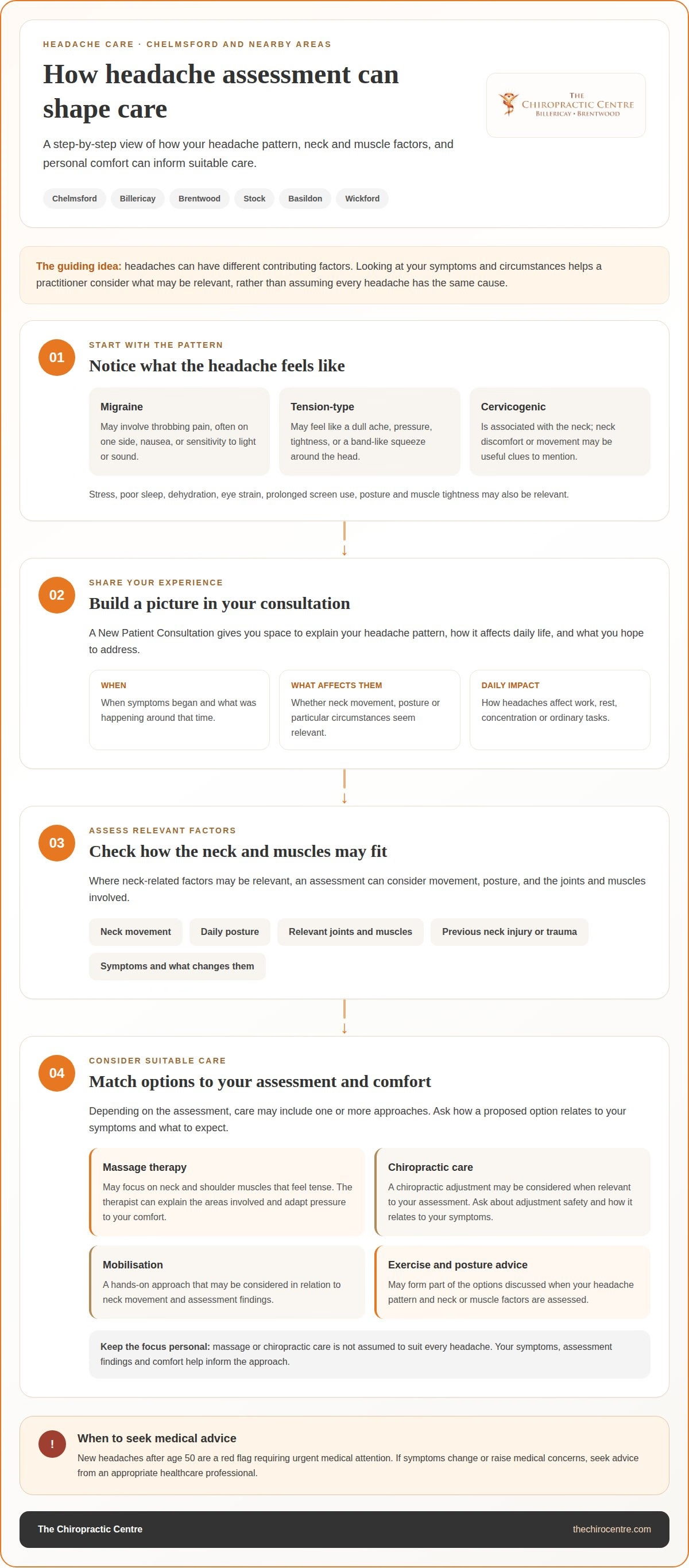
It’s understandable to want a clear explanation when headaches interrupt work, rest or family time. Migraine can involve throbbing pain, nausea and sensitivity to light or sound, while tension-type headaches may be associated with stress or muscle tightness. Cervicogenic headaches are linked to the cervical spine, so neck movement and related symptoms can help inform an assessment.
This guide explains how headache care may vary with your symptoms, what an assessment can consider, and how massage therapy or chiropractic adjustments may fit when neck or muscle factors are relevant. You’ll also learn what to expect from a personalised approach in Chelmsford and nearby areas, including Billericay, Brentwood, Stock, Basildon and Wickford.
Key Takeaways
- Learn how common triggers and neck-related factors may contribute to different types of headaches.
- Understand how a professional assessment can guide drug-free care, including chiropractic adjustments and massage therapy.
- See what symptoms and movement patterns may help distinguish cervicogenic headaches from tension-related pain or migraine.
- Find out how a consultation can inform a treatment plan and ongoing care suited to your needs.
Common causes of headaches
Headaches can have different contributing factors. Stress, poor sleep, dehydration and eye strain may play a part, as can long periods using a computer or phone. For example, hours at a desk may leave your neck and shoulders feeling tight. Jaw problems and posture can also be relevant, so consider the pattern and circumstances around your symptoms.
Migraine often involves throbbing pain, commonly on one side, alongside nausea or sensitivity to light or sound. Hormonal changes, including falling oestrogen levels, may trigger headaches for some women. Cervicogenic headaches are associated with the cervical spine. Neck joint or muscle strain, an awkward position, poor posture or previous neck trauma may be relevant. Symptoms can also follow a fall.
A secondary headache is linked to an underlying condition, rather than being a headache type on its own. A patient’s symptoms and circumstances help a consultant consider possible causes. Chronic and excessive use of headache medicines can cause medication-overuse headache, according to the World Health Organization. New headaches after age 50 are a red flag requiring urgent medical attention.
Headache and migraine treatment in Chelmsford
Care depends on your headache pattern and whether neck movement or muscle tension seems relevant. A headache relief clinic in Chelmsford can assess these factors and discuss appropriate options, including massage therapy, exercise and posture advice or chiropractic care.
Choosing a Local Headache Clinic
When comparing a headache relief clinic in Chelmsford, look at whether its services match your needs. Ask how assessment considers migraine and neck-related symptoms, and whether care may include massage or chiropractic adjustment. Patient reviews can help you understand appointment experiences and how clearly options are explained, but they don’t establish clinical suitability. Look for clear information about practitioner qualifications and adjustment safety.
Accessing Headache Treatment
In the UK, people commonly start by discussing headaches with their GP; private appointment and referral arrangements vary. Cranial nerve blocks and migraine injections are medical treatments, not manual therapies. Possible side effects depend on the treatment, so discuss expected effects and alternatives before proceeding. You can also ask how a proposed adjustment or massage relates to your symptoms and what to expect.
Tension and stress-related headaches
Tension-type headaches often feel like a dull ache, pressure or tightness around the head. Discomfort may affect both sides rather than one focused, throbbing area. For example, you might notice a band-like squeeze after a demanding workday. The intensity and character can vary between episodes.
Chronic tension-type headaches can occur daily for weeks or even months. That pattern can affect concentration, sleep and ordinary tasks, such as reading or working at a screen. Stress and fatigue are common triggers, but a headache pattern can have more than one contributing factor. Noting when symptoms start and what was happening can help clarify the pattern.
Tightness or spasm in the neck and shoulder muscles may contribute to some headaches. A prolonged slouched posture at a desk, for example, can leave these areas feeling strained. Stress may also increase muscle tension and make it harder to relax. If headaches become frequent or change in character, seek a clinical assessment to help distinguish tension-type pain from other causes.
Cervicogenic headaches
Cervicogenic headaches are associated with the cervical spine, the neck section of your spine. Upper-neck strain or dysfunction may contribute, and symptoms can follow an awkward position, poor posture, a fall or neck injury. A link between neck discomfort and headache pain is useful to mention during an assessment.
An assessment starts with a review of when symptoms began and what affects them. A practitioner may ask about previous injury, neck movement and daily posture, then assess relevant joints and muscles. These details help consider whether the neck may be contributing. Headaches can have other causes, so the wider picture matters too.
Depending on the assessment, headache care may include hands-on approaches such as massage, mobilisation or spinal manipulation. The aim is to address relevant neck movement or muscle tension, rather than assume every headache has the same cause. The approach should reflect your symptoms, assessment findings and comfort. If symptoms change or raise medical concerns, seek advice from an appropriate healthcare professional.
Massage therapy for headache-related tension
Massage therapy can focus on neck and shoulder muscles that feel tense alongside headache discomfort. Hands-on soft tissue techniques may support relaxation in these areas. For example, sitting at a desk with raised shoulders can leave the muscles feeling fatigued. The therapist can tailor the treatment to your comfort and the areas involved.
Sports massage may be suitable when exercise or repeated movement leaves your neck and shoulder muscles feeling tight. It focuses on soft tissues affected by activity, rather than treating every headache as a muscle problem. Before treatment, discuss the pressure and areas of focus, especially if touch feels uncomfortable during a headache.
A massage therapist can explain which areas they plan to work on and adapt the approach to your comfort. Share where you feel tension, such as across your shoulders or at the base of your skull. Massage is a drug-free way to address muscle tightness, but it does not explain every headache. A broader assessment helps determine whether it fits your care.
Your consultation and treatment plan
A New Patient Consultation gives you the opportunity to explain your headache pattern, its effect on daily life and what you hope to address. Describe when symptoms began, whether neck movement changes them, and any previous strain or injury. This context helps shape a discussion around your needs instead of treating every headache alike.
The practitioner can assess relevant movement, posture, joints and muscles, then explain the findings clearly. You can discuss suitable options, ask questions and raise any concerns about adjustments or massage. Your preferences and comfort are part of the conversation, alongside the assessment findings.
An Intensive Treatment Plan may be discussed when focused care is appropriate. Ongoing Well-being Care may also be considered to support movement and maintain progress over time. These are different approaches, and the proposed plan should reflect your goals and assessment. You can review what each involves before deciding whether it suits you.
Membership and ongoing care
Membership options include Chiropractic Membership Treatment Sessions and Massage Membership Sessions. They offer a way to arrange ongoing care around the treatment discussed with you. Chiropractic sessions may suit a plan involving adjustments, while massage sessions focus on soft tissue comfort. The appropriate option depends on your needs and the agreed approach to care.
Membership does not replace a review of your symptoms. If your headache pattern or needs change, discuss the care plan again. For example, massage may be considered for shoulder tension, while chiropractic care may be discussed if neck movement is relevant. Your practitioner can explain which session type fits the agreed plan.
Prices depend on the case and are given after a quote request. The cost depends on the session type and the care required, including whether you are considering chiropractic treatment or massage. This helps you understand the relevant option before deciding how to approach ongoing wellbeing care. You can weigh the session format against your treatment goals and preferences.
The Chiropractic Centre
The Chiropractic Centre is a local option if headaches affect your comfort and you’re looking for a headache relief clinic in Chelmsford. Its New Patient Consultation gives you space to explain when pain occurs, what affects it, and whether neck movement or muscle tension is part of the picture.
The practitioner can review these details alongside relevant movement, posture, joints and muscles, then explain findings and possible next steps in plain English. Massage Therapy may be considered when muscle tension is relevant. Chiropractic Adjustments may be discussed when the assessment supports them. Care is considered in light of your symptoms and assessment at a headache relief clinic in Chelmsford.
You can ask how each option relates to your needs and discuss comfort or concerns before deciding whether to proceed. For example, you might want to understand how an adjustment differs from massage, or which areas a massage may address. A considered plan focuses on your wellbeing without promising a particular result. If you’d like to discuss your next step, contact The Chiropractic Centre.
Frequently Asked Questions
Can stress cause headaches?
Yes, stress can trigger or worsen headaches, and fatigue may contribute too. You might notice a dull ache after a demanding day, particularly if you have been sitting with tense shoulders. Stress is one possible factor, not a complete explanation for every headache. Note whether symptoms occur alongside particular pressures or routines, and share the pattern during an assessment.
How can a clinic help you get relief from a headache quickly?
A practitioner can assess your symptoms and discuss options suited to their pattern and possible contributing factors. If neck movement or muscle tension seems relevant, for example, they may consider whether massage therapy or chiropractic care is appropriate. No single treatment suits every headache. Describe what you feel, when it began and what affects it, so the assessment can guide the discussion.
When should I see a doctor about headaches?
Seek urgent medical attention for a new headache after age 50. For recurring headaches, a GP can assess your symptoms and consider whether an underlying cause needs attention. Make a note of when the pain occurs, how long it lasts and whether it changes, as these details can help explain the pattern. Don’t rely on manual treatment alone if you need medical assessment.
When should I worry about a constant headache?
A constant headache warrants medical assessment, particularly if it is new, changing or affecting everyday activities. Tell your GP when the headache started and whether its character has changed.
Which clinics in Chelmsford offer headache relief or migraine treatment?
The Chiropractic Centre offers local care in Chelmsford, with a New Patient Consultation to discuss your symptoms and treatment needs. Its services include Massage Therapy and Chiropractic Adjustments. A consultation can help establish whether these options relate to your concerns, such as discomfort associated with neck movement. Ask how the proposed approach fits your assessment and what to expect from each treatment.
What headache treatments do Chelmsford clinics provide?
Treatment options depend on your symptoms and assessment. At The Chiropractic Centre, these include Massage Therapy, Chiropractic Adjustments and Dry Needling. Each is a different approach, so the practitioner can discuss what may be relevant to your needs. Ask what an adjustment involves, how massage can be tailored and how your comfort will be considered during treatment.