
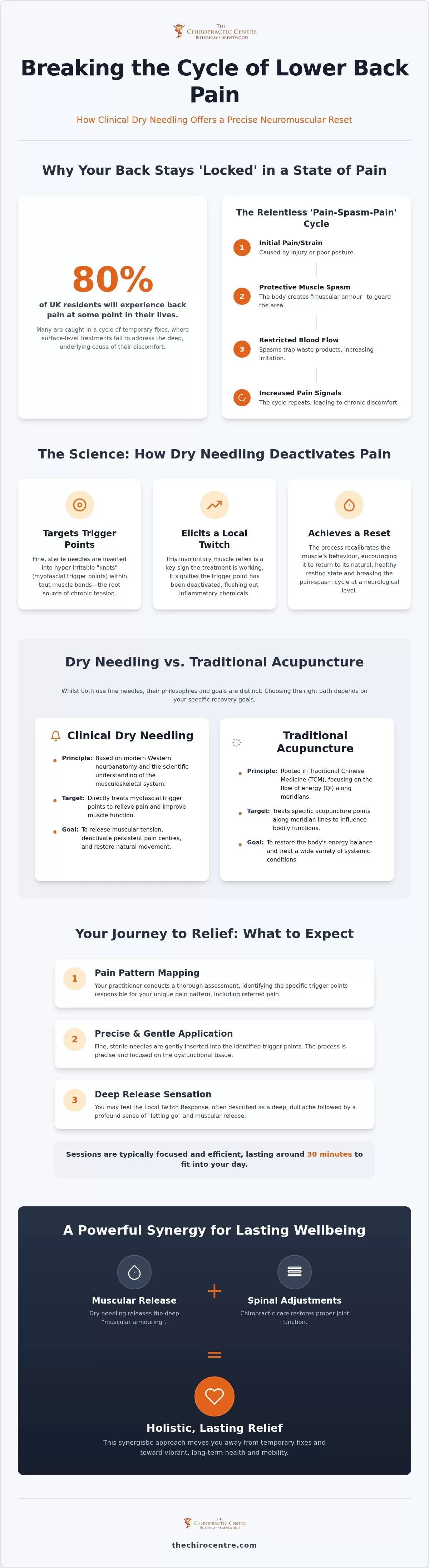
Imagine waking up and the first thing you feel isn’t the fresh morning air, but a sharp, restrictive tug in your lumbar spine that makes reaching for your slippers feel like a gruelling task. You aren’t alone in this frustration. With an estimated 80% of people in the UK experiencing back pain at some point in their lives, many of our neighbours feel trapped in a relentless “pain-spasm-pain” cycle. Whether it’s the inability to sit through a meal or the dread of a long drive through Brentwood, living with a back that feels permanently armoured against movement is physically and mentally exhausting.
We understand how debilitating this stiffness can be for your daily life and your sense of wellbeing. This article explores how clinical dry needling for lower back pain Essex residents can access offers a precise, neuromuscular reset to target the root causes of your discomfort. You’ll discover how this modern therapy safely releases deep muscular tension and why it’s a vital tool for restoring your natural range of motion. We will also preview how a professional recovery plan from a local expert can help you move away from temporary fixes and toward lasting, vibrant health.
Key Takeaways
- Understand why surface-level treatments often fail to reach the deep “muscular armouring” that protects and restricts your lumbar spine.
- Learn how clinical dry needling for lower back pain Essex residents prefer targets myofascial trigger points to deactivate persistent pain centres.
- Distinguish between traditional acupuncture and modern dry needling to ensure you select the most effective path for your specific recovery goals.
- Discover what to expect during a professional 30-minute session, including the specialised mapping of your unique pain patterns.
- Explore the powerful synergy between muscular release and spinal adjustments for a holistic approach to lasting mobility and wellbeing.
Why Persistent Lower Back Pain Needs More Than Just a Surface Massage
Many people across Essex find themselves in a frustrating cycle of temporary relief. You might book a relaxing massage to soothe a stiff back, only to find the familiar ache returning before the week is out. While traditional massage is excellent for general relaxation and surface-level circulation, it often fails to penetrate the deeper layers of “muscular armouring” that protect the lumbar spine. This armouring is your body’s natural defence mechanism. It creates a rigid shield of muscle to prevent further injury, but when this shield stays “on” indefinitely, it becomes the primary source of your discomfort. It’s a protective habit that the body simply doesn’t know how to break on its own.
Clinical intervention through dry needling for lower back pain Essex residents can access offers a different approach. Unlike surface-level therapies, this technique targets the specific neurological triggers that keep muscles locked in a state of tension. Understanding what is dry needling helps patients see how we can reach the deep-seated tension that hands alone cannot always release. By addressing these root causes, we help the body transition from a state of constant guarding to one of fluid, pain-free movement.
The Pain-Spasm-Pain Cycle in the Lumbar Region
When you experience a minor strain or a period of poor posture, your brain sends signals to the surrounding muscles to tighten. This is the “spasm” phase. It’s designed to act as a biological splint. Unfortunately, this constant contraction restricts blood flow and traps metabolic waste, which creates more pain. This leads to more spasming, and the cycle continues. The lumbar region is particularly prone to this because it bears the weight of your entire upper body. Over time, the muscles effectively “forget” how to relax, becoming stuck in a high-tension setting that requires a clinical reset.
Identifying Myofascial Trigger Points
At the heart of chronic back tension are myofascial trigger points. These are hyper-irritable spots located within a taut band of muscle fibres. You’ll likely recognise them as “knots” that feel tender to the touch. In the lower back, these triggers are commonly found in the Quadratus Lumborum or the gluteal muscles. These points are deceptive because they often refer pain to other areas. A trigger point in your hip might be the real culprit behind the sharp pain in your lower back. By identifying and deactivating these specific spots, we can break the cycle of dysfunction and restore your natural mobility.
The Science of Dry Needling: Deactivating the Pain Centres of the Lower Back
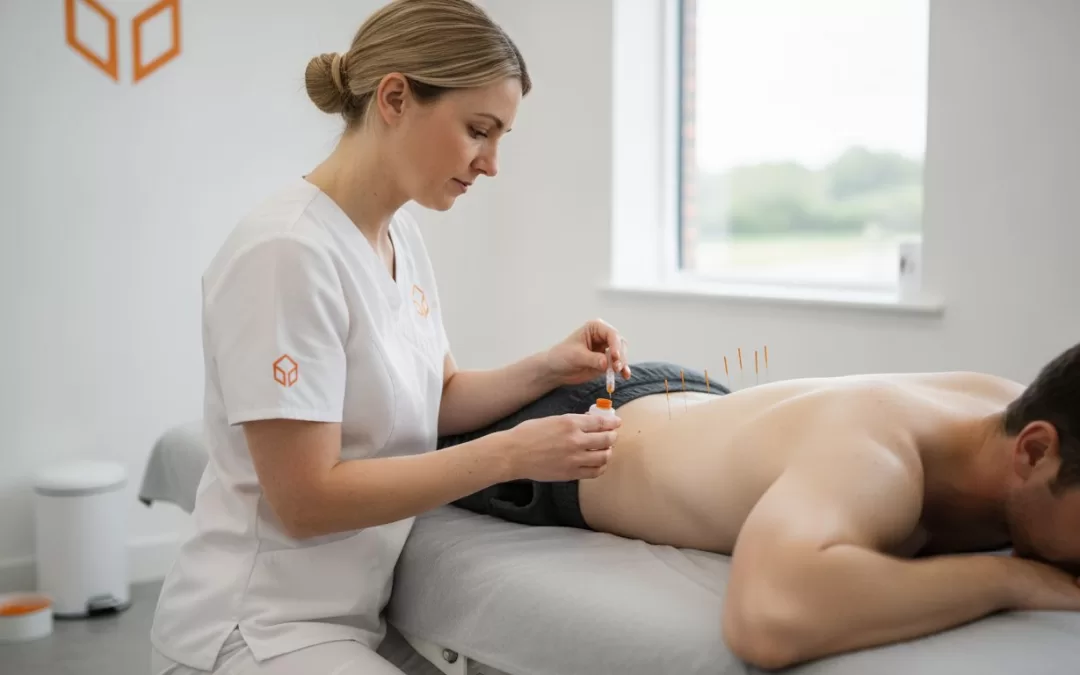
Dry needling is a precise clinical technique that uses fine, sterile needles to target specific myofascial trigger points within the muscle. For residents exploring dry needling for lower back pain Essex clinics provide, it’s helpful to view this treatment as a targeted intervention rather than a general therapy. The goal is to reach deep into the tissue to address the “knots” that stay locked despite rest or stretching. This process works by disrupting the dysfunctional electrical signals that keep a muscle in a state of permanent contraction.
When a muscle is chronically tight, it enters a state of metabolic distress. The needle acts as a physical catalyst for change, initiating a process we call the “Neuromuscular Reset.” By physically interacting with the trigger point, the needle encourages the muscle to return to its natural, healthy resting tone. This isn’t just about temporary relaxation. It’s about recalibrating the muscle’s behaviour at a cellular level to promote long-term recovery and improved function.
The Local Twitch Response: The Key to Deactivation
One of the most significant moments during a session is the Local Twitch Response (LTR). This is an involuntary spinal cord reflex where the muscle fibres contract momentarily around the needle. Whilst it might feel unusual, this twitch is a vital indicator that the treatment is working. It signifies that the needle has successfully deactivated the trigger point. This response helps to immediately flush out inflammatory chemicals that have pooled in the tight tissue. Most patients describe a deep, dull ache followed by a profound sense of “letting go” in the lower back.
Neurological Benefits for Back Pain Relief
The benefits of this therapy extend far beyond the local muscle tissue. The insertion of the needle stimulates the central nervous system, prompting the release of natural pain-relieving chemicals called endorphins. This biochemical shift alters how your brain perceives the chronic pain signals coming from your lumbar spine. It’s important to distinguish this from traditional acupuncture. Whilst both use similar tools, dry needling is strictly a “Western” anatomical approach. We focus on neurophysiology and musculoskeletal structures rather than the flow of energy or “Qi.”
This clinical focus ensures that every needle serves a specific purpose in your recovery journey. If you are ready to see how this precision can help you, a free spinal health check is an excellent way to start your path to relief.
Dry Needling vs. Traditional Acupuncture: Choosing the Right Path in Essex
Choosing between these therapies often starts with a single question: what is the goal of your treatment? Whilst both techniques utilise similar fine, sterile needles, the logic behind their use is fundamentally different. Traditional acupuncture is an ancient practice designed to balance the body’s internal energy or “Qi” along invisible meridians. In contrast, dry needling for lower back pain Essex residents seek out is a modern, clinical intervention focused on the physical structure of the muscle and the nervous system. We don’t look for energy channels; we look for anatomical dysfunction.
The difference in needle placement is equally distinct. An acupuncturist might place a needle in your hand to treat a headache or in your ankle to address back pain, following traditional maps of energy flow. In our clinical setting, the needle goes exactly where the dysfunction resides. If your lower back is stiff, we target the specific lumbar muscles that are failing to relax. This evidence-based approach is why many patients who haven’t found relief through holistic methods often see a breakthrough with clinical needling.
The Anatomical Focus of Dry Needling
Dry needling is specifically designed for mechanical issues, such as sports injuries and chronic postural strain. The process begins with a detailed physical assessment. We use palpation to map the unique “pain geography” of your back, feeling for the taut bands of muscle that signify a trigger point. By using our deep understanding of the lumbar spine’s anatomy, we can precisely target deep muscles like the multifidus, which provides essential stability to your vertebrae. This focus on mechanical deactivation makes it a powerful tool for those who need to restore physical function and range of motion quickly.
Acupuncture: A Holistic Energetic Approach
It’s easy to see why these two techniques are often confused amongst the public, as the equipment looks identical. Traditional acupuncture certainly has its place, particularly for patients seeking support with general wellbeing, stress reduction, or sleep quality. However, when it comes to resolving the “muscular armouring” mentioned earlier, a more direct approach is usually required. At The Chiropractic Centre, our preference is firmly rooted in the clinical, evidence-based needling approach. We believe that by focusing on the tangible, measurable structures of the body, we can provide a clearer and more predictable path to recovery for our Essex community.
Your Journey to Relief: What to Expect at Our Essex Clinics
Seeking help for chronic discomfort can feel daunting, especially if you’re unsure what a clinical appointment entails. At our centres in Billericay and Brentwood, we’ve refined a patient journey that prioritises your comfort and safety. When you visit us for dry needling for lower back pain Essex residents trust, you aren’t just getting a treatment; you’re entering a structured recovery process. Our team, established for over 10 years, ensures that every session is conducted with the highest standards of clinical hygiene and professional care. We treat every patient as an individual, looking beyond the immediate ache to understand your lifestyle and goals.
The Consultation and Mapping Process
Every successful recovery starts with a clear plan. We never begin treatment without a comprehensive New Patient Consultation. This initial step is vital to rule out serious underlying issues and to map your specific pain geography. We distinguish between “primary” triggers, which are the root causes of your pain, and “secondary” compensations. These are the muscles that have tightened to pick up the slack from your injured back. By identifying these patterns, we can set realistic, measurable goals for your mobility and pain reduction.
The Treatment Experience
A typical session lasts approximately 30 minutes. We understand that some patients may feel apprehensive about needles, but the sensation is usually minimal. The needles we use are incredibly fine, often thinner than a human hair. We organise each session to ensure you remain relaxed, as a calm body responds better to therapy. During the treatment, you might feel a brief twitch or a deep ache, which signifies a successful release of the trigger point. Immediately after, many people describe their muscles as feeling “heavy” yet their overall movement feeling significantly “lighter” and more fluid.
Home Care and Ongoing Support
Recovery doesn’t end when you leave the clinic. To maximise the benefits of your session, we recommend staying well-hydrated and engaging in gentle movement, like a short walk around your local neighbourhood. It’s normal to feel some post-treatment soreness, similar to the “good ache” felt after a gym workout. We often suggest specific Chiropractic Products for Back Pain to support your lumbar spine and maintain your progress at home. If you’re ready to start this journey, we invite you to book a free spinal health check to discuss your needs with our expert team.
The Synergy: Combining Dry Needling with Chiropractic Care for Lasting Relief
True relief often requires looking at the body as a whole rather than a collection of isolated parts. Whilst we’ve discussed how dry needling for lower back pain Essex residents use targets the soft tissue, we must also consider the framework those muscles support. This is the intersection of structure and function. If the spine is misaligned, the muscles will naturally tighten to protect it. Conversely, if the muscles are in a state of chronic spasm, they can pull the vertebrae out of their optimal position. Treating one without the other is like trying to fix a leaning house by only repainting the walls. Our integrated approach ensures both components are addressed simultaneously for a more resilient recovery. For many, this process is enhanced by targeted movement therapy; searching for an exercise physiologist near me is an effective way to find professional support that focuses on treating the underlying causes of injury and illness.
When muscles are locked in that “armouring” state we described earlier, they act like tight guy-ropes on a tent pole. They create significant tension that can make a Chiropractic Adjustment more difficult to perform effectively. By using dry needling to release these deep-seated knots, we create a “window of opportunity” where the body is more receptive to structural care. This is often supplemented by Clinical Massage Billericay patients find helpful for broader tissue relaxation and improved circulation. This combined strategy ensures that once the spine is correctly aligned, the surrounding muscles don’t immediately pull it back into a dysfunctional position. It’s a methodical way to build lasting stability rather than just chasing symptoms.
A Holistic View of Lower Back Health
Our commitment to your long-term wellness means we look beyond the clinic walls to understand your daily environment. We investigate the postural habits that create these trigger points in the first place, from your office ergonomics to your favourite sleeping positions. This comprehensive perspective is especially important in specialised cases like Scoliosis Management Essex, where structural curves require a delicate balance of spinal care and targeted soft tissue therapy. We find that a multi-modal approach is the most reliable way to prevent the recurrence of pain. If you’re unsure where your discomfort is coming from, our Free Spinal Health Check is designed to identify whether your issues are structural, muscular, or a combination of both. This assessment allows us to craft a personalised health plan that acts as a partner in your journey toward a more active, pain-free life.
Reclaiming Your Mobility and Living Pain-Free
We have explored how modern clinical techniques move beyond surface-level relief to address the deep “muscular armouring” that often keeps your back in a state of constant guarding. By targeting specific trigger points, dry needling provides a neuromuscular reset that prepares your body for more effective structural care. This evidence-based approach is quite distinct from traditional acupuncture, focusing purely on your anatomy and the mechanical dysfunction of the lumbar spine.
Choosing clinical dry needling for lower back pain Essex residents prefer ensures you are receiving a precision treatment tailored to your unique physical needs. At The Chiropractic Centre, we’ve been established for over 10 years in the Essex community. Our specialised team of chiropractors and therapists provides a personalised clinical approach to every patient, ensuring your recovery plan is as unique as you are. We invite you to Book Your Free Spinal Health Check or Consultation Today to discover the possibilities of long-term wellness. You don’t have to accept a stiff, painful back as your daily reality. We’re here to help you move with confidence again.
Frequently Asked Questions
Is dry needling painful for lower back issues?
The sensation is generally minimal. You might feel a brief “prick” as the needle enters, followed by a deeper, dull ache. This often indicates the needle has reached the trigger point. Many patients find the sensation reassuring rather than painful. It’s a sign that the “muscular armouring” is finally being addressed. Most people find they can relax comfortably throughout their session in our Billericay or Brentwood clinics.
How many sessions of dry needling will I need for my back pain?
Recovery timelines are unique to every patient. Whilst some feel a significant reduction in tension after just one visit, a course of three to six sessions is common for lasting results. For chronic issues that have persisted for months, we might recommend a longer-term plan. During your initial consultation, we’ll map your specific pain patterns to provide a clearer estimate of the time needed to restore your mobility.
Are there any side effects to dry needling in the lumbar area?
Side effects are typically mild and temporary. You may experience muscle soreness in the lumbar area for 24 to 48 hours, which feels very similar to the “post-gym ache” after a heavy workout. Occasional small bruising or a sense of fatigue can also occur. These are normal physiological responses as your body begins to flush out inflammatory chemicals and reset the resting tone of your lower back muscles.
Can I have dry needling if I am also seeing a chiropractor?
Absolutely, these therapies are incredibly effective when used together. In fact, dry needling for lower back pain Essex patients receive often acts as the perfect precursor to a chiropractic adjustment. By releasing the stubborn knots in the soft tissue, the spine becomes much easier to align. This integrated approach addresses both the structural and muscular components of your discomfort, leading to more sustainable, long-term relief.
How is dry needling different from the massage therapy I get in Billericay?
The primary difference lies in depth and precision. While massage therapy in Billericay is fantastic for surface circulation and general relaxation, dry needling reaches deep trigger points that hands simply cannot access. The needle allows us to target specific, hyper-irritable spots within the muscle fibres with clinical accuracy. This provides a direct neuromuscular reset that is often more effective for deactivating the root causes of chronic lumbar stiffness.
Is dry needling safe for older adults with chronic back pain?
Yes, it is an excellent, low-risk option for older adults. Since it’s a non-pharmacological treatment, it avoids the potential complications often associated with long-term pain medication. We carefully tailor our technique to suit your specific health history and comfort levels. Many of our older patients find that releasing deep muscular tension significantly improves their balance, gait, and ability to perform daily activities with less discomfort. For readers supporting an elderly relative or undergoing their own recovery, FIVESTEP 五步健 provides an extensive range of lifestyle and rehabilitation products to aid daily living.
We recommend wearing loose, comfortable clothing to your appointment. To perform dry needling for lower back pain Essex residents need us to have easy access to the lumbar spine and the gluteal muscles. Shorts or loose-fitting leggings are usually the best choice. If you’re coming straight from work, don’t worry; we always ensure your privacy and comfort are maintained throughout the assessment and treatment process.
Can dry needling help with lower back pain that radiates into the leg?
It certainly can. Radiating pain is often caused by trigger points in the lower back or hips that “refer” sensations down into the leg, a condition sometimes called pseudo-sciatica. By deactivating these specific spots, we can often reduce or eliminate the referred pain. We’ll use our initial assessment to determine if the pain is muscular or structural, ensuring we apply the most effective clinical technique for your specific symptoms.