

Maintenance care is usually spaced further apart than treatment for an active flare-up. If you’re asking how often you should see a chiropractor for maintenance, a suggested starting point is one visit every 4-12 weeks, with long-term visits sometimes set every 1-3 months when they support posture, mobility or performance. Your pain levels and how freely you move help shape the interval.
It makes sense to want a clear schedule, especially when you feel well between flare-ups. But maintenance, acute care and wellness visits have different aims, so a plan that suits someone managing current pain may not suit someone whose symptoms have settled.
This article explains how these types of care differ, what ongoing chiropractic care may involve, and how changes in pain and mobility can affect visit frequency. Regular appointments are not automatically necessary for everyone. A personalised approach keeps the focus on your comfort, movement and day-to-day wellbeing.
Key Takeaways
- Acute care addresses current pain, while maintenance and wellness care focus on different goals. Knowing which applies helps you make sense of a proposed visit schedule.
- Track how pain, stiffness and everyday movement change between flare-ups; these signs can help guide discussions about visit frequency.
- Long-term chiropractic care may suit some people, but regular appointments aren’t automatically necessary for everyone.
- Maintenance care research includes a year-long study of 328 people with low back pain, offering useful context without proving that visits prevent every recurrence.
- A New Patient Consultation can help you discuss your symptoms, mobility and goals as part of a personalised approach to chiropractic care.
Acute, Maintenance, and Wellness, What Is the Difference?
Acute care addresses current symptoms; maintenance follows improvement. First, consider whether pain, stiffness or reduced movement is affecting your daily activities.
Moving from treatment to maintenance
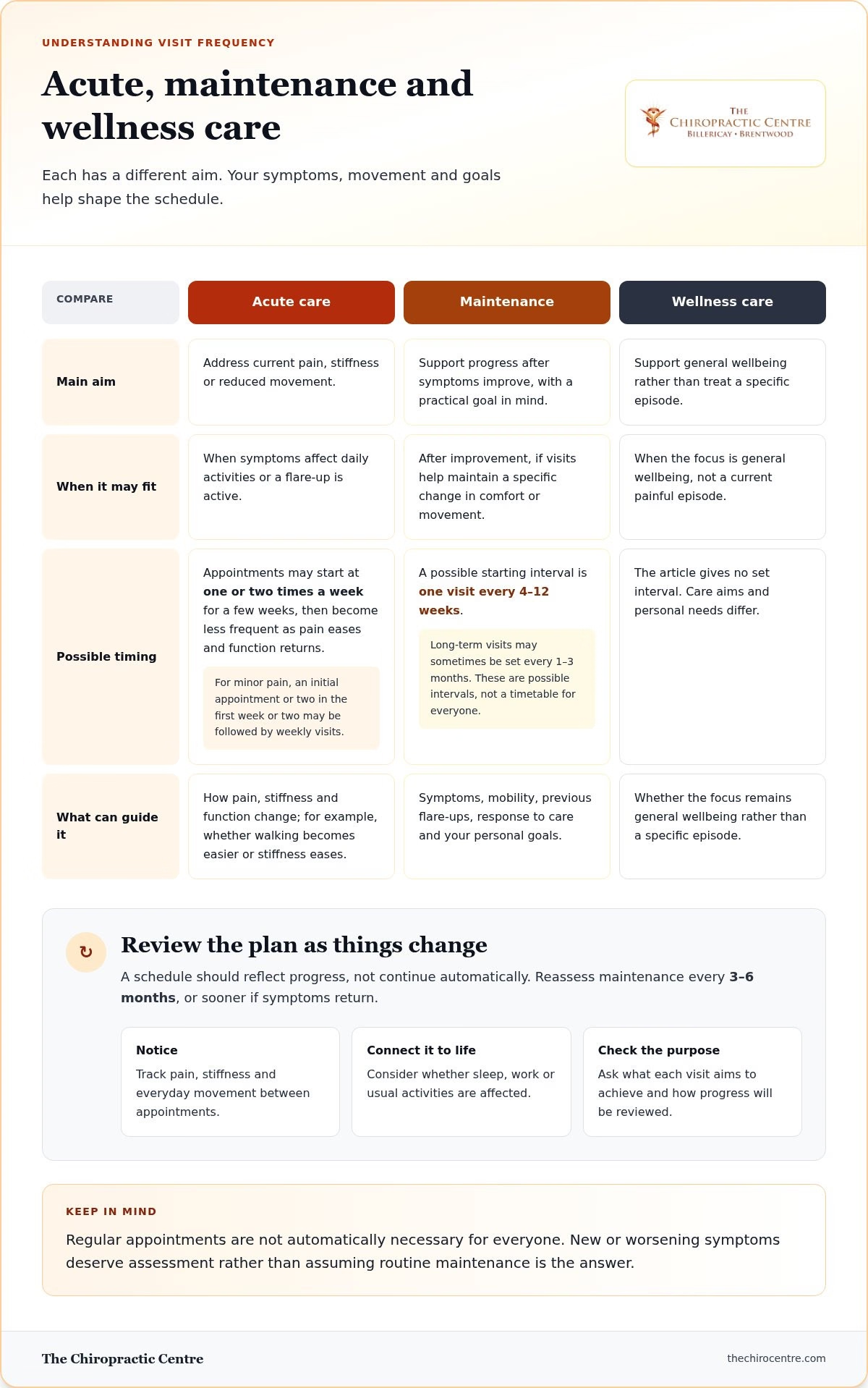
Moving to maintenance means shifting from addressing an active problem to supporting progress after symptoms settle. During acute care, appointments may initially happen one or two times a week for a few weeks, then become less frequent as pain eases and function returns. Your plan should reflect what has changed, such as easier walking or less stiffness, rather than continuing the same schedule automatically. For minor pain, an initial appointment or two during the first week or two may be followed by weekly visits.
Acute care addresses a current flare-up; chronic pain typically lasts longer than six months. Maintenance may be considered after improvement, with visits spaced according to symptoms, mobility and personal goals. Wellness care focuses on general wellbeing rather than treating a specific episode. These purposes can overlap, but they are not interchangeable: an appointment for a painful, restricted neck has a different aim from a check-in when you feel well.
Potential benefits and preventative care
Regular chiropractic care may support pain relief and movement for some people, while preventative care aims to address recurring stiffness before it disrupts routines. It cannot guarantee that you will avoid another flare-up. Maintenance is most useful when you have a practical goal, such as staying comfortable during desk work or returning to a usual activity. Review whether appointments support that goal instead of treating a calendar schedule as essential.
A chiropractic assessment may make sense when back or neck symptoms persist, return or restrict ordinary movement. Recurring stiffness that makes turning your head difficult, for example, differs from mild, short-lived tightness after a long day. Note what triggers your symptoms and which activities are affected so you can describe the problem clearly. New or worsening symptoms also deserve assessment, rather than an assumption that routine maintenance is the answer.
Physiotherapy and exercise can build strength, movement and confidence through planned activity; chiropractic maintenance may include adjustments to address joint movement and symptoms. These approaches can have different or complementary aims, and regular appointments alone do not establish that pain will be prevented.
In the UK, check that your chiropractor is registered with the General Chiropractic Council and ask about their qualifications. NHS access to chiropractic treatment varies by local service and referral pathway, so provision differs between areas.
Is Chiropractic Care Good Long Term?
Long-term chiropractic care is most useful when visits support a clear goal, such as easier movement or managing recurring symptoms. Review how your function changes between appointments, not just how you feel immediately afterwards.
Benefits and habits between visits
Regular visits may offer short-term pain relief and support mobility, while long-term value depends on whether progress carries over into everyday activities. For example, notice whether turning your head, walking or sitting through work becomes easier after adjustments.
Your lifestyle between appointments matters too. Follow any exercises recommended for you, build movement into desk-based days, and notice whether changes in sleep or activity affect your symptoms. A brief note after each visit can record pain, stiffness and function, giving you practical information to discuss at your next appointment.
How often maintenance visits may be needed
Maintenance frequency can range from one visit every 4-12 weeks for someone seeking ongoing support, to one visit every 1-3 months when it helps posture, mobility or performance. These are possible intervals, not a timetable everyone needs. Your symptoms, previous flare-ups and response to care all matter.
UK chiropractic guidance does not set one fixed interval for everyone. A maintenance plan should have a clear purpose and be reviewed against your progress, rather than continued automatically.
Reassess the plan every 3-6 months, or sooner if symptoms return. This gives you and your chiropractor a chance to consider whether visits still support your goals or whether the approach needs to change.
Signs that may prompt a visit
Consider an assessment if back or neck pain returns, stiffness limits movement, or symptoms interfere with sleep, work or usual activities. Recurring discomfort that makes lifting a shopping bag difficult, for example, has a practical impact worth discussing.
Track when symptoms began, which activities bring them on, and whether movement helps or worsens them. These details can make an appointment more focused. New or worsening symptoms call for assessment, rather than simply booking a routine maintenance visit.
Visits after symptoms improve
When acute pain settles, maintenance visits may continue if they help you sustain a specific improvement, such as comfortable movement during regular exercise. Someone whose mobility stays steady between appointments may need a different interval from someone whose symptoms repeatedly return.
Ask what each further visit is intended to achieve and how progress will be reviewed. Stop maintenance appointments when they no longer serve a clear goal; seek a second opinion if the plan’s purpose or progress remains unclear. If you’re considering chiropractic adjustments, discuss how they relate to your symptoms and day-to-day function.
Spinal alignment, mobility and pain
Spinal alignment describes how your spine and joints sit and move, but posture naturally varies between people. A slouched position after a long drive, for example, does not by itself explain back discomfort. Pain can relate to several factors, including muscle tension, movement habits and previous injury. That is why an assessment considers how you move and feel, not simply whether your posture looks straight.
Mobility is the ease and range with which you move a joint. Notice whether turning your head to reverse the car, bending to put on shoes or reaching overhead feels restricted. Compare these movements across ordinary days instead of judging progress from a single moment. A change in movement can help you measure function, alongside the intensity or frequency of discomfort.
Muscles help support the spine and control movement. If your shoulders tense during desk work, for example, you might notice neck stiffness after several hours. A musculoskeletal assessment can consider muscle tension, joint movement and posture together. This broader picture helps distinguish a movement restriction from a concern based only on appearance, such as thinking one shoulder looks higher in a photograph.
Chiropractic adjustments involve a hands-on approach to spinal joints. A chiropractor may apply a controlled, sudden force by hand or with a small instrument. The aim is to address joint movement and symptoms, not to make every spine look identical. This drug-free approach centres on hands-on care and movement, which may suit people who prefer not to rely on medication for this aspect of their care.
Keep a brief symptom record between appointments. Note the activity, location and duration of discomfort, along with any effect on sleep, walking or work. For instance, record whether a walk brings on back pain or sitting makes it worse. These details can help you discuss patterns and goals clearly, rather than relying only on how you feel during one appointment.
Movement habits also shape how your spine feels throughout the day. If prolonged sitting leaves you stiff, take regular movement breaks and vary your position. Choose exercises and stretches suited to your current ability, and observe how your body responds. A steady routine gives you useful information about mobility beyond what a single clinic visit can show.
Alignment alone does not tell you whether maintenance appointments are useful. Look at practical outcomes: can you turn comfortably, manage your usual tasks and stay active without recurring discomfort? A previous injury or chronic symptoms can affect those goals differently from temporary stiffness after gardening. A focused spinal health check can review alignment, joint mobility and muscle function, helping connect what you feel with the movements that matter in your life.
Reasons for chiropractic maintenance
Maintenance appointments can help you track recurring symptoms, movement and everyday function after active treatment. They make most sense when there is a defined reason, such as a previous injury, repeated stiffness or an activity that brings discomfort back.
One reason is a history of recurring back or neck episodes. For someone with a past injury or recurrent symptoms, an initial schedule may be one visit every 2-4 weeks for 6-12 weeks. After that initial course, maintenance may move to one visit every 4-8 weeks. These intervals describe possible approaches, not a requirement to continue appointments regardless of progress.
Your routine can also affect the frequency that suits you. Active athletes and people in high-demand jobs may consider one visit every 1-4 weeks, depending on training load and flare-up risk. For example, a busy training period may place different demands on the body from a quieter recovery phase. The reason for an appointment should connect to your activity, symptoms and movement goals.
Age-related changes or limited spinal mobility can be another reason to discuss ongoing care. For older adults with degenerative changes or restricted mobility, a suggested interval is one visit every 2-8 weeks, depending on symptoms and functional goals. Consider specific tasks, such as walking comfortably or reaching overhead, rather than posture alone when judging whether appointments support your daily life.
Headaches may also prompt an assessment, particularly when they occur alongside neck discomfort or restricted movement. Keep a record of when headaches happen, how long they last and whether neck movement affects them. This pattern gives a chiropractor clearer information than a general description such as “I get headaches”. Treatment should relate to your symptoms and assessment findings, not an assumption that every headache has the same cause.
Maintenance visits can provide an opportunity to review whether relief and mobility are holding between appointments. Note changes in your posture during desk work, discomfort after exercise or difficulty turning your head. If symptoms return sooner than expected, it may be time to reassess the interval or care plan. If you remain comfortable and move well, that matters too.
A useful review checks whether each appointment still has a purpose. Reassessing a maintenance plan every 3-6 months, or sooner if symptoms recur, can help keep the frequency relevant. Ask what change the next visit aims to support, how progress will be measured, and whether exercises or other daily habits can help maintain motion between appointments. Clear answers make it easier to decide whether ongoing care fits your needs.
Is there evidence that regular chiropractic maintenance prevents back or neck pain?
Evidence offers some support for maintenance care in people with recurring low back pain, but it doesn’t prove that regular visits prevent every episode. The distinction matters: fewer days with pain is a different outcome from never experiencing pain again.
The Nordic Maintenance Care Program followed 328 patients with low back pain over the course of a year. Patients receiving maintenance care at intervals of 1 to 3 months experienced significantly fewer days of pain than those who sought care only when symptoms returned. This finding suggests maintenance care can be useful for some people with recurring low back pain.
That finding has limits. Participants had low back pain, so it does not establish the same benefit for everyone or show that maintenance prevents neck pain. It also compares two care approaches among people already experiencing back pain. It cannot show that routine adjustments prevent pain in people who have never had symptoms.
For people without symptoms, evidence for long-term routine chiropractic adjustments is less strong than evidence for short courses addressing acute problems. Keep expectations realistic: maintenance might help someone manage recurring symptoms, but the available finding does not support a promise of pain-free living or a universal appointment schedule.
Use measurable changes to judge whether ongoing care is worthwhile. Track the days affected by pain, how often symptoms disrupt sleep, and whether you can complete usual activities. For example, compare a month when back discomfort interrupts walking with a later month when it does not. These observations help you discuss whether care is supporting a useful outcome, rather than assuming each adjustment prevents a future flare-up.
Ask what each appointment is intended to change and how that change will be reviewed. A clear goal could be reducing the number of days recurring low back pain affects your routine. Review your progress and visit frequency together. If symptoms are unchanged or your goals are not being addressed, discuss a different approach. Evidence is most useful when connected to your symptoms and day-to-day function.
If recurring back symptoms are affecting your movement, discuss chiropractic adjustments as one part of a care plan focused on your goals.
The Chiropractic Centre: New Patient Consultation
The Chiropractic Centre’s New Patient Consultation is a practical starting point if recurring symptoms or reduced mobility are affecting your routine. Whether you’re in Brentwood, Billericay, Chelmsford, Stock, Basildon or Wickford, you can discuss what you’ve noticed and what you’d like to change.
Depending on your needs, care may include Chiropractic Adjustments or Massage Therapy. Paediatric Care is also available for children. During your consultation, you can discuss ongoing appointments and how care can fit your personal goals.
To talk through your next step, contact The Chiropractic Centre.
Choose a care plan that supports your next step
If you’re still weighing how often you should see a chiropractor for maintenance, focus on how you want daily movement to feel. Notice which activities matter to you, what symptoms interrupt them and whether those patterns change over time. These details give you a useful starting point for discussing care that fits your wellbeing, rather than following a schedule without a clear purpose.
The right interval depends on your symptoms, mobility, goals and response to care. An assessment can help you decide whether ongoing appointments make sense or whether other habits better support your progress. You deserve a clear explanation of the purpose of care and how you’ll review whether it is helping.
Take the next step at a pace that feels right for you. Contact The Chiropractic Centre to discuss your concerns and explore your options. A thoughtful conversation can help you move towards a plan centred on comfort, confidence and the activities you value.
Frequently Asked Questions
How Often Should You See A Chiropractor For Maintenance?
A common starting range for maintenance is one visit every 4-12 weeks, but your symptoms, mobility and goals matter. For example, someone tracking recurring stiffness may need a different review interval from someone whose movement remains comfortable. Keep notes between appointments, such as when discomfort returns or which activities feel restricted. This helps you assess whether the timing still suits your needs.
How Often Should You Get a Chiropractic Adjustment?
There’s no single adjustment schedule that suits everyone. For longer-term maintenance, visits may be spaced every 1-3 months when they support posture, mobility or performance. An active treatment plan for current symptoms can follow a different pattern. Ask what each adjustment aims to address, then review whether your movement or day-to-day comfort changes between appointments.
Who Benefits Most from Maintenance Care?
Maintenance may be most relevant if you’re managing recurring symptoms or a past injury, especially when discomfort interrupts everyday activities. A runner might notice a familiar ache returning during training, while someone with a previous back problem may track stiffness after sitting. The useful question is whether ongoing care supports a specific personal goal, not whether everyone should book routine visits.
Can Someone Go to the Chiropractor Too Much?
Appointments may be more frequent than necessary if they continue without a clear purpose or review of progress. Discuss the plan if you’re unsure what each visit is intended to achieve or your symptoms are not changing as expected. Ask how progress is being assessed and whether the interval can be adjusted. A care plan should relate to your needs, not simply repeat appointments by habit.
Do Regular Adjustments Help Your Spine?
Adjustments may help address joint movement and symptoms, but they do not guarantee lasting changes to spinal alignment or prevent all future pain. Evidence for long-term routine adjustments in people without symptoms is less strong than evidence for short courses addressing acute problems. Focus on practical outcomes instead: whether turning, bending or completing a usual activity feels easier, and whether that change lasts between appointments.
How Often Is “Regular”?
“Regular” means appointments follow a planned interval; it doesn’t automatically mean weekly visits. For maintenance, a possible schedule ranges from every 4-12 weeks, depending on your situation. A brief record of symptoms and activity can make reviews more useful. For example, note whether stiffness returns after gardening or whether you stay comfortable through a usual workday.
What Happens When You Skip Regular Chiropractic Visits?
Missing a maintenance appointment does not automatically cause pain or harm your spine. You may notice no change, or familiar symptoms may return, particularly if they have been recurring. Keep up any movement routine that supports your comfort, and note changes in pain or function. If symptoms return and affect everyday activities, arrange an assessment rather than assuming you need to restart the same schedule.
How often should you see a chiropractor for maintenance care?
Maintenance care may begin with one visit every 4-12 weeks, then change as your symptoms and mobility change. If you’re feeling well and remain active between appointments, discuss whether the same interval still has value. If pain returns sooner or daily movement becomes restricted, review the plan. The aim is a schedule linked to your wellbeing and specific goals, not an automatic commitment to regular visits.