
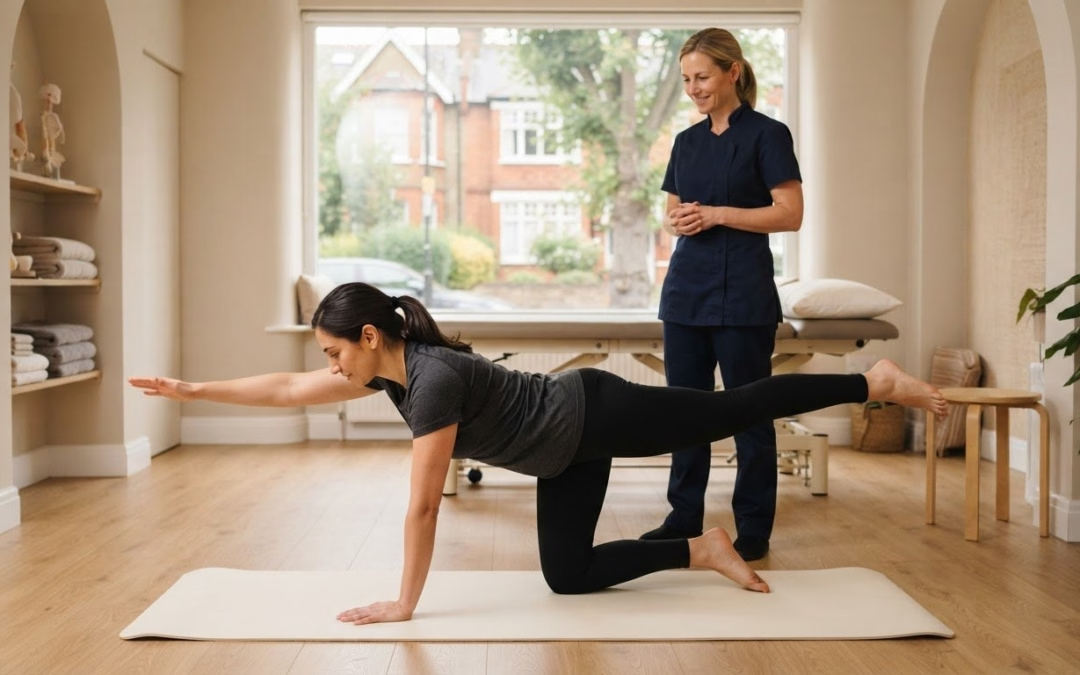
Movement should support an adjustment, not require you to push through pain. Exercises to support chiropractic adjustments may include gentle stretching and controlled core work to help maintain mobility and stability. A mild stretch or slight achiness may be normal, but stop if you feel sharp or worsening pain.
If you’re unsure whether stretching belongs in your routine, that’s understandable. The right movement should feel manageable, not like a test of endurance. This article explains how stretching, core strength and hip flexibility can complement chiropractic care, and how to recognise when discomfort is a sign to stop. You’ll also find practical movement examples and tips for adapting exercise to your comfort.
Key Takeaways
- Gentle stretching can help maintain mobility and ease tightness; choose movements suited to your comfort and treatment plan.
- A stretch may feel mild, but sharp or worsening pain is a reason to stop rather than push through.
- Controlled movements such as pelvic tilts, bridges and bird dogs can help build lower-back support.
- Hip-flexor stretches may ease tightness around the hips; move slowly and keep each stretch comfortable.
- Wall angels offer a simple way to practise shoulder movement and posture with steady, controlled motions.
1. But First: Why Is Stretching So Important For Chiropractic Care?
Gentle stretching can complement chiropractic care by helping maintain joint mobility and ease tight muscles. Your spine and the muscles around it work together in everyday movements, from turning your head to reaching overhead. When muscles feel tight, movement may feel restricted. Exercises to support chiropractic adjustments can combine flexibility work with controlled movements that help you practise stability for daily tasks.
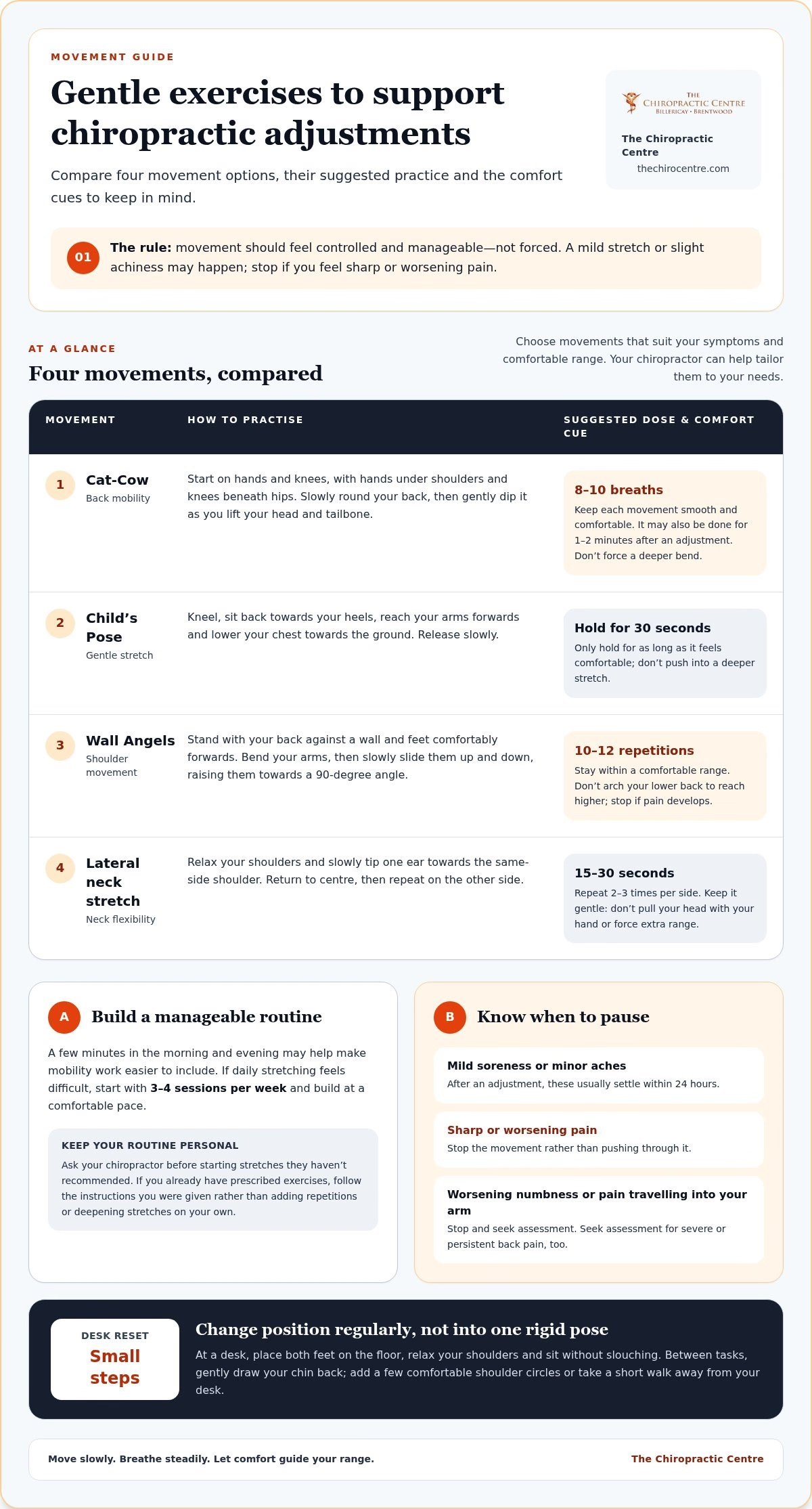
After an adjustment, a chiropractor may recommend stretches or exercises as homework. Cat-Cow is one example: start on your hands and knees, with hands under shoulders and knees beneath hips. Slowly round your back, then gently dip it while lifting your head and tailbone. Repeat for 8–10 breaths, keeping each movement smooth and comfortable.
Cat-Cow can also be performed for 1–2 minutes after an adjustment. Don’t force your back into a deeper bend. Another example is Child’s Pose: kneel, sit back towards your heels, reach your arms forward and lower your chest towards the ground. Hold for 30 seconds if comfortable, then release slowly.
Are there exercises to avoid after a chiropractic adjustment? Avoid stretches your chiropractor hasn’t recommended, and stop any movement that causes sharp pain or worsening discomfort. There isn’t one exercise list that suits everyone: your symptoms and comfortable range of motion matter.
Should exercises be tailored to the condition treated by a chiropractor? Yes. A movement that feels manageable for one person may aggravate another person’s symptoms. Your chiropractor can help identify suitable stretches for your needs, including movements to adapt or leave out.
Ask your chiropractor before starting a new routine, especially if they haven’t recommended those stretches. This helps match each movement to your condition and treatment plan. If you already have prescribed exercises, follow the instructions you were given rather than adding repetitions or deepening stretches on your own.
Daily practice can make mobility work easier to include in your routine. A few minutes each morning and evening may help keep muscles supple and joints moving. If daily stretching feels difficult, start with 3–4 sessions per week, then build a sustainable habit at a comfortable pace. Exercises to support chiropractic adjustments should fit your routine, not disrupt it.
Do exercises help chiropractic adjustments last longer? Exercises can help maintain mobility and stability, but they don’t make an adjustment last for a fixed period. Their value is in supporting movement between appointments, not promising a particular result. Move slowly, breathe steadily and stop if sharp pain occurs.
2. Should these exercises hurt?
Movement should feel controlled, not forced. A mild stretch or slight achiness can occur, but sharp pain is a signal to stop. After an adjustment, mild soreness or minor aches usually settle within 24 hours. Pay attention to how symptoms change during each movement and afterwards, rather than pushing through to finish a routine.
Wall angels help practise shoulder movement and an upright posture. Stand with your back against a wall, feet comfortably forward, and arms bent. Raise your arms towards a 90-degree angle, then slide them up and down slowly. Keep the movement within a comfortable range, without arching your lower back to reach higher. Repeat 10–12 times, stopping if pain develops.
Neck stretches should also stay gentle. For a lateral neck stretch, keep your shoulders relaxed and slowly tip one ear towards the same-side shoulder. Hold for 15–30 seconds, then return to centre and repeat on the other side. You can repeat the stretch 2–3 times per side. Avoid pulling your head with your hand or forcing extra range.
Posture correction is about changing positions regularly, not holding one rigid pose all day. At a desk, keep your shoulders relaxed, sit without slouching and take regular breaks from sitting. When standing, gently engage your core and let your shoulders rest back. These small changes can complement posture exercises and help you notice habits that leave your neck or shoulders feeling tight.
What are the risks of exercising after a chiropractic adjustment? Forcing a stretch or continuing through sharp pain can aggravate symptoms. Stop if you notice worsening numbness or pain travelling into your arm, and seek assessment for severe or persistent back pain.
What NHS or UK guidance is available on exercise for back and neck pain? A practical approach is to use gentle, controlled movement, take regular breaks from sitting and avoid exercises that worsen symptoms. For neck stretches, stay within a comfortable range. Seek assessment if symptoms persist or become severe.
If you work at a desk, try a brief posture reset between tasks: place both feet on the floor, relax your shoulders and gently draw your chin back. Add a few shoulder circles if they feel comfortable. A short walk away from your desk can also break up prolonged sitting. Build these steps into your routine gradually instead of adding a demanding workout when discomfort is already increasing.
If you’re unsure which movements suit your symptoms, discuss them during an appointment focused on safe chiropractic adjustments. A clinician can help you understand which stretches to modify and how posture habits may affect your recovery.
3. Core-strengthening exercises for lower-back stability
Your lower-back muscles work with your abdominal and hip muscles to support everyday movement. Gentle strengthening can help develop that support and stability. The aim isn’t to brace your body all day, but to practise controlled movements that keep your trunk steady as your arms and legs move. Start with simple exercises such as pelvic tilts, bridges and bird dogs.
For a pelvic tilt, lie on your back with your knees bent and feet flat. Gently tighten your stomach, then tilt your pelvis to flatten your lower back against the floor. Release and repeat without holding your breath or pushing through discomfort. This small movement helps you practise engaging your core while keeping your shoulders and legs relaxed.
To do a glute bridge, stay on your back with your knees bent and feet flat. Squeeze your buttock muscles, lift your hips, then lower them slowly. Keep the movement controlled rather than arching your back to lift higher. For a bird dog, start on your hands and knees, then extend one arm and the opposite leg. Return to the starting position and alternate sides.
A practical starting guide is 2–3 sets of 8–12 repetitions for each strengthening movement. For bird dogs, aim for 8–10 repetitions on each side, keeping your hips level as you extend. Move slowly enough to maintain good form. If you’re recovering from an injury, avoid overexertion and stop if an exercise increases discomfort.
Your mid-back also contributes to steady posture. For scapular retractions, sit or stand tall, gently draw your shoulder blades towards each other, and hold for 3–5 seconds. Relax, then repeat 10–12 times. Keep your shoulders down rather than shrugging. This movement focuses on the muscles between your shoulder blades, which help control shoulder position.
Resistance bands offer a low-impact way to add strength work without putting pressure on your spine or joints. Try band pull-aparts: hold a band in front of your chest, arms extended, and gently draw your hands apart. Return with control for 10–12 repetitions. Start with light resistance, and keep your neck relaxed rather than jutting your chin forward.
Build strength gradually, keeping a steady pace and working within a comfortable range. Perform core exercises three to four times a week, allowing your body time between sessions. If you add weights or a band, prioritise form over resistance. A mirror can help you notice whether your back stays steady during a bridge or your hips twist during a bird dog.
Choose movements that feel controlled from the first repetition to the last. If your technique changes as you tire, pause or reduce the repetitions. The aim is to practise useful muscle support, not to chase exhaustion. A routine you can perform consistently and comfortably is a more sensible foundation for strength than sudden, strenuous effort.
4. Hip-flexor flexibility and pelvic alignment
Hip flexors connect the front of your thigh with your pelvis. Long periods of sitting can leave these muscles feeling tight when you stand or walk. A gentle stretch may ease stiffness and make hip movement feel more comfortable. It doesn’t physically reposition your pelvis; instead, it supports flexibility around your hips and lower back. Keep your torso steady so the movement comes from your hip, not an exaggerated back arch.
Try a kneeling hip-flexor stretch on a mat. Kneel on one knee, place the other foot ahead, then gently shift your weight forwards. Keep your chest lifted and your pelvis facing forwards. You should feel a mild stretch at the front of the kneeling hip. Hold for 20–30 seconds, then switch sides. If kneeling feels uncomfortable, use a standing lunge position and keep the bent front knee at about 90 degrees.
Pelvic tilts can pair a small range of movement with gentle core activation. Lie on your back with knees bent and feet flat. Tighten your stomach lightly, tilt your pelvis until your lower back meets the floor, then release. Repeat 10–15 times without holding your breath. This controlled movement helps you notice how your pelvis and lower back move together, rather than forcing a particular alignment.
Yoga poses can combine flexibility, balance and body awareness. For example, move slowly between a supported low lunge and a comfortable upright stance. Keep your shoulders relaxed and your hips facing forwards. You should be able to breathe steadily and move with control; reduce the depth if you feel pinching or strain. Treat each position as a way to explore comfortable movement, not as a test of how far you can stretch.
Muscles and tendons respond differently to a stretch, so avoid bouncing or forcing a joint to its limit. For a doorway stretch, place your forearms against the frame and step forwards slightly. Keep your shoulders down as your chest opens, then hold for 20–30 seconds. This can stretch the front of the chest and shoulder area, which may feel tight after a day working at a desk.
Wrist and forearm mobility can also matter during activities such as typing or gardening. Rest one forearm comfortably, then rotate the wrist clockwise for 10–15 circles. Repeat counterclockwise, then change sides. Make the circles small and smooth, rather than forcing the wrist into stiffness. These movements won’t directly change pelvic alignment, but they can add variety to a routine that otherwise focuses on the hips and spine.
Choose stretches that suit your movement and fit into a balanced routine. For instance, combine a kneeling hip-flexor stretch with pelvic tilts, then finish with gentle wrist circles. A calm pace helps you notice how your hips, lower back and shoulders respond. If a movement causes pain, stop rather than pushing deeper.
5. Chiropractic adjustments and musculoskeletal care
A chiropractic adjustment and an exercise have different roles. An adjustment uses hands-on care to address joint movement, while an exercise asks muscles to work actively. Musculoskeletal care considers how joints, muscles and everyday habits interact. For example, restricted shoulder movement may sit alongside tight chest muscles and hours spent leaning forward. Looking at these together can help make the next step more relevant to your movement needs.
Therapeutic exercises can target muscles that feel weak or tight and may contribute to spinal problems. Instead of asking only, “Which stretch should I do?”, consider which movement feels restricted, what activity brings on tension, and whether strength or flexibility seems limited. If reaching overhead feels difficult, a suitable plan may include controlled shoulder movement. If standing from a chair feels strained, the focus may instead be on your hips and lower-back control.
Chiropractic care can also include practical guidance. A chiropractor may show you ways to sit, stand and move that reduce stress on your spine. Try applying one cue during an everyday task: place both feet flat while sitting, keep your shoulders relaxed and change position regularly. When lifting a box, keep it close and bend your knees. These small choices connect care in the clinic with movements you repeat at home or work.
Exercises and adjustments can take place on the same day. The right sequence depends on how you feel and which movements you’re practising. For instance, a gentle mobility exercise may suit a day when stiffness limits comfortable movement, while a strengthening task may fit a session focused on muscle control. Remember that exercise supports active movement, but it doesn’t replace an adjustment or guarantee a particular outcome.
Recovering from an injury calls for attention to symptoms and technique. Start each movement gently, use a comfortable range and keep your breathing steady. If a repetition brings sharp pain, increasing numbness or symptoms travelling into an arm, stop that movement. When rebuilding strength, controlled form matters more than speed or added resistance. This approach helps you recognise strain early and avoid turning a useful exercise into an uncomfortable challenge.
Chiropractic care for spinal conditions works best as part of a wider plan that combines patient education, therapeutic exercises and lifestyle changes. For example, practising a prescribed movement while adjusting your desk position addresses both exercise and daily habits. Your plan should reflect the area treated, your current mobility and the activities you want to manage. In short, adjustments address joint movement, while tailored exercises and practical movement habits support musculoskeletal function between appointments.
The Chiropractic Centre: New Patient Consultation
The Chiropractic Centre’s New Patient Consultation is a natural next step if pain, stiffness or uncertainty about exercise is affecting your movement. If you’re in Brentwood, Billericay, Chelmsford, Stock, Basildon or Wickford, you can discuss what you’re experiencing and which everyday activities feel difficult. Where appropriate, Chiropractic Adjustments may form part of your care, with Massage Therapy also available to support muscle tension.
If you’re considering exercises alongside treatment, explain which movements feel comfortable and which cause discomfort. This context can help guide a conversation about your needs. Parents can also ask about Paediatric Care for their child.
For a personal discussion about your care, contact The Chiropractic Centre.
Make comfortable movement part of your everyday routine
Progress can start with noticing how movement fits into your day. Choose a familiar moment, such as getting ready for work or finishing a walk, to practise movements that feel appropriate. Notice what feels easier and what still feels restricted. These observations can help you decide what to focus on next without feeling that you need to push harder or add more movements.
The aim of exercises to support chiropractic adjustments is to help you build confidence in comfortable, controlled movement over time. Focus on activities that matter to you, whether that means managing a workday, enjoying a walk or reaching more freely. Small, considered changes can help you move forward with greater confidence.
Frequently Asked Questions
But first: why is stretching so important for chiropractic care?
Stretching gives you a way to notice how freely each side of your body moves. For example, compare how easily you turn your head to the left and right without forcing either direction. This observation can help you describe your movement clearly during an appointment. Stretching can’t diagnose the cause of a restriction, but it can help you recognise which everyday movements feel different.
Can chiropractic care and exercises be done on the same day?
Yes, you can exercise on the same day as chiropractic care. If you’re planning a workout, choose a familiar activity rather than adding a demanding new session straight afterwards. For instance, stick to your usual gentle walk instead of trying unfamiliar exercises. Pay attention to how you feel as you move, and don’t treat the appointment as a reason to increase your training load.
Do these exercises fix neck pain on their own?
No, exercises don’t necessarily resolve neck pain on their own. They may form one part of a plan, but symptoms can have different contributing factors. Notice which daily activities affect your neck and whether they change your ability to turn, look up or concentrate. Sharing those details during an assessment gives a clearer picture than relying on one stretch to explain or address every symptom.
How often should I do these movements?
Follow the frequency set for your particular movements, since not every exercise needs the same schedule. Some guidance uses two or three brief exercise sessions per day, but that isn’t a universal target. A short session might fit naturally before work, at lunch or after your working day. Keep a simple record of when you practise and how your body responds, then use it to guide your next discussion.
Should these exercises hurt?
No, pain isn’t the aim of exercise. A movement may feel noticeable, but you shouldn’t need to grit your teeth, hold your breath or tense your whole body to complete it. Notice whether your body settles when you return to a relaxed position. If discomfort changes how you move or makes you avoid normal tasks, pause the exercise and describe what happened at your next appointment.
What exercises can support chiropractic adjustments?
Low-impact activities such as walking, swimming and cycling can support general mobility, so your routine need not rely only on floor exercises. Choose an activity that suits your current ability and feels manageable. For example, a walk can be part of your usual day rather than a separate workout. Change the pace or activity if your symptoms respond poorly, and focus on comfortable, repeatable movement.
Which stretches are recommended after a chiropractic adjustment?
Neck retractions and seated thoracic extensions are examples of movements that may be recommended. For a neck retraction, draw your chin gently backwards and hold for 3–5 seconds. A seated thoracic extension involves gently opening the upper back; hold for 15–20 seconds. These movements aren’t suitable for everyone, so use them only when they fit your instructions and feel controlled rather than forced.
What strengthening exercises help maintain spinal alignment?
A plank can train your trunk muscles to hold your body steady, but it doesn’t guarantee that your spine stays in a particular alignment. Begin with a version you can perform without your lower back sagging or your shoulders tightening. Hold for 20–30 seconds initially, then build gradually as your strength improves. If maintaining position becomes difficult, stop the set rather than allowing your form to collapse.