

Managing chronic pain without medication in Brentwood can include self-management: practical steps to pace activity, cope with pain and support your wellbeing as part of a wider care plan. Mid and South Essex’s chronic pain service defines chronic pain as pain that persists for at least three months after healing has taken place. The aim isn’t to ignore pain, but to find ways to live more comfortably and stay involved in daily life.
Ongoing pain can affect sleep, movement, work and mood, so it’s understandable to seek approaches that look beyond symptoms alone. Gentle, paced activity may help you build fitness over time, while mindfulness and talking therapy can support the emotional effects of pain.
This guide explains what self-management can involve and how chronic pain may affect everyday life. You’ll learn about pacing activity, relaxation and therapy, and how multidisciplinary care can bring different kinds of support together. These approaches can help you explore practical next steps at a manageable pace.
Key Takeaways
- Notice how ongoing pain may affect sleep, activity and mood, then choose a manageable way to keep moving.
- Learn how pacing can help you avoid pushing beyond your limits and build activity gradually.
- Explore mindfulness, relaxation and cognitive behavioural therapy as ways to respond to the emotional strain of pain.
- See how multidisciplinary care can bring physical, psychological and practical support together.
- Understand what to consider when weighing complementary treatments such as massage or acupuncture.
1. How chronic pain can affect sleep, activity and mental health
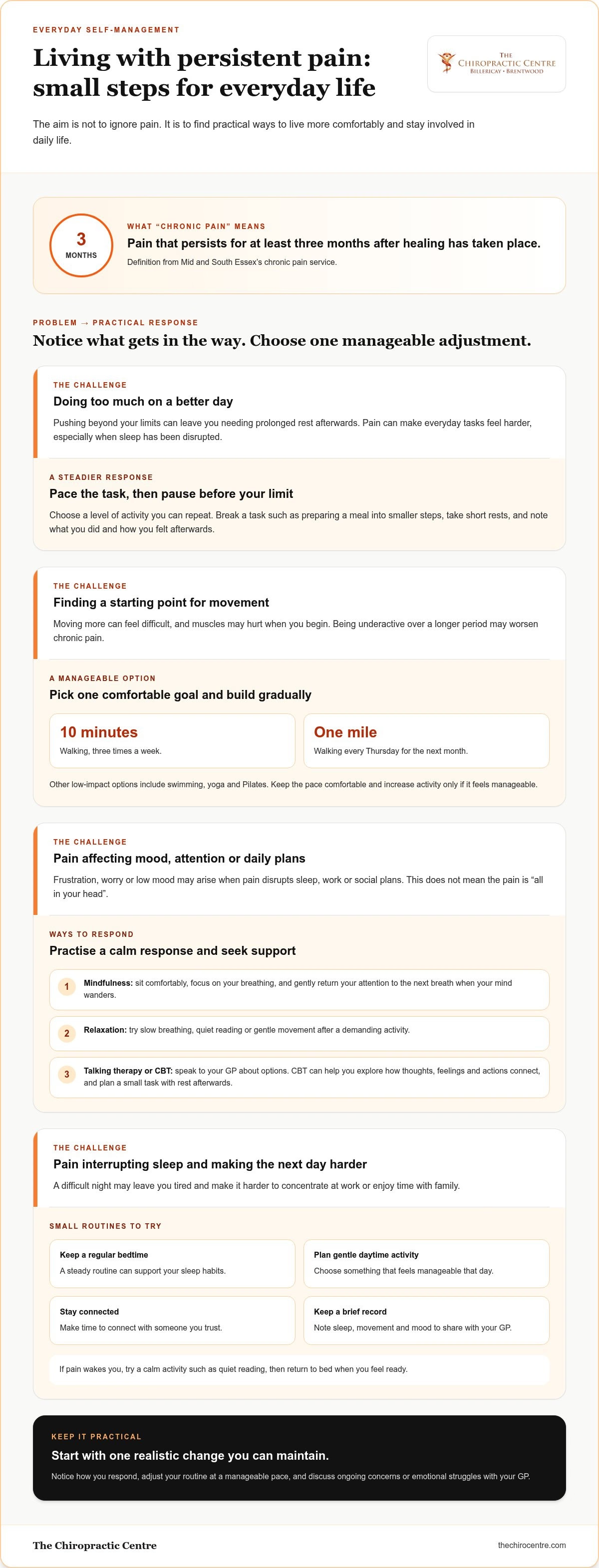
Chronic pain can disrupt sleep, make movement harder and affect your mood. For example, back pain might make turning in bed uncomfortable, leaving you tired the next day. Poor sleep can also make it harder to concentrate at work or enjoy time with family. Pain linked to nerve damage may bring other challenges, such as sensitivity or tingling. These effects can interact, so one difficult night may make daily tasks feel more demanding. For people managing chronic pain without medication in Brentwood, noticing these connections can help shape practical goals.
Managing activity means finding a steady level you can repeat, rather than doing too much on a better day and needing prolonged rest afterwards. Pacing means deciding how much to do and stopping before you exceed your limit. Try breaking a task, such as preparing a meal, into smaller steps with short rests between them. Note what you did and how you felt afterwards. This can help you spot patterns and adjust your routine without giving up activities that matter to you.
Choose exercise that suits your current ability, as muscles may hurt when you begin moving more. A practical starting goal could be walking for 10 minutes three times a week. Another measurable option is walking one mile every Thursday for the next month. Pick one goal, keep the pace comfortable and build gradually if it feels manageable. Low-impact options include swimming, yoga and Pilates. Regular, paced activity can build fitness over time, whilst being underactive over a longer period may worsen chronic pain.
Pain can also affect your psychological wellbeing. Frustration, worry or low mood may arise when pain disrupts sleep, social plans or work. If you’re struggling emotionally, speak to your GP about talking therapy options. A specialist can help you consider different kinds of healthcare support, including approaches focused on living with persistent pain. Asking for support is a practical step, not a sign that your pain is “all in your head”.
Try a few simple steps to support sleep and mood: keep a regular bedtime, plan a gentle activity during the day and stay connected with someone you trust. If pain wakes you, try a calm activity, such as quiet reading, before returning to bed when you feel ready. Keep a brief record of sleep, movement and mood to share with your GP. Concrete examples can focus your discussion and help identify routines that support your quality of life. In Brentwood, managing chronic pain without medication can start with one realistic change you can maintain.
2. Mindfulness, meditation and cognitive behavioural therapy
Mindfulness helps you notice what is happening now, including pain, thoughts and feelings, without immediately judging them. Try sitting comfortably and focusing on your breathing. When your mind wanders, gently bring your attention back to the next breath. You aren’t trying to make pain disappear; you’re practising a different response to it. A short pause before a demanding task can also help you notice tension and choose a steadier pace.
Meditation offers one structured way to practise this attention. For example, focus on the feeling of your feet against the floor, then notice the sounds around you. If pain draws your attention away, acknowledge it and return to your chosen focus. This practice may be useful during a quiet moment before sleep or after a stressful appointment. Keep the exercise comfortable, and change position if sitting increases discomfort.
Relaxation can support these practices because stress may worsen pain symptoms or contribute to flare-ups. Try slow breathing, a quiet reading break or gentle movement after a demanding activity. Gentle exercise and relaxation can complement mindfulness. Choose an option that feels manageable that day, then notice how your body responds. A simple note about the activity and your response can help you find a routine that fits.
Cognitive behavioural therapy, often called CBT, helps you examine how thoughts, feelings and actions connect. Pain can prompt thoughts such as “I can’t do anything today”, which may lead you to avoid every activity. CBT can help you reframe that thought into a practical choice, such as completing one small task and resting afterwards. It doesn’t suggest pain is imaginary. Instead, therapy can help you develop strategies for its emotional effects and daily challenges.
Pain-management programme sessions may combine gentle exercise, relaxation, mindfulness, group discussion and ways to manage emotions related to persistent pain. Pacing is often part of this learning: decide what you can do, divide demanding tasks and pause before pushing beyond your limit. Group sessions can also give you space to discuss practical approaches with others. These programmes focus on useful coping skills and a more active life, rather than promising that pain will vanish.
Start with one technique, such as mindful breathing before a regular activity, and notice whether it helps you feel calmer or more in control. If you’re exploring hands-on care alongside these strategies, consider how support for comfort and movement could fit into your wider approach.
3. Chronic pain definition, causes and wider effects
According to Mid and South Essex’s chronic pain service, chronic pain persists for at least three months after healing has taken place. This definition describes duration, not a diagnosis or a single cause. For example, pain continuing after an injury has healed may need a different discussion from pain linked to an ongoing health condition. Tell your GP when the pain began and whether its pattern has changed, as these details help explain your experience.
Long-term pain can be associated with arthritis, back problems, an old injury, illness or nerve damage. More than one factor may be relevant. A back problem, for instance, might affect how you bend, while nerve damage can involve altered sensation. These examples don’t establish what is causing your symptoms. A clinician considers your account alongside an examination and other relevant health information before reaching a diagnosis.
In the UK, a GP is the first point of contact for discussing pain. They may ask where it occurs, how it feels and what makes it better or worse. They may also examine you, review your pain history and look for illnesses that could cause or worsen it. Before an appointment, note the location, pattern and effect of your symptoms. If pain moves, changes character or appears alongside another concern, include that detail.
A clear account helps distinguish the pain itself from its wider effects. For example, explain whether you’ve stopped doing a particular task, need help with something you previously managed alone, or feel concerned that an activity might increase your pain. These examples give a healthcare professional more context than a general description such as “it hurts”. They also help you identify what you most want support with, such as returning to a routine or feeling more confident making plans.
Pain clinics vary in the treatments they offer, and not every hospital has a dedicated clinic. Some services may provide manual therapy, exercise, psychological support or complementary approaches such as acupuncture. Available support depends on the clinic and your needs. If you’re discussing a referral with your GP, describe how pain affects your life and the practical help you hope to explore.
Seek urgent medical advice if you have urgent concerns about chronic pain. Mid and South Essex advises attending A&E for urgent chronic pain concerns, including red-flag symptoms. If you’re unsure how a change in symptoms affects your situation, contact your GP to discuss what you’ve noticed and when it began.
4. Multidisciplinary chronic pain care
UK guidance supports a holistic approach to persistent pain: combine practical, physical and psychological ways to manage your pain. Pain-management programmes aim to improve quality of life despite pain, rather than reduce pain itself. For most people with chronic pain, medication alone will not provide benefit in treating their pain. Care can therefore focus on daily function, coping skills and reducing the distress pain causes.
If you’ve struggled with pain for more than 12 weeks, you can seek help from a range of services. Start by discussing your situation with your GP, who can consider your symptoms and how they affect activities such as work, walking or household tasks. If pain is difficult to manage, you can ask your GP for a referral to a specialist pain clinic. Referral to a pain-management programme is usually made through a local pain clinic.
A pain clinic may bring together professionals with different skills, including doctors, psychologists, nurses, physiotherapists and occupational therapists. Each can contribute a different perspective: a physiotherapist may help you plan movement, while an occupational therapist can discuss adapting everyday tasks. A psychologist can support coping strategies. The team’s shared focus is finding techniques that fit your needs, rather than treating one symptom in isolation.
Pain-management programmes are psychologically based rehabilitation for people whose chronic pain remains unresolved by other available treatments. They’re usually delivered as a series of group sessions, with experienced healthcare professionals working alongside participants. Sessions may cover education about pain, gentle exercise, relaxation, pacing and managing emotions. Group discussion can help you compare practical ideas, such as breaking a demanding household task into smaller stages.
These programmes aim to help you understand pain and build ways to live a more active life. The goal may be to return to a valued activity, such as preparing a meal or attending a social event, even if pain continues. Physical, psychological and practical techniques can reduce the disability and distress associated with persistent pain. This is different from promising a particular pain-relief result or focusing only on the spinal area.
To prepare for a conversation with your GP in Brentwood, note which activities are hardest, what you’ve already tried and what you hope to do more easily. For example, explain whether pain affects walking to the shops, sitting at work or getting dressed. Ask whether a specialist pain clinic or programme could suit your circumstances. This discussion can help connect your goals with available support.
5. What are the risks of acupuncture, massage or other complementary pain treatments?
Complementary treatments can be part of chronic pain care, but they aren’t automatically suitable for everyone. Acupuncture involves inserting thin needles at specific points to stimulate the nervous system. Massage uses hands-on techniques to work with soft tissues. These treatments differ, so consider what each involves and what you hope it will help you do. For example, your aim might be to ease muscle tension or support movement during daily activities.
Before trying a treatment, write down your main concern and the outcome that matters to you. “I want to walk comfortably to the shops” gives a clearer goal than “I want to feel better”. Tell the practitioner about your pain, relevant health history and any recent changes. This context can inform a discussion about whether the approach fits your needs. If you have questions about a treatment’s purpose or method, raise them before proceeding.
Ask for a plain-English explanation of what will happen, which body areas are involved and how you can pause or stop. For acupuncture, understand where needles may be placed and how the session is carried out. For massage, discuss the areas to be treated and the level of pressure. Agreeing on these details helps you make an informed choice and communicate clearly throughout the session.
Keep your GP involved in decisions about ongoing pain, especially if symptoms change or a new concern develops. A complementary treatment should not replace medical assessment of a new or unexplained problem. In the UK, your GP is the first point of contact for discussing pain. Share the name of any treatment you’re considering, alongside your symptoms and existing care, so your wider healthcare needs remain visible.
After a session, note what treatment you received and how you felt during everyday activities afterwards. For example, record whether sitting, walking or sleeping felt different that evening or the following day. This doesn’t prove that a treatment caused a change, but it gives you useful details for reviewing your experience. Avoid judging a treatment only by how you feel immediately afterwards; consider whether it supports a practical goal over time.
Be cautious of claims that acupuncture or massage will cure persistent pain, correct every underlying cause or guarantee relief. Chronic pain can have different causes, and one approach may not suit everyone. Treat the decision as part of a wider plan that includes your goals and healthcare advice. If you’re considering hands-on care, discuss the method, its purpose and how it fits alongside your current support before making a choice.
The Chiropractic Centre: New Patient Consultation
The Chiropractic Centre offers a New Patient Consultation to discuss your pain and movement concerns. If ongoing discomfort affects everyday activities, you can explain what you find difficult and what you hope to manage more comfortably. This is an opportunity to discuss whether chiropractic care may be relevant to your needs.
Depending on your concerns, care at The Chiropractic Centre includes Chiropractic Adjustments and Massage Therapy. These hands-on options may form part of a broader approach to musculoskeletal wellbeing, alongside the self-management strategies discussed above. A consultation gives you the opportunity to talk through your priorities and understand the care being considered, without assuming one treatment suits everyone.
If you’re considering this as a next step, you’re welcome to contact The Chiropractic Centre to discuss a New Patient Consultation.
Choose a next step that fits your priorities
Choose a practical goal that reflects what matters in your daily life, such as returning to a regular activity or feeling more confident with movement. If you’re supporting a child with health concerns, The Chiropractic Centre also provides Paediatric Care. Keep your next step specific to the person and concern, and note any questions you’d like to discuss.
For managing chronic pain without medication in Brentwood, a clear conversation can help you consider support that suits your priorities. Share the activities you hope to manage more comfortably and discuss possible options without assuming one approach is right for everyone.
If you’d like to take that step, contact The Chiropractic Centre. Keep moving towards a plan that respects your needs and wellbeing.
Frequently Asked Questions
What is self management?
Self-management is the part of care you put into practice in everyday life, guided by your needs and preferences. You might decide which daily responsibilities matter most, prepare questions for an appointment or tell someone close to you what support would help. It doesn’t mean having to solve pain alone. Your plan can change as your circumstances and priorities change.
What support is available for people living with pain?
Support can include practical changes at work as well as healthcare. If pain makes your role difficult, discuss the specific tasks or working patterns causing problems with your employer. Possible reasonable adjustments include changes to work patterns or hours. You could prepare by noting which duties are affected and what change might help you continue working. Your GP can also discuss concerns about pain and its effects.
What non-medication treatments help manage chronic pain?
Options include psychological approaches, movement-based strategies and complementary treatments. Consider what you want help with: for instance, therapy may focus on pain-related thoughts, while a hands-on treatment may address muscle tension. Discuss your aim and relevant health history before choosing an approach. Avoid relying on a treatment that promises a cure; consider whether it supports a practical, personally meaningful goal.
What chronic pain self-management programmes are available near Brentwood?
To find a suitable programme near Brentwood, ask your GP about the local referral pathway and what happens after referral. You can also ask practical questions about session format, accessibility and whether the programme’s aims match your priorities. Local provision can vary, so these details help you understand what participation would involve. Take a short list of questions to your appointment to keep the discussion focused.
What gentle exercise and movement options are suitable for chronic pain?
Suitable movement depends on your abilities and what feels manageable. Alongside activities such as walking or swimming, you might explore supported standing movements, gentle joint movements while seated or stretching within a comfortable range. Everyday movement, such as getting up from a chair, can also be a starting point. Choose an activity you can adapt, and discuss new or concerning symptoms with your GP.