
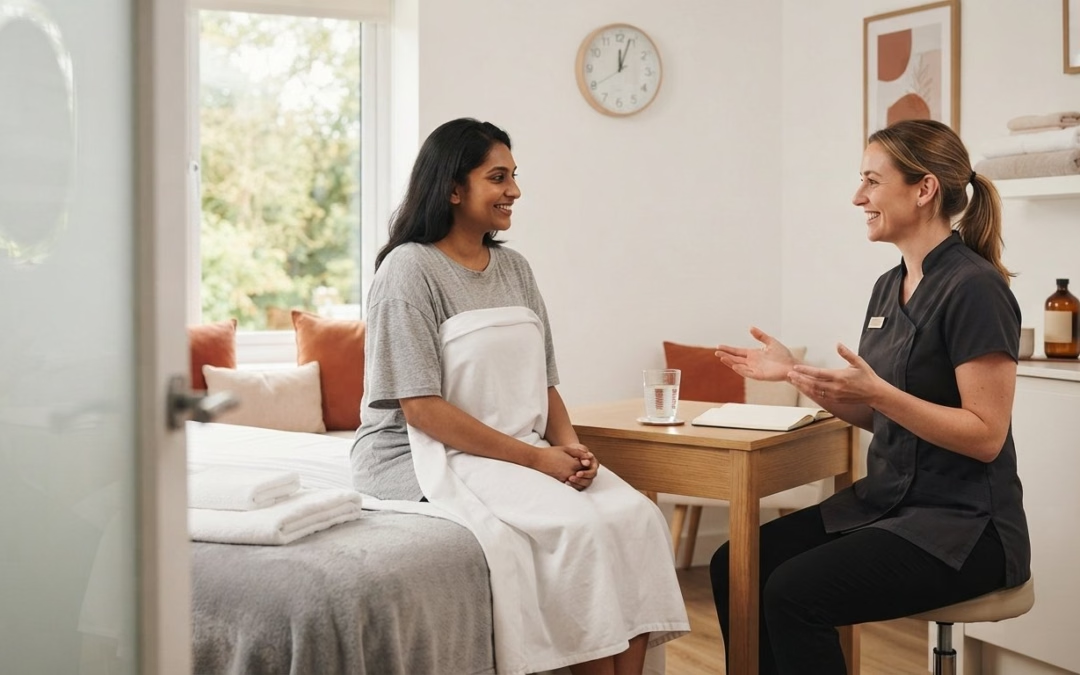
Your first massage should feel guided, not confusing. To understand how to prepare for your first massage therapy session, drink water through the day, wear loose clothing and arrive at least 10 minutes early to complete any paperwork and discuss your goals. Tell your therapist about relevant health conditions, injuries, allergies or pregnancy, and speak up if you want the pressure or focus adjusted.
It’s normal to wonder what happens when your massage begins. Your therapist will discuss your needs, explain how to prepare and check your comfort during the session. You’ll be covered with a towel or sheet, with only the area being worked on uncovered, and you can ask for a change or pause at any time. This guide explains how to get ready, what to expect and how to share your preferences, so you can arrive feeling settled and focus on your wellbeing.
Key Takeaways
- Choose loose, comfortable clothing and arrive at least 10 minutes early to settle in and complete any paperwork.
- Share your goals, relevant health information, allergies and sensitive areas before treatment begins.
- You can ask for the pressure, technique or focus to be adjusted during your massage.
- Only the area being worked on should be uncovered, with the rest of your body covered by a sheet or towel.
- Take your time getting up afterwards, drink water and give your body a chance to relax.
How Early Should You Arrive For The Massage?
- Choose a massage style that matches your comfort and goals. Table massage allows the therapist to work across your body or focus on particular muscles. Chair massage keeps you clothed and typically lasts 10 to 30 minutes. Sports massage targets muscles used during activity. For a first visit, a 60-minute massage is suggested as a suitable choice.
- Plan for the session length and cost before booking. Massage sessions commonly last 30 to 90 minutes, depending on the treatment and areas addressed. In the UK, the price depends on the case and is given after a quote request; session length, treatment focus and individual needs affect the cost.
- Consider your health before treatment. Temporary soreness can follow a massage. If you have suspected DVT, uncontrolled hypertension, a fever or a recent fracture, get medical clearance before having a massage. Tell the therapist about any health conditions or injuries beforehand so they can take them into account when planning your session.
- Arrive at least 10 minutes early. This gives you time to find the treatment room, settle in and complete paperwork without rushing. Wear loose clothing, such as a soft top and comfortable trousers, which are easy to remove and put back on. Leave jewellery at home or take it off before treatment.
- Prepare with a few practical steps. Drink water as you normally would throughout the day, and avoid a heavy meal within one to two hours of your appointment. A lukewarm shower may help you feel fresh. If you’re coming from work or exercise, bring clean clothes to change into afterwards.
- Choose clothing that feels comfortable for you during the massage. You can undress to your preferred level; you don’t have to remove every item. The therapist should leave the room while you change, then cover you with a sheet or towel. Only the area being massaged is uncovered, preserving your privacy.
- Use your arrival time to clarify practical details. Tell the therapist if you prefer to keep certain clothes on, or ask about draping before getting onto the table. For example, you can ask how your back or shoulders will be uncovered. Knowing what to expect can help you feel prepared and start the session comfortably.
Communicating goals, pressure preferences and sensitive areas
Clear information helps your therapist tailor the session to your needs. Before treatment starts, explain your health, goals and comfort preferences.
-
Share health history and wellness goals
Before treatment, tell the therapist about injuries, ongoing health conditions, allergies, sensitivities, medicines or pregnancy. These details can affect the plan, including which areas receive attention and which techniques are appropriate. Then describe your goal in plain language, such as easing shoulder tension or relaxing after a stressful week. You don’t need technical terms; specific examples are helpful.
-
Discuss preferences and sensitive areas
Explain what level of pressure feels comfortable and identify any areas you’d like avoided or treated gently. For example, you might prefer firm pressure on your upper back but lighter pressure near a tender shoulder. Mention sensitivity to oils or lotions, too. If you have a scent allergy or sensitivity, say so before any aromatherapy massage so the therapist can take it into account.
- Use the initial conversation to explain your priorities. Your therapist may ask about your health and what you hope to get from the session, then invite your questions. You could say, “I’m looking for relief from tightness around my neck,” or “I’d prefer a gentle massage today.” A clear aim gives you both a useful starting point without promising a particular result.
- Discuss your boundaries before getting onto the massage table. Tell the therapist if you don’t want a particular area touched or feel uneasy about a technique. You can also say whether you prefer quiet or conversation. If it’s hard to describe a concern, point to the area or explain what makes it uncomfortable, such as pressure, movement or sensitivity.
- Allow time for the health intake and questions before the massage starts. Arriving early gives you time to complete paperwork and talk without rushing. Read each form carefully, answer health questions accurately and raise anything you’re unsure about. If your needs or comfort change during the appointment, tell the therapist so they can adjust the session.
- Discuss your aims when considering future appointments, rather than choosing a schedule out of habit. Explain whether you’re looking for attention to a specific area, general relaxation or ongoing wellness support. The therapist can use this conversation to understand your priorities and discuss how a session might be structured. Share what feels manageable, and mention if your needs change.
What Should You Expect During Your First Massage Therapy Session?
Expect an initial conversation, hands-on treatment and check-ins about your comfort. In the UK, you can ask about the therapist’s relevant training, experience and professional membership, and look for clear information about their approach.
-
Communicate pressure preferences
Before treatment starts, describe your preferred pressure using simple terms such as gentle, moderate or firm. You can also share what’s worked for you before, for example, “Light pressure feels best on my shoulders.” Your therapist should check your comfort during the appointment. You don’t need to tolerate unpleasant pressure to achieve a particular result.
-
Ask for pressure or technique adjustments
Speak up as soon as you want something changed. You might say, “Could you use lighter pressure here?” or “Please try a different technique on that muscle.” Your therapist can adjust the pressure during the session, and you can ask them to pause while you explain what feels better. Clear, specific feedback gives them a practical guide.
-
Speak up about discomfort and consent
Tell the therapist if you feel discomfort, tenderness or unease instead of waiting for the massage to finish. Explain where you feel it and whether it’s related to pressure, movement or your position. You can ask them to stop, pause or avoid an area. Before treatment moves to another area, speak up about any boundary or technique that makes you uncomfortable.
- Notice how your muscles feel as the massage progresses. A strong sensation may still feel manageable, but sharp pain or increasing discomfort is a reason to speak up. For instance, say, “That feels too intense on my calf,” rather than silently tensing. Your therapist can adjust their technique, reduce pressure or move to another area based on your feedback.
- Use direct words if speaking feels difficult. “Softer, please,” “That area is tender” and “I’d like a pause” are clear requests. You don’t need to explain or justify a preference. If music distracts you or you’d rather not talk, say so. Comfort includes the atmosphere as well as how the therapist works on your muscles.
- Keep communicating throughout the appointment, even if your preferences change. Pressure that felt comfortable on your back may not suit your shoulders, and a technique may feel different as the therapist moves. Your massage therapist should check your pressure and comfort during the session. Answer honestly and request a change whenever your experience shifts.
- Remember, you can pause the treatment and revisit your boundaries at any point. If you feel unsure about continuing, tell the therapist what’s bothering you and ask them to stop. Consent is an ongoing conversation, not a one-time answer before the massage begins. A respectful session leaves room for your questions and choices.
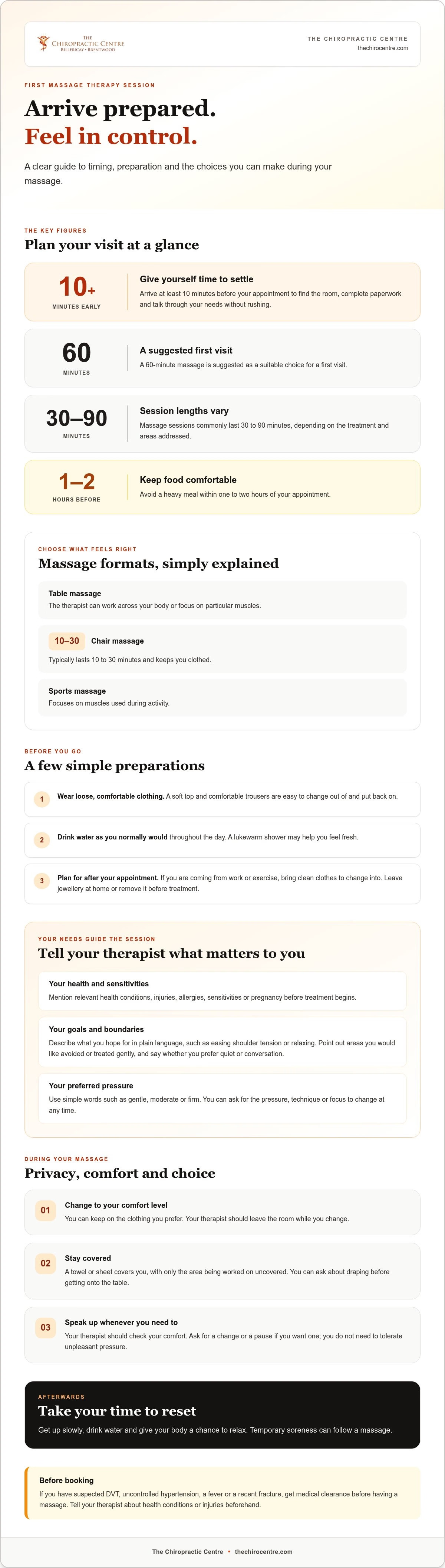
Post-massage relaxation, soreness and hydration
After your first massage, get up slowly, drink water and take it easy. Drink before and after your session, then continue with your usual hydration habits. The amount you need depends on your normal needs and activity, rather than a fixed amount for everyone.
-
Allow time for post-massage relaxation
Take a moment before returning to your usual routine. After the therapist finishes, they should give you privacy to dress and time to get up slowly. Sit on the edge of the table first, then stand when you feel ready. If you have work or travel immediately afterwards, leave a little breathing space instead of rushing out.
-
Notice soreness and follow aftercare
Pay attention to how your body feels after treatment. Soreness after a massage is generally temporary and should ease within a day or two. Take it easy, stretch lightly if that feels comfortable, and follow any aftercare guidance from your therapist. If an area feels tender, avoid putting extra strain on it during your usual activities.
-
Consider hydration and eating around the session
Drink water before and after your appointment, and continue drinking throughout the day as you normally would. There’s no single volume that suits everyone; your usual needs and activity affect how much you drink. Before your massage, avoid a heavy meal within one to two hours so you’re more comfortable lying on the table.
- Keep the rest of the day manageable. A relaxing massage can leave you feeling settled, so leave room to rest rather than planning strenuous exercise straight afterwards. Avoid strenuous exercise for at least 24 hours after treatment. If you have a busy schedule, move a gym session or hard training effort to another day.
- Choose gentle movement if you want to stay active. Light stretching after your massage may help you ease back into normal movement, but keep each stretch comfortable and stop if it increases discomfort. For example, try a gentle shoulder roll rather than a demanding workout. Give your body time to settle instead of pushing through tension.
- Use your therapist’s aftercare advice to guide your next steps. They may suggest home stretches or exercises suited to the areas treated. If you’re unsure how to do a movement, ask for an explanation before you leave. Keep the instructions somewhere easy to find, then notice how your muscles respond during everyday activities such as walking or sitting.
- Give yourself time to notice changes without expecting an instant result. Relaxation or reduced tension after a first massage may feel subtle at first. Make a note of how you feel later that day and the following day, including any soreness. This simple record can help you describe your response if you have another session.
How Should You Prepare For A Massage Therapy Appointment?
A little planning can help you arrive ready to focus on your session. These steps leave time for paperwork, settling in and sharing practical needs.
-
Arrive early for paperwork
Arrive at least 10 minutes before your appointment so you can complete the medical history form without rushing. Include past injuries, ongoing conditions, allergies, sensitivities, pregnancy and medicines you take. Read each question carefully, then mention anything the form doesn’t capture. Accurate details help the therapist consider your health and lifestyle when planning the session.
-
Settle in before the appointment
Use your arrival time to get comfortable and take care of practical details before treatment begins. Put your phone on silent, use the toilet if needed and have your questions ready. If completing paperwork on arrival may be difficult, ask in advance about doing it earlier. You can also explain any accommodation that would help you feel settled.
- Think about your aims when scheduling the appointment. Consider whether you want general relaxation or attention to a particular area, such as your shoulders after desk work. Share your aim when arranging the session, then describe it again at your appointment. If you’re considering deep tissue massage, mention it beforehand and discuss the pressure you’re comfortable with.
- Plan your journey toward the practice with enough time for usual delays. Check the appointment time and travel arrangements the day before, then leave room to arrive at least 10 minutes early. If you’re coming from work, allow time to put away bags and remove restrictive outer layers. Rushing through the door can make the first conversation harder.
- Decide what to bring before leaving home. Keep glasses, medication details or relevant health notes together so you can refer to them when completing paperwork. Wear loose clothing that’s easy to change out of and back into. If you have a specific concern, note a brief example, such as when your shoulder feels uncomfortable.
- Tell the therapist about practical preferences before getting onto the table. For example, say if you’d like the room to be quiet or need a moment to understand the draping arrangements. Ask about the massage technique and identify any areas you want the therapist to avoid. Clear instructions help shape a session around your comfort.
- Use the appointment to begin a conversation about your wellbeing, rather than feeling you must prepare a perfect explanation. At The Chiropractic Centre, massage therapy appointments give you an opportunity to discuss your needs and preferences before treatment. Bring the details that matter to you, then take each part of the process one step at a time.
The Chiropractic Centre: New Patient Consultation
The Chiropractic Centre offers a New Patient Consultation for people in Brentwood and Billericay who want to discuss their wellbeing and care options. Its hands-on, non-drug approach includes Massage Therapy, which can support comfort and movement without relying on medication.
During a consultation, you can talk through your concerns and what you hope to address. The Chiropractic Centre also offers Paediatric Care, with an individual approach centred on each patient’s needs.
Contact The Chiropractic Centre to discuss a New Patient Consultation and take a considered next step towards your wellbeing.
Take your next step towards feeling more at ease
Your first massage can be the start of a more attentive approach to your wellbeing. Knowing how to prepare for your first massage therapy session gives you a useful foundation, but your needs may change over time. Notice what helps you feel comfortable and what you’d like to discuss at a future appointment.
The Chiropractic Centre offers a New Patient Consultation, Paediatric Care and Massage Therapy. If you’re considering massage for yourself or your child, a conversation can help you understand the next steps and share what matters to you. You don’t need to phrase every question perfectly; start with the concern or goal you’d like to discuss.
Contact The Chiropractic Centre to discuss your needs. Taking that first step can help you move forward with greater confidence and care.
Frequently Asked Questions
Can I Shower Beforehand?
Yes. If you shower at home, leave enough time to dry off and get ready without rushing your journey. A lukewarm shower can also be part of your preparation. If you’re considering aromatherapy, mention any scent sensitivity before oils are chosen. The aim is to arrive comfortable, not to follow a strict washing routine.
Do I need to be completely undressed for a massage?
No. You choose what clothing to remove and can set your boundaries before treatment starts. For a full-body massage, the therapist may work across the body while excluding private areas. Ask which areas the planned massage involves, then decide what feels comfortable. You can speak up if your preferences change during the session.
Is It Normal to Feel Sore After a Massage?
Temporary soreness can happen, but it isn’t proof that a massage was more effective. Notice where you feel tender and whether ordinary movement feels comfortable afterwards. If you’re recording your response for a future appointment, note which areas were worked on and how they felt later. That gives you clearer feedback to share next time.
What should I do before my first massage therapy session?
A useful way to prepare for your first massage therapy session is to make a short list of practical needs. You can ask in advance about completing forms early or arranging a language interpreter. Keep the list on your phone or on paper, then use it to remember questions at the start. This can make the first conversation easier to follow.
What should I wear to a massage in the UK?
Wear something suited to your journey and appointment, such as easy-to-remove layers for changeable British weather. You don’t need specialist kit. If you’re having a chair massage, you stay clothed and no oil or lotion is used. For other massage styles, decide what clothing you want to keep on and explain your preference.
Should I shower or avoid eating before a massage?
You can shower beforehand, and avoiding a heavy meal shortly before lying down may help you feel comfortable. If you’ve eaten recently, mention it when discussing your comfort and position on the table. A lukewarm shower is optional, not a requirement. Plan around your comfort so you can focus on the session rather than feeling too full or rushed.
What should I tell the massage therapist about my health, injuries and preferences?
Share details that could shape the session, including a past injury that still affects movement or an allergy that causes a reaction. Give a clear example, such as which movement brings on shoulder discomfort. You can also mention what you’d like the therapist to avoid. If a health detail feels personal, ask how it relates to the massage plan.
What happens during a first massage appointment, step by step?
Knowing how to prepare for your first massage therapy session also means knowing you can ask questions throughout your appointment. Your therapist will first discuss your needs, then explain the planned approach before treatment. Once you’re ready, they’ll work on the agreed areas and check how you’re feeling. At the end, take a moment to share what felt comfortable and what you might change next time.