

Around two-thirds of people involved in a car accident develop whiplash symptoms. A chiropractor for a whiplash injury in Basildon can assess your symptoms, neck movement and the effect on daily activities, then explain whether chiropractic care may suit you. Whiplash-related neck pain can begin a few hours or even days after an accident.
It can be unsettling when stiffness or discomfort appears after you have left the scene, and you may be unsure whether to seek an assessment. This guide explains what a whiplash assessment involves, how a chiropractor considers your symptoms and what care may include, such as chiropractic adjustments and massage therapy.
You’ll also learn what can shape an individual care plan, when a different type of medical assessment may be appropriate, and how to check clinic opening hours and appointment availability around Basildon. The aim is to help you understand your options, know what to expect at an appointment and take a calm, informed next step towards recovery.
Key Takeaways
- Use the Billericay clinic address to plan your journey from Basildon, then check its current opening hours before setting off.
- Notice changes in neck comfort and movement after an accident, and keep track of when symptoms appear and what makes them better or worse.
- Learn how a chiropractic assessment considers your symptoms, movement and health history before care is planned.
- Find out what to have ready when booking so you can explain your needs and ask about appointment availability.
- Explore how chiropractic adjustments and massage therapy may form part of a wider approach to restoring comfortable movement.
Clinic location and opening hours
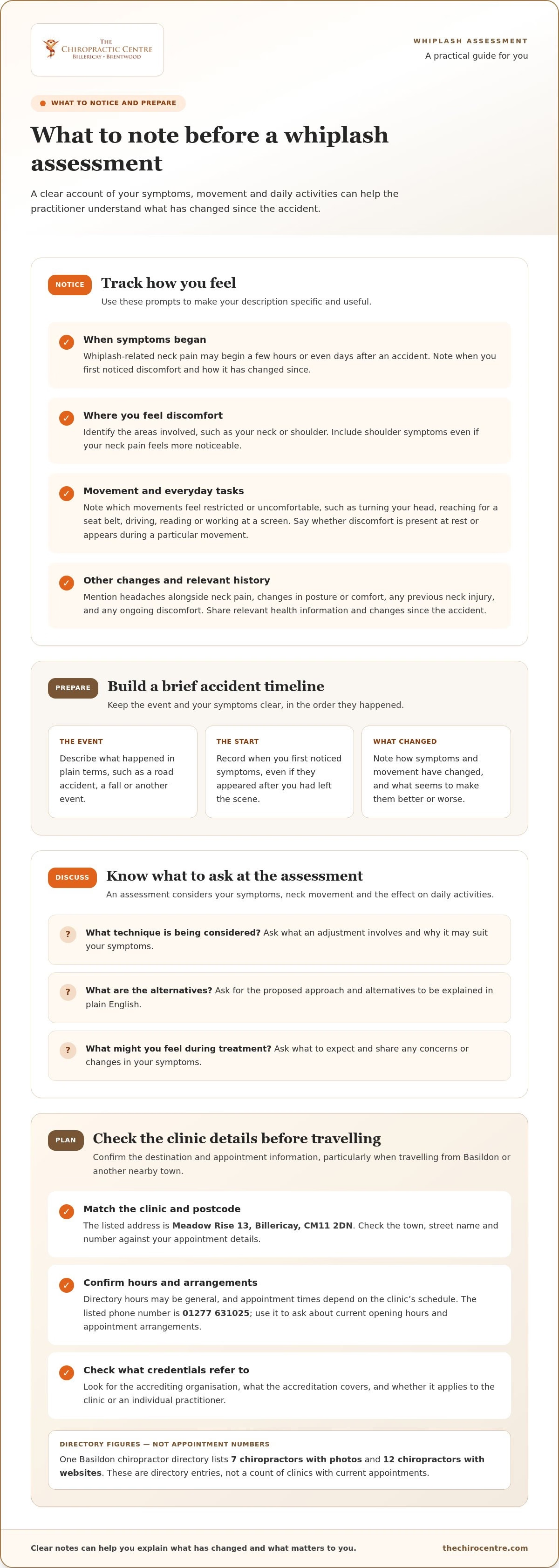
For Basildon residents, a nearby listed clinic address is Meadow Rise 13, Billericay, CM11 2DN. The listed phone number is 01277 631025. Use the full postcode when planning your journey, and compare the street name and number with your appointment details. This helps you identify the Billericay location when travelling from Basildon, Wickford or another nearby town.
Directory listings can help you find chiropractic clinics serving Basildon and surrounding areas. One Basildon chiropractor directory lists 7 chiropractors with photos and 12 chiropractors with websites. These figures describe directory entries, not the number of clinics with current appointments. Check the clinic name, complete address and contact details shown in each listing before using it to plan a visit.
Opening hours matter if you’re arranging chiropractic care around work, school runs or travel. A directory may display general hours, while appointment times depend on the clinic’s schedule. Use the listed phone number, 01277 631025, to ask about opening hours and appointment arrangements. Keep the address and appointment time together in your notes, especially if you’re travelling from Brentwood, Chelmsford or Stock.
Basildon, Billericay, Brentwood, Chelmsford, Stock and Wickford are distinct places, so check the town and postcode rather than relying on a broad local search label. For example, a listing marked Billericay should match the Meadow Rise address and CM11 2DN postcode. This quick comparison helps you choose the right destination and avoid confusing nearby clinics or similarly named listings.
Clinic accreditations and practitioner credentials are different things. Look for the accrediting organisation’s name, what the accreditation covers and whether it applies to the clinic or an individual practitioner. A photograph or general website description does not explain the scope of a credential. Clear information helps you understand what a qualification or accreditation relates to before arranging chiropractic treatment.
Before setting off, follow a simple check: match the clinic name, confirm the postcode, note your appointment time and review the latest opening hours. For example, check that your directions show Billericay and CM11 2DN if you’re heading to Meadow Rise. Accurate details make it easier to plan a visit for neck pain, headaches or concerns about spinal movement without relying on an outdated directory entry.
Conditions treated, including neck pain and stiffness
After an accident, note where you feel discomfort and how it affects your movement. The timing and pattern of neck or shoulder symptoms can help shape an assessment.
Post-accident neck and shoulder pain
Neck and shoulder discomfort can follow a collision, even if you felt able to carry on immediately afterwards. Notice whether turning your head, reaching for a seat belt or sitting at your desk feels different. These examples help you describe the effect on everyday tasks, rather than reporting pain as a general feeling.
Write down which area hurts, when you first noticed it and whether the sensation changes during the day. Include any shoulder symptoms alongside neck pain, even if one feels more noticeable. This gives the practitioner useful context about the areas involved and the movements that matter to you.
Whiplash-related neck pain
Whiplash-related neck pain may begin a few hours or even days after an accident. A gap between the collision and discomfort does not make the timing irrelevant. Record when symptoms started and how they have changed, so you can describe the sequence during an assessment.
Describe the accident in plain terms, then explain what your neck feels like now. For example, mention whether discomfort is present at rest or appears during a particular movement. A clear account helps show how symptoms affect your day, separately from the details of the collision itself.
Neck pain and stiffness
Stiffness can make ordinary movements feel restricted, such as looking over your shoulder before crossing a road. Note which movement feels limited and whether you change your posture to avoid discomfort. These details are more useful than simply saying your neck feels tight, because they show how the problem affects your routine.
Track changes in symptoms during activities such as driving, reading or working at a screen. If headaches occur alongside neck pain, note when they appear and what you were doing. These observations help build a clearer picture of your experience without assuming every symptom has the same cause.
Neck pain and injuries
Neck pain can follow different types of injury, so explain what happened rather than labelling it yourself. Note whether symptoms began after a road accident, a fall or another event, and identify the areas affected. Include any changes in movement, posture or comfort since the incident.
Before an appointment, prepare a brief timeline: what happened, when symptoms began and what has changed. Mention any previous neck injury or ongoing discomfort, as this adds useful context. An assessment can then focus on your situation and whether chiropractic care is appropriate for your needs.
Chiropractic assessment and treatment planning
A careful assessment connects your symptoms, movement and health history to a plan suited to your needs.
Treatment safety and questions
Before an adjustment, ask what the technique involves and why it may suit your symptoms. The practitioner should explain the proposed approach in plain English, including alternatives and what you may feel during treatment. Share relevant health information and describe any changes since the accident. This context helps shape a discussion about appropriate care.
Ask how progress will be reviewed and what might prompt a change to the plan. Chiropractic care, physiotherapy and GP treatment have different roles. A GP can assess wider health concerns, while a chiropractor or physiotherapist may focus on movement and musculoskeletal care. The right option depends on your symptoms and needs.
Whiplash injury treatment
Whiplash care may involve advice, exercises or hands-on therapy, depending on your assessment. Chiropractic adjustments are one possible approach, not an automatic step. Discuss what an adjustment aims to address, what other options may suit you and how the plan relates to everyday activities, such as turning your head while driving.
Evidence should relate specifically to whiplash-associated disorders, not just general spinal pain. Look for studies that explain the treatment tested and measure outcomes such as pain, movement or daily function. The cost depends on the assessment needed, treatment approach and number of sessions, and is provided after a quote request.
Comparing whiplash care options
Chiropractic care may focus on joint movement and hands-on treatment; physiotherapy may centre on movement, exercise and rehabilitation. A GP can assess your general health, consider other causes of symptoms and discuss medical care. These approaches have different aims, so compare them with the difficulties you want help with.
Private health insurance cover depends on your policy, including its treatment terms and practitioner requirements. NHS referral routes depend on local services and clinical assessment, so there is no single route for every Basildon resident. Review your policy or discuss NHS access with your GP to understand the options relevant to you.
Assessment timing and urgent symptoms
Arrange a chiropractic assessment when neck symptoms affect movement or daily activities, and explain when they began. There is no single waiting period that suits every situation. The severity and pattern of symptoms, your accident history and any other health concerns all matter when deciding what assessment is appropriate.
If symptoms are severe or rapidly worsening, seek urgent medical assessment through a GP or A&E rather than waiting for a routine chiropractic appointment. New concerns after an accident deserve attention, especially if they affect your ability to function normally. A chiropractor can discuss musculoskeletal care, but urgent symptoms call for medical assessment first.
Appointment booking and availability
Appointment availability depends on the clinic’s diary, opening hours and the type of visit you need. A directory of Basildon chiropractors lists 9 results as open in the evening and 7 as open at the weekend. These are directory results, not a guarantee that a particular clinic has appointments at those times. Check the clinic’s current hours and booking options before planning your visit.
When you enquire, explain that your symptoms followed an accident and describe how they affect movement. For example, mention difficulty turning your head, muscle discomfort or stiffness when driving. This gives the clinic useful context for arranging an appropriate consultation. If symptoms have changed since you first noticed them, include that update too.
Prepare a few details before booking, so you can give a clear account without trying to remember everything during the call:
- The date and type of accident, such as a road collision.
- When your neck or shoulder symptoms began and how they have changed.
- Which movements or activities affect your mobility.
- Times you can attend, including whether evenings or weekends matter.
Ask what the first appointment involves and how much time to allow for your consultation. A new patient visit may include questions about your health and an assessment before treatment is discussed. Ask whether you should bring relevant medical information, and note any instructions given when booking. This helps you arrive prepared and make good use of the appointment.
For an appointment outside standard daytime hours, search listings by the time that suits you, then check details directly with the chosen clinic. The directory’s 9 evening results and 7 weekend results describe listings across Basildon, not one practice’s diary. Availability can change as appointments are booked, so the latest information from the clinic is the useful detail for planning.
If you are reviewing appointment options after your symptoms change, explain what is different when you get in touch. Someone whose neck movement has become more restricted may need a different discussion from someone whose discomfort is easing. Ask how cancellations are handled and what to do if you need to rearrange. Clear booking details help you plan around work, travel and recovery.
Keep the clinic’s appointment confirmation and directions together, whether saved on your phone or written down. Check the date, arrival time and location before setting off. If you are unsure which appointment type to select, describe the accident and your current symptoms so staff can guide the booking process. This helps you focus on the right first step for your needs.
Chiropractic, massage and rehabilitation
Whiplash care can involve more than one hands-on technique. A useful plan links your symptoms with practical goals, such as turning your head comfortably or returning to normal tasks. Chiropractic adjustments and massage therapy address different aspects of care. Rehabilitation focuses on building confidence with suitable movement and exercises, guided by your assessment and changing needs.
An adjustment is a hands-on approach involving a spinal joint. Before treatment, discuss its purpose, the proposed technique and any alternatives. Massage therapy works with soft tissues, including muscles around the neck and shoulders. It may be considered alongside other care when appropriate to your needs. Your comfort, preferences and response to each approach should guide the conversation.
Rehabilitation also focuses on what you do between appointments. A practitioner may discuss manageable movements or exercises linked to daily activities, such as checking a blind spot or working at a screen. Ask how each activity connects with your plan. If an exercise increases discomfort, note the movement and explain what happened at your next review.
- Chiropractic adjustments: Discuss the aim and method before hands-on treatment.
- Massage therapy: Talk about muscle tension and the areas you want assessed.
- Movement: Identify daily tasks that feel difficult, such as turning or reaching.
- Exercises: Understand the purpose of each activity and how to report your response.
Keep a brief record between visits. Note which movements feel easier or more restricted, what activities trigger discomfort and how your routine is affected. Specific details help you explain changes without relying on memory. Sports training, desk work and driving place different demands on movement, so describe the activities that matter in your week.
A holistic approach also means explaining symptoms beyond the neck. If you have shoulder discomfort, headaches or symptoms such as sciatica, mention each clearly rather than assuming they share one cause. The practitioner can consider those details as part of your assessment. This keeps the plan focused on your needs, not a standard sequence of treatments.
Ask how progress will be reviewed and what would lead to adjusting the plan. A clear conversation helps you understand the role of each appointment and your part in recovery. To discuss chiropractic adjustments and massage therapy for your needs, book a consultation.
The Chiropractic Centre: New Patient Consultation
The Chiropractic Centre offers a New Patient Consultation if you are considering chiropractic care after a whiplash injury. Use the appointment to explain how the accident happened, describe your symptoms and discuss how neck discomfort affects everyday movement. You can use the consultation to understand the next steps and whether care is appropriate for your needs.
The Chiropractic Centre provides Chiropractic Adjustments and Massage Therapy as part of its care. Any treatment discussion should take your symptoms and personal circumstances into account. For children, the centre also offers Paediatric Care.
If you’d like to discuss a New Patient Consultation, contact The Chiropractic Centre.
Take your next step towards comfortable movement
As you move forward, set a personal goal that reflects what matters in your day. It might be returning to a familiar walk or feeling more at ease during a quiet evening. Noticing what supports that goal can help you take an active role in your wellbeing, without expecting progress to follow a fixed pattern.
If you are considering a chiropractor for a whiplash injury in Basildon, choose an approach that feels clear and respects your priorities. Before deciding, think about what you want to understand and what would help you feel comfortable discussing your care.
You can explore your care options and consider which next step fits your needs. Each thoughtful choice can help you build confidence as you work towards the activities that matter to you.
Frequently Asked Questions
Which chiropractors in Basildon treat whiplash injuries?
The Chiropractic Centre in nearby Billericay provides chiropractic care for Basildon residents after whiplash. If you are looking for a chiropractor for a whiplash injury in Basildon, a New Patient Consultation gives you the chance to explain the accident, your symptoms and your concerns before discussing care. The clinic also serves Brentwood, Chelmsford, Stock and Wickford. Ask about the assessment and proposed approach, and check the clinic location before travelling.
What whiplash treatments do Basildon chiropractors offer?
Care can include an assessment and, where suitable, chiropractic adjustments or massage therapy. The Chiropractic Centre provides both services. The right approach depends on your symptoms, health history and the practitioner’s findings. Before treatment, ask what a proposed technique involves, how it relates to your needs and what alternatives are available. Understand the plan before agreeing to hands-on care.
How much does a chiropractic appointment for whiplash cost in Basildon?
The cost depends on your case and is provided after a quote request. Factors include the appointment type, assessment required and proposed care. Ask what the quoted amount covers and whether later sessions are priced separately, so you can understand expected costs before deciding. Do not assume a local average or estimate when comparing a chiropractor for a whiplash injury in Basildon.
What qualifications and registration should I check when choosing a chiropractor in the UK?
Check the individual practitioner’s chiropractic qualification and current registration with the appropriate UK regulator. Match the practitioner’s name against the registration record, rather than relying only on a clinic description. You can also ask about experience assessing neck problems and how treatment choices are explained. Clear answers help you understand who will assess you and their professional background.
What are the risks or side effects of chiropractic treatment for whiplash?
Risks depend on your health, symptoms and the proposed technique. Before agreeing to an adjustment or massage, discuss your health history, previous injuries and any changes in your condition. Ask the practitioner to explain potential reactions, warning signs and alternatives relevant to your situation. You should feel able to pause or decline a technique if you are uncomfortable or do not understand its purpose.
How can I book a whiplash appointment with a chiropractor in Basildon, and what should I bring?
Contact The Chiropractic Centre by phone, email or in person to arrange an appointment. Explain that your symptoms followed an accident, then ask which appointment to book. Bring a concise account of what happened, when symptoms began and how they affect daily activities. Relevant health information and notes about previous neck problems can also help the practitioner understand your circumstances during the consultation.
What evidence supports chiropractic treatment for whiplash-associated disorders?
Look for studies specifically on whiplash-associated disorders that explain the treatment tested and measure outcomes such as pain, movement or daily function.