
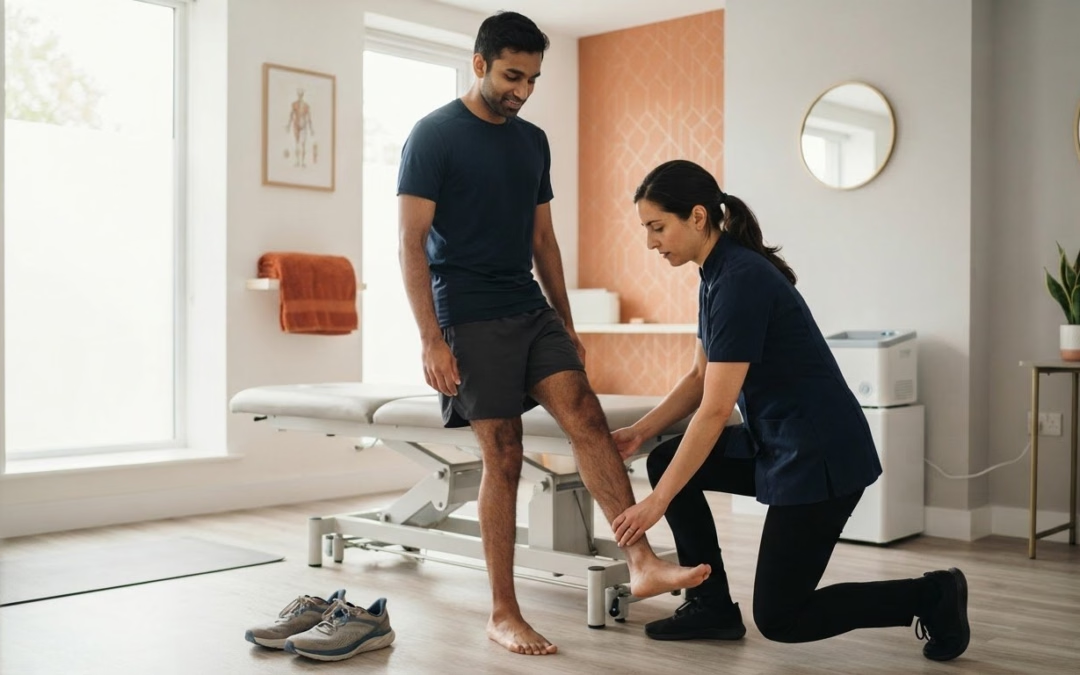
A sports injury needs more than a guess about what hurts. Chiropractic care for athletes in Wickford can start with a consultation and examination to understand your symptoms, movement and sporting demands. The findings help shape an individual approach focused on your discomfort and joint mobility.
It’s natural to want to return to training while avoiding a setback. This article explains how consultations, soft-tissue therapy and rehabilitation may fit into sports injury care, what can influence the approach, and how chiropractic adjustments and massage therapy can support your wider recovery plan. You’ll also learn what to expect from an initial assessment and how care can take account of your sport, symptoms and everyday movement.
Key Takeaways
- Learn how a sports injury assessment can consider your symptoms, training demands and everyday movement.
- See how soft-tissue therapy and rehabilitation may support recovery alongside a gradual return to activity.
- Understand how joint mobility and range of motion can shape your progress in sport and exercise.
- Find out what to expect from a New Patient Consultation and how it can help guide your next steps.
Sports and gym-related injuries
For athletes in Wickford, chiropractic care can take account of symptoms, movement and sporting demands. An assessment helps determine whether chiropractic care for athletes in Wickford is appropriate and what approach may suit your needs.
Common Sports Injuries
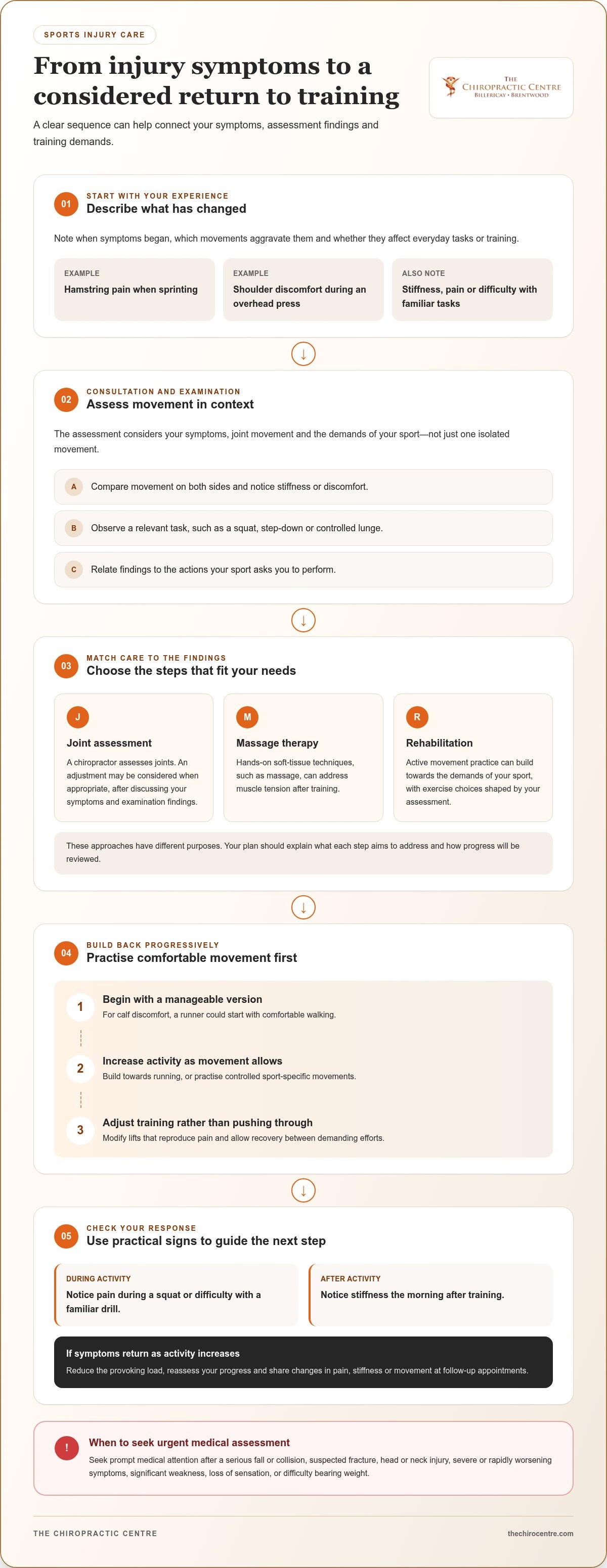
Running, football, tennis and gym training place different demands on your body. A hamstring strain may hurt when sprinting, while shoulder discomfort can make an overhead press difficult. Ankle sprains, knee pain, muscle strains and back discomfort are other issues athletes may experience. Note when symptoms began, which movements aggravate them and whether they affect everyday tasks. These details help focus a discussion about your needs.
When should an athlete seek medical care instead of chiropractic treatment? Seek urgent medical assessment after a serious fall or collision, suspected fracture, head or neck injury, or severe, rapidly worsening symptoms. Significant weakness, loss of sensation or difficulty bearing weight also calls for prompt medical attention.
What are the risks and side effects of chiropractic treatment? Treatment can cause temporary soreness, stiffness or a headache. Discuss your symptoms and health history before an adjustment, and stop if treatment causes concerning or worsening symptoms.
Recovery and Injury Prevention
Recovery should reflect the activity that triggered the problem. A runner returning after calf discomfort could start with comfortable walking, then build towards running as movement allows. A weight trainer might modify lifts that reproduce pain instead of pushing through. Warm up before training, use controlled technique and allow recovery between demanding efforts. Notice how your body responds as you change your activity.
Track practical signs, such as pain during a squat, stiffness the morning after training, or difficulty completing a familiar drill. If symptoms return as you increase activity, reduce the provoking load and reassess your progress. When considering chiropractic care for athletes in Wickford, discuss how symptoms affect your sport and training goals. An adjustment may be considered if the assessment indicates it is suitable, alongside movement guidance tailored to your needs.
The cited finding states that 75% of trials showed enhanced outcomes in relation to regular chiropractic care for athletes. This may be one consideration when discussing whether chiropractic care is appropriate for your sporting needs, alongside your symptoms and assessment.
Sports rehabilitation and soft-tissue therapy
Sports rehabilitation combines hands-on care with practical movement to help you build towards the demands of training. The appropriate mix depends on which movements feel restricted, your sport and how symptoms affect daily activity.
Chiropractic care assesses joints and movement, with an adjustment considered where appropriate. Rehabilitation adds active steps, such as controlled calf raises for a runner or gradual shoulder movements for a swimmer. Massage therapy works with soft tissue, including muscles that feel tight after training. These approaches serve different purposes, so a plan should explain what each step aims to address and how progress will be reviewed.
How can I choose between a chiropractor, physiotherapist and sports therapist? Match the approach to your needs: a chiropractor assesses joints and may use adjustments, while physiotherapy often centres on movement and exercise rehabilitation. Sports therapy commonly focuses on sports-related problems and supporting a return to activity. Ask how the proposed assessment and treatment address the movements your sport requires.
Are local chiropractors registered with the General Chiropractic Council? Registration applies to individual practitioners. Rebecca Willard’s General Chiropractic Council registration number is 30020916.
Which chiropractors near Wickford offer care for athletes? Look for an assessment that takes account of your sport, training demands and functional goals. For example, a racket-sport player may need their serving and reaching movements considered, rather than focusing only on discomfort at rest.
Soft tissue therapy uses hands-on techniques such as massage to address muscle tension. Rehabilitation turns assessment findings into active practice: a footballer might work on comfortable changes of direction before progressing to drills. Track your response during and after activity, and share changes in pain, stiffness or movement at follow-up appointments. This helps inform adjustments to exercise demands.
Joint mobility and range of motion
Joint mobility describes how comfortably a joint moves; range of motion describes how far it moves. For a tennis player, shoulder movement matters during serving, while ankle movement affects running and landing. Restricted movement can change a familiar action, so an assessment should consider your sport rather than just one isolated movement.
A practitioner may compare movement on both sides, then observe a sport-specific task. For example, a runner might squat, step down or perform a controlled lunge. The assessment can note stiffness, discomfort, balance and differences between sides. These observations help distinguish restricted joint movement from a movement pattern affected by pain or muscle tension.
Chiropractors assess joints and may recommend an adjustment when appropriate. An adjustment is a hands-on movement intended to address joint motion; it should follow a discussion of your symptoms and examination findings. It does not replace practising the movements your sport requires. For a golfer, that could mean assessing trunk rotation alongside hip movement during a comfortable swing.
Use simple, repeatable checks to notice changes during training. A swimmer could compare comfortable overhead reach on each side; a cyclist could observe whether their hips move freely while mounting and dismounting. Note what feels restricted, when it occurs and whether it changes after warming up. Avoid forcing a painful movement to increase your range.
Progress is most useful when linked to function, not an abstract target. If a basketball player finds landing uncomfortable, consider whether they can bend their knees, control their balance and repeat the movement comfortably. Follow agreed activity guidance, then report changes at review. A return to full training should take account of symptoms, movement quality and the demands of the sport, not range alone.
Chiropractic consultations and examination
Yes. Athletes in Wickford can start with a New Patient Consultation to discuss a sports injury and movement needs. It begins by clarifying what happened, which activities aggravate symptoms and what you hope to return to, such as running, swimming or weight training.
Give clear examples when describing the problem: when pain began, whether it followed a tackle or repeated lifting, and which movements now feel difficult. Mention previous injuries and relevant health concerns too. These details help the practitioner understand your training context, not just the area that hurts.
The examination can then focus on relevant movement and function. For a tennis player with shoulder discomfort, this might include observing arm movement and discussing serving demands. For a runner with knee symptoms, the assessment could consider walking, bending and how the issue affects training. The findings guide next steps, including whether chiropractic adjustments are appropriate.
- Describe the activity: Explain the sport, exercise or movement linked to your symptoms.
- Show what feels restricted: Identify movements such as reaching overhead or bending your knee.
- Discuss your goal: Be specific, for example returning to a comfortable training session.
A useful consultation should leave you understanding the assessment findings, proposed approach and how progress will be reviewed. Ask how each recommended step relates to your symptoms and sporting goal. If the findings suggest that your problem needs a different form of medical assessment, this should be discussed before treatment proceeds.
For athletes in Wickford, this measured first step helps connect symptoms with the movements that matter in training. Arrange a New Patient Consultation to discuss your injury and have your movement assessed before considering care.
The Chiropractic Centre: New Patient Consultation
The Chiropractic Centre offers a New Patient Consultation for athletes seeking a considered assessment of sports-related discomfort. You can explain how the issue affects training, which movements feel difficult and what you hope to return to. This gives the consultation a practical focus, whether you play football, run or train in the gym.
Chiropractic adjustments may be considered following an assessment, with the approach guided by your needs and findings. Massage therapy is also available for athletes seeking support with muscle tension. Discuss your sporting goals and any concerns so the next steps can be explained clearly and personally.
If you’re ready to discuss your needs, contact The Chiropractic Centre or visit thechirocentre.com.
Take your next step towards confident training
Your next step can be a clearer conversation about what you want your body to manage, whether that means returning to a familiar training routine or moving more comfortably in everyday life. For athletes considering chiropractic care for athletes in Wickford, a personal discussion can help clarify your priorities and a suitable way forward.
There’s no need to arrive with every answer. Bring a clear account of what you hope to do, what currently feels difficult and any questions you want addressed. A considered starting point keeps your wellbeing at the centre of decisions about care and activity.
If you’re ready to talk through your needs, contact The Chiropractic Centre. Take the next step at a pace that feels right for you, and keep your focus on returning to movement with confidence.
Frequently Asked Questions
What sports injuries and conditions can a chiropractor treat?
A chiropractor can assess musculoskeletal concerns such as back, shoulder, knee or elbow pain, and muscle strains linked to sport. Suitability depends on your symptoms and examination findings, not simply the sport you play. For example, tell the practitioner if a shoulder problem limits an overhead throw or if knee discomfort affects stairs as well as training. Serious injuries need appropriate medical assessment.
What chiropractic treatments and techniques are used for athletes?
Care may include chiropractic adjustments and massage therapy, selected to suit your assessment and goals. An adjustment is a hands-on technique for a joint; massage therapy works with soft tissues such as muscles. Your practitioner should explain the purpose of each approach and how it relates to your concern, such as restricted movement after repetitive lifting. The combination and plan depend on your individual needs.
How do I book an appointment with a sports chiropractor near Wickford?
Contact The Chiropractic Centre by phone, email or in person to arrange a New Patient Consultation. When booking, explain that you’re seeking help with a sports-related concern, and be ready to describe the activity involved, where you feel discomfort and what you’d like to do more comfortably. This gives the conversation a clear focus on your training and wellbeing.