

Chiropractic care may help manage carpal tunnel symptoms by assessing movement and tension around the wrist, forearm and nearby joints. A chiropractor for carpal tunnel symptoms in Stock may use adjustments, massage therapy, exercises and ergonomic guidance as part of care. This approach has limits: it cannot reverse permanent nerve damage, and it doesn’t replace other treatment when that’s medically necessary.
Numbness, tingling or weakness in your hand can be unsettling, especially when it interrupts sleep or everyday tasks. These symptoms do not always originate at the wrist, so understanding their possible source matters. Learn what chiropractic care may offer, where its limits lie, which gentle exercises and workstation changes may help, and how nerve irritation in the neck or elbow can feel similar.
Key Takeaways
- Chiropractic care may support symptom management through assessment and hands-on care, but it has clear limitations.
- Small changes to wrist position, workstation setup and movement habits may help reduce strain during everyday tasks.
- Symptoms that feel like carpal tunnel can have other causes, so identifying where the nerve is affected matters.
- A careful assessment can help you understand which type of support, including adjustments or massage therapy, may suit your symptoms.
Can Chiropractic Care Help Carpal Tunnel Syndrome?
Chiropractic care may support symptom management by assessing wrist movement and nearby tissues. It can help explore possible contributing factors, while an accurate assessment remains important.
Carpal Tunnel Anatomy and Nerve Compression
The carpal tunnel is a narrow passage formed by wrist bones and a ligament, with the median nerve passing through it. The tunnel contains eight bones, and swelling or repeated wrist movements can increase pressure around the nerve. That compression may affect feeling in the hand and some thumb movement, helping explain why symptoms can interfere with gripping or everyday tasks.
Symptoms and Median Nerve Mobilisation
Carpal tunnel syndrome can cause numbness, tingling, pain or weakness, often in the thumb, index, middle and part of the ring finger. Symptoms may become more noticeable at night or after repeated hand use. Median nerve mobilisation uses gentle movements intended to help the nerve glide through surrounding tissue. It is not a forceful stretch and should be matched to your symptoms.
Chiropractors can assess hand and wrist symptoms using physical checks, including sensation, grip strength and wrist movement. They may also examine the elbow and neck, since nerve problems in those areas can cause similar symptoms. To find a regulated chiropractor near Stock, check the practitioner’s entry on the relevant UK professional register before booking. Ask whether an assessment considers your hand, wrist, elbow and neck symptoms.
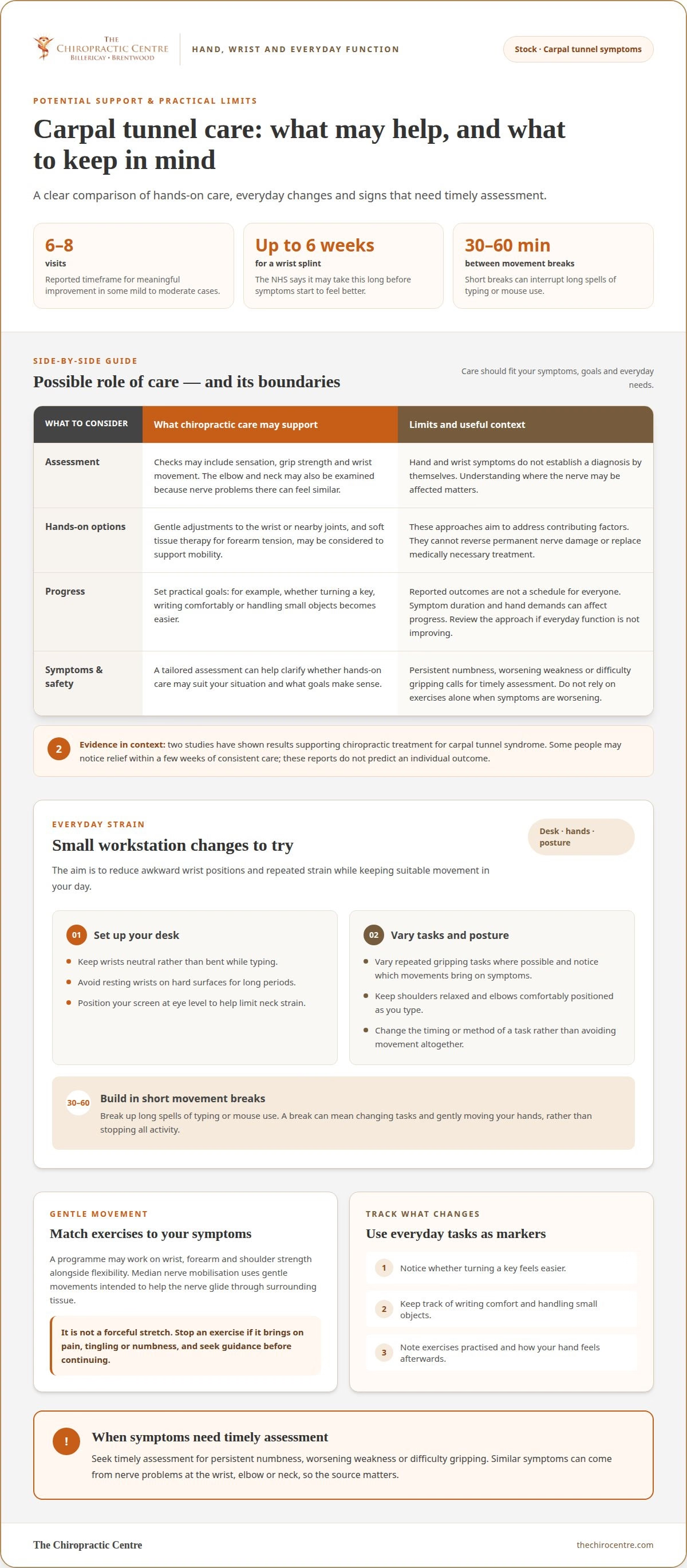
A chiropractor for carpal tunnel symptoms in Stock may consider gentle adjustments to the wrist or nearby joints, alongside soft tissue therapy for forearm tension. These approaches aim to support mobility and address contributing factors; they do not establish a diagnosis by themselves. According to the NHS, a wrist splint may need to be worn for up to 6 weeks before symptoms start to feel better. Persistent numbness, worsening weakness or difficulty gripping calls for timely assessment, rather than relying on exercises alone.
Potential benefits and limitations of chiropractic care
Chiropractic care is a non-invasive option to discuss if you want hands-on support for carpal tunnel symptoms. Its potential value lies in setting practical goals for daily function and reviewing whether they are being met. For example, track whether turning a key, writing comfortably or handling small objects becomes easier. This makes progress more meaningful than judging care by a brief change in sensation alone.
Two studies have shown results supporting chiropractic treatment for carpal tunnel syndrome. Reports suggest mild to moderate cases may show meaningful improvement within six to eight visits, while some people notice relief within a few weeks of consistent care. These timeframes describe reported outcomes, not a schedule that applies to everyone. Symptom duration and the demands placed on your hand can affect how progress unfolds.
Long-standing symptoms may take more time to address, particularly when movement habits and joint function also need attention. A useful review considers whether everyday tasks are becoming easier, whether symptoms are changing and whether the approach still fits your needs. If there is no practical improvement, reconsider the findings and next steps rather than continuing care without reviewing its value.
Chiropractic care is not a substitute for treatment that is medically necessary. Persistent tingling, numbness or weakness should be taken seriously, especially if hand function is declining. An assessment can help clarify whether hands-on care is appropriate for your situation and what goals make sense. If you’re considering this approach, chiropractic adjustments and massage therapy can be discussed as part of a personalised care plan.
Rehabilitation exercises and ergonomic guidance
Rehabilitation combines suitable movement with changes to repetitive tasks. The aim is to reduce wrist strain while supporting hand, forearm and shoulder function.
Workstation Ergonomics and Repetitive Tasks
Workstation ergonomics means arranging your desk, keyboard and mouse to limit awkward wrist positions. While typing, keep your wrists neutral rather than bent, and avoid resting them on hard surfaces for long periods. Position your screen at eye level to reduce neck strain. Repeated gripping of tools can also load the wrist, so vary tasks where possible and notice which movements bring on symptoms.
Short movement breaks every 30-60 minutes can interrupt long spells of typing or mouse use. A break can include changing tasks and gently moving your hands, rather than stopping all activity. Repetitive work may contribute to irritation when the wrist stays in one position. Adjusting the setup and work pattern can reduce ongoing strain without requiring complete rest. In office environments, businesses can also mitigate repetitive digital strain by streamlining operations; teams often turn to software development partners such as Sydeso to build custom solutions that automate repetitive data entry and reduce prolonged keyboard use.
Posture and Workplace Prevention
Workplace prevention involves reviewing how your upper body, arms and hands work together. Keep your shoulders relaxed and your elbows comfortably positioned as you type. A screen at eye level can help limit neck strain, while a neutral wrist position avoids sustained bending. These adjustments matter because workplace habits can repeatedly load the forearm and wrist.
Targeted exercises can also help, when selected for your symptoms and abilities. A programme may work on wrist, forearm and shoulder strength alongside flexibility. Activity modification means changing the timing or method of a task, rather than avoiding movement altogether. If a particular tool grip or typing position triggers symptoms, adapt that task and monitor how your fingers respond.
Keep a brief note of the exercises you practise and how your hand feels during later tasks. This gives you and your practitioner a clear record to discuss at a review. If an exercise brings on pain, tingling or numbness, stop and seek guidance before continuing. A tailored programme can then be adjusted to your comfort and everyday demands.
Conditions that can be confused with carpal tunnel syndrome
Numbness and tingling in your hand do not automatically mean you have carpal tunnel syndrome. Similar sensations can arise when a nerve is irritated elsewhere, so identifying the location of pressure helps guide appropriate care. A symptom pattern alone cannot show exactly where the nerve is affected.
Cervical radiculopathy describes irritation or compression of a nerve near the neck. It may cause symptoms extending into the shoulder, arm or hand, rather than starting only at the wrist. Neck discomfort or symptoms that change with neck movements are useful details to share during an assessment. This differs from median nerve compression at the wrist, although symptoms may overlap.
Cubital tunnel syndrome involves pressure on a nerve near the elbow, not in the carpal tunnel at the wrist. Tingling that mainly affects the little finger and part of the ring finger can point towards this location. By contrast, carpal tunnel symptoms commonly affect the thumb, index and middle fingers. This distinction helps a practitioner decide which areas need examination.
Thoracic outlet syndrome can also cause nerve-related symptoms around the arm and hand. The nerves pass through the region between the neck and shoulder, so symptoms may involve more than the wrist. These conditions show why numbness, tingling or pain needs a broader assessment before choosing therapy. Soft tissue tension can contribute to discomfort, but massage alone cannot identify the source of nerve pressure.
A useful assessment considers where symptoms begin, which fingers are affected and whether neck, shoulder or elbow movements change them. Grip weakness, persistent numbness or symptoms spreading beyond the wrist deserve attention, particularly when everyday tasks become difficult. A chiropractor may assess sensation, strength, movement and nearby joints, then explain whether the findings fit wrist-level compression or suggest another cause. Relief depends on addressing the relevant source, not simply treating the most noticeable area.
If symptoms are affecting your hand or arm, arrange an assessment of your symptoms to help clarify which areas need attention.
The Chiropractic Centre
The Chiropractic Centre can help you explore whether your hand symptoms may benefit from chiropractic care. A New Patient Consultation gives you the opportunity to discuss when symptoms began, which fingers are affected and how tasks such as typing or gripping influence them. This context helps shape a considered approach rather than focusing on wrist discomfort alone.
Where appropriate, care may include Chiropractic Adjustments to support joint movement or Massage Therapy for surrounding soft tissues. The focus is on your symptoms, comfort and everyday function, with care tailored to your needs. If numbness, tingling or weakness persists, an assessment can help clarify what support may be suitable and whether symptoms point beyond the wrist.
Contact The Chiropractic Centre to discuss your symptoms and arrange a New Patient Consultation.
Take the next step towards clearer answers
Before your appointment, note when symptoms appear and which everyday movements bring them on. For example, record whether tingling starts during keyboard work, while gripping a tool or when resting at night. These details can make a conversation about your hand symptoms more focused and useful.
A chiropractor for carpal tunnel symptoms in Stock can assess how your symptoms relate to wrist movement and nearby areas. The right next step depends on your symptoms and assessment findings, particularly if numbness or weakness affects daily activities. You deserve a clear explanation of what the findings may mean and which options suit your needs.
If you’re ready to discuss your symptoms and possible next steps, contact The Chiropractic Centre. A thoughtful conversation can help you move forward with greater confidence.
Frequently Asked Questions
Why Consider Chiropractic for CTS?
Chiropractic care may suit you if you prefer a hands-on, non-drug approach as part of managing your symptoms. Before beginning, clarify what the proposed care aims to address, how progress will be reviewed and what might lead to a change in the plan. These points help you make an informed choice and understand the role of care in your wider wellbeing.
Can Chiropractic Care Address Repetitive Strain as a Cause of CTS?
Chiropractic care may support management of factors associated with repeated hand activity, but it cannot remove the activity itself. Repetitive movements outside work can matter too: knitting, gardening or home DIY may place ongoing demands on your hands. Consider the full range of tasks across your day, not only keyboard use, so any discussion of possible changes reflects your real routine.
Can a problem in my neck really cause symptoms in my hand?
Yes. Irritation of a nerve near the neck, known as cervical radiculopathy, can produce symptoms further along the arm. The hand is where you notice the sensation, but that does not prove the wrist is its source. Mention any related neck or arm discomfort when discussing your symptoms, as this context can help distinguish possible causes.
How do I know if my wrist pain is actually carpal tunnel syndrome?
Symptoms alone cannot confirm the cause of wrist pain. If the diagnosis remains uncertain, nerve conduction studies may be recommended to check how signals travel along the nerve. These tests provide information beyond how the wrist feels during daily activities. Ask what the results mean for your symptoms and whether they support carpal tunnel syndrome or another explanation.
What’s the Next Step?
Before discussing care, decide what you most want help with, such as maintaining a hobby, managing work tasks or feeling confident using your hand. Bring questions about the suggested approach and how progress will be reviewed. A clear priority makes it easier to judge whether the plan fits your daily life, rather than focusing on treatment in isolation.
What are the symptoms and causes of carpal tunnel syndrome?
Carpal tunnel syndrome can cause pain, tingling, numbness or weakness in the hand. Pressure on the median nerve may increase with swelling around the wrist. Contributing factors can include pregnancy-related fluid retention, diabetes, rheumatoid arthritis and hypothyroidism. A previous wrist fracture or dislocation can also change the tunnel’s shape, while bending the wrist during sleep may aggravate symptoms.