

Growing pains describe recurring leg discomfort in childhood, but they are not a diagnosis for every ache. If you’re considering a chiropractor for children’s growing pains in Basildon, first look at the symptom pattern and note any signs that need medical attention. This can help you choose an appropriate next step for your child.
It’s natural to want a clear answer when your child is uncomfortable. Start by listening to what they describe and noticing how the pain affects everyday life. Understanding the difference between general guidance, clinical assessment and hands-on care can help you have a more focused conversation.
This article covers common patterns, signs that need further assessment and points to consider when weighing care options. It also explains how a child-focused consultation can fit into the next step, helping you approach your child’s wellbeing with greater clarity.
Key Takeaways
- Recognise the familiar pattern of evening leg aches and learn which details to observe as symptoms come and go.
- Find out why swelling, redness, warmth, fever, a rash or limping call for medical assessment rather than being assumed to be growing pains.
- Understand which age groups commonly experience growing pains, and why the name doesn’t mean bones are growing too quickly.
- Explore how a child-focused consultation can help assess your child’s needs and whether gentle chiropractic or soft-tissue care may be suitable.
Chiropractic adjustments and soft-tissue care
For a child, an adjustment should be gentle and suited to their developing body. The pressure described for children’s adjustments is no greater than testing a tomato’s ripeness. The practitioner should explain each step in child-friendly language, invite your child’s cooperation and stop if they feel uncomfortable. Care should respond to the child rather than use an adult approach.
When comparing chiropractors serving Basildon, consider their experience with children, how they explain care and how they involve young patients. Reviews can help you understand families’ experiences of communication, but they can’t determine what’s suitable for your child. You can also check a practitioner’s registration on the General Chiropractic Council register.
Before arranging care, ask what the appointment involves and whether a GP referral is part of the process. A referral does not replace medical assessment when symptoms raise concern. If you’re unsure which route is right, discuss your child’s symptoms with a healthcare professional before considering hands-on care.
Chiropractic care shouldn’t be presented as a proven cure for growing pains. The information available here does not establish how effective adjustments are for this specific discomfort. Gentle massage, stretching and a warm bath are other measures that may soothe leg discomfort. Speak with a paediatrician before trying magnesium supplements, so any decision takes your child’s individual needs into account.
Before an adjustment, discuss your child’s health history, symptoms and comfort with the practitioner. Ask them to explain the proposed technique and how your child can signal a pause. Appropriate care should respect your child’s willingness to participate, without pressure to continue. If you’re considering a chiropractor for children’s growing pains in Basildon, prioritise clear explanations and a manageable pace.
Care should be gentle and suited to a child’s developing body, and the practitioner should stop if the child feels uncomfortable. Discuss your child’s health history and the proposed technique before care.
What are common growing pain symptoms?
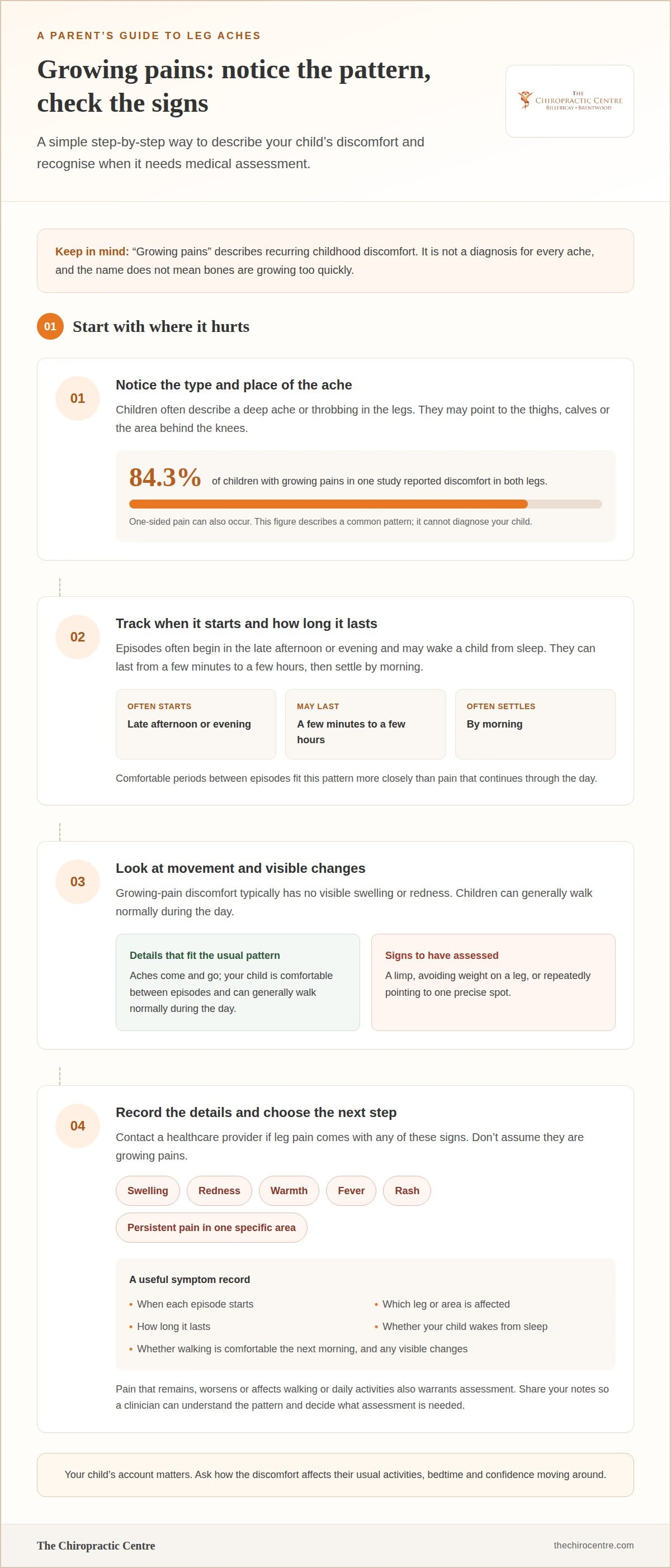
Growing-pain episodes are usually described as a deep ache or throbbing in the legs. Children may point to their thighs, calves or the area behind their knees. The discomfort often affects both legs, although one-sided pain can occur. A study reported that 84.3% of children with growing pains felt discomfort in both legs. The number describes a common pattern, not a way to diagnose your child.
Timing can help you describe what’s happening. Symptoms often begin in the late afternoon or evening, sometimes waking a child from sleep. An episode may last from a few minutes to a few hours, then settle by morning. Pain that comes and goes, with comfortable periods between episodes, fits this pattern more closely than pain that continues through the day. Note when it starts, where your child feels it and how long it lasts.
Notice how your child moves as well as what they say. Growing-pain discomfort typically occurs without visible swelling or redness, and children can generally walk normally during the day. A child who limps, avoids putting weight on a leg or repeatedly points to one precise spot needs medical assessment. These details help distinguish recurring aches from symptoms that need closer attention.
Contact a healthcare provider if leg pain comes with swelling, redness, warmth, fever or a rash. Persistent pain in one specific area also warrants assessment, especially if it affects walking or daily activities. Don’t assume these signs are growing pains. Record the location and timing, note visible changes, and mention any fever or limp. A clear account helps a clinician understand the pattern and decide what assessment is needed.
For a useful symptom record, note the time of each episode, the leg or area affected, how long it lasts and whether your child wakes from sleep. Add observations about walking the next morning. Pain that improves by morning differs from pain that remains, worsens or repeatedly centres on one spot.
What Are Growing Pains?
Growing pains aren’t caused directly by bones growing too quickly. The term describes recurring childhood discomfort, but it doesn’t explain every child’s pain. Seek medical advice if you’re concerned, the discomfort changes noticeably or it starts affecting your child’s usual activities. An assessment can clarify what attention may be appropriate.
To prepare for that conversation, ask your child how the pain affects their day. Do they avoid a favourite activity, struggle to settle at bedtime or feel worried about moving? Their own words can add useful context. Note what you hope to understand, such as whether an assessment is needed or what support might suit them.
A healthcare professional can consider your child’s account alongside their general health and movement. They may ask about previous injuries, recent changes in activity and the effect on everyday routines. Share relevant health information and ask what each part of the assessment is intended to clarify. Clear explanations help you take part in decisions and support your child during the appointment.
Treatment planning should follow an assessment, not assume all recurring leg discomfort has the same cause. Ask what the findings suggest, which options are appropriate and how your child’s comfort will guide any proposed care. If the explanation doesn’t address your main concern, ask for simpler wording. The plan should make sense to both you and your child, with the next step explained before you decide how to proceed.
Mention swelling, redness or limping alongside pain behind the knees, and check in with a healthcare provider. Growing pains are generally not associated with joint swelling, redness or tenderness, and the pain usually settles by morning. Sharing whether these signs are present gives the provider useful context.
Family history may also be useful context. A study reported that 69.8% of children with growing pains have a family history of the same condition. You can mention any such history during an assessment, while remembering that it is one piece of information to consider alongside your child’s symptoms and general health.
Children most likely to experience growing pains
Growing pains commonly affect children aged 3 to 12, but they don’t occur in every child. A study published in The Journal of Pediatrics reported that 36.9% of children experience them in early childhood. This gives useful context, not a prediction for an individual child. Age alone can’t confirm that leg pain is growing pains.
Children’s ages span very different stages, from preschool routines to busy school days. Notice how discomfort relates to your child’s day, such as whether aches appear after active play or during a quiet evening. A familiar pattern can help you explain your concerns, but it doesn’t establish the cause. Consider your child’s overall symptoms alongside their age.
Episodes may recur over months or years, then usually become less frequent as children move into their teenage years. This pattern may explain why discomfort returns after a settled period. Track when episodes happen and whether your child feels well between them. A change in the pattern deserves attention, especially if new symptoms appear.
Family history can be useful context when discussing recurring leg aches. Tell the healthcare professional if a parent or sibling had similar childhood discomfort. This detail doesn’t diagnose your child and shouldn’t outweigh signs such as persistent pain in one spot, swelling or limping. Consider age, family history and the symptom pattern together.
If your child falls within the 3-to-12 age range, recurring evening aches may fit the usual age group, but age isn’t proof. Record episodes, note changes and seek assessment for warning signs rather than relying on age alone. For guidance on your child’s symptoms, request support for your child’s leg pain.
The Chiropractic Centre: New Patient Consultation
The Chiropractic Centre offers a New Patient Consultation and Paediatric Care for families discussing a child’s leg discomfort. Share when the pain occurs, where your child feels it and whether it affects walking or sleep. This gives the conversation a clear starting point and helps focus the discussion on your child’s needs.
Chiropractic Adjustments and Massage Therapy are care options to discuss as part of an individual plan. If your child has swelling, redness, warmth, fever, a rash or limping, seek medical assessment before considering hands-on care.
For a calm, child-focused conversation about next steps, contact The Chiropractic Centre.
Choose a thoughtful next step for your child
Helping your child feel heard can make the next conversation easier. Invite them to describe the discomfort in their own words and share what feels worrying or uncomfortable. Bring these observations to a healthcare professional and discuss what support may suit your child. A careful, child-centred conversation keeps their comfort and wellbeing at the heart of each decision.
If you’re considering a chiropractor for your child’s growing pains in Basildon, look for clear explanations and an approach that respects your child’s pace. The Chiropractic Centre can discuss your concerns and whether its care is appropriate for your family. You’re welcome to contact The Chiropractic Centre to talk about a suitable next step.
Every child’s experience is personal. Attentive support and an open conversation can help your child feel listened to and cared for as you consider next steps.
Frequently Asked Questions
What checks should a chiropractor perform before treating a child with leg pain?
Before considering treatment, the chiropractor should take a clear history of the child’s health, symptoms and previous injuries. They should ask which activities affect the pain, observe how the child stands and walks, and assess relevant movement. They should explain their findings in child-friendly language, discuss whether care is suitable, and respect the child’s comfort and willingness to participate.
Is chiropractic treatment safe for children, and what are the risks or side effects?
A child’s adjustment should be gentle and suited to their developing body. The practitioner should explain each step and stop if the child feels uncomfortable. Discuss your child’s health history and the proposed technique before care.