What if that stubborn “knot” in your shoulder isn’t actually a muscle problem, but a neurological signal that’s simply forgotten how to switch off? If you have been searching for professional dry needling Essex, you probably know the frustration of chronic tension that refuses to budge. You’ve likely tried stretching and massage, only to find the relief is temporary. It’s exhausting to live with restricted movement whilst wondering if you’ll ever regain your full range of motion.
We understand that the idea of needles can feel daunting, especially when you’re already in pain. However, clinical dry needling is a precise, evidence-based tool designed to “reboot” your neuromuscular system. It is fundamentally different from traditional acupuncture, focusing specifically on the trigger points that cause referred pain and stiffness. Our goal is to act as your partner in health, moving you away from the limitations of discomfort and towards a more vibrant, active lifestyle.
This guide provides everything you need to know about how dry needling can resolve myofascial pain and improve your daily mobility. We will cover the clinical differences between needle therapies, address your concerns about the procedure, and help you decide if this targeted approach is the right choice for your recovery journey.
Key Takeaways
- Understand how dry needling Essex practitioners use evidence-based techniques to deactivate persistent muscle “knots” and restore your natural movement.
- Learn the biological process behind trigger point therapy and how mechanical stimulation triggers a healing response in tight muscle fibres.
- Clarify the clinical distinction between Western dry needling and Traditional Chinese Medicine to choose the best path for your recovery.
- Discover the powerful synergy between soft tissue work and chiropractic adjustments to address both muscle tension and joint mobility.
- Gain a clear understanding of the clinical assessment process so you can feel confident and relaxed throughout your treatment.
Understanding Dry Needling: More Than Just a Needle
Dry needling is a sophisticated, evidence-based therapy that has gained significant traction within the clinical community. Unlike traditional methods that might focus on surface-level relief, this approach targets the deeper musculoskeletal structures to resolve persistent pain. For those seeking dry needling Essex, it’s essential to understand that this isn’t a “one-size-fits-all” treatment. It is a precise intervention used to restore function and alleviate the physical stress that accumulates from daily life.
The term “dry” simply means that no medication or fluid is injected into the body. Instead, the therapeutic effect comes from the needle itself and the specific way it interacts with your tissues. By using sterile, single-use filiform needles, practitioners can reach tissues that are often inaccessible through manual massage alone. If you’ve been curious about what is dry needling, it’s best viewed as a Western medical tool that bridges the gap between physical therapy and neurological recovery. It has become a staple for everyone from high-performance athletes to those simply looking to move without restriction.
The Role of Myofascial Trigger Points
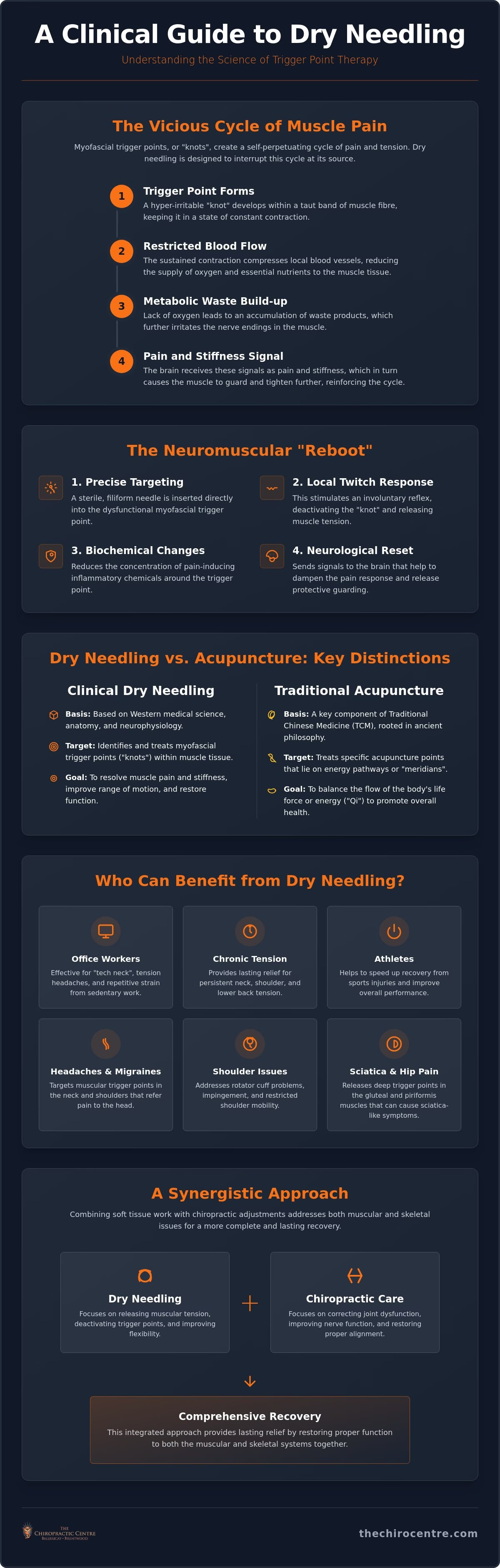
Most of us have felt a “knot” in our neck or shoulders. In clinical terms, these are known as myofascial trigger points. These points are hyper-irritable spots within a taut band of muscle fibre. When a trigger point develops, it causes the muscle to stay in a state of contraction, which restricts local blood flow and deprives the tissue of oxygen. This lack of oxygen leads to the build-up of metabolic waste, creating a cycle of pain and stiffness. Dry needling works by physically deactivating these points, allowing the muscle to finally relax and receive the nutrients it needs to heal. This process doesn’t just treat the symptom; it addresses the physiological root of the tension.
Who Can Benefit in Essex?
Our centre in Billericay sees a diverse range of patients who benefit from this targeted approach. Amongst our local community, we treat Essex athletes looking to speed up recovery from sports injuries and improve their performance. However, you don’t need to be a marathon runner to see results. We frequently help office workers from Brentwood and Chelmsford who suffer from “tech neck” or tension headaches caused by long hours at a desk. If you find that traditional massage only offers temporary relief, dry needling Essex might be the missing piece of your recovery plan. It is particularly effective for:
- Chronic neck and lower back tension
- Tension-type headaches and migraines
- Rotator cuff issues and shoulder impingement
- Sciatica and hip discomfort
- Repetitive strain injuries from sedentary work
By focusing on the structural dysfunction within the muscle, we help patients regain mobility that they thought was lost for good. Whether you are dealing with a recent injury or a decade of “stiff shoulders”, this clinical tool offers a path toward lasting wellness.
For those who may not be local to Essex but are seeking ways to support their physical health, exploring services like mobile massage North East can be a great way to access professional therapy in a home environment.
The Science of Relief: How Trigger Point Therapy Works
Dry needling is more than just physical contact; it is a physiological conversation with your body. When we provide dry needling Essex patients with this care, we are looking to interrupt a cycle of pain that has often become hard-wired into the nervous system. This isn’t a passive treatment. It is a dynamic process that uses mechanical stimulation to force a change in how your muscles behave and communicate with your brain.
The insertion of the needle provides direct mechanical stimulation to the dysfunctional muscle fibre. This action triggers a cascade of biochemical changes within the tissue. Clinical studies have shown that needling helps to reduce the concentration of inflammatory chemicals and pain-inducing substances, such as Substance P, that pool around a chronic trigger point. By altering the chemical environment, we help the muscle transition from a state of constant distress to a state of active recovery. It’s a highly effective way to quieten the “alarm bells” that have been ringing in your muscles for weeks or even months.
This therapy also acts as a “reset” button for your nervous system. By stimulating specific sensory receptors, we send a signal to the brain that encourages it to dampen the pain response and release the protective guarding that keeps muscles tight. If you are ready to experience this “reset” for yourself, a new patient consultation at our Billericay clinic is the first step towards understanding your body’s unique needs.
The Local Twitch Response Explained
The local twitch response is an involuntary spinal cord reflex where the muscle fibres contract momentarily when the needle accurately hits a trigger point. Whilst it might feel like a strange or sudden sensation, this twitch is a definitive sign that the needle has reached the source of the tension. Achieving this response is often our primary goal because it indicates that the muscle is effectively “releasing” its stored energy. As the University Health Center on Dry Needling notes, patients often describe this as a deep ache or a brief cramping sensation. It’s a completely normal part of the process and a positive indicator that the treatment is working exactly as intended.
Improving Blood Flow and Oxygenation
Tight muscles are often “starved” of oxygen because the constant contraction squeezes local blood vessels shut. This creates a stagnant environment where metabolic waste products accumulate, further irritating the nerve endings. Dry needling encourages micro-circulation by creating tiny, controlled lesions that the body immediately works to repair. This influx of fresh, oxygenated blood is vital for healing damaged fibres and restoring tissue elasticity. Over time, this improved circulation leads to better tissue health and significantly enhanced mobility. For many seeking dry needling Essex, this restoration of blood flow is the key to breaking the cycle of recurring stiffness and achieving long-term relief.
Dry Needling vs. Acupuncture: Which is Right for You?
At first glance, the two therapies look almost identical. Both involve the insertion of thin, sterile needles into the skin, and both aim to improve your quality of life. However, the philosophy and clinical intent behind each practice are worlds apart. For patients seeking dry needling Essex, understanding these differences is the key to choosing the therapy that aligns with your specific health goals. Whilst acupuncture is rooted in ancient tradition, dry needling is a modern development focused on structural anatomy and Western physiological principles.
The primary difference lies in the map the practitioner follows. Acupuncture is based on Traditional Chinese Medicine (TCM), which focuses on the flow of energy, or “Qi”, through meridians. As the Cleveland Clinic explains dry needling, the Western approach is not concerned with energy channels; it is concerned with the nervous system and musculoskeletal dysfunction. Instead of balancing your internal organs, we are targeting specific trigger points to restore physical function. We use clinical knowledge of anatomy to identify exactly which muscle is causing your restriction.
Traditional Chinese Medicine (TCM) vs. Western Medical Acupuncture
Traditional Chinese Medicine takes a systemic view of the body. It often treats conditions like insomnia, digestive issues, or general stress by placing needles along meridian lines to restore balance. In contrast, Western Medical Acupuncture, or dry needling, is an evidence-based intervention. At our Billericay centre, we choose this approach because it allows us to be incredibly precise with muscle recovery. We aren’t looking for a general energy shift; we are looking for a specific, measurable change in a taut band of muscle fibre. This makes it a highly effective tool for those dealing with physical trauma or repetitive strain.
Choosing the Best Path for Your Pain
Deciding between these treatments depends on what your body is telling you. If you are struggling with systemic issues like poor sleep or emotional stress, traditional acupuncture may be a wonderful support. However, if your primary concern is physical pain, stiffness, or restricted movement, dry needling is often the more effective choice. It is particularly suited for:
- Acute muscle strains or sports injuries
- Chronic “knots” that restrict your range of motion
- Postural pain from long hours at a desk
- Referred pain that travels from a muscle to another part of the body
Our team in Essex, led by Grayson and Julie, brings over 10 years of clinical experience to every assessment. We don’t just “poke and hope”; we use a professional consultation to determine exactly which path will lead you back to wellness. If you are unsure which therapy fits your needs, a Free Spinal Health Check at our clinic can provide the clarity you need to start your recovery with confidence. We are here to guide you toward the most effective solution for your unique situation.
Your Session in Essex: What to Expect
Walking into our Billericay centre, you’ll find an environment that feels more like a community hub than a clinical office. We believe that your comfort is just as important as the clinical precision of the treatment itself. When you arrive for dry needling Essex services, we begin by listening. Your history, your daily activities, and the specific nature of your discomfort are the most important pieces of information we have. We never rush straight into treatment; instead, we take the time to ensure you feel informed and relaxed.
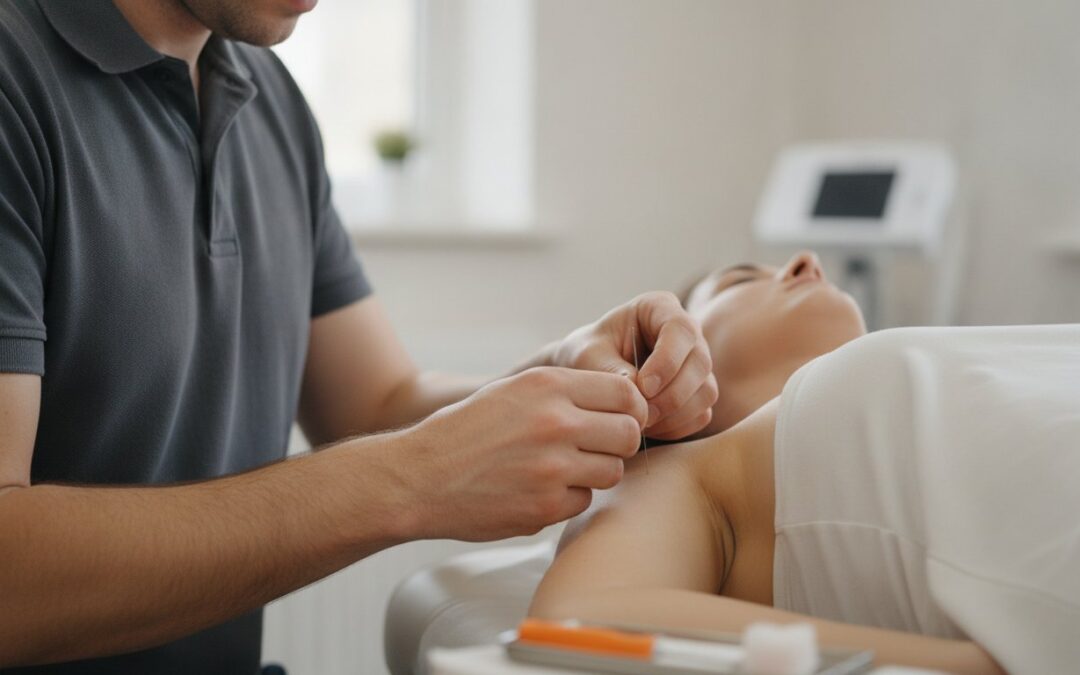
The process involves the careful insertion of fine needles into the mapped trigger points. You might feel a tiny, sharp pinch as the needle breaks the surface, followed by a deeper, dull ache once it reaches the muscle. This sensation is often described as a “good” pain, similar to the pressure of a deep tissue massage. Whilst the needle is in place, you may feel a brief, involuntary contraction if we trigger a local twitch response. Our team stays in constant communication with you throughout, adjusting the technique to suit your comfort levels and ensuring you feel supported at every stage.
The Consultation and Mapping Process
Success in dry needling depends entirely on the accuracy of the mapping process. We use our fingers to palpate the muscle, feeling for the taut bands and hyper-irritable spots that define a trigger point. This physical assessment allows us to identify exactly which structures are causing your restriction. If you are new to the centre, your journey might begin with a Free Spinal Health Check. This initial screening helps us determine if dry needling is the most appropriate tool for your recovery or if another approach would serve you better.
Aftercare and Recovery
It’s common to feel some muscle soreness for 24 to 48 hours after your session, much like the feeling after a challenging workout. This is a natural part of the healing response as your tissues begin to remodel and repair. To maximise your results, we recommend staying well-hydrated and engaging in gentle movement, such as a short walk or light stretching. Avoid heavy lifting or intense exercise on the day of your treatment to allow the nervous system to settle. Most patients see significant progress within three to six sessions, although chronic issues may require a more consistent plan to ensure the results truly last.
If you’re ready to address those stubborn knots once and for all, we invite you to book your New Patient Consultation today and start your path to better mobility with a team that truly cares.
The Synergy: Combining Dry Needling with Chiropractic Care
Muscles and joints do not function in isolation; they exist in a constant state of mutual influence. Whilst previous sections have explored the mechanical and chemical benefits of dry needling Essex, its true power is often realised when integrated with chiropractic care. In our Billericay centre, we view the body as a single, interconnected system where the health of the soft tissue directly impacts the stability of the skeleton. By addressing both the “engine” (the muscles) and the “chassis” (the joints), we provide a more robust path to long-term wellness.
Dry needling serves as an exceptional tool for preparing the body for a chiropractic adjustment. When a patient is in significant pain, their muscles often enter a state of protective “guarding,” which can make manual adjustments more challenging. By deactivating trigger points first, we reduce this muscular resistance. This “pre-set” allows for a smoother, more comfortable adjustment that is more likely to hold its position. It is this joined-up thinking that defines our role as your partner in health, moving beyond surface-level fixes to address the underlying mechanics of your movement.
Breaking the Pain-Spasm-Pain Cycle
A chronic “knot” in the muscle is more than just a source of discomfort; it is a physical force that exerts a constant pull on your joints. Over time, this persistent tension can pull vertebrae out of their natural alignment, leading to the very stiffness that brings many patients to our clinic. If a practitioner only adjusts the joint without addressing the shortened, tight muscle, the tension will simply pull the joint back into a dysfunctional position. Our “Trusted Local Expert” approach focuses on breaking this cycle. We use dry needling to release the muscular pull, followed by chiropractic adjustments to restore proper joint motion, ensuring that the relief you feel is both deep and lasting.
Your Personalised Health Plan
At The Chiropractic Centre, Grayson and the team believe that the best results come from a coordinated strategy. We don’t believe in guesswork. Instead, we organise your care across different therapies to suit your body’s specific recovery pace. Having massage therapy Brentwood patients trust, dry needling, and chiropractic adjustments under one roof in Billericay means your progress is monitored holistically. Your history is understood by the entire team, ensuring a seamless transition between different phases of your recovery. This integrated model is why so many people across Essex choose us as their home for musculoskeletal health. We look beyond the immediate symptom to guide you toward a future of improved mobility and internal vitality.
If you are tired of managing pain and are ready to start a proactive journey toward wellness, we are here to help. Book your New Patient Consultation in Billericay today and experience the difference that expert, integrated care can make to your daily life.
Take the First Step Towards Lasting Mobility
Persistent muscle tension shouldn’t dictate how you live your life. Dry needling acts as a neurological “reboot”, deactivating painful trigger points and restoring the vital blood flow your tissues need to heal. Whether you’re a local athlete or navigating the physical demands of desk-based work, choosing dry needling Essex provides a targeted, evidence-based solution for chronic discomfort. By combining this technique with chiropractic care, you address both the structural and muscular components of your pain simultaneously.
Our team has spent over 10 years serving the Essex community, providing a welcoming space where clinical expertise meets genuine care. We offer integrated recovery plans that include clinical massage therapy Brentwood residents rely on and chiropractic adjustments, all designed to help you regain your vitality. If you’re ready to move beyond temporary relief, we invite you to Book Your New Patient Consultation at our Billericay Centre. You can even start with one of our Free Spinal Health Checks to see how we can support your unique health journey. We look forward to helping you feel like yourself again.
Frequently Asked Questions
Is dry needling painful?
Most patients feel a brief, tiny pinch as the needle enters, followed by a deeper, dull ache when the trigger point is reached. This sensation is generally well-tolerated and is often described as a “good pain” similar to the pressure of a deep tissue massage. You might experience a sudden, involuntary muscle twitch, which can be surprising but is rarely sharp. Most of our Essex patients find the process much more comfortable than they initially anticipated.
How is dry needling different from acupuncture?
Whilst both therapies use similar thin needles, dry needling is based on Western medical principles rather than Traditional Chinese Medicine. Acupuncture focuses on energy flow and meridians to treat systemic issues like sleep or digestion. In contrast, dry needling Essex practitioners target specific “knots” or trigger points in the muscle to restore physical function. It is a structural intervention designed to deactivate hyper-irritable spots within the musculoskeletal system.
How many sessions of dry needling will I need?
The number of sessions required depends on the severity of your condition and how long you’ve been in pain. Most patients begin to feel a noticeable improvement within three to six sessions. Acute injuries often resolve faster, whilst chronic tension that has accumulated over several years may require a more consistent course of care. During your consultation in Billericay, we will provide a personalised plan tailored to your recovery goals.
Can I drive home after a dry needling session in Essex?
Yes, you can almost always drive yourself home immediately following your treatment. Some patients report feeling a little tired or “heavy” in the treated area, but this doesn’t typically interfere with operating a vehicle safely. If you’ve had a particularly intense session or feel slightly lightheaded, we encourage you to relax in our comfortable reception area for a few minutes before starting your journey back through Essex.
Are there any side effects to dry needling?
Side effects are typically mild and temporary, with post-treatment muscle soreness being the most common reaction. You might feel as though you’ve completed a strenuous workout for 24 to 48 hours after your appointment. Occasional bruising can occur at the needle site, and some patients experience a sense of fatigue as the body begins its healing response. These are normal indicators that your neuromuscular system is successfully “rebooting” and beginning to repair.
Can dry needling help with sciatica or nerve pain?
Dry needling is often highly effective for sciatica when the nerve is being compressed by hyper-irritable muscles. For instance, if the piriformis muscle in the buttock is too tight, it can pinch the sciatic nerve and cause radiating pain down the leg. By deactivating trigger points in these specific areas, we can reduce the mechanical pressure on the nerve. This often leads to improved mobility and a reduction in shooting sensations.
Is dry needling safe during pregnancy?
Dry needling is generally safe during pregnancy, provided we have performed a thorough clinical assessment first. It can be an excellent tool for managing the lower back and pelvic pain that often occurs as your body changes. We take extra precautions, avoiding certain points and adapting our techniques to ensure you and your baby remain perfectly comfortable. Our team is experienced in pregnancy care, providing a reassuring environment for expectant mothers.
Do I need a GP referral for dry needling at your Billericay centre?
No, you don’t require a GP referral to access dry needling Essex at our clinic. As primary healthcare practitioners, we are qualified to perform our own comprehensive assessments and review your medical history. We will determine if you’re a suitable candidate for needling or if a different therapy would serve you better. If we believe your condition requires further medical investigation, we will provide clear advice on the best steps to take.