
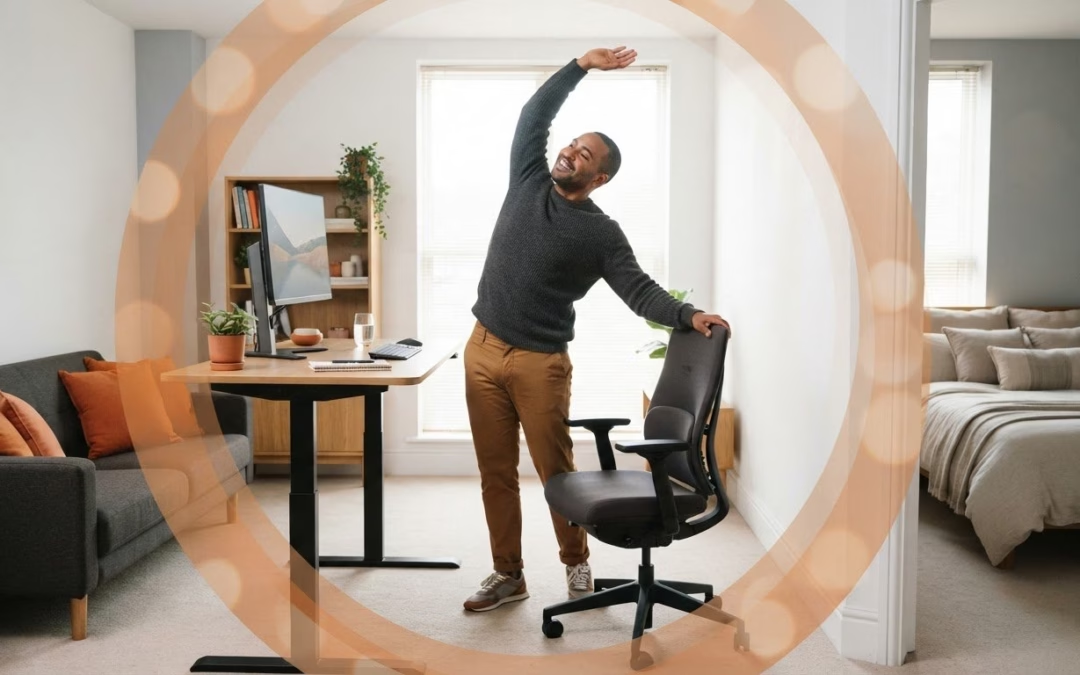
What if supporting your spine at home is less about holding a perfect posture and more about moving regularly? If you spend long periods sitting, working or looking at a screen, it’s natural to wonder which changes might help and how to make them without forcing your body into one position all day. Learning how to improve spinal health at home starts with manageable habits: changing position, making your workspace easier to use and noticing how your body responds.
This guide offers practical ways to build movement into your day, arrange your workspace and make rest more comfortable. You’ll also find ways to adapt activity to how you feel, so changes stay gradual and realistic. If you’d like personal guidance, The Chiropractic Centre offers a free spinal health check for people in Brentwood, Billericay, Chelmsford, Stock, Basildon and Wickford. Our caring approach puts your everyday wellbeing at the centre of the conversation.
Key Takeaways
- Spinal wellbeing is about comfortable movement and everyday function, not maintaining a perfect posture or preventing every ache.
- To explore how to improve spinal health at home, notice stiffness, change position and move in a way that feels comfortable.
- Adjust your screen, chair and frequently used items to make your workspace more comfortable and easier to adapt.
- Shape your sleep environment around what feels comfortable for you, including adjusting pillows or sleep positions as needed.
- If symptoms persist or worsen, a spinal health check can help explore what support may suit your individual needs.
How to improve spinal health at home starts with everyday habits
Good spinal health doesn’t mean keeping your back in one “perfect” position. It’s about how comfortably you can move, use your body and manage the ordinary demands of your day. Your spine works alongside muscles, joints and other tissues. You can read more about the human spinal column, but posture alone doesn’t tell you everything about everyday wellbeing.
Work, caring responsibilities and limited space can make a regular routine difficult. You don’t need a home gym or a complicated plan to begin. Choose a small change you can repeat, such as standing and walking around after a period of sitting. Supportive habits can help you pay attention to movement and comfort, but they can’t guarantee that pain will be prevented or cured. They are not a diagnosis or a substitute for individual treatment.
What does good spinal health mean in everyday life?
Consider whether you can move with reasonable comfort, manage daily tasks and do things such as getting dressed, preparing food or walking around. Your needs and abilities can change over time, so spinal health isn’t a fixed standard you have to meet every day.
Posture also changes naturally as you sit, stand, reach and move. No single position is ideal to hold all day. Discomfort can have different causes, so it shouldn’t automatically be attributed to vertebral subluxations or another specific explanation without an appropriate assessment.
Can small home changes make a difference?
Steady habits are a practical place to start. Instead of committing to a demanding exercise programme, choose one change that fits your routine. After sitting for a while, for example, stand, walk around the room or gently move in a way that feels comfortable. Notice how you feel afterwards and adjust the habit to suit you.
Your starting point depends on your symptoms, health history and daily activities. A routine that feels comfortable for one person may not suit someone else, so avoid pushing through movements that aggravate your discomfort. Keep changes gradual and practical enough to repeat, even on busy days. Online resources such as UCCARL share practical self-care guides that can help you explore manageable ways to look after your daily health.
If symptoms persist, worsen or start to limit your usual activities, seek individual advice rather than relying on general home guidance alone. A spinal health check can help explore your movement and everyday concerns. The aim of learning how to improve spinal health at home is to build habits that work for you, while recognising when tailored guidance could be useful.
Build spinal health with regular movement and varied positions
Rather than trying to hold one posture throughout the day, give your body opportunities to move and change position. If you notice stiffness while working, reading or doing household tasks, use it as a prompt to pause. Try this simple sequence: notice how you feel, change position, move comfortably, then see how your body responds.
Changing position is a practical home habit because it breaks up stillness without asking you to find one perfect way to sit or stand. To get started, stand and walk around your home, reach for something nearby or gently move your shoulders and back within a comfortable range. Keep the movement manageable rather than pushing through discomfort.
How can you add movement to a normal day?
Link short movement breaks to routines already in your day, rather than relying on finding a separate workout slot. You might walk between household tasks, stand while waiting for the kettle or take a gentle stroll after a spell of desk work. These everyday opportunities can make it easier to change position regularly, even when work or caring responsibilities keep you busy.
Choose options that suit your space and current ability. Walk from one room to another, gently shift your weight from side to side or move your arms and shoulders. There’s no single duration or pace that everyone needs to follow. If an activity brings on concerning discomfort, stop or adapt it rather than forcing yourself to continue.
How should you approach stretching and strengthening?
Stretching and strengthening can be part of a movement routine, but choose exercises that feel manageable and reflect what you can do now. There isn’t one stretch or set of movements that suits everyone; personal and medical fitness providers such as fitrevolution.com.pl demonstrate how tailored exercise plans can be adapted to an individual’s specific needs. Start gently, pay attention to how you feel during and afterwards, and don’t treat discomfort as something you must work through.
If pain, a diagnosed musculoskeletal disorder or uncertainty about safe movement affects what you can do, individual guidance can help you consider suitable next steps. The National Institute of Neurological Disorders and Stroke provides information about spinal cord injury. This is different from everyday stiffness, but it helps explain why a suspected injury needs appropriate attention.
Building movement into your day can support your wider routine without becoming another source of pressure. If you’d value personal guidance, a free spinal health check is an optional next step.
Make your home workspace and daily posture more supportive
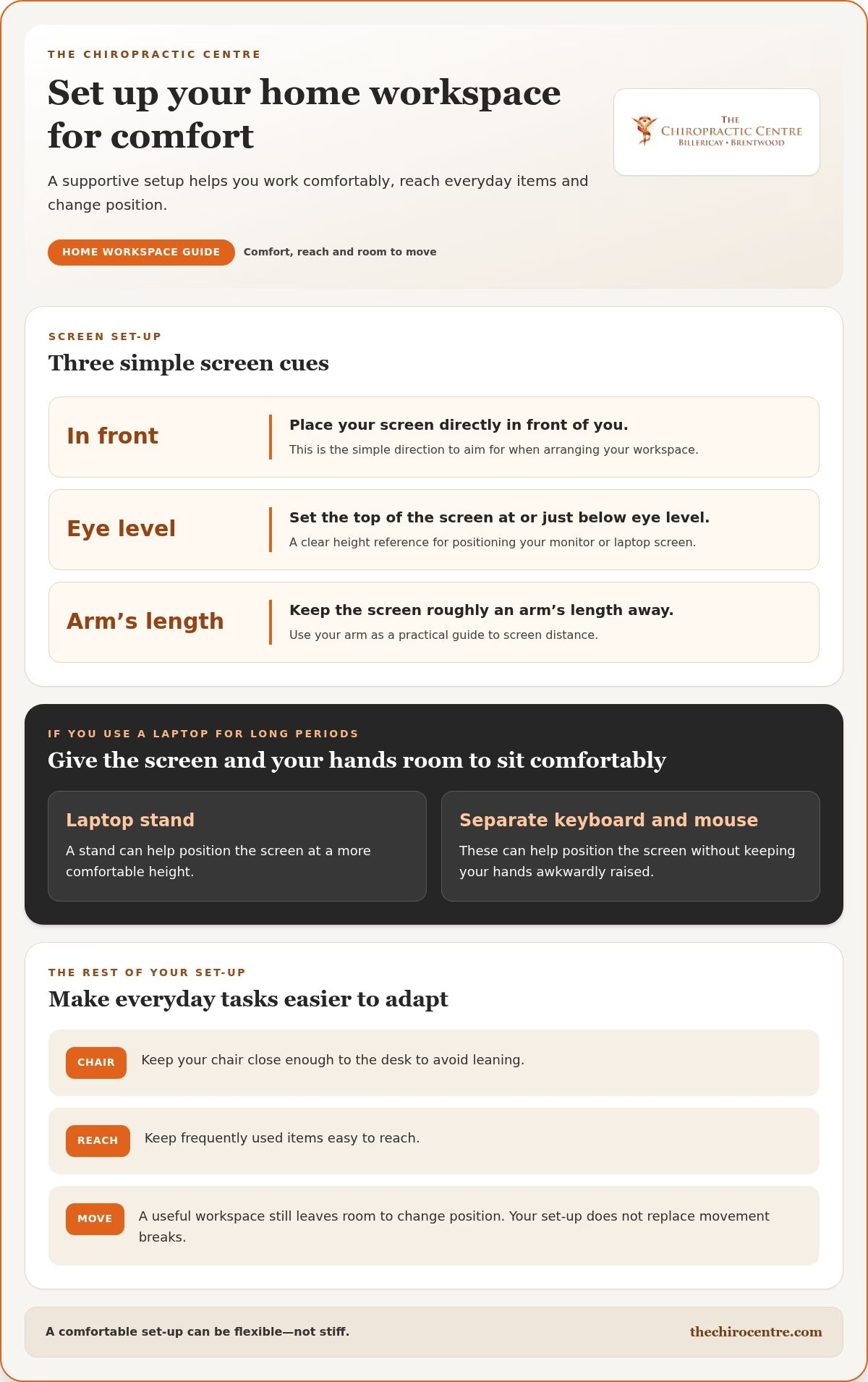
A comfortable setup should help you work without making you hold yourself stiffly. There’s no need to chase a supposedly perfect posture. Aim for a position where your body feels supported, your frequently used items are easy to reach and you can change position. A useful setup can make daily tasks more comfortable, but it doesn’t replace movement breaks.
How can you arrange a more comfortable home workspace?
Place your screen directly in front of you, with the top at or just below eye level and roughly an arm’s length away. If you use a laptop for long periods, a stand and separate keyboard and mouse can help you position the screen without keeping your hands awkwardly raised. Keep your chair close enough to the desk to avoid leaning forwards, and support your feet on the floor or a stable footrest where practical.
Keep regularly used items within easy reach. Repeatedly twisting or stretching across your desk for a phone, notebook or mug can make a work session less comfortable. Make small adjustments until the arrangement suits you, then keep varying your position instead of expecting one setup to solve everything. The National Spine Health Foundation also offers patient-focused spinal health information.
What everyday habits can reduce prolonged sitting?
Build position changes into your working day before stiffness becomes your only reminder. If it suits the call and your circumstances, stand or walk during a phone conversation. Alternate desk tasks with suitable household jobs, or get up during a natural break. These small changes may be easier to maintain than waiting until you feel uncomfortable before moving.
Prolonged sitting can involve spinal compression, meaning force that reduces the space between vertebrae. This isn’t a reason to fear sitting or to change position anxiously. Instead, treat it as a reminder to include regular opportunities to get up and move during a day at your desk.
Your posture matters outside work, too. While driving, adjust your seat and steering wheel so you can sit comfortably and reach the controls without straining. On longer journeys, take suitable opportunities to get out and move. For household tasks, bring objects closer before lifting or reaching, and alternate jobs that involve bending, standing or sitting. When using your phone, raise it towards a comfortable viewing height where possible instead of keeping your head bent down for long periods.
Support spinal wellbeing with rest, sleep and steady routines
Rest is part of everyday wellbeing, but there isn’t one sleeping position or bedding choice that suits everyone. What feels comfortable can depend on your needs, symptoms and usual routine. Rather than following a rigid rule, notice what helps you settle and rest, then make small adjustments. A supportive routine should fit around real life, including work, family commitments and everyday tasks.
How can you make sleep more comfortable for your back?
Pay attention to how you feel when you settle into bed and when you wake. If a position feels uncomfortable, try a gradual change, such as adjusting your pillow or changing how you lie. Give yourself time to notice whether it feels better, and keep what suits you. You don’t need to replace your bedding or force yourself into a particular position because it’s said to be best for everyone.
A comfortable sleep environment is personal. Consider whether your pillow supports you in a way that feels restful and whether your bed allows you to relax. If you make changes, try one at a time so you can judge how each feels. The goal is more comfortable rest, not a guaranteed effect on pain or recovery.
How do you keep home habits realistic over time?
Choose one or two changes that fit your circumstances, then build on them only if they feel manageable. For example, pair a regular movement break with an existing daily task and allow yourself a calmer wind-down before bed. Keep the routine flexible: caring responsibilities, work patterns and how you feel can vary from day to day.
If symptoms persist, worsen or affect your usual activities, individual guidance can help you understand what support is appropriate. A free spinal health check gives you the opportunity to discuss your concerns and receive guidance specific to you. Your home routine can support day-to-day wellbeing, but it doesn’t have to replace tailored advice when you need it.
When home spinal-health habits are not enough: your next steps
Home routines can support everyday wellbeing, but general advice can’t account for everyone’s symptoms, health history or circumstances. If discomfort persists, worsens or interferes with activities you usually manage, consider seeking individual guidance. You don’t need to wait until a problem feels severe to ask for help understanding what may suit you.
When should you seek individual guidance?
A postural assessment considers your posture and movement in the context of your needs, rather than relying on online generalisations or the idea that one position suits everyone. A musculoskeletal assessment looks at muscles, joints and posture in relation to the concerns you describe. These assessments can inform a discussion about possible next steps, but they don’t establish a particular cause or treatment in advance.
Pay attention to changes in your own experience. If symptoms are getting worse or making work, sleep or ordinary tasks harder, seek advice tailored to you instead of simply adding more exercises or trying to correct your posture by force. An adjustment may be considered when appropriate to your individual needs; it isn’t a guaranteed solution for every concern.
What can a local spinal health check offer?
The Chiropractic Centre offers a free spinal health check as a relaxed opportunity to discuss your spinal wellbeing. A spinal health check can look at spinal alignment, joint mobility and muscle function, helping you talk through what you’ve noticed and whether further guidance may be useful. It’s a personal starting point, not a promise of a particular diagnosis or outcome.
If you’d like to explore how to improve spinal health at home in a way that reflects your circumstances, the check can help connect general habits with guidance specific to you. Chiropractic adjustments and massage therapy are hands-on, non-drug options that may form part of personalised care when appropriate. Neither is right for everyone, and neither guarantees a particular result.
For background on what to expect, read the existing guide to a new patient chiropractor consultation and the page about the free spinal health check. The Chiropractic Centre supports people across Brentwood, Billericay, Chelmsford, Stock, Basildon and Wickford. A local spinal health check is a useful next step if you’d like to discuss whether your home routine is meeting your needs.
Take small steps towards everyday spinal wellbeing
Learning how to improve spinal health at home doesn’t mean chasing perfect posture or following a demanding routine. Focus on changes that suit your day: vary your positions, make your workspace more comfortable and adjust rest habits according to what feels right for you. Small, repeatable steps provide a practical foundation for everyday wellbeing.
If symptoms persist, worsen or make usual activities difficult, general home advice may not be enough. The Chiropractic Centre has supported the local community for over 10 years, with a team that includes chiropractors and massage therapist Julie. A free spinal health check offers an opportunity to discuss your wellbeing and explore guidance tailored to you.
If you’re in Brentwood, Billericay, Chelmsford, Stock, Basildon or Wickford, book your free spinal health check. Start with habits that feel manageable, and take the next step when you’re ready.
Frequently Asked Questions
How can I improve my spinal health at home?
You can support spinal wellbeing by changing position regularly, adding comfortable movement to your day and making your workspace easier to adjust. Small, repeatable habits are often more manageable than a demanding routine. Notice how your body responds and adapt activities to your needs. These steps can support everyday comfort, but they can’t guarantee that discomfort will be prevented or cured, and they don’t replace individual guidance when you need it.
Can sitting at home all day affect your spine?
Long periods of sitting can leave you feeling stiff or uncomfortable, particularly if you rarely change position. Sitting isn’t automatically harmful, and you don’t need to hold yourself rigidly upright. Try alternating desk work with suitable standing tasks, walking around your home or taking a movement break. Adjusting your chair and screen may also help you feel more comfortable, but changing position remains useful even with a supportive setup.
What is the best sleeping position for spinal health?
There isn’t one sleeping position that’s best for everyone. Choose a position and pillow arrangement that feel comfortable for you, and make gradual changes if you regularly wake feeling uncomfortable. Try adjusting your pillow before replacing your bedding or following a strict rule about how you should sleep. Your comfort and individual needs are more helpful guides than a universal recommendation, and sleep habits alone can’t promise a particular recovery outcome.
How often should I move when working at home?
There’s no single break schedule that suits everyone, so avoid waiting until you feel stiff before changing position. Look for natural opportunities throughout your day: stand during a suitable phone call, walk between tasks or get up while taking a break. If you work at a screen for long periods, vary your position regularly and choose a rhythm you can maintain alongside your work and other responsibilities.
Can stretching improve spinal health at home?
Gentle stretching may be one way to keep moving, provided the movements feel manageable and suit your current ability. No single stretch is right for everyone, so start carefully and notice how you feel during and afterwards. Don’t force a movement or push through concerning discomfort. If you have pain, a diagnosed musculoskeletal disorder or uncertainty about which exercises are appropriate, seek individual advice before starting a new routine.
When should I seek help for back or neck discomfort?
Seek individual guidance if discomfort persists, worsens or interferes with your usual activities. A professional assessment can consider your symptoms, movement and circumstances rather than relying on general online advice. The Chiropractic Centre offers a free spinal health check for people in Brentwood, Billericay, Chelmsford, Stock, Basildon and Wickford. It’s an opportunity to discuss your spinal wellbeing and explore what support may suit you.