
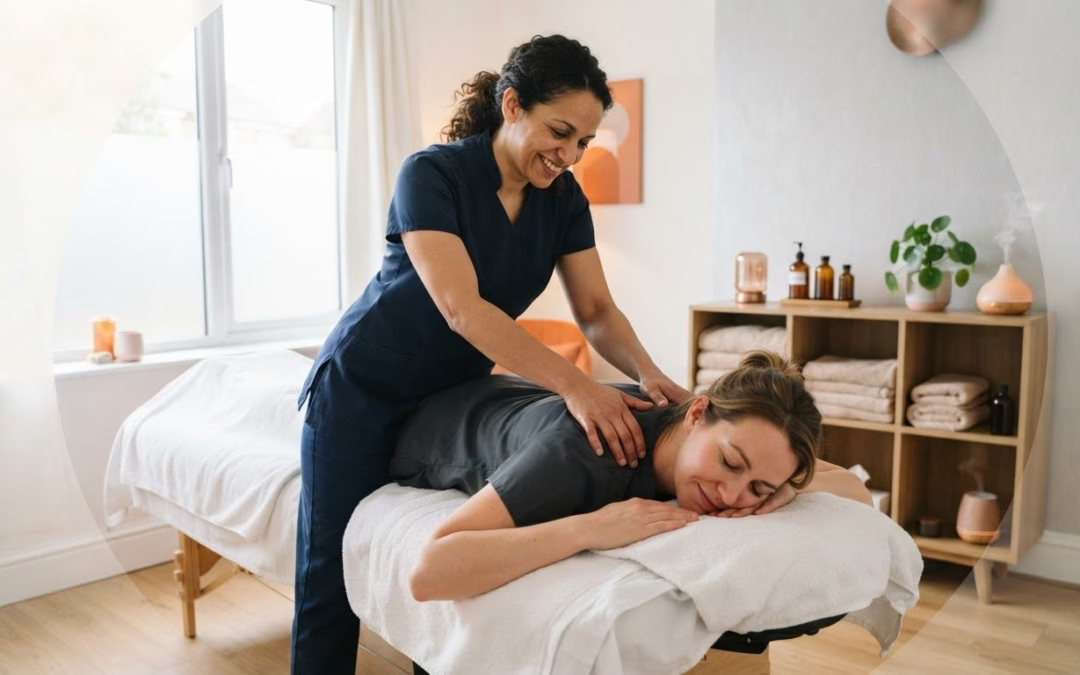
What if easing stress starts with giving your body time to release some of its tension? If you’re finding it hard to switch off, or stress seems to coincide with tight muscles, massage therapy for stress relief Wickford may offer a calm, supportive part of your wellbeing routine. It isn’t a guaranteed cure for stress, but a person-centred session may help you relax and feel more at ease.
It’s natural to be unsure which kind of massage might suit you or what happens during an appointment. A welcoming experience starts with listening to your needs and helping you feel comfortable. At The Chiropractic Centre, massage therapy and clinical massage are part of a holistic approach to wellbeing for people in Wickford and nearby Brentwood, Billericay, Chelmsford, Stock and Basildon.
This guide explains what massage may and may not help with, what to expect from a session, and how options such as clinical massage, sports massage, pregnancy massage and reflexology differ in focus. You’ll also find practical points to consider before choosing, so you can take a comfortable next step with realistic expectations.
Key Takeaways
- Understand how hands-on soft tissue care may support relaxation when stress and muscle tension overlap, without promising a cure.
- Compare clinical massage, sports massage, pregnancy massage and reflexology to see which approach may best match your preferences.
- Before choosing massage therapy for stress relief Wickford, consider what you hope to gain and what would help you feel comfortable.
- A musculoskeletal assessment may help put physical concerns into context when appropriate.
- Explore a person-centred massage therapy session at The Chiropractic Centre, with realistic expectations and your wellbeing in focus.
Massage Therapy for Stress Relief in Wickford: What Can It Offer?
Stress can feel mental and physical at once. After a demanding day, you might notice tight shoulders, a clenched jaw or a tired body, even when you’re trying to rest. Massage therapy for stress relief Wickford offers hands-on soft tissue care that may support relaxation when tension and difficulty switching off overlap. It is a drug-free option for people seeking hands-on wellbeing support, but it doesn’t identify why you feel tense, and it won’t affect everyone in the same way.
Massage can support your wellbeing, but it can’t guarantee that stress will disappear or deliver a particular medical outcome. Think of a session as one possible way to make space for rest and physical ease, rather than a cure or a substitute for other support that may suit your circumstances.
Clinical massage is therapeutic massage that works with soft tissues such as muscles. At The Chiropractic Centre, massage therapy is delivered with attention to your needs and comfort. That personal focus matters: the aim is to understand what you want from your session, rather than assume that everyone experiences stress in the same way.
How stress and physical tension can overlap
A full diary, long periods at a desk or the effort of keeping up with daily responsibilities may coincide with tight or tired muscles. That doesn’t mean stress is always the cause of discomfort. Before your session, notice where you feel tension, whether it changes during the day and what helps you feel more at ease. These details can help you explain your experience and preferences.
People have different preferences for touch and pressure. You might want a quieter, gentler session or prefer the massage to focus on areas that feel tense. There’s no single correct response. Your comfort is a useful guide, and you can say what feels suitable for you.
What a person-centred massage session aims to provide
A supportive session starts with listening. Explaining your goals, areas of tension and comfort preferences helps the practitioner understand what matters to you. You can also mention anything that makes you feel more or less comfortable. The Chiropractic Centre provides a calm, welcoming setting for care for people in Wickford and nearby Essex communities.
Massage may be one part of your wider wellbeing routine, alongside everyday choices that help you make time to pause. Relaxation techniques are often used to manage stress and anxiety. Massage isn’t a guaranteed stress treatment, but it may give you an opportunity to relax and notice how your body feels. Start with your individual needs, realistic expectations and a conversation that helps you feel at ease.
How Clinical Massage May Support Relaxation and Everyday Wellbeing
Massage isn’t a predictable way to change stress, sleep or health, and it can’t replace an assessment when you have a physical concern that needs attention. The National Center for Complementary and Integrative Health offers evidence-based information on massage therapy, including discussion of the limits of research. This can help you keep expectations grounded as you consider whether massage has a place in your wellbeing routine.
What happens during a massage appointment?
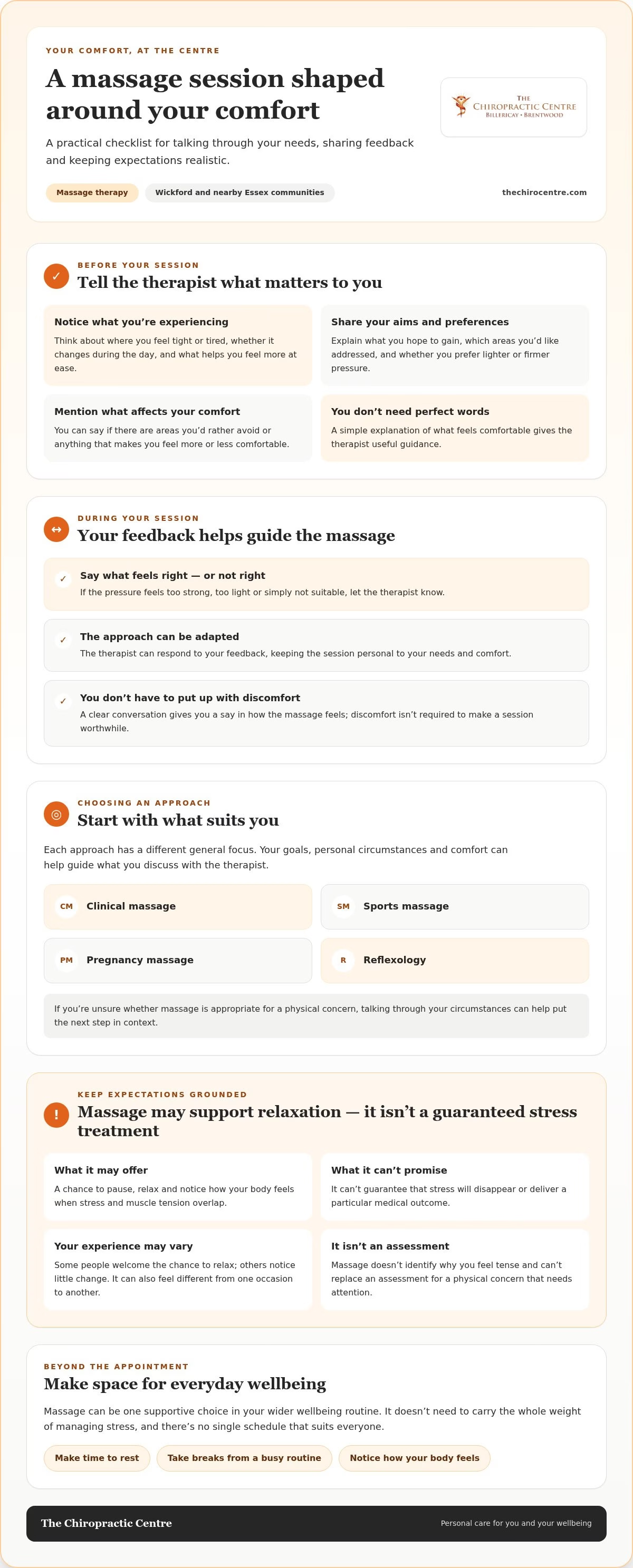
Before treatment, you can talk through what brings you in, which areas you’d like addressed and anything that affects your comfort. You might prefer lighter or firmer pressure, or want to avoid particular areas. You don’t need to find perfect words. Simply explaining what feels comfortable gives the therapist useful guidance.
You can give feedback throughout the appointment. If the pressure feels too strong, too light or simply not right for you, say so. The therapist can adapt the approach in response. You don’t have to put up with discomfort to make a session worthwhile. A clear conversation helps keep the experience personal and gives you a say in how the massage feels.
How massage fits into ongoing wellbeing
For a closer look at this hands-on care, the clinical massage guide explains the approach in more detail. If you’re considering massage therapy for stress relief Wickford, use your goals and comfort preferences to guide your decision rather than expecting a guaranteed result. You can also read about massage therapy at The Chiropractic Centre and its place in personal wellbeing care.
Which Massage Approach May Suit Your Stress-Relief Goals?
Different types of massage have different general focuses. The most suitable option depends on what you want from your visit, your personal circumstances and what feels comfortable. None should be viewed as a guaranteed way to relieve stress. Use the comparison below as a starting point, then discuss your preferences when deciding what may suit you.
| Approach | General focus | May suit you if… |
|---|---|---|
| Clinical massage | Hands-on soft tissue care provided as part of clinical treatment. | You’d like to discuss muscle tension or physical comfort in a clinical context. |
| Sports massage | Massage focused on muscle care in the context of physical activity. | You’re active and want to talk about areas of muscular tightness or fatigue. |
| Pregnancy massage | A massage approach considered in light of your individual circumstances during pregnancy. | You’d like to discuss comfort and personal considerations before treatment. |
| Reflexology | A hands-on approach focused on areas of the feet, with pressure adapted to comfort. | You prefer an approach centred on the feet rather than broader soft tissue work. |
Clinical massage and sports massage: different focuses
Clinical massage is therapeutic soft tissue care in a clinical setting. It may suit you if you want to discuss a physical concern alongside your massage preferences. Sports massage, by contrast, is associated with physical activity and muscle-care preferences. You don’t need to be a competitive athlete to consider whether this focus feels relevant. Neither approach is inherently better for stress relief. Your priorities and what feels appropriate to you are the better guides.
Pregnancy massage and reflexology: consider personal comfort
How to Decide Whether Massage Therapy in Wickford Feels Right for You
Choosing whether to try massage is a personal decision. You don’t need to arrive with a diagnosis or a fixed idea of what treatment should achieve. Start with what you’ve noticed and what would help you feel comfortable discussing it. At The Chiropractic Centre, your goals and circumstances can inform the conversation before hands-on treatment begins.
Clarify what you want from a session
Think about whether you’re mainly looking for a calm pause in a busy routine or support for areas of muscle tension that affect your comfort. It may be a little of both. Consider what kind of pressure feels acceptable, whether there are areas you’d prefer not to have touched, and how you’d like to communicate during treatment. These preferences help guide a considered discussion without setting a promised result or a course of appointments.
A simple way to prepare is to note:
- Your main aim: for example, time to relax or attention to a particular area of tension.
- Your comfort preferences: the pressure you prefer and any sensitive areas.
- Relevant circumstances: anything about your health or wellbeing that may affect how you feel about hands-on care.
Share these points in your own words. If something changes during treatment, say so. Your feedback helps make the experience feel appropriate for you.
What to expect from a thoughtful clinical approach
A clinical approach begins by listening, rather than assuming what you need from a session. If you have a physical concern, a musculoskeletal assessment may be appropriate to help understand how your muscles, joints and posture are working together. In plain English, it looks at movement and physical function. It isn’t a promise to identify the cause of every symptom. The findings can help put your concern into context and inform a suitable next step.
Before massage, raise any relevant health concerns, sensitivities or worries about pressure and touch. This gives the practitioner a clearer picture of your circumstances and helps you discuss whether the approach feels right. A new patient consultation guide explains how a clinical conversation can help make sense of your care options.
For massage therapy for stress relief Wickford, make your decision based on your aims, comfort and realistic expectations. Massage may be a supportive wellbeing choice, but it isn’t a guaranteed answer to stress or a replacement for an assessment when you have a physical concern. Learn more about massage therapy at The Chiropractic Centre.
Your Next Step: Explore Massage Therapy at The Chiropractic Centre
By now, you’ve considered what you want from massage, which approach may feel suitable and what would help you feel comfortable. Keep those points in mind as you decide whether to take a next step. Massage therapy can support wellbeing, but it isn’t a guaranteed way to remove stress or produce a particular result. Knowing your own preferences can help you approach a session with realistic expectations.
The Chiropractic Centre provides massage therapy and clinical massage for people in Wickford and nearby Essex communities, including Brentwood, Billericay, Chelmsford, Stock and Basildon. The practice has been part of the local community for over 10 years. Care is person-centred, with space to explain what matters to you and discuss how massage may fit your needs.
What personal care means in practice
Personal care starts with listening. You should feel able to talk about your goals, preferred pressure, sensitive areas and any concerns that could affect your comfort. This helps shape a conversation around you, rather than treating stress or muscle tension as though everyone experiences it in the same way.
The facilities and environment are calm and welcoming. This can help you feel more at ease as you discuss your preferences and consider whether massage feels suitable. A holistic approach keeps your wider wellbeing in view while staying realistic about what massage can offer. Your comfort and individual circumstances remain central.
Taking a considered next step in Wickford
If you’re thinking about massage therapy for stress relief Wickford, reflect on what you hope the session will provide. Perhaps you want a chance to pause, or you’d like to discuss muscle tension alongside relaxation. You can share what pressure feels comfortable and raise relevant health or personal concerns before hands-on treatment. These are useful starting points for a considered conversation, not a promise of a particular outcome.
Massage Membership Sessions are another option to consider as part of your wellbeing choices. You don’t need to decide on a routine before understanding what suits you. Take time to weigh up your goals, comfort and the type of massage that feels most appropriate.
When you’re ready, explore massage therapy at The Chiropractic Centre and take a considered first step towards personal care in Wickford.
Make Space for a More Considered Next Step
You don’t need to have every detail decided before exploring care. A useful next step can simply be recognising what would help you feel comfortable, then using that as the starting point for a conversation. If you’re considering massage therapy for stress relief Wickford, keep your expectations realistic and choose an approach that feels right for your needs.
The Chiropractic Centre’s personal approach and calm, welcoming environment are intended to help you feel at ease as you consider massage therapy. You remain part of the conversation, with your comfort and wellbeing guiding the experience.
For people in Wickford and nearby Brentwood, Billericay, Chelmsford, Stock and Basildon, book a massage therapy session with The Chiropractic Centre.
Frequently Asked Questions
Can massage therapy help with stress?
Massage may be a useful wellbeing choice, but it can’t address every influence on stress or guarantee a lasting change. If you’re considering massage therapy for stress relief Wickford, note what you’d like from the experience before your appointment. Afterwards, reflect on whether it suited you. This can help you decide whether massage has a place in your personal wellbeing routine, without treating one session as a test you can pass or fail.
Is clinical massage different from a relaxation massage?
Can massage help if stress makes my muscles feel tense?
Massage may be something to consider if you notice muscle tension alongside stress, but tension can have different causes and massage doesn’t diagnose them. Before your appointment, note when the feeling began, whether it changes with particular activities and which areas concern you most. Sharing that context gives the therapist a clearer picture of your experience, without assuming massage will resolve the tension or provide pain relief.
Is pregnancy massage suitable for everyone?
Whether massage during pregnancy feels suitable depends on your circumstances and comfort. Before arranging treatment, consider what you’d like from the experience and whether you have questions or concerns. Discuss relevant details with the therapist so the conversation can take your situation into account. Your individual needs matter, and you don’t need to assume a particular approach will feel right.
How often should I have massage therapy for stress relief?
There isn’t one schedule that will suit everyone, so a fixed routine isn’t necessary for managing stress. Reflect on your reason for trying massage, how it fits around your other wellbeing habits and whether you want to continue. Your decision can change as your needs do. Massage is one possible part of ongoing wellbeing care, not a prescribed or guaranteed stress plan.
How much does massage therapy cost at The Chiropractic Centre?
The Chiropractic Centre offers Massage Sessions and Massage Membership Sessions. Check the listed fee for the option you’re considering and weigh it against your own budget and preferences. A single-session fee and a membership fee relate to different options, so review the relevant price when planning your care.
What should I tell the therapist before a massage?
Before your appointment, let the therapist know what prompted your visit and what you hope the session will focus on. Mention personal circumstances that could shape your needs, such as pregnancy, or anything that may affect how you experience hands-on care. If it helps, jot down a reminder beforehand. You can also update the therapist during treatment if something changes.