

What if the most useful questions to ask a new chiropractor aren’t about which treatment you’ll receive, but why it’s being recommended? It’s natural to feel unsure about an initial assessment, especially if you have questions about hands-on care, safety or consent. You deserve clear answers and space to explain what matters to you.
A thoughtful conversation helps you understand how your symptoms, health history and goals inform the assessment. It also gives you the chance to discuss treatment preferences, including whether an adjustment, massage therapy or dry needling may be relevant to your care.
This practical checklist will help you prepare for a new patient consultation and understand the recommendations. You’ll find questions about the musculoskeletal assessment, adjustment techniques, consent, treatment options and next steps. Whether you’re visiting from Brentwood, Billericay, Chelmsford, Stock, Basildon or Wickford, use it to have a more informed, personal conversation about what feels right for you.
Key Takeaways
- Ask how your symptoms, health history and goals inform the recommended care.
- Find out what an assessment involves, why an adjustment or spinal manipulation is being considered, and what alternatives may suit your preferences.
- Compare chiropractic adjustments, clinical massage and dry needling by asking about their purpose and how each relates to your needs.
- Before starting, agree what progress means to you, how it will be reviewed and when fees will be discussed.
- A New Patient Consultation at The Chiropractic Centre gives you time to raise concerns and discuss possible next steps in a calm, welcoming setting.
Questions to Ask a New Chiropractor Before You Begin Care
A first conversation can feel easier when you know what you want to discuss. The right questions to ask a new chiropractor help you explain what’s troubling you and understand how your concerns will guide the next steps. You don’t need to know clinical terms or arrive with every detail prepared. Start with what you’ve noticed and what you hope to get back to doing.
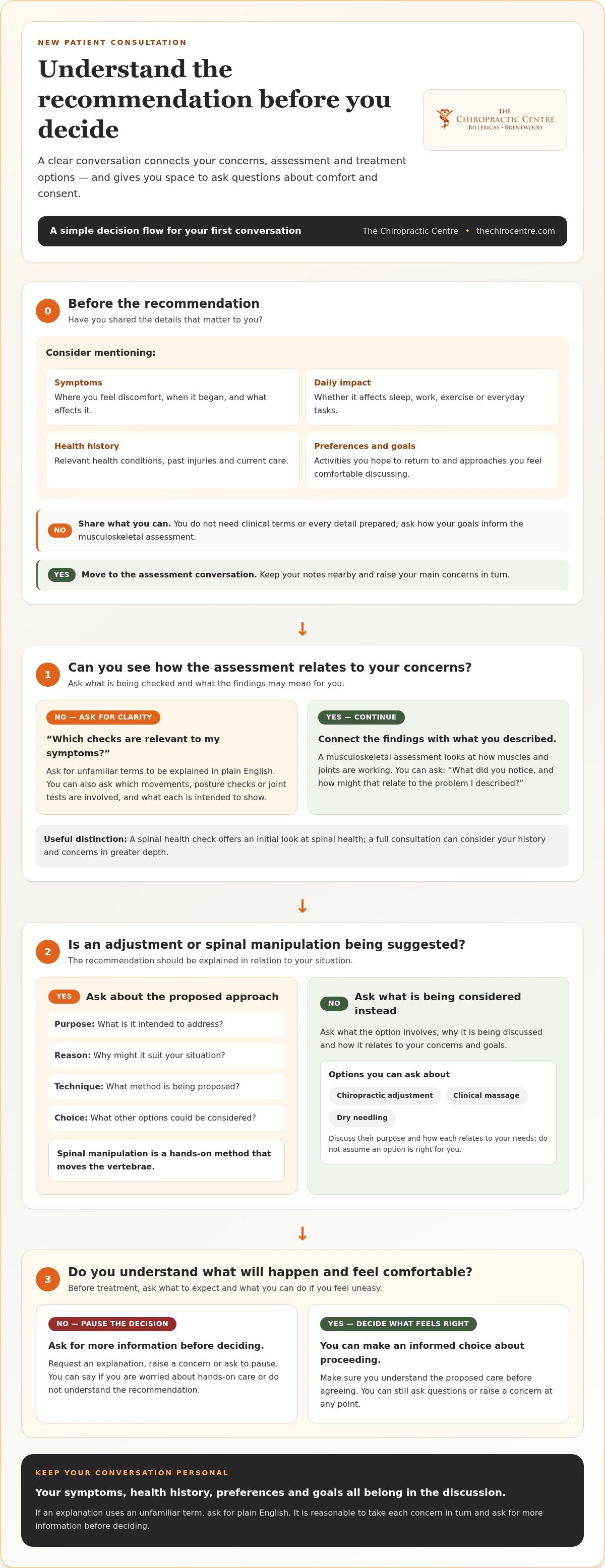
A useful consultation connects your goals with an individual assessment. Before your appointment, jot down a few notes and mark the concerns you most want to address. This checklist can help:
- Symptoms: Where do you feel discomfort, when did it begin, and what seems to affect it?
- Daily impact: Does it affect how you sleep, work, exercise or manage everyday tasks?
- Health history: What relevant health conditions, past injuries or current care should the chiropractor know about?
- Preferences and goals: What activities would you like to resume, and are there approaches you feel comfortable discussing?
What should you explain about your health and goals?
Describe your symptoms in your own words, including when they started and whether particular movements or activities make them better or worse. Share relevant health history and any care you’re currently receiving. If you’re hoping to return to gardening, walking or sport, or simply sleep more comfortably, say so. You can ask, “How will these goals inform my musculoskeletal assessment?”
How can you make sure your questions are heard?
Bring your notes and take each concern in turn. If an explanation includes an unfamiliar term, ask for it in plain English. You can also say if you’re worried about hands-on care, have a treatment preference or don’t understand a recommendation. It’s reasonable to pause and ask for more information before deciding what feels right for you.
For a clearer picture of what to expect, the new patient chiropractor consultation guide explains the consultation journey. For general background on the profession’s history and techniques, the Chiropractic overview offers further context. Keep your own health, preferences and goals at the centre of the conversation.
Ask About Assessment, Adjustment Safety and Spinal Manipulation
Understanding how an assessment informs care can make treatment discussions clearer. Ask what the chiropractor plans to examine, how the findings relate to your concerns and why a particular approach is being considered. A clear explanation connects the findings with your concerns, so you can understand the reasoning behind a recommendation.
What should you ask about the examination?
A musculoskeletal assessment looks at muscles, joints and movement to build a picture of how your body is functioning. Ask which movements, posture checks or joint tests may be involved and what each is intended to show. If a movement feels uncomfortable, tell the chiropractor so you can discuss it together.
Ask the chiropractor to explain the findings in plain English. For example: “What did you notice, and how might that relate to the problem I described?” You can also ask how a spinal health check differs from a full assessment. A check offers an initial look at spinal health, while a full consultation can consider your history and concerns in greater depth. Knowing which type you’re having helps you understand what it can and can’t tell you.
How do you discuss adjustment techniques and consent?
Spinal manipulation is a hands-on method that moves the vertebrae. If it’s suggested, ask what the approach aims to address, why it may suit your situation and what other options could be considered. Adjustment techniques vary, so ask the chiropractor to describe the method they’re proposing rather than assuming every adjustment feels the same. The Chiropractic: MedlinePlus overview can also help you understand the profession and common approaches.
Your comfort matters. Before treatment, ask what will happen, what sensations you might notice and what you can do if you feel uneasy. You can ask to pause, request an explanation or raise a concern at any point. Make sure you understand the proposed care before agreeing to proceed. These are practical questions to ask a new chiropractor, not signs that you’re being difficult.
- About the assessment: “Which checks are relevant to my symptoms?”
- About the recommendation: “Why are you suggesting this approach for me?”
- About comfort: “Can we pause if I feel uncomfortable?”
If you’d like to know more about what an adjustment may feel like, the guide to chiropractic adjustment sensations offers helpful context. At The Chiropractic Centre, a New Patient Consultation gives you time to discuss your concerns and questions about care. Explore the New Patient Consultation to discuss your options.
Compare the Recommended Treatment Options and Their Rationale
A treatment recommendation should make sense in light of your assessment and what you want to achieve. Ask why an option is being suggested, what it involves and how your comfort will be considered. You can also ask about alternatives or take time to think before deciding. The questions to ask a new chiropractor should help you understand the reasoning, not steer you towards a particular treatment.
Use this table to compare discussion points. It isn’t a way to choose a treatment on your own. Instead, it can help you understand how each option relates to your individual findings and preferences.
| Option | Purpose to discuss | Questions to ask | Your preference |
|---|---|---|---|
| Chiropractic adjustment | How the proposed adjustment relates to the assessment and your concerns. | “What are you aiming to address, and what might I feel?” | Share whether hands-on care feels comfortable and ask about other choices. |
| Clinical massage | Whether soft tissue therapy may be relevant to your symptoms or goals. | “What would the session involve, and how does it fit with my assessment?” | Discuss pressure preferences, sensitive areas and what feels manageable. |
| Dry needling | Why it is being considered in your particular situation. | “What does this involve, and how will we review my response?” | Raise any concerns and say what you are or aren’t comfortable discussing. |
What should you ask about an adjustment?
Ask what the adjustment is intended to address in your case and how the chiropractor reached that recommendation. Invite them to explain the approach in plain English, including the sensations you might notice and any alternatives relevant to you. An adjustment shouldn’t be a one-size-fits-all step. Your questions and comfort are part of the conversation, and you can ask to pause or discuss the plan further.
When might massage therapy or dry needling be discussed?
Clinical massage and dry needling are different options, so ask what each involves and how it connects to the assessment and your goals. You might ask, “What would you focus on?” or “How can I give feedback during the session?” Your response matters. Speak up if something feels uncomfortable or unclear. For more background on soft tissue therapy, the clinical massage guide explains this approach.
Ask How Progress, Self-Care and Fees Will Be Discussed
A care plan should give you a clear sense of what you’re working towards, how recommendations relate to your needs and when you’ll discuss how things are going. You don’t need to predict how you’ll feel. Ask how progress will be reviewed and how your feedback can shape the plan over time.
Use this four-step checklist to cover practical points before you begin:
- Agree goals: Choose everyday activities or movements that matter to you, such as sitting comfortably at work or returning to a regular walk.
- Understand the plan: Ask what is being recommended, why it’s relevant to your assessment and what each session is intended to involve.
- Discuss review points: Find out how and when you’ll review your experience, and how the plan may change if your needs or feedback shift.
- Clarify fees: Ask what each session fee covers, how payment works and whether membership terms apply to the care being discussed.
How will you know whether care is helping?
Progress can mean different things to different people. You might focus on whether a daily task feels easier, movement feels less restricted or you’re managing an activity that matters to you. Ask, “How will we review these goals, and when can I share an update?” This keeps the conversation grounded in your experience rather than an assumed result or fixed timetable.
Your priorities may change as care continues. If an activity becomes more difficult, you have a new concern or the plan no longer feels aligned with your goals, raise it. Ask how that feedback will be considered and whether you should discuss the next steps again. An open review helps you understand the thinking behind any change.
What should you clarify about home care and fees?
Ask what self-care steps or activities are appropriate for you, and how to adapt them if they feel uncomfortable. If written aftercare would help, ask whether a clinical recovery guide is provided. This is written guidance outlining steps to follow after treatment. Advice should reflect your individual situation, so make sure you understand what to do and when to seek further guidance.
Before committing to a plan, make sure you understand the fee for each type of session and what it includes. Ask about payment arrangements and any relevant membership terms. You can refer to the practice’s published fees and ask for an explanation of anything that isn’t clear. There’s no need to assume a set number of visits. Ask how recommendations and review points will be discussed in your case.
Bring these questions to a New Patient Consultation at The Chiropractic Centre to discuss your goals, progress reviews, self-care and fees. These practical questions to ask a new chiropractor can help you understand the next steps and make decisions at a pace that feels comfortable.
Questions to Ask at The Chiropractic Centre in Essex
A New Patient Consultation at The Chiropractic Centre gives you an opportunity to talk through your symptoms, goals and questions in a calm, welcoming setting. Explain what has been affecting your day-to-day life and ask for recommendations in clear, practical terms. You don’t need to arrive with a treatment decision already made. The conversation can help you understand what may be relevant to your needs.
For patients in Brentwood, the local practice offers a personal setting to discuss care close to home. The team includes chiropractors and a massage therapist. Depending on your needs, discussions may cover chiropractic adjustments, massage therapy, dry needling or paediatric care. The focus is on listening to your concerns and explaining options, rather than assuming the same plan suits everyone.
What can you discuss during a new patient consultation?
Start with the concern that matters most to you. Ask how the assessment relates to your symptoms, what a recommendation is intended to address or what other options you could discuss. If you’re attending with a child, raise questions about their needs and ask for explanations that help you feel informed. You can also talk about your preferences around hands-on care and ask for unfamiliar terms to be explained in plain English.
It may help to keep a short note on your phone or bring written questions, especially if you’re unsure what to cover. Useful prompts include:
- “How do my assessment findings relate to the concerns I’ve described?”
- “What are you recommending, and what is the reason for it?”
- “How can I share feedback if my comfort or priorities change?”
These questions to ask a new chiropractor can help you take part in the discussion and understand how your goals inform the next steps. Ask for time to consider a recommendation or clarification if something isn’t clear.
How can you take your next step locally?
The Chiropractic Centre serves people across Brentwood, Billericay, Chelmsford, Stock, Basildon and Wickford. If you’re unsure whether to begin with a full consultation, a free spinal health check is available as an initial screening. It doesn’t replace a full consultation, so ask what the check can tell you and what further assessment may be discussed if you have specific concerns.
Taking the next step is your decision. Consider which questions matter most to you and arrange a conversation when you feel ready. A considered start gives you room to understand your options and feel heard.
Explore care at The Chiropractic Centre and take the next step at a pace that feels right for you.
Take the Next Step at Your Pace
Feeling prepared doesn’t mean you need to have every answer before you begin. It means you can bring your concerns into the conversation, ask for clear explanations and take time to consider what feels right. Keep your notes handy. Questions to ask a new chiropractor can help you make the discussion your own.
The Chiropractic Centre is an established local practice with over 10 years of experience, and adjustment safety is a strength. If you’re considering care in Brentwood or nearby, explore the practice and decide what you’d like to do next, without pressure to make a decision before you’re ready.
Explore care at The Chiropractic Centre and take a first step towards a considered conversation about your wellbeing. Your questions belong in that conversation, and you can move forward at a pace that feels comfortable.
Frequently Asked Questions
Do I need a GP referral to see a chiropractor in the UK?
For private chiropractic care, you can generally arrange an appointment without a GP referral. Referral arrangements may differ if you’re using another healthcare pathway or your GP has recommended specific steps. If you have complex health concerns or are unsure whether chiropractic care is suitable for you, speak with your GP and share any relevant advice during your consultation. You can also ask how your existing care will be taken into account.
What should I wear to a chiropractic appointment?
Choose comfortable clothing that lets you move easily, such as a T-shirt and trousers or leggings. Your chiropractor may ask you to perform simple movements, so restrictive clothes could make this less comfortable. You don’t usually need specialist sportswear. If you have a particular clothing, mobility or modesty concern, mention it at your appointment so you can discuss what would help you feel at ease.
Should I bring medical records or previous scan results to a chiropractor?
Bring relevant records or scan results if you already have them, but don’t delay seeking an appointment if you can’t find them. A useful starting point is a list of current medicines, previous injuries, health conditions and any advice you’ve received from another clinician. Tell the chiropractor when and why a scan was taken. They can discuss whether the information is relevant to your assessment and care conversation.
Will a chiropractor always recommend an X-ray?
No, an X-ray isn’t automatically part of every chiropractic assessment. Whether imaging is appropriate depends on your individual circumstances and the clinical assessment. You can ask what an X-ray would help clarify, how the result might affect recommendations and whether there are other ways to assess your concerns. If imaging is discussed, make sure you understand the reason before proceeding, and share any previous imaging information you have.
Can I continue exercising while receiving chiropractic care?
Activity can often be adjusted to suit how you feel, but the right approach depends on your symptoms and the exercise involved. Tell your chiropractor what you do, such as running, swimming or strength training, and ask whether any movements should be modified for now. If an activity increases discomfort or brings on new symptoms, pause and discuss it. Your guidance should reflect your individual assessment and response.
How long does a new patient chiropractic appointment take?
Appointment length can vary. Check the booking information for the time set aside for your visit in Brentwood. A first appointment may include discussion of your health history and concerns alongside an assessment, so allow time to arrive, settle in and explain what you’d like help with. If you have travel or access needs, plan ahead so you don’t feel rushed during the consultation.