
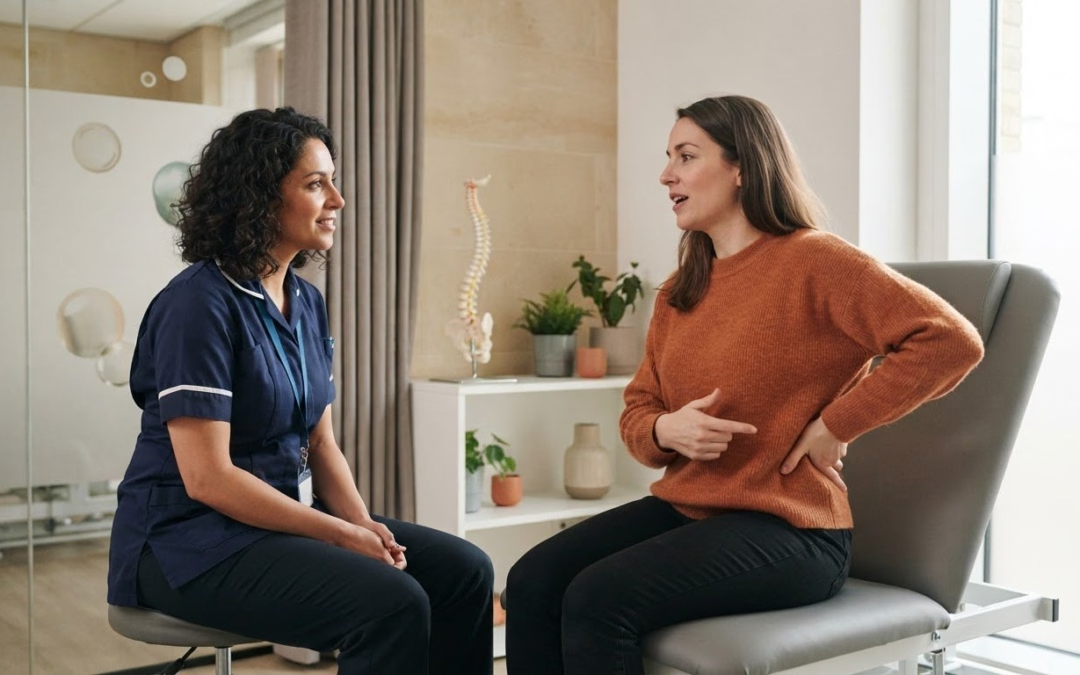
Adult scoliosis is a sideways curve in the spine, and it can be present without causing pain. When discomfort does occur, it may affect your back and make everyday movement harder. Scoliosis pain management for adults in Stock starts with understanding what may be contributing to your symptoms, rather than assuming the curve itself tells the whole story.
It’s understandable to want clear answers about what you’re feeling and what might help. Back-strengthening and stretching exercises may ease pain, although they’re unlikely to change the spinal curve. Speak with a healthcare professional before starting a new exercise programme. This guide explains adult scoliosis, how related pain can feel and why it may develop, then explores care options and when surgery may be considered. You’ll gain a clearer picture of the choices and what can shape a suitable approach.
Key Takeaways
- Adult scoliosis does not always cause pain; the curve, surrounding muscles and changes in the spine can all shape how symptoms feel.
- Suitable strengthening and stretching may help ease discomfort, but exercise is unlikely to alter the spinal curve.
- Care focuses on your symptoms and daily function, with surgery considered in more serious cases when other factors make it appropriate.
- Learn what to discuss at a New Patient Consultation and how a personalised assessment can help guide your next steps.
What kind of pain does scoliosis cause?
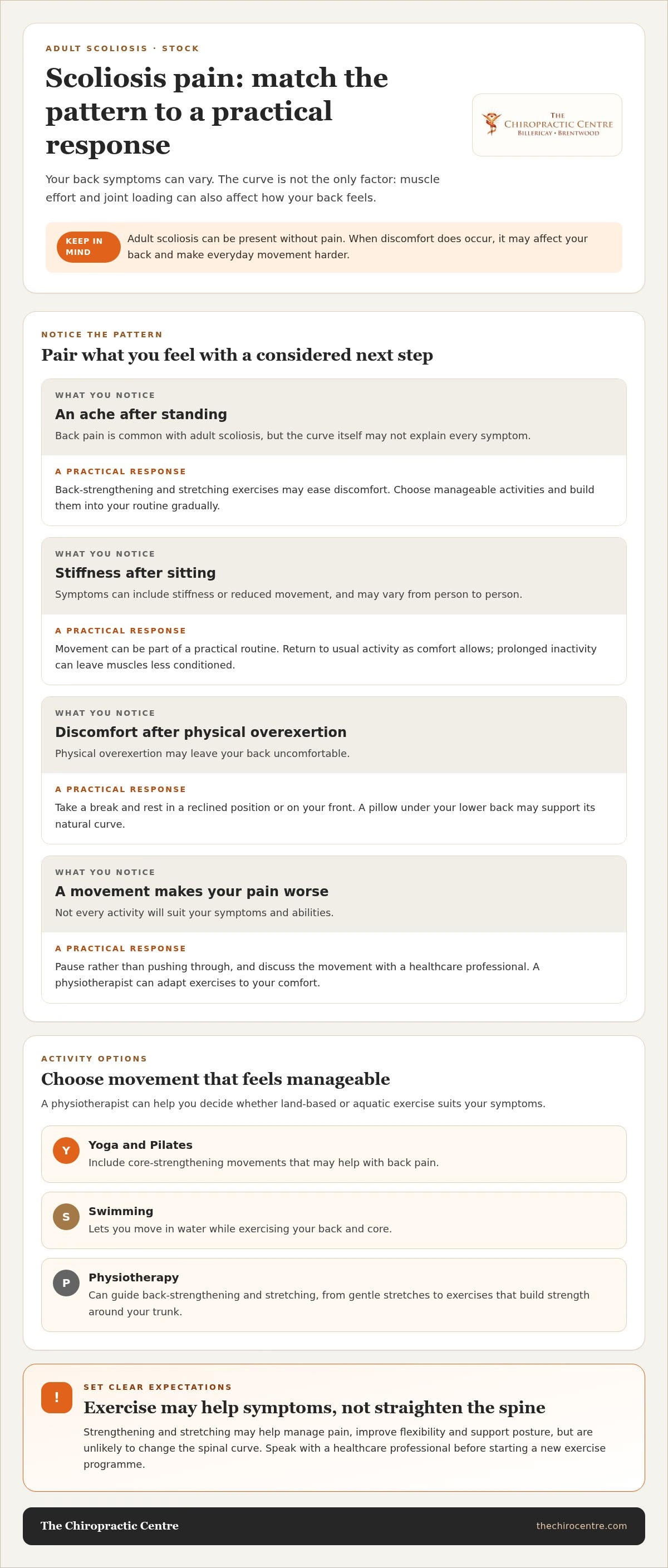
With adult scoliosis, pain is often felt in the back, but its pattern varies. You might notice an ache after standing, stiffness after sitting, or discomfort that builds during physical overexertion. The spinal curve does not explain every symptom: muscle effort and joint loading can also affect how your back feels.
Exercise may ease discomfort and support movement, but speak with a healthcare professional before starting a new programme. They can help you choose activities that suit your symptoms and abilities. If a movement increases your pain, pause and discuss it with them rather than pushing through.
Physiotherapy can guide you through back-strengthening and stretching exercises. These may help manage pain, improve flexibility and support posture, but are unlikely to change the spinal curve. A physiotherapist can adapt movements to your comfort, from gentle stretches to exercises that build strength around your trunk.
For scoliosis pain management for adults in Stock, exercise can be part of a practical routine, not a way to straighten the spine. Yoga and Pilates include core-strengthening movements that may help with back pain. Swimming lets you move in water while exercising your back and core. Choose manageable activities and build them into your routine gradually.
A physiotherapist can help you decide whether land-based or aquatic exercise suits your symptoms. You might begin with a supported stretch, then try a short swimming session if movement feels comfortable. Exercise can also help maintain a healthy weight and reduce strain on your back.
Injections are a separate option for some pain. According to the NHS, the benefits of spinal steroid and local anaesthetic injections normally last only a few weeks or months.
Private scoliosis treatment and physiotherapy costs in the UK vary with the type of care and number of appointments. Ask about the likely cost before arranging treatment.
What is adult scoliosis?
Adult scoliosis means the spine curves sideways. The curve may have been present since childhood or develop as the spine changes with age. Some adults have no pain; others experience back discomfort, stiffness or reduced movement. Treatment focuses on symptoms and daily function, particularly when pain makes standing, walking or sleeping harder.
For pain relief, UK guidance commonly starts with over-the-counter options such as paracetamol or ibuprofen. Read the medicine leaflet to check whether an anti-inflammatory medicine is suitable for you, and speak to a pharmacist if you’re unsure. NSAIDs can affect the stomach, bowel and circulation. If over-the-counter pain relief isn’t working, a GP can assess your symptoms and discuss next steps.
Rest can help after physical overexertion. Take a break and lie reclined or on your front; a pillow under your lower back may support its natural curve. The aim is to settle symptoms, not avoid movement altogether. Prolonged inactivity can leave muscles less conditioned, so return to usual activity as comfort allows.
A back brace is not commonly used for adults, but may support the spine and ease pain. It may be considered as an alternative to surgery when someone is not well enough for an operation. A brace provides support; it does not remove the curve or address every cause of discomfort.
Heat, massage and acupuncture focus on symptoms rather than straightening the spine. Massage therapy works with soft tissues and may help ease muscle tension. Discuss heat or acupuncture with a healthcare professional as part of your pain-relief plan, especially if symptoms are severe or changing.
In England, start NHS care by contacting your GP about persistent pain or changes in symptoms. A GP can assess your concerns and, if over-the-counter painkillers do not work, may refer you to a specialist pain management clinic. Bring a clear example, such as pain that limits walking or disrupts sleep, to explain its effect on daily life.
When surgery may be considered
A specialist review can help when an adult’s spinal curve is severe or worsening, pain remains severe despite other care, or spinal nerves appear irritated or compressed. These signs call for closer assessment of symptoms and their effect on everyday function. Difficulty walking or managing routine tasks, for example, helps show how the condition is affecting you.
Assessment focuses on what has changed, not just the curve’s appearance. A specialist considers how pain behaves, whether it travels into a leg, and whether movement or sensation has changed. They also consider how symptoms affect sleep, work and independence. The aim is to understand what is driving your difficulties and identify suitable next steps.
Before an appointment, note when symptoms began and whether they are becoming more limiting. Give specific examples, such as needing to stop during a familiar walk or finding work tasks harder. Mention previous care and how your symptoms responded. This keeps the discussion grounded in your priorities and day-to-day experience.
If pain is not improving, a GP can assess your concerns and may refer you to a specialist pain management clinic. The team can consider how persistent pain affects activity and wellbeing, then discuss ways to manage it. Track meaningful changes between appointments, including new discomfort or reduced ability to carry out usual tasks.
For adults with scoliosis, the key decision is whether symptoms are stable or worsening and how much they interfere with daily life. Severe pain, a changing curve and possible nerve involvement are reasons for specialist assessment. Use that review to ask which symptoms need follow-up, what care options fit your needs, and how progress will be assessed over time.
Causes of scoliosis-related pain in adults
The curve alone doesn’t explain every painful symptom. In adults, discomfort can come from uneven loading: muscles on one side work harder to support the spine, while joints take pressure differently. Standing for a long time, for example, may leave your back aching even when the curve itself hasn’t changed. This helps explain why two people with similar curves can experience very different pain.
Age-related changes can add another source of strain. As discs and joints change, the spine may become stiffer, and an existing curve can place extra demand on nearby muscles. A curve that began in childhood may affect an adult differently as the body changes. Pain can also occur alongside spinal nerve irritation or compression, which may cause symptoms beyond the back, such as pain travelling into a leg.
Daily activities and posture can influence how symptoms build. Prolonged sitting, repeated lifting or standing in one position may increase strain. Discomfort might rise after desk work and ease when you change position, for example. This doesn’t mean poor posture caused scoliosis. Noticing which activities bring on pain can help you and a specialist understand its pattern.
Painkillers may ease symptoms, but they don’t explain what is causing them. Note when pain starts, where it travels and which movements affect it. Include whether a gentle stretch feels comfortable or aggravates symptoms. This record can help a specialist distinguish muscle strain from possible nerve-related pain and consider how your spinal curve, movement and daily routine fit together.
Children often receive scoliosis care while their bodies are still growing; adult assessment instead considers current symptoms, spinal changes and everyday function. A posture assessment can help identify movement restrictions, but posture alone does not prove the cause of pain. Understanding the likely contributors can make care more targeted, whether the main issue is muscle fatigue, joint strain or nerve irritation. If you want to discuss your symptoms, arrange a scoliosis assessment.
The Chiropractic Centre: New Patient Consultation
The Chiropractic Centre offers a New Patient Consultation for adults seeking guidance on scoliosis-related discomfort and movement. Discuss how symptoms affect everyday activities, such as sitting, walking or sleeping, and what you hope to improve.
The centre’s scoliosis management care offers a non-surgical option focused on your wellbeing. Depending on your needs, Massage Therapy may help address muscle tension, while Chiropractic Adjustments can be discussed as part of your care. The consultation gives you space to raise questions and understand which options may suit your symptoms.
If back pain is limiting your routine or you want to explore supportive care, contact The Chiropractic Centre to arrange a New Patient Consultation.
Choose a next step that fits your goals
Start with a simple goal: identify what you’d like to do more comfortably, whether that’s walking, working or enjoying time with family. For scoliosis pain management for adults in Stock, keeping that goal in view can help shape a useful conversation about your symptoms and suitable care options.
The Chiropractic Centre offers a New Patient Consultation for people seeking guidance, alongside Massage Therapy and Paediatric Care. A personal discussion can help you explain what matters most and consider a practical way forward, with your wellbeing at the centre.
If you’re ready to discuss your needs, contact The Chiropractic Centre. Taking an informed next step can help you move towards greater comfort and confidence in daily life.
Frequently Asked Questions
How can I explain the pain I am in to my specialist?
Describe where the pain starts, where it travels and how it feels, such as a dull ache or sharp twinge. Give a recent example, like discomfort that stops you carrying shopping or sitting through a meeting. Mention what eases or aggravates it, any changes in sensation, and how sleep or work is affected. Notes on these patterns can help focus your appointment.
How will my pain be treated?
Your care depends on what contributes to your symptoms and how they affect daily life. A healthcare professional may discuss movement, physiotherapy, pain relief and other supportive approaches with you. Bring details of treatments you have tried and how you responded, including any medicines. If pain is worsening or interfering with ordinary tasks, explain that clearly so the plan can address your main concerns.
What causes pain from adult scoliosis, and what symptoms need urgent medical attention?
Pain can relate to uneven strain on muscles and joints, age-related spinal changes, or irritated nerves. Important symptoms include new weakness, numbness, or changes in bladder or bowel control. Seek urgent medical assessment if these occur, particularly if they start suddenly or worsen. Also contact a healthcare professional about persistent or changing pain that limits your usual activities.
What non-surgical treatments help manage pain from adult scoliosis?
Non-surgical care may include physiotherapy, suitable exercise, massage and pain relief recommended for your circumstances. A physiotherapist can adapt movement to your ability, while massage may address muscle tension. Some people also benefit from support in coping with persistent pain, such as cognitive behavioural therapy. Discuss options with a healthcare professional, especially if you have other health conditions or take medicines.
Which exercises or physiotherapy approaches are recommended for adults with scoliosis?
A physiotherapist can tailor strengthening and stretching to your symptoms, mobility and goals. Core-focused activities such as Pilates, yoga or swimming may suit some adults, but comfort and safe technique matter more than a particular exercise name. Ask for help adapting a movement that causes discomfort. Track how you feel during and after activity, and share that response when reviewing your programme.
How can adults manage scoliosis pain at work, while sleeping, and during daily activities?
At work, change position regularly and keep frequently used items within easy reach to reduce repeated twisting. For carrying bags, split the load or make separate trips if that feels more comfortable. At night, adjust your sleeping position and pillows until you find support that eases strain. Note which changes help, then discuss ongoing disruption to work or sleep with a healthcare professional.