
Could the pain, tingling or weakness affecting your movement be caused by a slipped disc, or might something else be going on? It’s understandable to want clear answers, especially when advice about chiropractic care, massage and other approaches can feel conflicting. This guide to slipped disc treatment Essex residents can access explains what a slipped disc may involve and why symptoms alone don’t always tell the whole story.
A slipped disc happens when some of the soft material inside a spinal disc pushes through its outer layer. It can irritate a nearby nerve, but not every disc change causes symptoms. A useful next step is to understand what you’re experiencing and have your needs carefully assessed, rather than assume one treatment suits everyone. Here, you’ll learn which signs deserve attention, how an individual care plan may be shaped, and how chiropractic adjustments or massage therapy could fit into supportive care. You’ll also discover how a holistic approach can consider movement, exercise and everyday habits alongside hands-on treatment, with local support in Brentwood, Billericay, Chelmsford, Stock, Basildon or Wickford.
Key Takeaways
- Back or neck pain, tingling and weakness can have different causes, so symptoms alone can’t confirm a slipped disc.
- A musculoskeletal assessment considers your symptoms, movement and relevant health history to help guide appropriate next steps.
- Slipped disc treatment Essex may involve an individual mix of chiropractic adjustments, massage therapy and exercise support.
- Note where symptoms occur, what affects them and how they change your daily activities, so you can explain your experience clearly.
- The Chiropractic Centre offers chiropractic care, massage therapy and dry needling, alongside lifestyle support.
What is a slipped disc, and what symptoms can it cause?
Persistent back or neck symptoms can be worrying and disruptive, especially when pain makes everyday activities harder or altered sensation leaves you unsure what is happening. A slipped disc is one possible explanation, but similar symptoms can have other causes. Understanding what the term means is a helpful first step when considering slipped disc treatment Essex and whether an individual assessment could help clarify your next steps.
A slipped disc is a change in a spinal disc where some of its soft inner material pushes through its tougher outer layer. It is also commonly called a herniated disc. The name can sound alarming, but it doesn’t automatically mean a disc has moved out of place or that you will have symptoms. A scan finding or a particular symptom on its own cannot confirm what is causing your discomfort. A clinician considers the wider picture.
What happens to a spinal disc?
Spinal discs sit between the vertebrae, the bones that make up your spine. They act as cushions and help your back and neck move. Over time, a disc may change shape or develop a weakness in its outer layer, allowing some of the softer centre to push outwards. The term spinal disc herniation, commonly known as a slipped disc, describes this type of change.
Disc changes don’t always cause pain or other problems. A bulge does not necessarily press on a nerve, and a scan finding does not by itself show whether that change explains how you feel. This is why an assessment considers your symptoms and how you move, rather than treating an image or label in isolation. Not every disc change needs treatment.
Which symptoms may be associated with a slipped disc?
Symptoms can vary depending on the disc’s position and whether nearby nerves are irritated. You might notice discomfort in your back or neck, or pain that travels away from the spine into an arm or leg. The affected spinal region can influence where symptoms are felt: a change in the neck may be associated with arm symptoms, while a lower-back issue may be associated with pain travelling into a leg.
Some people also experience tingling, numbness or weakness in an arm or leg. These sensations can be unsettling, but they don’t prove that you have a slipped disc. They can occur for different reasons, so describe them clearly during an assessment.
- Notice where the pain or altered sensation starts and whether it travels elsewhere.
- Pay attention to whether tingling, numbness or weakness is present, and how it affects movement.
- Describe how symptoms influence everyday activities, such as sitting, walking or reaching.
These details can help build a clearer picture, but they are not a self-diagnosis. If symptoms persist or affect daily life, an assessment can help you consider appropriate next steps.
How is a suspected slipped disc assessed in Essex?
An assessment helps make sense of your symptoms and identify sensible next steps. It isn’t about assuming that a particular symptom must mean a disc problem. When considering slipped disc treatment Essex, the focus should be on your individual experience, what an examination can show and whether the care being considered is suitable for you.
What may happen during a musculoskeletal assessment?
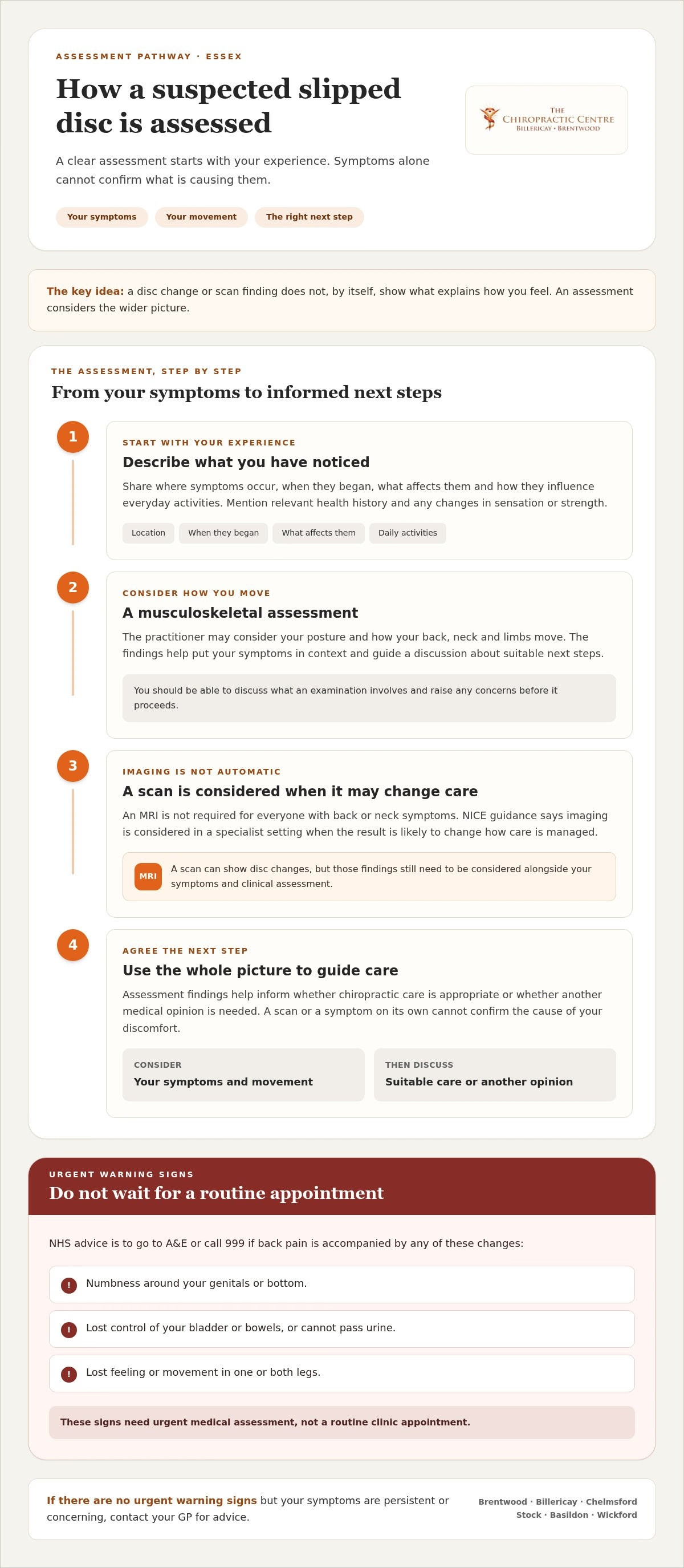
A practitioner will usually begin by listening to what you’ve noticed: where symptoms occur, when they began, what affects them and how they influence daily activities. You can also share relevant health history, such as previous problems or changes in sensation or strength. These details put your concerns in context before any hands-on examination is discussed.
A musculoskeletal assessment may consider posture and how your back, neck and limbs move. The findings help inform whether an approach such as chiropractic care is appropriate, or whether another medical opinion is needed. You should have the opportunity to discuss what an examination involves and raise any concerns before it proceeds.
Does assessment always involve a scan?
No. Imaging, such as an MRI, isn’t automatically required for everyone with back or neck symptoms. NICE guidance says imaging is considered in a specialist setting when the result is likely to change how care is managed. A scan can show disc changes, but the findings still need to be considered alongside your symptoms and clinical assessment.
For general background on possible approaches, see treatment options for a herniated disc from University of Michigan Health. This information is not a substitute for an assessment of your own needs or guidance on the NHS pathway in Essex.
When should you seek prompt medical advice?
Seek urgent help for warning signs. Back pain with certain changes can require urgent medical attention. NHS advice is to go to A&E or call 999 if you have:
- Numbness around your genitals or bottom.
- Lost control of your bladder or bowels, or cannot pass urine.
- Lost feeling or movement in one or both legs.
These signs need urgent medical assessment, not a routine clinic appointment. Read the NHS guidance on slipped discs for further information. This list cannot diagnose the cause of symptoms.
If you don’t have urgent warning signs but your symptoms are persistent or concerning, contact your GP for advice. In some areas, a First Contact Practitioner based in a GP surgery may also assess musculoskeletal problems. A spinal health check can support a discussion about your wellbeing, but it doesn’t replace medical care when that’s needed.
For non-urgent concerns, a Free Spinal Health Check at The Chiropractic Centre offers a local starting point to discuss your spinal wellbeing and possible next steps.
Slipped disc treatment options: how should care be matched to you?
There isn’t one standard plan for everyone with back or neck symptoms. The options considered depend on your assessment, what you’re experiencing and what you want to manage in daily life. When exploring slipped disc treatment Essex, comparing the role of each approach can help you understand what may be discussed, without assuming that every option is needed or suitable for you.
Treatment choice depends on your symptoms, assessment findings and personal needs, because the same approach isn’t suitable for everyone. The options below may be considered individually or as part of a wider plan.
| Approach | What it may contribute | How suitability is considered |
|---|---|---|
| Assessment | Provides a basis for discussing possible care and next steps. | Recommendations are informed by your circumstances and needs. |
| Chiropractic adjustments | Hands-on care focused on spinal joint movement. | Adjustment techniques are selected in light of your individual assessment. |
| Massage therapy | May address soft tissue tension as part of a wider care plan. | Considered in relation to your symptoms, comfort and overall needs. |
| Exercise support | Can help you work towards movement and everyday activity goals. | Guidance should reflect your abilities and be adapted to your response. |
What role can chiropractic adjustments play?
Chiropractic adjustments are hands-on methods that focus on spinal joint movement. The approach should be selected following an assessment, rather than applied as a fixed routine. Safety matters: your health history, symptoms and comfort all inform whether an adjustment is suitable and how it may be approached. No single adjustment technique suits everyone. An adjustment should not be described as repositioning a disc or guaranteeing recovery.
If you’re considering an adjustment, discuss what it involves, the available options and any concerns you have before deciding whether it feels right for you.
How can massage therapy and movement support care?
Massage therapy may be considered as soft tissue therapy when it fits your symptoms and assessment. Its role differs from an adjustment, and it shouldn’t be presented as changing the position of a spinal disc. Whether massage is appropriate depends on your individual circumstances and comfort.
Movement support can be shaped around your abilities and practical goals, such as building confidence with walking or returning to usual activities. Exercise and lifestyle coaching can help you consider manageable ways to support movement, rather than follow a generic routine that may not suit your situation. Guidance should reflect your response and change as your needs become clearer. This keeps the focus on individual support without promising how quickly symptoms will change.
What can you do next when slipped-disc symptoms affect daily life?
When discomfort or altered sensation starts to shape your routine, a few clear notes can make it easier to explain what you’re experiencing and discuss suitable next steps. You don’t need to work out the cause yourself. Focus on what has changed, what seems to affect your symptoms and which everyday activities are becoming difficult.
How can you prepare for a first discussion about symptoms?
Before a discussion or New Patient Consultation, jot down what you can. You might find it useful to include:
- When the symptoms began and whether they have changed over time.
- Where you feel discomfort or altered sensation, and whether it travels to an arm or leg.
- Activities or positions that seem to make symptoms better or worse.
- How symptoms affect tasks such as sitting, walking, sleeping or working.
- Relevant health history, previous assessments and any advice you’ve already received.
Your notes don’t need to be detailed or perfectly organised. A few examples, such as discomfort that builds during a particular activity or tingling that affects a daily task, can help you describe your experience. If you’re unsure what to expect from an initial appointment, the New Patient Consultation guide can help you prepare for a conversation about your concerns.
How should you approach activity while symptoms are present?
Be cautious about copying an exercise routine from a video or article simply because it’s described as suitable for a slipped disc. Symptoms and abilities differ, and a movement that feels manageable for one person may not suit another. Follow individual clinical advice from a clinician who understands your circumstances, and discuss any activity that brings on new or increased symptoms.
Progress isn’t identical for everyone. How symptoms change can depend on the individual and the factors affecting them, so avoid judging your experience against someone else’s recovery story or a promised timetable. If you’re given guidance, let the clinician know how it fits with your everyday routine and whether your symptoms change as you follow it. This helps keep decisions personal and grounded in your experience.
Seek urgent medical help if warning signs appear. If you develop numbness around your genitals or bottom, lose control of your bladder or bowels, cannot pass urine, or lose feeling or movement in one or both legs, go to A&E or call 999. Don’t wait for a routine appointment. If symptoms are new or worsening but don’t match these urgent signs, contact your GP or NHS 111 for advice about the appropriate next step.
If you’re in Brentwood, Billericay, Chelmsford, Stock, Basildon or Wickford and would value a considered discussion about your symptoms, you can arrange a New Patient Consultation with The Chiropractic Centre. The consultation gives you an opportunity to discuss your concerns and whether a personalised assessment and care plan may be appropriate.
Slipped disc treatment in Essex: what to expect at The Chiropractic Centre
Searching for slipped disc treatment Essex can leave you facing plenty of information, but your care should begin with your own concerns, not assumptions based on a label. At The Chiropractic Centre, the starting point is a conversation about how you’re feeling, what you want help with and how symptoms affect everyday life. An assessment can then inform a considered discussion about suitable next steps.
A personalised, holistic approach to care
There isn’t a single plan that suits everyone. Depending on your assessment and wellbeing goals, care may include chiropractic adjustments, massage therapy or dry needling. These approaches have different roles, and any recommendation should reflect your circumstances and comfort. No hands-on treatment should be presented as repositioning a disc or guaranteeing recovery.
A holistic approach can also consider how movement and everyday habits fit into your wellbeing. Alongside hands-on care, The Chiropractic Centre offers nutrition and diet advice, and exercise and lifestyle coaching. For example, a discussion might include how your usual activities feel and which practical movement goals matter to you. Support is shaped around the individual, rather than applying the same treatment combination to everyone.
Starting care with the local team
If you’re unsure where to begin, the Free Spinal Health Check and New Patient Consultation offer ways to start a conversation. A spinal health check can help you discuss your spinal wellbeing, but it isn’t a diagnosis, a substitute for medical care or a promise of a particular result. If you have urgent warning signs, seek appropriate medical help rather than waiting for a routine appointment.
The Chiropractic Centre serves people in Billericay, Brentwood and surrounding Essex communities, including Chelmsford, Stock, Basildon and Wickford. The clinic has been established for over 10 years, has supported over 1,000 happy clients and has 240+ reviews. Its Google rating is 5.0 based on 192 reviews. These figures provide context about the local practice, while your care should still be based on your own needs and assessment.
Before arranging a visit, explore the New Patient Consultation guide to understand the first steps and prepare any questions you’d like to discuss. If you’re ready to talk through your concerns, book a New Patient Consultation with The Chiropractic Centre. It’s a practical way to begin a conversation about your wellbeing and the support available to you.
Take a considered next step for your wellbeing
You don’t need to settle on a treatment before understanding what may be suitable for you. A useful next step is a conversation focused on your priorities, concerns and the activities you’d like to approach with greater confidence. That gives you space to consider whether support such as chiropractic care, massage therapy or lifestyle guidance fits your individual needs.
Choosing slipped disc treatment Essex isn’t about following a fixed plan or expecting a guaranteed result. It’s about making informed decisions with your wellbeing in view, and adapting the approach as your needs become clearer. If you’re ready to talk through your situation, arrange a New Patient Consultation with The Chiropractic Centre.
Start with your questions, take the conversation at a pace that feels comfortable and focus on a next step that makes sense for you. Small, considered decisions can help you move forward with greater clarity.
Frequently Asked Questions
What is the difference between a slipped disc and a herniated disc?
In everyday use, the terms usually refer to the same disc condition. “Herniated disc” is a more formal term, while “slipped disc” is widely understood in conversation. If you see either phrase on a report or hear it during an appointment, ask what it means in relation to your symptoms. The wording alone doesn’t tell you what activities to avoid or what care to choose.
Can a chiropractor help with a slipped disc?
A chiropractor can discuss whether chiropractic care is appropriate for your situation. Ask what an adjustment is intended to address, what alternatives may be considered and how your response would inform future care. These are useful questions whether you’re exploring care in Brentwood, Billericay, Chelmsford, Stock, Basildon or Wickford. A clear discussion can help you make an informed choice without feeling pressured to proceed with an approach you’re unsure about.
How long does it take for a slipped disc to get better?
There isn’t a reliable timetable that applies to everyone. Rather than comparing yourself with someone else, notice practical changes that matter to you, such as whether a daily task feels easier or you can manage an activity more comfortably. If you’re concerned about your progress, record what has changed and discuss it with a clinician. That conversation can help you decide whether your current plan still makes sense.
Do I need a scan to find out if I have a slipped disc?
Not necessarily. The decision about imaging is made in the context of your symptoms and care needs, rather than simply because you suspect a disc problem. If you’re wondering about a scan, ask the clinician assessing you what information it could add and whether it would affect decisions about your care. Your GP can advise on the appropriate NHS route if further investigation is being considered.
Can massage therapy help when I have slipped-disc symptoms?
It may be an option to discuss as part of your care, depending on your circumstances. Before a session, tell the therapist about any areas that feel sensitive and mention what kinds of pressure you find comfortable. During the session, speak up if you want the approach changed or paused. Afterwards, note how you feel and share any response that concerns you with your clinician.
When should I seek urgent help for back pain or numbness?
Seek emergency help if back pain is accompanied by numbness around your genitals or bottom, loss of bladder or bowel control, difficulty passing urine, or loss of feeling or movement in one or both legs. Call 999 or go to A&E. If you’re unsure what to do and the situation isn’t an emergency, contact NHS 111 or your GP for advice rather than relying on an online self-assessment.
What happens at a slipped-disc assessment at The Chiropractic Centre?
You can use the appointment to explain what you’d like help with and ask questions about possible care. Bringing a brief note of your main concerns, relevant previous advice and activities you hope to manage can make the discussion more useful. Recommendations are considered in light of your individual needs. The New Patient Consultation is an opportunity to discuss your situation with The Chiropractic Centre’s local team.