
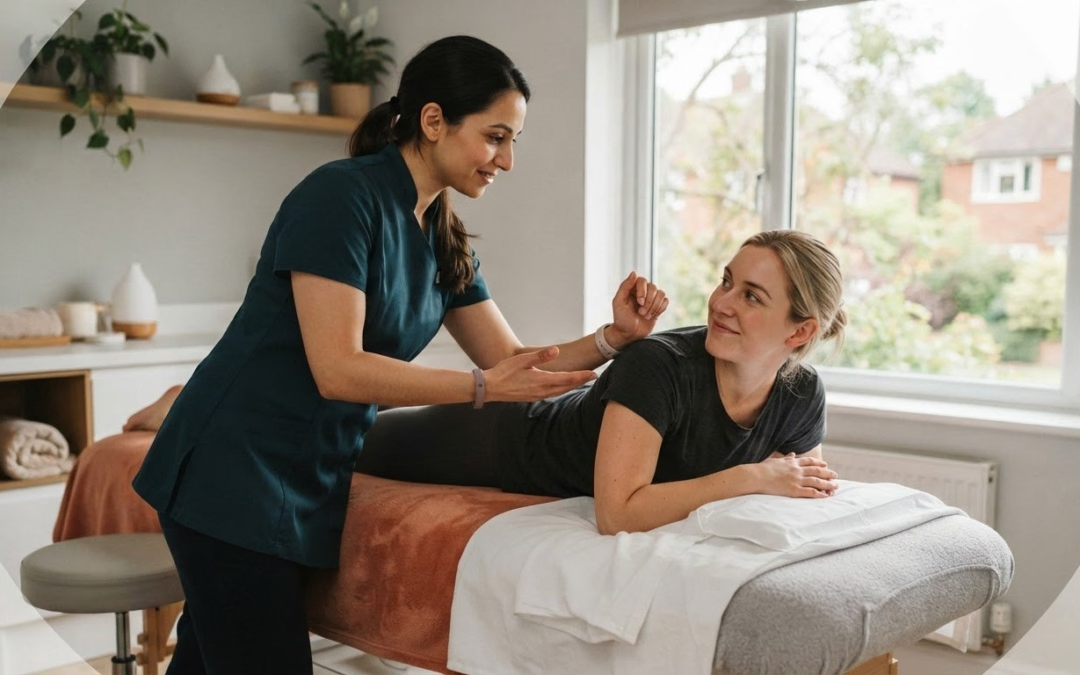
What if the best response to a tight muscle isn’t simply to press harder, but to understand what your body needs? If you’re considering soft tissue massage Essex, you may want to know how clinical massage differs from a relaxation treatment, what an appointment involves and whether the pressure can be adapted to you.
Relaxation massage can offer time to unwind, while clinical massage focuses on your concerns, comfort and goals. You should feel listened to, not expected to tolerate pressure that doesn’t feel right. A person-centred appointment gives you space to explain what you’re experiencing and what you’d like to do more comfortably.
This guide explains soft tissue therapy in plain English, who might consider it and how to prepare for an appointment. It also compares massage with dry needling, a separate service, so you can make a more informed choice. The aim is to help you feel at ease as you consider a next step towards greater comfort and movement.
Key Takeaways
- Learn how soft tissue therapy works and when muscle tightness or limited movement may make it worth considering.
- Understand how clinical, sports and relaxation massage differ in purpose, so you can identify what you’re looking for.
- Prepare for an appointment by noting your concerns, sharing relevant health information and speaking up about pressure or comfort.
- Find out how soft tissue massage Essex at The Chiropractic Centre is shaped around your needs, with massage therapist Julie as part of the clinic team.
- See how massage therapy and dry needling are distinct approaches to soft tissue concerns and mobility.
What Is Soft Tissue Massage, and Who Might Find It Helpful in Essex?
Persistent tightness or limited movement can make ordinary tasks feel harder, whether you’re reaching for something on a shelf, turning your head to check traffic or getting comfortable after a day at work. If you’re considering soft tissue massage Essex, it helps to know that the aim isn’t simply to press on a sore spot. A thoughtful approach considers what feels restricted and which activities you’d like to do more comfortably.
Soft tissue therapy uses manual techniques, such as massage, to address muscle tension and support circulation. The therapist works with muscles and other soft tissues, adapting the area of focus and pressure to your needs. Massage may support comfort, mobility and recovery, but people respond differently and no particular result can be promised. For a general overview, see What is massage therapy?
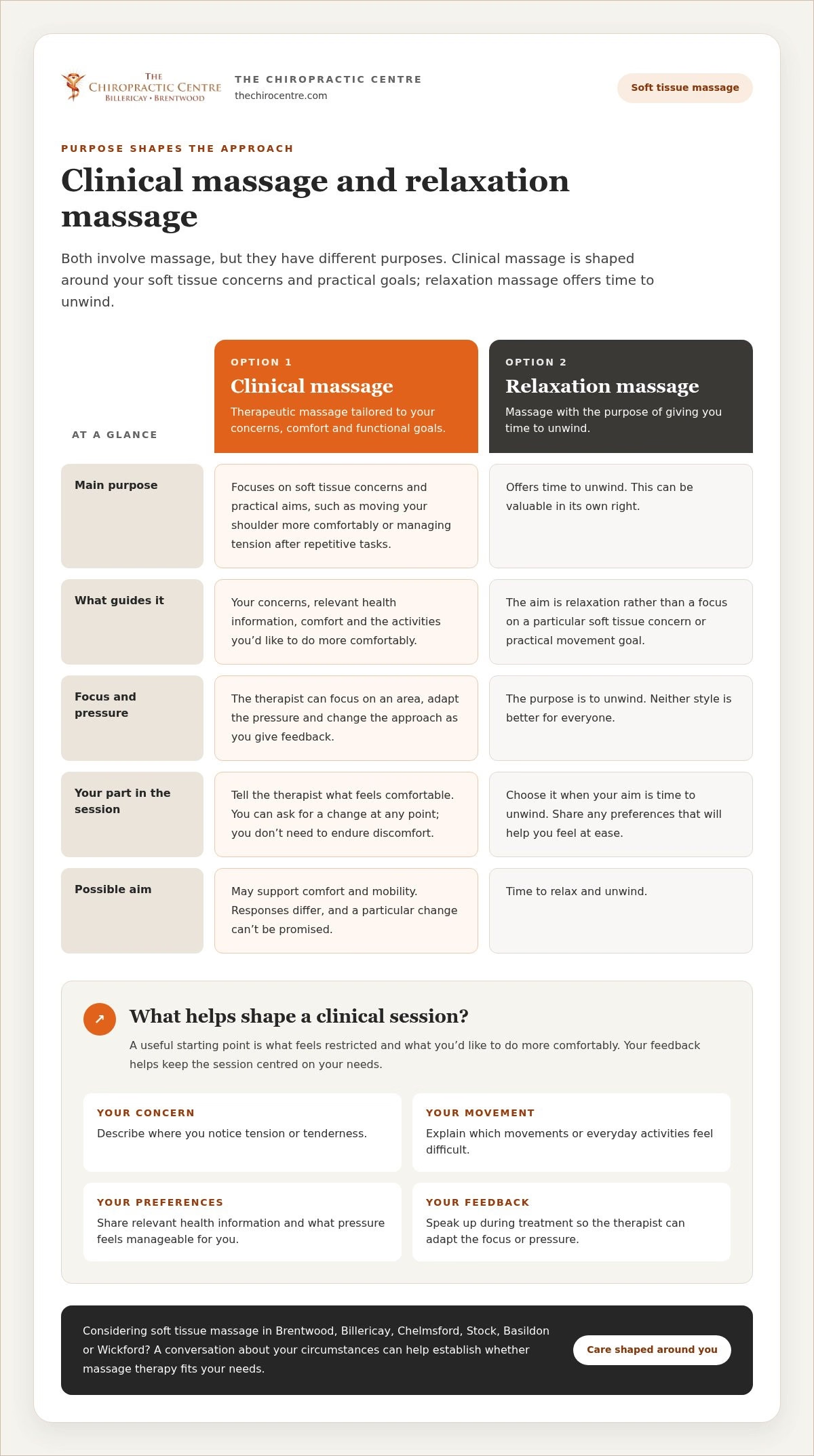
Clinical massage is tailored rather than delivered as a fixed routine. Your concerns, comfort and relevant health information help shape the session. The therapist might focus on one area, use gentler pressure or adapt the approach as you give feedback. You can speak up at any point. A session should be a conversation as well as hands-on care, with your wellbeing guiding the pace.
How Does Clinical Massage Differ from a Relaxation Massage?
Clinical massage focuses on soft tissue concerns and practical goals, such as moving your shoulder more comfortably or managing tension after repetitive tasks. Relaxation massage has a different purpose: it offers time to unwind and can be valuable in its own right. Neither purpose is better for everyone. In clinical care, the therapist adapts pressure and focus to your comfort and the reason you’ve come in.
Who Might Consider Soft Tissue Therapy?
You might consider it if muscle tension or restricted movement is affecting how you feel or move. That doesn’t mean those symptoms point to a particular diagnosis. Desk-based work, regular exercise and physically demanding tasks can all place different demands on the body. What feels suitable depends on your circumstances, so an individual discussion can cover your concerns, relevant health information and preferences before treatment begins.
Similar feelings of tightness can have different causes, and your daily routine may help explain what aggravates or eases them. You can describe when you notice the restriction, which movements feel uncomfortable and what you hope to return to doing. This gives the therapist a clearer starting point and helps shape care around your priorities, rather than using the same sequence or pressure for everyone.
If you’re in Brentwood, Billericay, Chelmsford, Stock, Basildon or Wickford, you can discuss your concerns in a calm, welcoming setting at The Chiropractic Centre. Soft tissue treatment may form part of an approach to comfort and movement, but it isn’t a substitute for considering your individual circumstances. Clear communication helps you take part in decisions and feel more at ease during your appointment.
How Soft Tissue Massage Supports Muscle Comfort and Movement
Massage therapy involves hands-on work with muscles and other soft tissues. In a clinical setting, the therapist considers your concerns and aims, then adapts the focus and pressure to your comfort and response. The intention may be to ease feelings of tension and support movement, not to apply the same routine to everyone.
Clinical massage is therapeutic massage tailored to your soft tissue concerns, comfort and functional goals. The therapist may check how you’re feeling during treatment and adjust their technique accordingly. You should be able to describe what feels comfortable and ask for a change at any point.
What Happens to Muscles During Soft Tissue Therapy?
During treatment, a therapist uses manual techniques on soft tissues, such as muscles that feel tight or tender. The type of touch, pressure and area of focus can be adapted as the session progresses. Some people prefer lighter pressure, while others may be comfortable with firmer contact. Your feedback helps guide the approach. You don’t need to endure discomfort.
Massage is sometimes discussed in terms of circulation, but individual responses vary and a particular physical effect can’t be guaranteed. The practical focus is your experience: what feels tense, which movements feel restricted and whether the chosen approach feels manageable. If an area is sensitive, say so. That gives the therapist useful information to adjust the treatment.
What Can Massage Support Alongside Everyday Movement?
Comfort and mobility may be useful aims when tension makes everyday movement feel less easy. You might hope to turn more freely, reach overhead with greater ease or return to your usual exercise with less discomfort. Massage may support these goals, but it can’t promise a specific change or replace an appropriate assessment when symptoms need further attention.
Think about the activity that matters to you. If you walk regularly, work at a desk or exercise, describing what feels difficult can make your goals more practical. Rather than focusing only on a tight area, discuss how it affects your routine and what comfortable movement would mean for you. This keeps the conversation centred on your needs and day-to-day wellbeing.
Responses to treatment differ. You may notice a change in how an area feels, or you may want to discuss another way to address your concern. If symptoms persist, change or worry you, raise this in an appropriate clinical discussion rather than relying on massage alone. A tailored conversation can help establish whether massage therapy fits your circumstances.
For soft tissue massage Essex, a personal discussion can connect treatment with the movement you want to return to. At The Chiropractic Centre, clinical massage therapy is a distinct service from dry needling, with care shaped around you rather than a fixed routine.
Is Soft Tissue Massage Only for Sportspeople, or Can It Suit Everyday Tension?
No. Soft tissue therapy isn’t only for athletes or sports injuries. You might be considering massage because desk work leaves your shoulders feeling tense, exercise makes your muscles feel tired, or a physically demanding routine affects how comfortably you move. The purpose of treatment matters more than whether you think of yourself as sporty.
Clinical massage, sports massage and relaxation massage can all involve hands-on techniques, but they have different aims. None is automatically the right choice for everyone. The table below offers a simple guide. Within each approach, the focus and pressure can still be adapted to the individual.
Purpose
Typical focus
Individual tailoring
Address soft tissue concerns and personal functional goals.
Areas of tension or movement that matter to you.
Focus and pressure can reflect your concerns, comfort and relevant health context.
Support someone around their sporting or exercise activity and recovery.
Areas affected by training or physical activity.
The approach can be guided by your activity, needs and comfort, without promising performance gains.
Offer a relaxing experience and time to unwind.
A calming, general massage experience.
Pressure and focus can be adjusted to your preferences.
Clinical Massage, Sports Massage and Relaxation Massage Compared
Clinical massage centres on your soft tissue concerns and what you’d like to do more comfortably. Sports massage relates to activity and recovery, whether exercise is a regular part of your routine or an occasional pursuit. Relaxation massage serves a different purpose: unwinding. It isn’t a lesser option. A useful starting point is to explain what you want from the appointment, rather than choosing based on a label alone.
For example, you might want to discuss an area that feels tense after repetitive work, muscle comfort around your exercise routine, or simply making time to relax. These aims can guide a conversation about the type of massage that may suit you. They don’t guarantee a particular result, and your preferences remain part of the decision.
Does Effective Massage Have to Feel Deep or Uncomfortable?
No. Stronger pressure isn’t a measure of better treatment, and pain isn’t required for massage to be worthwhile. Discuss pressure and ask for it to be adjusted to your comfort. If it feels uncomfortable, tell the therapist promptly so they can ease off, change the focus or pause. Clear feedback helps keep the session responsive to you.
This reassurance can help whether you’re new to massage or have experienced firm sports-style techniques before. Explain what pressure feels manageable and speak up if that changes during the appointment. For tailored soft tissue massage Essex, a discussion about your priorities can help shape clinical massage around you. The Chiropractic Centre provides clinical massage therapy with a caring, person-centred approach.
How to Prepare for a Soft Tissue Massage Appointment
A little preparation can make it easier to explain what you need and feel comfortable discussing treatment. You don’t need technical terms or a perfect description. A few clear details about what’s bothering you and what you hope to do more easily can help the therapist shape an individual appointment.
- Identify your main concern. Note where you feel tension or restriction, when you notice it and whether a particular movement or activity is affected.
- Think about your goal. You might want to move more comfortably during a usual task, return to exercise at your own pace or understand whether massage may suit you.
- Share relevant health information. Mention health circumstances, past or current treatment, or anything else you feel may affect your care. This helps inform a suitable approach.
- Explain your preferences. Let the therapist know what pressure feels comfortable, which areas you’d prefer to avoid and whether you have questions or concerns.
What Should You Tell the Therapist Before Treatment?
Be specific where you can, but share what feels relevant. Describe whether a movement feels limited, whether discomfort changes during the day and what you’ve already found comfortable or uncomfortable. Your preferences matter too. Asking what the planned approach involves or requesting a change in focus helps make the conversation collaborative and the care more personal.
If you’re unsure how to explain a sensation, ordinary language is enough. You could say an area feels stiff, tender or tiring. You can also mention if you feel nervous about hands-on treatment or uncertain about pressure. The therapist can discuss the proposed focus before treatment begins, giving you the chance to ask questions and understand what to expect.
What Can You Expect During and After the Appointment?
The appointment can begin with a calm discussion of your concerns and relevant health information. The therapist can explain the planned approach, including the areas of focus, before hands-on treatment starts. During the session, the focus and pressure should reflect your comfort. Speak up if anything feels uncomfortable or your needs change. You don’t have to wait until the end to give feedback.
Afterwards, follow any personalised aftercare guidance the therapist provides. Advice may depend on your circumstances and the treatment given, so the same instructions won’t necessarily apply to everyone. If you have questions about what you’ve been advised, raise them with the therapist.
If you have new, severe or unexplained symptoms, raise them with an appropriate health professional rather than relying on massage alone. If you’re considering soft tissue massage Essex, you can arrange a massage therapy appointment and discuss your concerns and preferences with the clinic team.
Soft Tissue Massage in Essex: The Chiropractic Centre’s Personal Approach
Choosing massage therapy is a personal decision. You may be looking for support with muscle tension, hoping to move more comfortably or wanting to discuss whether clinical massage suits your circumstances. At The Chiropractic Centre, care is centred on your needs, with time to talk through your concerns and preferences in a calm, welcoming environment.
A Local Clinic Serving Essex Communities
The Chiropractic Centre welcomes people from Brentwood, Billericay, Chelmsford, Stock, Basildon and Wickford. Personal attention in a calm setting can help you feel more at ease discussing what you’re experiencing. Before hands-on treatment begins, you can talk through your concerns and understand the proposed approach, helping you make an informed decision about your care.
Explore Massage Therapy with The Chiropractic Centre
Clinical massage uses hands-on techniques to address soft tissue concerns and may support comfort and movement. The approach is discussed with you and adapted to your needs and feedback. Massage therapy and dry needling are distinct services, not automatically combined in every appointment. If you’d like broader assessment context, a New Patient Consultation offers an opportunity to discuss your concerns and relevant health background.
You don’t need to arrive with a diagnosis or treatment plan in mind. Sharing what feels difficult and what you’d like to do more comfortably can shape a useful conversation about your options and wellbeing. There’s no promise of a particular outcome, and the focus remains on an approach that feels appropriate to you.
If you’re considering soft tissue massage Essex, explore the clinic’s massage therapy service and discuss a suitable next step.
Take a Comfortable Next Step
Your next step doesn’t need to be a firm decision about treatment. Start by noticing what you’d like to feel more comfortable doing, then consider whether a tailored massage appointment feels like a helpful option. A clear conversation about your needs and preferences can help you decide at your own pace.
If you’re considering soft tissue massage Essex, explore the clinic’s approach and choose a next step that feels right for you. Learn more about massage therapy and arrange an appointment with The Chiropractic Centre: Explore massage therapy at The Chiropractic Centre.
Feeling informed and comfortable is a worthwhile place to begin. Your care can start with a conversation centred on you.
Frequently Asked Questions
What is soft tissue massage?
Soft tissue massage is hands-on work with muscles and other soft tissues, using massage techniques to address tension and support circulation. In clinical massage, the therapist considers your concerns and comfort when discussing the approach. You might describe when an area feels restricted, such as after carrying shopping or sitting through a long journey. Massage isn’t a guaranteed cure, and it can’t promise lasting change for every person.
Can soft tissue massage help with everyday muscle tension?
It may support comfort and movement if muscle tension is making routine activities feel difficult, though people respond differently. For example, you could explain that turning to reverse a car or lifting a light bag feels less comfortable than usual. If you’re considering soft tissue massage Essex, share what you notice and any relevant health background so the therapist can discuss an approach suited to you, rather than assume a diagnosis.
Is soft tissue massage supposed to hurt?
No. Massage doesn’t need to feel painful to be useful, and soreness isn’t proof that treatment is working. Pressure can be adjusted to suit your comfort, so mention promptly if it feels uncomfortable, sharp or simply too firm. You can also ask for a pause or a change in focus. Clear feedback helps you stay involved in decisions throughout the appointment, whether you prefer lighter or firmer touch.
How often should you have a soft tissue massage?
There isn’t one schedule that suits everyone, and regular massage isn’t automatically necessary. Frequency can depend on what you’re hoping to address, how you respond and whether massage fits into your wider care goals. Discuss these points with the therapist rather than following a standard course of appointments. You can review how you’re feeling and what you want to prioritise before deciding whether another session makes sense for you.
Can I have a massage during pregnancy?
Pregnancy massage should be considered in light of your comfort and individual circumstances. Tell the therapist that you’re pregnant and share any relevant health information before treatment, so you can discuss a suitable approach together. Explain which positions or areas feel uncomfortable and ask questions before hands-on care begins. Massage shouldn’t be treated as a promise to address pregnancy-related symptoms; your wellbeing and preferences guide the conversation.
Is clinical massage the same as dry needling?
No. Clinical massage involves hands-on manual techniques focused on soft tissues, while dry needling is a separate treatment technique. The Chiropractic Centre provides both services, but that doesn’t mean they’re combined in every appointment or appropriate for everyone. If you’re unsure which approach fits your concerns, explain what you’re experiencing and what you feel comfortable with. The therapist can discuss the options as part of an individual conversation.