
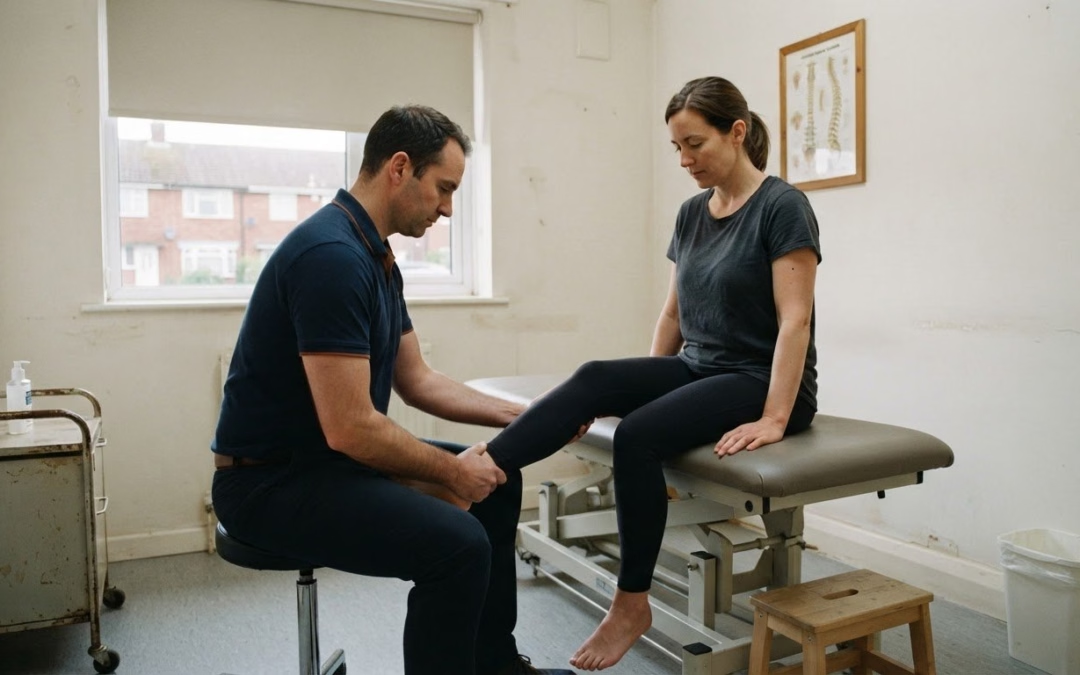
Persistent pain is a reason to pay attention, especially when it keeps returning or spreads beyond your neck or back. Signs you need a spinal health check in Brentwood may include ongoing discomfort, pain travelling into an arm or leg, headaches, sciatica or symptoms associated with a disc problem. These symptoms can have different causes, so an assessment can help clarify what may be contributing to them.
You may be wondering whether rest and time will be enough or whether it’s worth having your symptoms assessed. This guide explains which patterns of pain and nerve symptoms may warrant a spinal health check, what an assessment can involve and when to seek further advice.
You’ll also learn how an assessment can help identify suitable next steps, including when chiropractic care, an adjustment or massage therapy may be considered as part of a personalised approach to wellbeing.
Key Takeaways
- Persistent neck or back pain, especially when it spreads into an arm, leg or head, may merit an assessment.
- Notice whether headaches appear alongside neck stiffness or posture-related strain, as this pattern can help guide an assessment.
- Sciatica-like pain, tingling or numbness can point to nerve irritation; changes in strength or sensation are worth discussing promptly.
- Disc changes don’t always cause symptoms, so a health check can help relate your symptoms to movement and spinal function.
Assessment for persistent neck and back pain
Persistent pain may need assessment when it keeps returning, limits movement or travels from your neck or back. The pattern, your medical history and examination findings help shape the next step.
Physical and neurological assessment
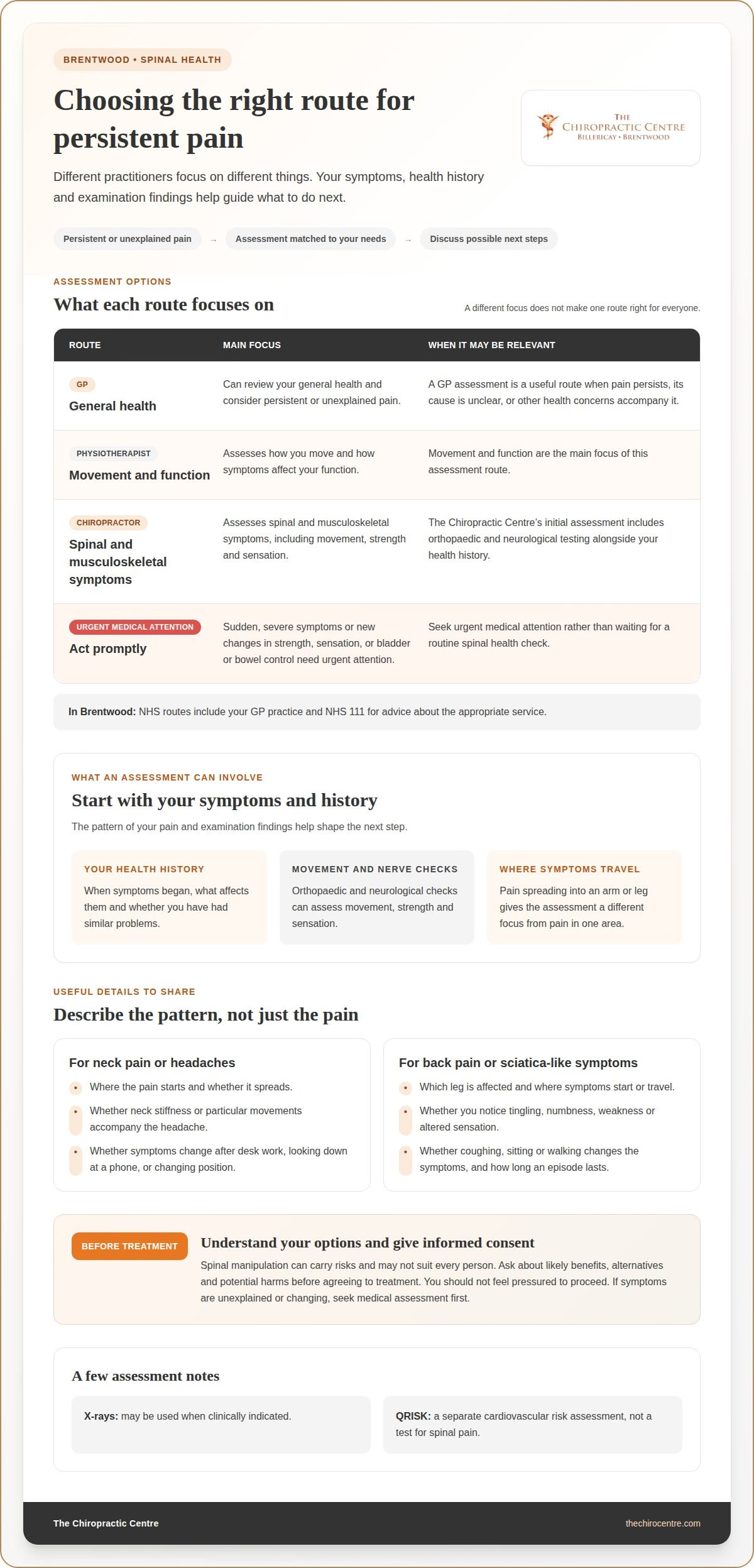
An assessment starts with your health history: when symptoms began, what affects them and whether you have had similar problems. Orthopaedic and neurological checks can assess movement, strength and sensation. These findings help distinguish local discomfort from symptoms that may involve a nerve.
For example, pain spreading into an arm or leg gives the assessment a different focus from pain that stays in one area. X-rays may be used when clinically indicated. QRISK is a separate cardiovascular risk assessment, not a test for spinal pain. If IDD Therapy is being considered, discuss your symptoms and history first so suitability can be assessed.
Choosing an assessment and care route
Seek a GP assessment for persistent or unexplained pain, or when other health concerns accompany it. A GP can review your general health; physiotherapists assess movement and function; chiropractors assess spinal and musculoskeletal symptoms. Each has a different focus. Seek urgent medical attention for sudden, severe symptoms or new changes in strength, sensation, or bladder or bowel control.
In Brentwood, NHS routes include your GP practice and NHS 111 for advice about the appropriate service. To choose a chiropractor or physiotherapist, look for clear explanations, a relevant assessment, informed consent and an open discussion of care options. Spinal manipulation can carry risks and may not suit every person. Ask about likely benefits, alternatives and potential harms before agreeing to treatment; avoid proceeding if you feel pressured. If symptoms are unexplained or changing, seek medical assessment first.
The Chiropractic Centre’s initial assessment includes orthopaedic and neurological testing. This allows movement, strength and sensation to be considered alongside your health history. Problems in one part of the spine can cause pain locally or pain that radiates into the arms, legs or head. If discomfort extends beyond its starting area, explain where it travels and how it changes. These details can help guide discussion of the assessment and possible next steps.
Headaches and posture-related strain
A headache alongside neck stiffness can make it difficult to turn your head or concentrate. Cervicogenic headaches originate from irritation of the cervical spine, the neck section of your spine. Neck-related symptoms may also include shoulder tension or discomfort that changes with movement. These patterns don’t prove the spine is responsible, but they give an assessor useful details to explore.
Notice what happens before and during each headache. Symptoms might appear after prolonged desk work, increase while looking down at a phone or ease when you change position. Record where the pain starts, whether it spreads and which movements affect it. This simple symptom record can help distinguish a repeated posture-related pattern from a headache that occurs independently of neck movement.
A postural assessment can consider how you sit and stand, alongside neck movement and shoulder position. An assessor may ask you to turn or tilt your head and describe any familiar symptoms. They may also consider muscle tightness around the neck and upper back. These observations help build a clearer picture; posture alone cannot establish the cause of a headache or guarantee relief.
Everyday adjustments can be a useful first step: bring a screen closer to eye level, change position regularly and notice whether symptoms change. If headaches persist, recur or affect work, sleep or daily movement, a spinal health check can explore whether neck function or muscular strain may contribute. Assessment is non-invasive and focuses on your symptoms and movement before considering care. Seek medical advice for headaches that are new, worsening or accompanied by other concerning changes; not every headache is posture-related.
The spine supports posture, protects the nervous system and enables movement. These functions provide a broader context for considering neck symptoms: posture, movement and reported discomfort can be discussed together, rather than treating a headache as proof of one cause. A symptom record can make that discussion more specific by noting whether a familiar pattern accompanies particular positions or movements. Keep observations descriptive, and seek an assessment when symptoms continue or interfere with daily life. The spine’s functions alone do not identify why a headache is occurring.
Sciatica and nerve irritation
Sciatica describes pain that travels from the lower back or buttock down a leg. You might also notice tingling, numbness or altered sensation in your foot. These symptoms can follow a nerve’s path, but leg pain alone doesn’t identify its cause. A clinician considers where symptoms travel, which movements affect them and whether strength or sensation has changed.
Persistent back pain, numbness, tingling or weakness can arise when a nerve is irritated or compressed, though other causes are possible. Disc changes, spinal joints or surrounding tissues may contribute. For example, pain beginning in your lower back and extending behind your thigh differs from local muscle soreness. An initial assessment helps clarify the pattern and decide whether further medical review is needed.
Tell the practitioner which leg is affected, where symptoms start and whether coughing, sitting or walking changes them. Mention how long each episode lasts and whether discomfort reaches your foot. These are among the signs that you may need a spinal health check in Brentwood. A personalised assessment can include questions about your health history, followed by checks of movement, strength and sensation.
Pay attention to changes in everyday function. You may find it harder to climb stairs, stand from a chair or feel the floor beneath one foot. New or worsening weakness, spreading numbness, or difficulty controlling bladder or bowel function needs prompt medical assessment.
Gentle exercise may form part of a suitable plan, depending on your symptoms and assessment. Walking a comfortable distance, for example, can show how activity affects leg pain. Stop if symptoms sharply worsen, and seek clinical advice about changing your movement. If these signs are affecting you, consider a spinal health check in Brentwood to discuss your symptoms and suitable next steps.
Disc bulges, herniations and degeneration
Spinal discs sit between the vertebrae and help absorb pressure during movement. A bulge describes a disc extending beyond its usual outline; a herniation involves inner disc material pushing through its outer layer. Degeneration refers to changes in a disc over time. These terms describe different findings, but none alone explains every episode of back discomfort.
Scan findings and symptoms need to be considered together. For example, a disc change may appear on imaging without matching the location or pattern of your pain. Conversely, pain may travel into a limb when nearby structures irritate a nerve. An assessment considers your history, movement and neurological signs alongside any available imaging.
Notice which activities affect your symptoms. Sitting for a long time, bending to lift a bag or turning in bed may each bring a different response. Record where discomfort starts, whether it spreads and what eases or increases it. This gives an assessor practical details, rather than relying on the word “disc” alone.
Muscle tension can accompany spinal discomfort, particularly when you change how you move to avoid a painful position. For instance, you might brace your back when standing or feel tightness around your hips after sitting. These responses matter during assessment, but they don’t prove that a disc is the cause. A clinician can consider joint movement, muscle function and nerve symptoms together.
X-rays are used in an assessment only when clinically indicated. Persistent or worsening symptoms, pain spreading into an arm or leg, or changes in strength or sensation warrant professional review. A spinal health check can help assess how your symptoms relate to movement and function. Arrange a spinal health check to discuss your symptoms and suitable next steps.
The Chiropractic Centre: Free Spinal Health Check
The Chiropractic Centre offers a Free Spinal Health Check if persistent pain, headaches or nerve symptoms are affecting your movement. It can assess spinal alignment, joint mobility and muscle function, giving you a clearer basis for deciding what to do next.
If you need a fuller discussion of your symptoms and health history, a New Patient Consultation may be the next step. Depending on your assessment, care options can include Chiropractic Adjustments or Massage Therapy. The right approach depends on your symptoms, findings and personal needs, with your wellbeing guiding the discussion.
If you’re concerned about ongoing pain or changes in sensation, contact The Chiropractic Centre to arrange a Free Spinal Health Check.
Take the next step towards clearer answers
Taking action doesn’t mean committing to a particular treatment. It means making space to discuss what’s affecting your comfort, movement and daily routine. Before an appointment, consider what you most want help with, such as sitting comfortably at work, sleeping well or returning to an activity you enjoy. A clear priority can help keep the conversation focused on your needs.
Recognising the signs you need a spinal health check in Brentwood can help you decide when to seek an assessment rather than continuing to manage persistent symptoms alone. The next step is a conversation about your concerns and the options available to you. You can get in touch with The Chiropractic Centre to discuss a suitable starting point for your care.
With a thoughtful assessment and a plan shaped around your wellbeing, you can move forward with greater clarity and confidence.
Frequently Asked Questions
What are common signs that you should get your spine checked?
Consider an assessment if pain or stiffness keeps disrupting ordinary tasks, such as turning to reverse your car, carrying shopping or getting comfortable at your desk. Symptoms that return after activity, restrict movement or change how you walk or sit are also worth discussing. Note which activities bring them on and what you have had to stop doing, so the impact is clear.
What happens during a spinal health check or assessment?
A spinal health check begins with questions about your symptoms, health history and daily activities. The practitioner may then assess posture, joint movement, muscle function and relevant neurological signs, such as sensation or strength. These findings guide a discussion about suitable next steps. X-rays may be used if clinically indicated, rather than as a routine part of every assessment.