

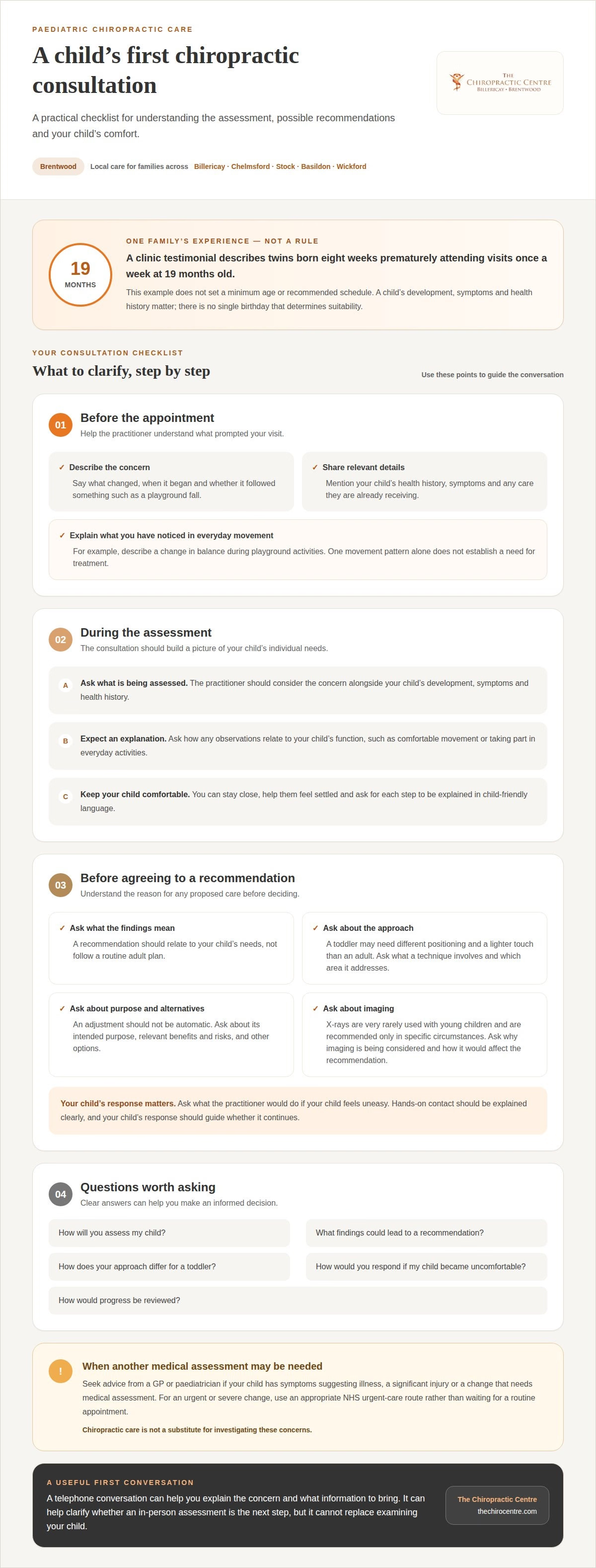
What age can a child start chiropractic care? A local clinic testimonial describes twins attending visits at 19 months, but this is an example, not a recommended minimum age. A toddler chiropractic adjustment in Brentwood should be considered in the context of the child’s individual needs, with their comfort and wellbeing at the centre.
It’s understandable to want clear answers before considering a toddler chiropractic adjustment in Brentwood. You’ll want to know what happens at a first appointment, how care for a young child differs from adult care, and how the practitioner decides whether treatment is suitable. Those details matter more than assuming every child needs the same approach.
This guide explains how to think about a child’s age, what a consultation may involve, and how gentle techniques are considered. It also covers paediatric chiropractic care for families in Brentwood, Billericay, Chelmsford, Stock, Basildon and Wickford, so you can understand the process before deciding what feels right for your child.
Key Takeaways
- There isn’t one age that suits every child; understand what to consider when exploring care for a toddler or primary-school child.
- A consultation helps build a picture of your child’s needs before treatment recommendations are made.
- Gentle techniques can be considered with your child’s comfort and wellbeing in mind.
- Learn how paediatric care and chiropractic adjustments in Brentwood may fit into your family’s next steps.
At what age can a child start chiropractic care?
There is no single birthday that determines whether chiropractic care is suitable for a child. Their development, symptoms and health history all matter.
Care for toddlers and school-age children
Chiropractic care may be considered for toddlers and primary-school children, but age alone does not determine suitability. A practitioner should consider the child’s development and reason for seeking care. A clinic testimonial describes twins, born eight weeks prematurely, attending visits once a week when they were 19 months old. This is one family’s experience, not a recommended schedule or minimum age.
For children in the UK, parents can ask how a practitioner assesses suitability and what experience they have with young patients. The key is to understand how the proposed care relates to your child’s individual concern, rather than relying on an age threshold.
Gentle adjustments for children
An adjustment for a toddler is not simply an adult technique applied with less force. The practitioner considers the child’s size, development, comfort and the area being assessed before recommending an approach. Children may need different positioning and a lighter touch than adults.
During an appointment, ask the practitioner to explain each step in child-friendly language. You can stay close, help your child feel settled and share relevant health details. An explanation of the practitioner’s experience with toddlers and how they respond when a child feels uneasy can help you decide whether the care feels appropriate.
Posture, balance and movement development
Falls, playground knocks and sports strains can also prompt parents to seek advice. Describe what happened and what movement has changed. If a fall is followed by severe pain or an urgent change in your child’s condition, seek appropriate medical attention promptly.
Consultations and treatment recommendations
A child’s first appointment should clarify the concern, review relevant health details and explain possible next steps. Any treatment recommendation should relate to your child’s needs, not follow a routine adult plan.
First consultation and X-rays
Start by describing what prompted you to seek advice, such as a change in movement after a playground fall. Share relevant health history, symptoms and any care your child is already receiving. The practitioner can then assess the concern and explain whether chiropractic care is appropriate.
X-rays are very rarely used with young children and are recommended only in specific circumstances. Ask what the examination has found, why imaging is being considered and how the result would affect the recommendation. An adjustment should not be automatic: understand its purpose, the proposed approach and any alternatives before agreeing.
A useful consultation also distinguishes a physical concern from broad claims about the nervous system. Ask how a recommendation relates to your child’s function, such as comfortable movement or participation in everyday activities.
Telephone consultation
A telephone conversation can help you explain why you are seeking care and describe your child’s symptoms before an appointment. For example, mention when a movement change began and whether it followed a fall. The conversation can clarify what information to bring and whether an in-person assessment is the next sensible step, but it cannot replace examining your child.
When to seek a GP or paediatrician
Seek advice from a GP or paediatrician if your child has symptoms that suggest illness, a significant injury or a change that needs medical assessment. Chiropractic care is not a substitute for investigating those concerns. If you are worried about an urgent or severe change, use an appropriate NHS urgent-care route rather than waiting for a routine appointment.
Questions to ask before booking
Before booking with a Brentwood chiropractor, ask how the appointment will assess your child, what findings could lead to a treatment recommendation, and how the approach differs for a toddler. You can also ask what the practitioner would do if your child becomes uncomfortable, what benefits and risks are relevant, and how progress would be reviewed. Clear answers help you make an informed decision for your child.
Cranial and gentle adjustment techniques
For a young child, the word “adjustment” doesn’t describe one fixed technique. The approach depends on the area assessed, the child’s age and comfort, and the reason for care. Parents should receive a plain-English explanation before any hands-on technique begins.
Cranial approaches focus on the head and the tissues around it. Some explanations suggest birth can place strain on a baby’s skull and spine, contributing to tension or misalignment. This does not prove that every baby has a problem or needs treatment. The practitioner should explain what they have assessed and how it relates to your child’s specific concern.
Gentle care doesn’t always involve spinal manipulation. A visit can include discussion, observation of movement and comfortable positioning rather than an adjustment. For example, a toddler who is unsettled can stay close to a parent while the practitioner explains each step. Any hands-on contact should be described clearly, and your child’s response should guide whether it continues.
Before agreeing to a technique, ask what it involves, which area it addresses and what the intended purpose is. A useful explanation distinguishes a light-touch approach from a joint adjustment, rather than treating both as the same. Parents can share relevant health details and raise concerns about a previous injury or discomfort.
Safety depends on careful assessment and an approach suited to the child, not simply on choosing a technique described as gentle. The practitioner should explain relevant risks, listen to your questions and stop if your child becomes distressed. If the assessment suggests the concern needs medical attention, that should take priority over hands-on care.
For toddlers and older children, the aim is a considered, age-appropriate process. Understand the plan before treatment starts, including what will happen, how your child’s comfort will be monitored and how the practitioner will review their response. Clear explanations help you make an informed choice without assuming every child needs an adjustment.
Chiropractic services in Brentwood
For families in Brentwood, a useful starting point is to identify the concern and decide what information will help explain it. You may be thinking about a change after a playground fall, a sports strain or difficulty with a familiar movement. Note when you first noticed the change and what your child was doing. This simple timeline can make a local conversation more focused.
Families may also travel from Billericay, Chelmsford, Stock, Basildon or Wickford for care in the area. Consider practical needs, such as how your child manages journeys and what helps them feel settled in an unfamiliar setting. Bringing a favourite comfort item, for example, may help a toddler adjust to a new environment.
As you consider local care, look for a clear explanation of how your child’s concern will be approached. You should be able to describe what you have noticed and understand how the proposed assessment relates to it. A spinal adjustment is not the only possible part of a visit; the discussion may begin with listening and observation.
It can also help to consider how your child communicates discomfort. A toddler may turn away, become restless or ask to pause, while an older child may describe where movement feels difficult. Sharing these cues can keep the conversation focused on your child rather than a standard approach.
Brentwood families can use an initial discussion to understand the purpose of an assessment and what decisions may follow. If you want to talk through a specific concern, a local assessment can help connect your observations with an informed next step for your child.
The Chiropractic Centre: Chiropractic Adjustments
The Chiropractic Centre provides Paediatric Care and Chiropractic Adjustments for families considering support for a child’s movement or comfort. A New Patient Consultation gives you the opportunity to discuss your child’s needs and understand possible next steps. Chiropractic care is a hands-on, non-drug option for musculoskeletal concerns, which may suit families looking for an approach that does not rely on medication.
If you’re considering an adjustment for your toddler, use the consultation to discuss the approach and whether it suits your child’s needs. Massage Therapy is also available as a separate service when appropriate to the concern.
Make a considered next step for your child
Choosing care for your child is not about following a set routine. It’s about finding an approach that takes their comfort, development and individual needs seriously. If you’re considering a toddler chiropractic adjustment in Brentwood, discuss what you have noticed and what would help you make an informed decision.
The Chiropractic Centre provides Paediatric Care and New Patient Consultations, giving families a place to discuss a child’s needs. Massage Therapy is also available as a separate service. The right next step depends on the concern you want to address and your discussion with the practitioner.
You can take time to raise questions and decide what feels appropriate for your family. For a personal conversation about your child, contact The Chiropractic Centre. A thoughtful first step can help you move forward with greater clarity and confidence.
Frequently Asked Questions
How does paediatric chiropractic care work?
Paediatric chiropractic care starts with understanding the child’s concern and whether hands-on care is suitable. The practitioner discusses relevant health information, assesses the issue and explains any proposed approach. For example, if your child struggles with a particular movement, describe when it happens and what makes it easier or harder. That context helps keep the discussion focused on your child’s needs.
Is chiropractic care safe for kids?
Safety depends on the child’s needs, the proposed technique and the practitioner’s assessment, so it cannot be assumed from the treatment name alone. Ask for a clear explanation of what will happen, why it is being considered and what alternatives are available. You should have time to discuss your concerns and make an informed choice. Care should not replace medical assessment when your child is unwell or injured.
What conditions can paediatric chiropractic help with?
Paediatric chiropractic care may be considered for some musculoskeletal concerns, such as discomfort or restricted movement, after an individual assessment. It should not be presented as a way to treat every childhood condition or improve general health without a specific reason. For instance, if your child avoids turning their head after a knock, explain the change and seek an appropriate assessment before deciding what care may help.
Why should babies be checked?
Babies do not automatically need chiropractic checks simply because they are young. Parents may seek an assessment for a specific concern about movement or comfort, but the check should have a clear purpose. For example, explain what you have noticed during feeding or everyday handling. If your baby seems unwell or has concerning symptoms, seek medical advice rather than treating a chiropractic visit as a substitute.
Are chiropractic adjustments safe for toddlers?
An adjustment should only be considered after the practitioner has assessed whether it suits your toddler’s needs. Before agreeing, ask which area would be treated, what the technique involves and how your child’s comfort will guide the session. You can also ask how the practitioner will respond if your toddler resists or becomes upset. Your understanding and consent are important parts of deciding on care.
What are the risks and side effects of chiropractic treatment for toddlers?
Risks depend on your child’s health, the concern being assessed and the proposed technique, so ask for an explanation specific to your toddler before treatment. Find out what reactions to look for afterwards, what would prompt you to seek medical advice and how to raise concerns after the appointment. If symptoms began after an injury or worsen, prioritise appropriate medical assessment rather than assuming an adjustment is the answer.