
Around four in five people experience lower-back pain at some point in their lives. If you’re trying to understand the cause of your recurring back pain, possible contributors include muscle strain, spinal problems and everyday factors such as prolonged sitting or inactivity. The reason it returns may not be the same for everyone.
Recurring back pain can be frustrating: it settles, then flares again and disrupts your routine. Understanding what triggers it, how it feels and what else is happening can help you make sense of the pattern.
Here, you’ll learn how common persistent back pain is, which spinal and other factors may contribute, and when to seek medical care. You’ll also find out which warning signs need urgent attention, so you can choose an informed next step towards feeling and moving better.
Key Takeaways
- Recurring back pain is common, and symptoms such as pain travelling down a leg can offer clues about what may be contributing.
- Spinal changes, muscle strain and movement restrictions can play a part, but scan findings do not always explain pain.
- Notice how sitting, activity, posture and stress relate to flare-ups; seek medical advice for persistent pain or concerning symptoms.
- The NHS advises contacting 111 if back pain comes with feverishness, chills, shivering or feeling generally unwell. A New Patient Consultation at The Chiropractic Centre offers a next step for discussing recurring symptoms.
When to seek medical care
Recurring pain deserves attention when it keeps interrupting daily movement or fails to settle. The symptoms you notice can help distinguish routine advice from the need for urgent medical care.
Help for recurring back pain
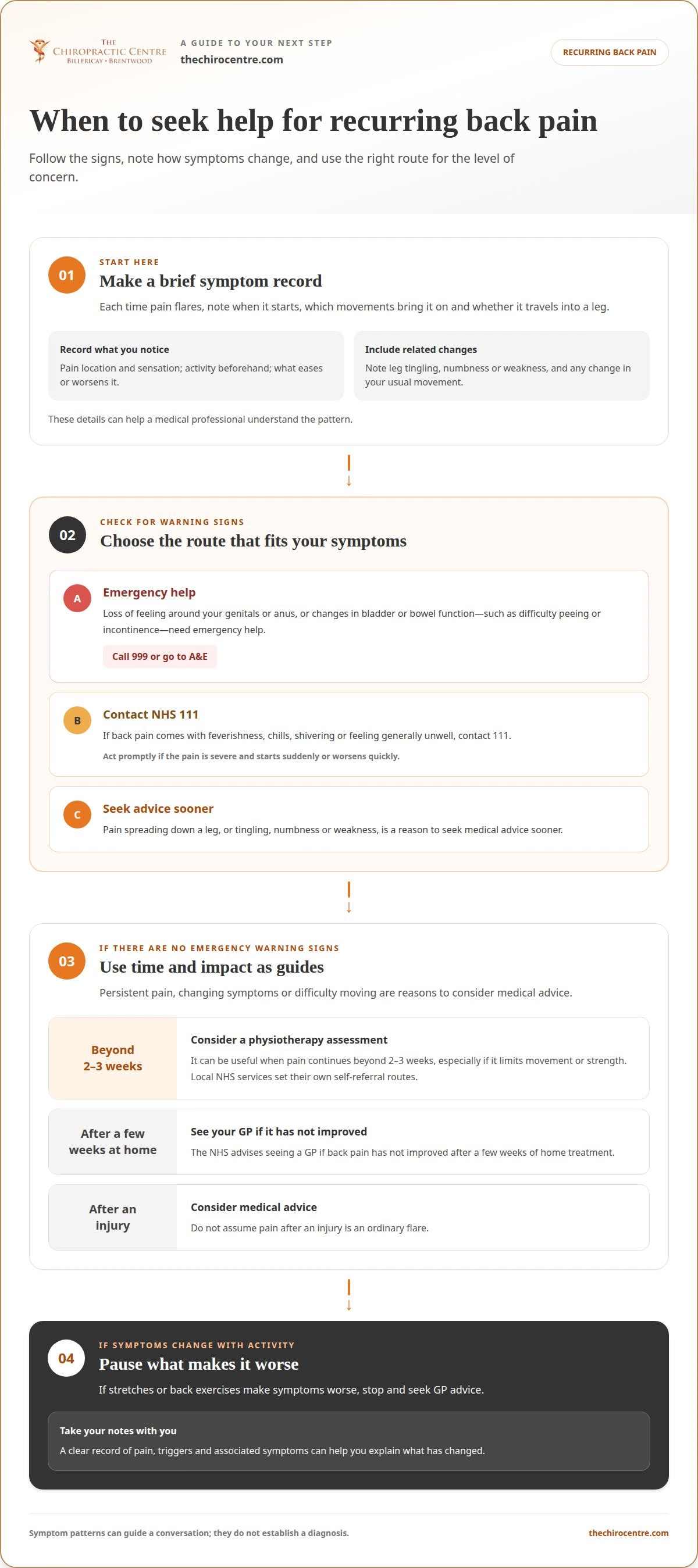
Recurring back pain eases and then returns, affecting your usual activities. Note when each flare starts, which movements bring it on, and whether symptoms travel into a leg. These details help a medical professional understand the pattern. The National Health Service advises seeing a GP if back pain hasn’t improved after a few weeks of home treatment, and dedicated family practices like Heatley Medical & Skin Care Centre similarly highlight the importance of timely medical evaluation for persistent symptoms.
Medical advice and physiotherapy
Medical advice can help assess persistent pain, changing symptoms and suitable treatment. NHS routes include GP assessment and physiotherapy; local NHS services set their own self-referral routes. In addition, community healthcare services such as Merali Pharmacy & Clinic can provide support with pain relief and initial health consultations. A physiotherapy assessment can be useful when pain continues beyond 2-3 weeks, especially if it limits movement or strength. Seek advice sooner if pain spreads down a leg, or you notice tingling, numbness or weakness.
Act promptly when back pain is severe and starts suddenly or worsens quickly. Contact the National Health Service on 111 if pain comes with feverishness, chills, shivering or feeling generally unwell. The National Health Service advises calling 999 or going to A&E if you lose feeling around your genitals or anus. Changes in bladder or bowel function, such as difficulty peeing or incontinence, also require emergency help. These symptoms can signal pressure affecting nerves and need urgent assessment.
After an injury, consider seeking medical advice rather than assuming the pain is an ordinary flare. If stretches or back exercises make symptoms worse, stop and seek GP advice. Keeping a clear record of pain, triggers and associated symptoms can help you explain what has changed.
How common is chronic back pain?
Lower-back pain is common: around four in five people experience it at some point in life. This figure covers episodes of back pain, not chronic pain alone. Recurring symptoms vary between people, so their location, pattern and effect on movement offer useful clues.
Common symptoms include an ache across the lower back, stiffness, muscle tightness or spasms. Pain may stay in one area or worsen with bending, lifting or prolonged sitting. Stress can also affect how pain feels and how it interferes with sleep or daily activities. These patterns are useful to describe, but they don’t establish a diagnosis.
Pain that travels from the back into the buttock and down a leg may suggest sciatica. Sciatica can result from compression or inflammation of nerves at the base of the spine. Nerve-related symptoms may include tingling, numbness or weakness in the leg or foot. Symptoms alone can’t show exactly what is affecting a nerve, so note where they travel and whether they change.
Symptoms can suggest a possible cause, but no single sensation proves it. For example, leg pain with tingling may fit nerve irritation, while back stiffness after lifting may accompany muscle strain. Ankylosing spondylitis is an inflammatory disease that can cause back pain. Persistent stiffness or other changing symptoms deserve medical assessment.
To track possible triggers, keep a brief daily record of pain location, sensation and activity. Note whether symptoms followed sitting, lifting, exercise or poor sleep, and record any leg tingling or numbness. Add what eased or worsened the pain, such as walking or bending. This record gives a healthcare professional clearer details to consider when assessing your symptoms and discussing suitable therapy.
Mechanical and structural spinal problems
Spinal structures support movement, but changes to discs, joints or nerves may contribute to recurring pain. Their presence alone doesn’t explain every flare.
Spinal anatomy and structures
The spine contains 33 vertebrae, with cartilage discs between them acting as shock absorbers. These discs also allow the back to bend and move. Joints, muscles and nearby nerves each play a part in everyday movement. A strain during lifting, for example, may cause pain without a major structural problem. A bulging or ruptured disc may also appear without causing back pain.
Arthritis and spinal stenosis
Arthritis affects joints, while spinal stenosis means narrowing around the spinal canal or nerve pathways. These changes may be relevant when back pain occurs alongside stiffness, restricted movement or nerve symptoms. The location and pattern matter: pain during bending differs from pain travelling into a leg. A healthcare professional considers these factors alongside your history, rather than treating a label as the whole explanation.
Chronic spinal conditions
Chronic back pain lasts longer than 12 weeks. A slipped disc, sciatica or ankylosing spondylitis can be associated with back pain, but each involves different structures or processes. Sciatica relates to irritation or compression of nerves at the base of the spine. Ankylosing spondylitis is a long-term inflammatory condition affecting the spine. Identifying the pattern helps distinguish persistent symptoms from a temporary response to activity.
Scans and spinal changes
Scans can show changes in spinal discs, joints or vertebrae, but some findings are common and don’t directly explain pain. For example, a disc bulge on an image may not be the source of someone’s symptoms. Clinicians compare scan findings with your symptoms, movement and medical history. This helps avoid assuming every visible change is the cause, while identifying structural problems that fit the overall picture.
Unaddressed causes of recurring back pain
Common causes include muscle strain, inactivity, prolonged sitting or standing, and lifting heavy or awkward objects. Work stress, smoking, depression, posture and sleep habits can also affect lower-back discomfort. Often, several everyday factors combine rather than one obvious cause explaining every flare.
A flare can follow a sudden increase in activity, such as lifting a heavy box after a quieter spell. Returning to normal tasks too quickly after an injury may bring symptoms back. Too much rest can reduce strength and make movement harder, while gentle walking helps you stay active. If exercises worsen your pain, stop and seek medical advice.
Long hours in one position can make your back feel more sensitive when you move again. Change your sitting position at least every half hour, and notice whether discomfort follows desk work, a long drive or prolonged standing. Weakness in your core, hips or legs can also leave your back carrying more load during tasks such as climbing stairs or carrying shopping.
Restricted hip or upper-back movement may shift extra pressure to the lower back. Limited hip movement, for example, can change how you bend to pick something up. Arthritis or another spinal condition may contribute, but recurring pain doesn’t automatically mean a serious problem. Your symptoms, recent activity and daily habits all provide useful context.
You might tell yourself, “I’m focused on understanding the cause of my recurring back pain,” then record what you were doing before each flare. Note sleep, activity and the movements that ease or aggravate symptoms. At an appointment, you could explain, “Understanding the cause of my recurring back pain matters to me,” and share what your notes reveal. Regular movement breaks and a gradual return to exercise can help you notice what your back tolerates. If discomfort affects daily movement, take a step towards understanding your back pain.
The Chiropractic Centre: New Patient Consultation
The Chiropractic Centre offers a New Patient Consultation when recurring back pain affects your everyday movement. You can discuss when symptoms began, what seems to trigger them and how they affect your routine. Sharing details such as pain location, stiffness or discomfort during lifting helps make the conversation specific to your needs.
Depending on your circumstances, Chiropractic Adjustments or Massage Therapy may form part of your care. These hands-on options focus on movement and muscle tension; they don’t replace urgent medical attention when warning signs are present. If symptoms are severe, changing or worrying, seek appropriate medical advice.
For a personal conversation about recurring back discomfort, contact The Chiropractic Centre or visit thechirocentre.com.
Take your next step towards easier movement
Understanding the cause of recurring back pain starts with noticing how it affects your daily life, not just where it hurts. Bring those observations into a conversation about your goals, concerns and the activities you want to return to. A thoughtful next step can help you move from managing each flare-up to making informed choices about your wellbeing.
The Chiropractic Centre offers a New Patient Consultation to discuss your concerns, alongside Massage Therapy. Paediatric Care is also available for children. These services give you a chance to talk through what matters and consider suitable support in a calm, personal setting.
If you’re ready to discuss recurring back discomfort, contact The Chiropractic Centre. Taking that first step can help you feel more informed and supported as you work towards comfortable movement.
Frequently Asked Questions
Can pregnancy cause back pain?
Yes, back discomfort can occur during pregnancy as posture and the way your body carries its weight change. For example, standing for a long time may feel different as your centre of balance shifts. Note which activities aggravate symptoms and mention them to your midwife or GP, particularly if pain is severe, persistent or accompanied by other new symptoms.
What About Scans and Diagnoses?
A scan can identify structural changes, but the image alone doesn’t determine what is causing your pain. A clinician considers its findings alongside your symptom history and how your back moves. If you receive a scan report, note any terms you don’t understand and ask how they relate to your symptoms and everyday function, rather than assuming every finding needs treatment.
What are the types of back pain?
Back pain is often described by how long it lasts: acute pain usually lasts from a few days to a few weeks, subacute pain lasts 4 to 12 weeks, and chronic pain lasts longer than 12 weeks. These labels describe duration, not the cause or severity. A short-lived episode can still be intense, while persistent pain may fluctuate in strength.
When Should You Take Action?
Take action when pain starts limiting activities that matter to you, such as getting dressed, preparing food or sleeping comfortably. Write down what changed before the flare, including a new task, altered routine or return to exercise. This gives you a clearer basis for deciding whether home care is helping or whether you need medical advice.
When should this symptom be treated by a healthcare provider?
Arrange healthcare advice if your back pain keeps returning, affects daily tasks or isn’t settling with home care. Contact a GP if symptoms are changing or you’re concerned about their effect on your movement. Mention any recent injury, other health conditions and treatments you’ve tried, so the discussion can focus on your circumstances and suitable next steps.
What are the red-flag symptoms of back pain that need urgent medical attention?
Seek urgent help for back pain with new bladder or bowel problems, marked weakness, or loss of feeling around the genitals or anus. The National Health Service advises calling 999 or going to A&E for loss of feeling around the genitals or anus. Contact 111 if you feel feverish, shivery or generally unwell with back pain. Sudden, severe or rapidly worsening pain also needs urgent medical attention.