

What if the mild muscle tenderness you feel after leaving the clinic isn’t a sign that something is wrong, but rather the first evidence that your body is finally beginning to heal? It’s a common misconception that the path to wellness is always instantaneous. In reality, your nervous system often needs time to process the structural changes made during a session. You might be wondering what happens after your first chiropractic adjustment Essex, especially if you’re feeling a bit more tired or stiff than you anticipated. We understand that this uncertainty can be unsettling when you’re simply looking for relief from persistent pain.
This clinical recovery guide is designed to provide total clarity on your post-treatment journey. You’ll discover exactly what to expect in the first 48 hours, how to manage common sensations like “flu-like” fatigue, and the best aftercare steps to ensure your recovery is both smooth and effective. We’ll outline the difference between normal healing responses and abnormal symptoms, whilst providing a clear roadmap for your ongoing spinal health. By the end of this article, you’ll have the confidence to navigate your recovery with ease, knowing your body is moving from a state of chronic compensation to active, vibrant health.
Key Takeaways
- Understand that mild soreness or “flu-like” fatigue is a natural inflammatory response as your nervous system begins to process the structural realignment.
- Discover exactly what happens after your first chiropractic adjustment Essex and how your body shifts from a stressed state into a restorative healing mode.
- Identify the critical aftercare steps, such as prioritising hydration and gentle movement, that help flush out metabolic waste and support your recovery.
- Recognise why the second visit is the most important milestone for assessing how your spine is adapting and holding its new, healthier position.
- Learn how a decade of clinical expertise in Billericay and Brentwood provides the foundation for a safe, effective, and long-term wellness journey.
Understanding Immediate Post-Adjustment Sensations
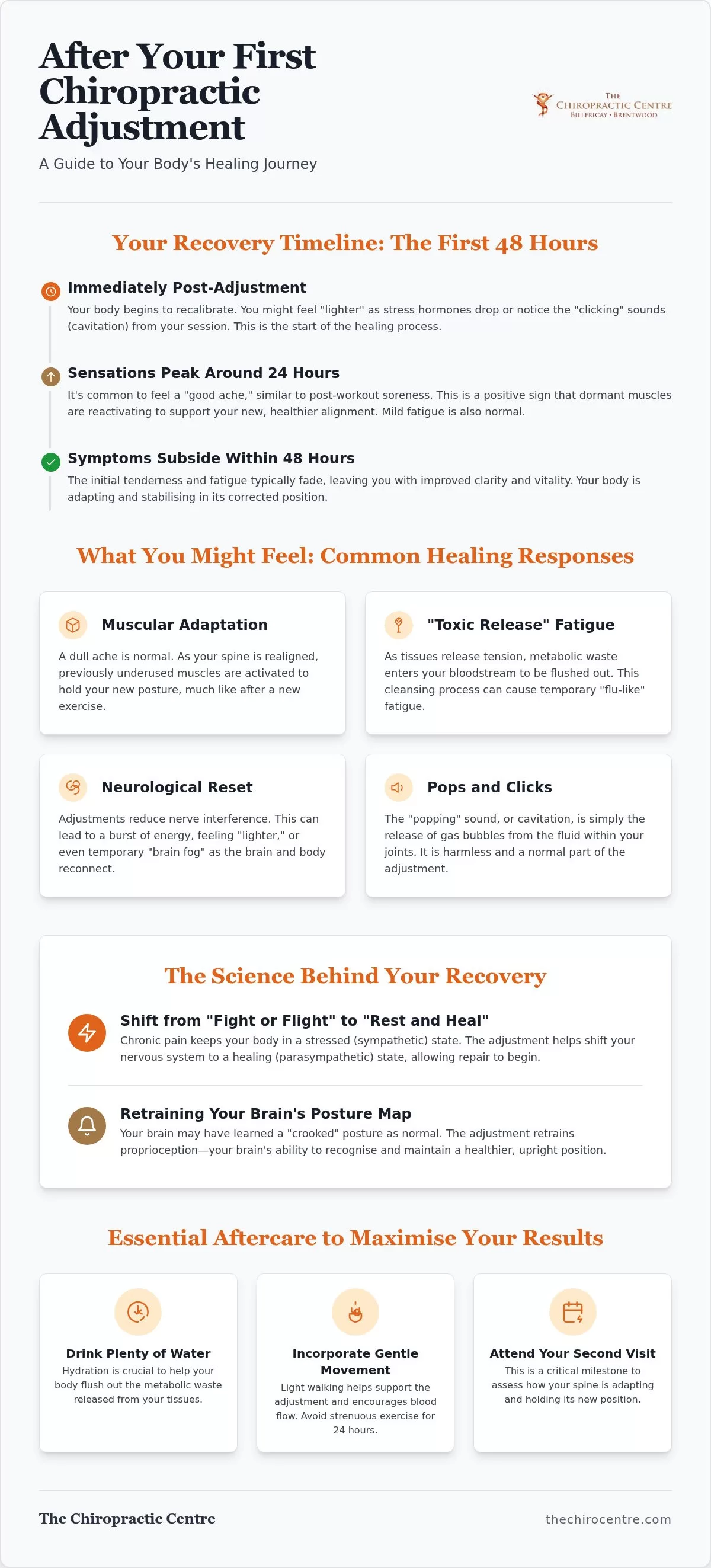
After your session, your body begins a complex process of recalibration. It’s perfectly normal to wonder what happens after your first chiropractic adjustment Essex, as the physical sensations can be quite distinct during the initial 48 hours. Think of your spine as a structural foundation that has been shifted back into its optimal alignment; this realignment often triggers a natural inflammatory response. It isn’t a sign of injury; it’s a sign of activation. Your body is simply learning how to function in a more balanced, efficient way.
You might have heard “clicking” or “popping” sounds during your treatment. These are simply small pockets of gas being released from the joint capsules, a process known as cavitation. Beyond the sounds, some patients experience a “toxic release”. This occurs when metabolic waste, previously trapped in tight, restricted tissues, is released into the bloodstream. Understanding chiropractic care involves recognising that this internal cleansing can lead to mild, temporary fatigue as your system processes these changes and returns to a state of equilibrium.
Is it Normal to Feel Sore After Your First Visit?
Many people describe the sensation after their first visit as a “good ache”, very similar to how you might feel after trying a new gym class or a challenging Pilates session. When your spine is misaligned, certain muscles become overactive whilst others go dormant. Once we restore balance, those dormant muscles are suddenly called back into action to support your posture. It’s hard work for them. Typically, these sensations peak around 24 hours post-treatment and almost always subside within 48 hours.
Understanding what happens after your first chiropractic adjustment Essex helps you distinguish between adaptation and injury. If you feel a dull, muscular tightness, your body is simply adapting to its new configuration. This is fundamentally different from the sharp, acute pain that likely brought you to our clinic in the first place. This period of mild tenderness is actually a positive indicator that your musculoskeletal system is responding to the corrective input.
The Emotional and Neurological “Reset”
The impact of an adjustment isn’t just physical; it’s deeply neurological. As we reduce interference in your nervous system, there is often a significant drop in cortisol, the body’s primary stress hormone. This shift can leave you feeling remarkably “lighter” or even give you a sudden burst of energy as your nervous system stabilises. Conversely, a significant adjustment in the upper neck (cervical spine) can sometimes result in temporary “brain fog” as the brain and body re-establish their communication lines. This is a brief phase of stabilisation before you reach a state of improved clarity and vitality.
The Biological Response to Spinal Realignment
When considering what happens after your first chiropractic adjustment Essex, it’s vital to look beyond the surface level of muscle tension. The most significant changes occur within your nervous system. For many patients, chronic pain keeps the body in a “sympathetic” state; this is the well known fight or flight response. A precision adjustment helps shift the body into a “parasympathetic” state, which is the essential mode for healing, rest, and digestion. This transition is a deeper part of what to expect after a chiropractic adjustment, as your internal systems finally receive the signal that it’s safe to begin the repair process.
By restoring proper alignment, we reduce the mechanical interference on your central nervous system. This allows for clearer communication between your brain and your body. This process involves proprioception, which is your brain’s ability to recognise where your limbs and joints are in space. After years of poor posture, your brain might view a crooked spine as “normal”. The first adjustment begins the vital work of retraining your brain to recognise and maintain a healthier, more upright position. Whilst the bones are moved during the session, the surrounding soft tissues, including ligaments and tendons, require time to “set” and stabilise in this new configuration.
Nerve Signalling and Pain Gate Theory
The adjustment works partly through the “Pain Gate” theory. By stimulating specific mechanoreceptors in the joints, we can actually dampen the pain signals that are being sent to your brain. This neurological “noise” reduction is often why patients feel an immediate sense of relief. Furthermore, the physical realignment encourages the restoration of blood flow to areas that were previously compressed or restricted. A subluxation is a specific spinal misalignment that creates mechanical interference, hindering the optimal transmission of nerve impulses throughout your body. Once this interference is reduced, your body’s innate healing capacity can function without obstruction.
Muscle Memory and Structural Compensation
Your muscles have a long memory. If you’ve spent years slouching at a desk in Brentwood or Billericay, your muscles have shortened and tightened to accommodate that habit. Because of this, your body might try to “pull” the spine back into its old, crooked habit shortly after your session. This is exactly what happens after your first chiropractic adjustment Essex as your structural system begins to negotiate between old patterns and new alignment. To support this muscular transition and prevent the “pull back” effect, many patients find that incorporating clinical massage Billericay is incredibly beneficial. If you’re unsure about your current spinal health, a Free Spinal Health Check is a great way to assess your needs before starting a full recovery programme.
Essential Aftercare: Maximising Your Results at Home
The work done in our clinic is only the beginning of your recovery. To truly understand what happens after your first chiropractic adjustment Essex, you must recognise that your body remains in a highly adaptive state for several hours following your treatment. Proper aftercare is the bridge between a temporary structural shift and a lasting wellness change. It ensures that the corrections made during your session have the best possible chance to “set” and stabilise.
One of the most vital steps you can take is prioritising hydration. As we have explored, an adjustment can trigger a release of metabolic waste from previously restricted tissues. Drinking plenty of water helps your lymphatic system flush these substances out of your system efficiently. Without adequate fluid, you might experience more pronounced potential side effects of chiropractic adjustments, such as mild headaches or the “flu-like” fatigue mentioned earlier. Aim to sip water consistently throughout the day rather than drinking large amounts all at once.
Movement is equally crucial for a smooth recovery. Whilst you might feel like lounging on the sofa, total inactivity can actually cause your muscles to stiffen around the new alignment. A gentle 10-minute walk on flat ground is far more beneficial. It keeps the blood circulating and encourages your nervous system to accept the new posture. However, you must strictly avoid heavy lifting or vigorous exercise. Your spinal joints are more mobile than usual immediately after a session. They need time to gain stability before being subjected to heavy loads or high-impact strain.
The First 24 Hours: A Practical Protocol
Following a structured routine can significantly reduce post-treatment discomfort and support your long-term progress. We recommend these three immediate steps:
- Step 1: Drink at least 500ml of water immediately after leaving the centre to support the metabolic flush.
- Step 2: Avoid high-impact exercise, heavy lifting, or strenuous gardening in Brentwood or Billericay for at least 24 hours.
- Step 3: Use an ice pack for 15 minutes if you feel “hot” or inflammatory soreness in your lower back. Avoid heat during this initial window, as it can increase swelling in the newly adjusted joints.
Sleeping Positions for Spinal Support
Your recovery continues whilst you sleep, provided your spine remains in a neutral, supported position. If you are a side sleeper, place a pillow between your knees to keep your hips level and reduce torque on the lower spine. Back sleepers should place a pillow under their knees to maintain the natural curve of the lumbar region. We strongly advise against stomach sleeping. This position forces the cervical spine into a strained, rotated state for hours, which is particularly detrimental after a neck adjustment. If you are feeling uncertain about how your body will react overnight, reading about what does a chiropractic adjustment feel like can offer extra reassurance before you settle down.
Planning Your Long-Term Recovery Pathway in Essex
Your first session is a significant milestone, but it’s essential to view it as an introduction rather than a conclusion. Many patients in Basildon or Wickford arrive with chronic issues that have developed over several years; these structural habits won’t vanish in a single 20-minute appointment. When considering what happens after your first chiropractic adjustment Essex, the most important factor is how your body integrates the change over the coming days. Your second visit is often the most critical stage of your initial care. It allows your chiropractor to assess how well your spine “held” the alignment and how your nervous system responded to the corrective input.
Healing is a cumulative process. Each subsequent adjustment builds upon the progress of the previous one, gradually retraining your musculoskeletal system to adopt a healthier state. If you think of it like orthodontics, the first adjustment is like putting on the braces; it’s the consistent, gentle pressure over time that creates the permanent change. This structured approach ensures that we aren’t just masking symptoms but are actively rebuilding your spinal integrity. Every session moves you further away from pain and closer to a state of internal vitality.
The Three Phases of Chiropractic Care
To help you visualise the journey ahead, we categorise your progress into three distinct phases. This ensures your expectations align with the biological reality of healing:
- Initial Relief: This phase is focussed on reducing acute pain, lowering inflammation, and calming the nervous system after your first session.
- Corrective Care: Once the pain has subsided, we address the root cause of the dysfunction to stabilise the spine and strengthen the supporting ligaments.
- Wellness/Maintenance: This is the proactive stage where regular check-ups prevent future relapses and optimise your long-term health.
Why Consistency Matters for Essex Patients
It’s tempting to stop care as soon as you feel “100% better”. However, understanding what happens after your first chiropractic adjustment Essex involves recognising that the absence of pain doesn’t always mean the underlying structural issue is fully resolved. Stopping too early often leads to a quick return of the original symptoms because the muscle memory hasn’t yet been reset. Your new patient chiropractor consultation Essex is designed to create a bespoke schedule tailored specifically to your body’s needs. By keeping your follow-up appointments, you ensure that the progress you’ve made becomes a permanent foundation for your health. If you are ready to take the next step in your recovery, booking a Free Spinal Health Check is an excellent way to gain clarity on your long-term needs.
Expert Support at The Chiropractic Centre
At The Chiropractic Centre, we believe that clinical expertise should always be paired with genuine, empathetic care. Our team, led by Grayson and Julie, consists of dedicated practitioners who have spent over a decade serving the communities of Billericay, Brentwood, and Chelmsford. We understand that your health journey is personal, and our role is to act as your trusted partners. If you have any lingering questions about what happens after your first chiropractic adjustment Essex, or if you simply need reassurance during your initial 48-hour recovery window, our doors are always open for a conversation. We’re here to listen and to provide the professional guidance you need to feel completely at ease.
Our approach is fundamentally holistic, looking beyond isolated symptoms to address your body as a complete, integrated system. To support your recovery, we often combine traditional adjustments with specialised services like dry needling. This can help release deep-seated muscular tension that might otherwise pull your spine back into its old, compensative patterns. This multidisciplinary strategy ensures that every patient receives a plan as unique as their own physiology. We aren’t just treating a back; we’re supporting a person’s return to a more active, vibrant lifestyle.
Tailored Care for the Whole Family
We take great pride in being a community-focused clinic that caters to every generation. From our specialised paediatric wing, where we use incredibly gentle techniques for infants and children, to our dedicated work in scoliosis management Essex, our goal is to provide non-surgical, drug-free relief for the whole family. We’ve seen first-hand how early intervention can set the stage for a lifetime of vibrant health. We remain committed to maintaining the highest standards of clinical excellence for all our Essex neighbours, ensuring that everyone from toddlers to seniors can benefit from precision spinal care.
Book Your Next Step in Billericay
If you haven’t yet started your journey toward better spinal health, we invite you to begin with a Free Spinal Health Check. This low-pressure consultation allows us to assess your posture and nerve function without any immediate commitment. Our Billericay centre is conveniently located for patients travelling from Basildon, Wickford, or Stock, offering a modern and welcoming environment for your recovery. We want you to feel confident and empowered as you move forward. Remember, your health is our favourite priority, and we’re here to ensure every step of your recovery is as effective and comfortable as possible.
Begin Your Journey Toward Lasting Vitality
Your path to optimal health is a process of transformation rather than a single event. By understanding what happens after your first chiropractic adjustment Essex, you can approach your recovery with total confidence and clarity. It’s essential to remember that initial sensations like mild muscle tenderness or fatigue are simply indicators that your nervous system is recalibrating and shifting into a restorative state. Prioritising simple aftercare steps, such as staying hydrated and choosing gentle movement, ensures that the structural changes made during your session are given the best chance to stabilise.
With over 10 years of experience serving our local community, our highly rated clinical team, led by Grayson, is here to support you through every phase of your healing. We believe in looking beyond immediate symptoms to address your wellbeing as a whole. If you’re still feeling uncertain about the process, we invite you to experience our approach first-hand through a Free Spinal Health Check. Book your New Patient Consultation at our Essex clinic today and start your roadmap to long-term relief. We’re excited to partner with you as you rediscover the possibilities of a life lived without the limitations of pain.
Frequently Asked Questions
Is it normal to feel a bit dizzy after my first adjustment?
Yes, mild lightheadedness is a common response as your nervous system recalibrates. This sensation typically occurs because the adjustment improves nerve signalling and blood flow, especially after cervical work. It usually passes within a few minutes. We recommend sitting in our reception area for five minutes before leaving to ensure you feel steady and grounded before continuing your day.
Can I go to the gym immediately after my chiropractic session in Essex?
No, you should avoid vigorous exercise for at least 24 hours after your session. Your spinal joints are more mobile and less stable immediately following an adjustment. High-impact movements or heavy lifting can interfere with the realignment process. Instead, choose a gentle 10-minute walk to keep your circulation moving without straining the newly adjusted areas of your spine.
What should I do if my pain feels worse after the first 24 hours?
You should contact our clinic if your discomfort significantly increases or changes in nature. Whilst mild soreness is a standard part of what happens after your first chiropractic adjustment Essex, persistent or sharp pain may indicate that your body is struggling to adapt. Our team can provide specific advice or bring your follow-up appointment forward to ensure your recovery stays on track.
How much water should I drink after a spinal adjustment?
We recommend drinking at least 500ml of water immediately after your session and aiming for 2 litres throughout the day. Hydration is essential for flushing out the metabolic waste released from your tissues during the realignment. Proper fluid intake also keeps your spinal discs hydrated and resilient, which supports the long-term success and stability of your bespoke treatment plan.
Do I really need to come back if I feel great after one session?
Yes, consistency is vital for creating lasting structural change. Feeling “great” often means the initial inflammation has subsided, but the underlying muscle memory still needs retraining to prevent a relapse. The first visit is just the introduction; subsequent appointments focus on stabilising the spine so your body doesn’t pull itself back into its old, painful habits once you leave the clinic.
Can I take painkillers like ibuprofen after my adjustment?
You should ideally use an ice pack for 15 minutes to manage localised inflammation before reaching for medication. Whilst we don’t prescribe medication, we generally suggest letting your body’s natural healing process take the lead. If you feel painkillers are necessary, please consult your GP or speak with our clinical team to ensure they won’t mask symptoms we need to monitor.
What happens if I hear a loud “crack” when I stretch at home later?
Hearing a “crack” or “pop” during a gentle stretch is usually just a harmless release of gas from the joint capsule. It is the same process that occurs during a clinical adjustment. However, you should never force your joints to click or “self-adjust” at home. If the sound is accompanied by sharp pain or swelling, please let us know immediately.
Is it safe to drive home to Chelmsford or Basildon straight after treatment?
Yes, most patients find it perfectly safe to drive home immediately after their appointment. If you feel slightly lightheaded or unusually tired, we advise waiting ten minutes in our Billericay centre until you feel fully alert. Ensuring you are hydrated before starting your journey back to Chelmsford or Basildon will help you stay focused and comfortable behind the wheel.