
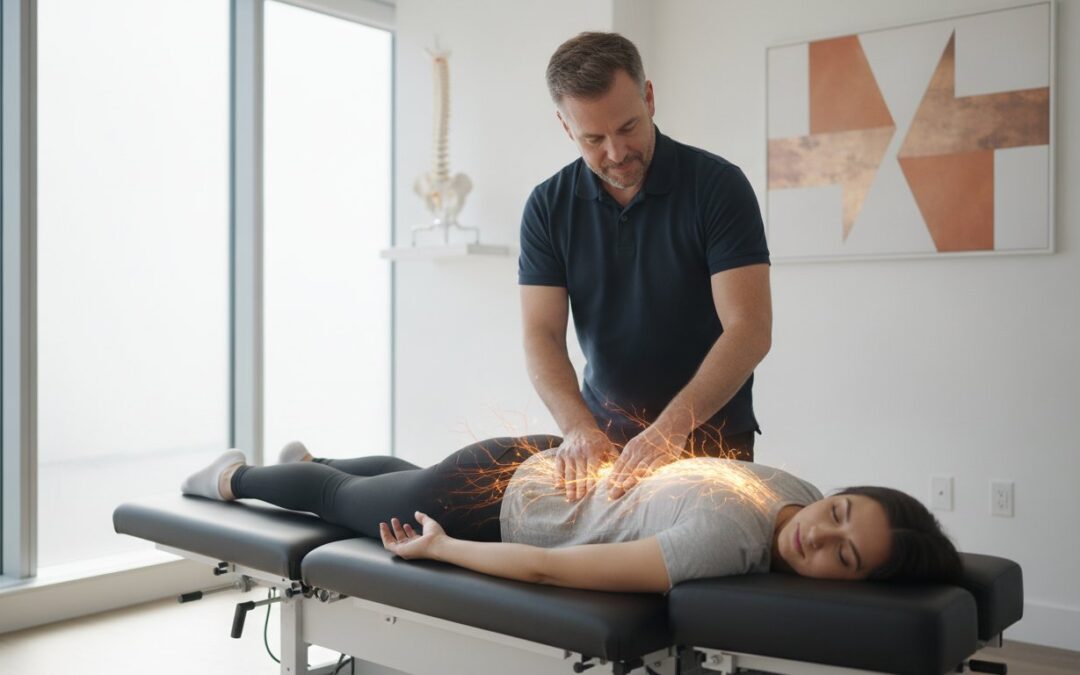
What if that familiar ‘pop’ during a treatment isn’t actually your bones cracking, but a sophisticated neurological reset for your entire body? Many people living with recurring musculoskeletal discomfort feel a mix of curiosity and hesitation when considering manual therapy for the first time. It’s completely natural to wonder exactly how chiropractic adjustments work and whether the process is as intense as it sometimes sounds. At its core, this clinical practice is less about “cracking backs” and more about restoring the vital communication between your brain and your nervous system through precise, gentle movements.
We recognise that the mechanics of spinal health can feel complex, especially when you’re simply looking for lasting relief whilst managing a busy life. In this guide, we’ll demystify the science behind spinal alignment, explaining the mechanical shifts and neurological signals that occur during a session. You’ll discover how these clinical interventions move beyond temporary fixes to foster long-term vitality and internal balance. We’ll also address common concerns regarding safety and the ‘popping’ sound, ensuring you feel confident and informed about your journey toward better health.
Key Takeaways
- Understand the clinical definition of a high-velocity, low-amplitude thrust and why it is a controlled, precise movement rather than a simple ‘crack’.
- Learn exactly how chiropractic adjustments work to clear ‘noise’ in your nervous system and restore seamless communication between your brain and body.
- Discover the difference between traditional manual methods and gentle, instrument-assisted techniques designed for targeted, patient-centred care.
- Explore why addressing soft tissue through complementary therapies is essential to prevent muscles from pulling your spine back out of alignment.
- Recognise the importance of a comprehensive New Patient Consultation to ensure your recovery plan is evidence-based and tailored to your specific health goals.
What is a Chiropractic Adjustment? Defining Spinal Manipulation
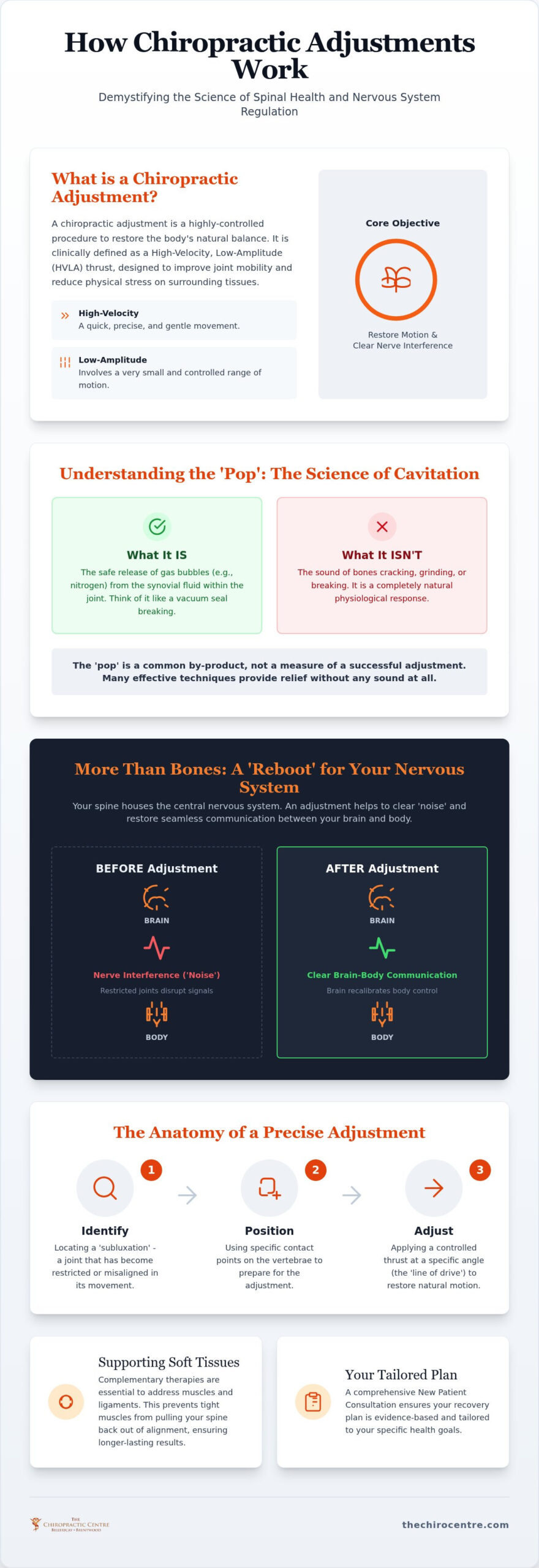
A chiropractic adjustment is far more than a simple physical movement; it’s a clinical intervention designed to restore the body’s natural state of balance. In professional settings, this is often referred to as a high-velocity, low-amplitude (HVLA) thrust. This term describes a movement that’s quick (high-velocity) but involves a very small range of motion (low-amplitude). By applying this controlled force to a specific joint, a chiropractor can improve mobility whilst reducing the physical stress on the surrounding tissues. Understanding how chiropractic adjustments work starts with the clinical definition of this procedure as a targeted way to influence both the skeleton and the nervous system.
Gaining a clear perspective on spinal manipulation requires looking at the chiropractor as a specialised healthcare professional. These practitioners undergo years of intensive training to master the biomechanics of the human frame. Their primary objective isn’t just to “fix” a single bone, but to identify areas where joint restrictions create nerve interference. When a joint isn’t moving correctly, it can disrupt the signals sent between your brain and your body. By restoring motion, an adjustment helps clear this communication, allowing your nervous system to function as intended. When discussing how chiropractic adjustments work, it’s helpful to understand that we are looking for a holistic shift in your internal vitality.
The Anatomy of a Precise Adjustment
Precision is what separates a professional adjustment from a random stretch. The process begins by identifying a ‘subluxation’, which is a joint that has become restricted or misaligned in its movement. To address this, the chiropractor uses specific contact points on the vertebrae, often using the palm or fingers to apply pressure at a very particular angle. This is known as the ‘line of drive’. Getting this angle right is essential for clinical outcomes, as it ensures the force is directed exactly where the joint needs it most to regain its natural glide.
Understanding the ‘Popping’ Sound (Cavitation)
One of the most common sources of confusion for patients is the audible ‘pop’ or ‘click’ that sometimes occurs during a session. This sound is clinically known as cavitation. It isn’t the sound of bones rubbing together or breaking; rather, it’s the release of gas bubbles, such as carbon dioxide and nitrogen, from the synovial fluid within the joint. Think of it like popping a cork on a bottle of champagne or the sound of a vacuum seal breaking. It’s a completely safe physiological response, yet it’s not a requirement for success. Many effective techniques provide significant relief without any sound at all.
The Science of Alignment: How Adjustments Influence the Nervous System
Your spine is far more than a structural support beam; it is the protective housing for your central nervous system. Every signal that moves from your brain to your organs, muscles, and tissues must travel through this vital conduit. When spinal joints become restricted, they don’t just cause local stiffness; they create ‘noise’ in the communication loop between the brain and the body. This is why we view the body as a ‘Neuro-Musculoskeletal’ system. The nerves, muscles, and bones are inextricably linked, and a disruption in one inevitably impacts the others. Understanding how chiropractic adjustments work requires looking past the bone itself to the electrical signals flowing through it. Recent research on spinal manipulation highlights how these interventions can help manage complex pain by addressing these very pathways, ensuring that the brain receives accurate data from the body’s periphery. By exploring how chiropractic adjustments work at a cellular level, we see that the goal is always to optimise the body’s self-healing mechanisms.
A chiropractic adjustment acts as a neurological ‘reboot’ by providing a rapid burst of sensory input to the mechanoreceptors, which helps the brain recalibrate its control over the musculoskeletal system.
Mechanoreceptors and Proprioception
Mechanoreceptors are tiny sensory receptors located within your spinal joints that tell your brain where your body is in space. This sense is called proprioception. When a joint is stuck or restricted, these receptors send “muddled” or static-filled data to the brain, which can lead to poor balance and increased muscle tension. By restoring motion through a precise adjustment, we clear this data. This process also has an inhibitory effect, essentially ‘turning down’ the volume on pain signals whilst ‘turning up’ the signals for healthy movement, coordination, and overall physical awareness.
Reducing Nerve Interference and Inflammation
Spinal health and systemic inflammation are closely linked through the nervous system’s influence on the immune response. When a vertebra is misaligned, it can create subtle pressure on exiting spinal nerves, leading to discomfort or reduced organ function. Regular adjustments help reduce this physical stress, which may lower inflammatory markers across the body by calming the nervous system’s stress response. Over time, this supports the autonomic nervous system, helping you shift from a state of ‘fight or flight’ into a more relaxed, healing state of vitality. For those seeking natural pain relief from a chiropractor in Essex, understanding how these neurological mechanisms work can help separate clinical fact from common misconception. If you’re curious about how your own spinal health impacts your wellbeing, you might consider a Free Spinal Health Check to see how these clinical principles apply to your unique situation.
Clinical Techniques: How a Chiropractor Performs an Adjustment
Every body is unique, so clinical expertise involves selecting the most effective method for each individual’s spinal structure and comfort level. Whilst many people associate the profession with a hands-on approach, the reality of how chiropractic adjustments work involves a diverse toolkit of specialised techniques. The most common method used globally is the Diversified Technique. This manual approach allows the practitioner to use their hands to deliver a quick, shallow thrust to a specific joint, restoring motion with high levels of precision. It’s an evidence-based way to address joint restrictions and is often the preferred choice for healthy adults looking for immediate functional improvement.
Beyond manual thrusts, modern clinics utilise advanced equipment to enhance patient outcomes. Specialised chiropractic tables often feature ‘drop pieces’—sections of the table that move slightly when a gentle force is applied. This uses gravity to assist the adjustment, allowing for a lower-force movement that is often more comfortable for the patient. According to The Science of Chiropractic Adjustments, these varied clinical approaches are essential for addressing different types of joint dysfunction safely and effectively. By tailoring the method to the individual, we ensure that the intervention is both safe and productive for your specific health goals.
Manual vs. Instrument-Assisted Adjustments
A chiropractor’s choice between manual and instrument-based care often depends on factors like bone density, acute pain levels, and patient preference. Instrument-assisted methods, such as the Activator, use a handheld device to deliver a targeted, light force. The primary benefit here is speed; the device moves faster than the body’s natural tendency to ‘guard’ or tense the muscles. This makes it an excellent option for sensitive patients or those with lower bone density who require a more delicate touch whilst still achieving a neurological reset. For those interested in specialised gentle care, a NUCCA chiropractor Chelsea MI offers a prime example of how precision-based, non-invasive techniques can be applied to the upper cervical spine. Understanding how chiropractic adjustments work through these different lenses helps demystify the process and reassures patients about the high safety standards of modern care.
Specialised Care for Paediatrics and Scoliosis
In our Billericay community, we recognise that spinal health starts early. Our Paediatric Care involves significantly modified techniques; for an infant, the force used is no more than you would use to check the ripeness of a tomato. Similarly, Scoliosis Management requires a high degree of precision to manage spinal curvature and reduce secondary discomfort. Whether we are treating a newborn or a senior, our focus remains on providing a patient-centred experience that prioritises both comfort and long-term vitality.
Beyond the Spine: Complementary Therapies that Support Adjustments
A common misconception is that spinal health is solely about the bones. In reality, your muscles and joints function as a single, integrated unit. When a joint becomes restricted, the surrounding muscles often tighten in a protective response. If we only address the joint without considering these soft tissues, those hypertonic muscles can simply pull the joint back into its previous, poor alignment. Understanding how chiropractic adjustments work means recognising that the skeleton is the frame, but the muscles are the cables that hold it in place. By addressing both, we create a more stable environment for your body to heal.
For those interested in exploring how other evidence-based modalities like shockwave therapy can complement musculoskeletal care, you can discover Benchmark Physio and their specialised clinical approach.
Clinical massage therapy effectively reduces muscle tension and increases local blood flow, preparing the soft tissues to receive a more effective and comfortable adjustment. This multi-disciplinary approach is a cornerstone of our philosophy. By combining different modalities, we can often accelerate recovery times and help you move from acute pain to long-term wellness more efficiently. We don’t just want to provide a temporary fix; we want to change the underlying patterns that caused the discomfort in the first place. You can discover our full range of supportive treatments at The Chiropractic Centre.
The Role of Massage Therapy and Dry Needling
Our team works in synergy to ensure your treatment is comprehensive. For instance, Julie’s massage therapy focuses on reducing muscle hypertonicity and improving circulation. When muscles are relaxed, the adjustment itself is often smoother and the results are more enduring. We also utilise dry needling to target stubborn trigger points. These are ‘knots’ in the muscle that can refer pain elsewhere and contribute to spinal restrictions. Releasing these trigger points allows the nervous system to settle, helping your adjustment ‘hold’ for longer periods between visits.
Rehabilitative Exercises and Posture Correction
Long-term success depends on what happens outside the clinic walls. Strengthening your postural muscles is essential to support the structural changes made during your sessions. We provide tailored rehabilitative exercises that fit into your daily routine, whether you’re at home or commuting from Billericay. For many of our local residents who spend hours at a desk or on a train, simple ergonomic adjustments and targeted stretches can prevent recurring restrictions. This proactive approach ensures that the benefits of how chiropractic adjustments work translate into lasting vitality in your everyday life.
Professional Chiropractic Care at The Chiropractic Centre
At The Chiropractic Centre, we believe that understanding how chiropractic adjustments work is the first step toward taking control of your physical health. Our Billericay clinic is dedicated to providing evidence-based, patient-centred care that moves beyond the simple relief of symptoms to address the root causes of discomfort. Led by Grayson and the team, we have spent over 10 years serving the local community, building a reputation as a centre of excellence for Essex residents. We don’t believe in one-size-fits-all solutions. Instead, we focus on creating bespoke treatment pathways that align with your unique lifestyle and long-term wellness goals. Our team, including Grayson and Julie, works collaboratively to ensure your adjustments are supported by therapeutic massage when needed, creating a holistic recovery experience.
Before any clinical intervention begins, we prioritise a comprehensive New Patient Consultation. This is where the science of spinal alignment meets your personal health history. By conducting a thorough assessment, we ensure that every adjustment is safe, appropriate, and targeted to your specific needs. This meticulous approach is why we favour long-term vitality over short-term symptom masking. We want to help you understand how chiropractic adjustments work specifically for your body, empowering you to make informed decisions about your recovery journey. By looking at the person as a whole rather than just a set of symptoms, we act as your partner in health.
What to Expect During Your First Visit in Essex
During your first visit to our clinic, you’ll experience a methodical clinical history and physical examination process. We look at your posture, joint mobility, and neurological function to build a complete picture of your spinal health. We value transparency. This is why we take the time to explain your spinal health report in plain, accessible language. Our goal is to provide a safe, welcoming environment where you feel heard and supported from the moment you walk through our doors. We ensure you leave with a clear understanding of your path forward.
Taking the First Step with a Free Spinal Health Check
If you’re unsure where to start, our complimentary spinal screening is an ideal first step. This 15-minute health check is designed for anyone experiencing recurring stiffness, poor posture, or curiosity about their spinal alignment. We look for obvious signs of joint restriction and nerve interference, providing you with a clear starting point for your health journey. It’s a low-pressure way to see if chiropractic care is the right fit for you. Our community-focused approach ensures that everyone has access to professional advice regarding their spinal wellbeing.
Book your free spinal health check at our Billericay clinic today
Embrace a Future of Movement and Vitality
Understanding the clinical science behind your care is the first step toward reclaiming your physical freedom. We have explored how a precise adjustment serves as a neurological reset, clearing the ‘noise’ in your nervous system whilst restoring natural joint mobility. By addressing the vital synergy between your spine and soft tissues, you can move beyond temporary relief toward a life of sustained internal vitality. Whether you are seeking specialised paediatric care, scoliosis management, or simply want to understand how chiropractic adjustments work for your unique frame, our team is here to guide you with expertise and empathy.
With over 10 years of clinical experience in Essex, we are proud to be a trusted partner in our local community’s health journey. We invite you to experience our patient-centred approach firsthand, perhaps starting with one of our free 15-minute spinal health checks if you’re not yet ready for a full assessment. Your path to long-term wellness is a collaborative process, and we are committed to providing the clinical skill and personal kindness you deserve. Book Your New Patient Consultation in Billericay Today and take the first step toward a more balanced, vibrant version of yourself.
Frequently Asked Questions
Is a chiropractic adjustment painful?
Most patients find that a chiropractic adjustment is not painful and often provides immediate relief from tension. You may feel a quick, firm pressure as the joint is moved, but the sensation is typically described as a release rather than a sharp pain. If you’re experiencing acute inflammation or significant muscle guarding, you might feel some temporary discomfort during the process, but this usually subsides quickly as the joint regains its natural mobility.
How many adjustments will I need before I feel better?
The number of sessions required varies significantly based on your specific condition, age, and how long you’ve been experiencing symptoms. Whilst some patients notice a shift after just one or two visits, others with chronic or complex issues may require a structured plan over several weeks to achieve stable results. During your New Patient Consultation, we establish a bespoke pathway that outlines exactly what to expect for your recovery and long-term wellness.
What is the ‘cracking’ sound I hear during an adjustment?
The ‘cracking’ or ‘popping’ sound you hear is a physiological phenomenon called cavitation. It occurs when a quick change in pressure within the joint capsule causes gas bubbles, primarily carbon dioxide and nitrogen, to be released from the synovial fluid. This sound is a normal part of how chiropractic adjustments work for many people, but it is not a requirement for a successful treatment or a sign that bones are rubbing together.
Can I adjust my own neck or back at home?
You should never attempt to adjust your own neck or back at home, as you lack the clinical training to identify which specific joint requires movement. ‘Cracking’ your own joints often involves moving the segments that are already too mobile, rather than the ones that are restricted. This can lead to ligament laxity and long-term instability. Professional adjustments are precise, controlled, and delivered at a specific angle to ensure safety and effectiveness.
Is chiropractic care safe for children and babies?
Chiropractic care is exceptionally safe and beneficial for children and babies when performed by a practitioner trained in paediatric care. The techniques used for infants are incredibly gentle, often involving no more pressure than you would use to test the ripeness of a piece of fruit. These adjustments focus on supporting healthy spinal development and ensuring the nervous system functions optimally as the child grows and reaches new developmental milestones.
What should I do after my first chiropractic adjustment?
After your first session, it’s important to stay hydrated to help your body process any physiological changes. We recommend taking a short, gentle walk to help your nervous system integrate the new alignment and avoid heavy lifting or strenuous exercise for at least 24 hours. Your chiropractor will provide specific advice tailored to your needs, which may include using an ice pack if you experience any mild, temporary soreness. Understanding how chiropractic adjustments work involves recognising that the body needs time to adapt to these structural shifts.
Are there any side effects to spinal manipulation?
Most patients experience no side effects, though some may feel mild muscle soreness or stiffness for a day or two after an initial session. This sensation is very similar to the ‘delayed onset muscle soreness’ you might feel after a new gym workout. It’s a natural part of the body’s adaptation process as the muscles and joints begin to function in a more aligned and efficient way following the clinical intervention.
How do I know if I need a chiropractor or a physiotherapist?
Choosing between a chiropractor and a physiotherapist depends on the primary cause of your discomfort. Chiropractors specialise in the relationship between the spine and the nervous system, focusing on joint mechanics and neurological function. Physiotherapists often focus more on muscular rehabilitation and exercise-based recovery after injury. At our centre, we often combine these approaches, using massage and adjustments together to ensure your bones and muscles are working in perfect harmony. If you are weighing up your options and want to understand the clinical reality behind natural pain relief options available from a chiropractor in Essex, our detailed guide can help you make a fully informed decision.